Showing posts with label minority. Show all posts

Tuesday, September 13, 2011

Indonesia’s Ahmadiyah Sect Fears Religious Violence

VOA News
Asia
Indonesia’s Ahmadiyah Sect Fears Religious Violence
Brian Padden | Jakarta September 13, 2011
Members of the Ahmadiyah community attend Friday prayers at the An-Nur Mosque in Manis Lor village, in Kuningan, West Java. Indonesian Foreign Minister Marty Natalegawa defended the country's judicial system after a court sentenced Muslim radicals to a few months in jail for killing members of the minority sect (File photo, August 5, 2011).Photo: AFP
Members of the Ahmadiyah community attend Friday prayers at the An-Nur Mosque in Manis Lor village, in Kuningan, West Java. Indonesian Foreign Minister Marty Natalegawa defended the country's judicial system after a court sentenced Muslim radicals to a few months in jail for killing members of the minority sect (File photo, August 5, 2011).

Last month, an Indonesian court sparked outrage over the light sentences handed out to 12 people accused of a deadly riot. The accused were part of a mob that targeted members of the Ahmadiyah Muslim minority sect, killing three of them.

Analysts say the light sentences were an example of what they say is Indonesia’s uneven justice system that can hand down unpredictable sentences.

An example is the case of Irwan Kristanto, who has been locked behind the doors of Pondok Rajeg prison for five months now. He is allowed to have visitors, but can not give a recorded interview.


The frail 29 year-old looks like he is barely 20. He explains that life here has been tough.

As a thief, the shy young man is forbidden to work in the orchard garden that stands in the middle of the concrete block. That is a job only accessible for those on a narcotics-related offense. But Irwan’s case is different from the murderers serving 20 year sentences. His crime was stealing two computer memory cards from an Internet café. Net value: $40.

Antonius Badar follows the Irwan case for the Indonesian legal aid group LBH Masyarakat. On Monday, he is visited Irwan’s parents, Hendri and Siti, to make sure they managed to get a copy of their son’s judgment.

“Sometimes, the district court doesn’t give this letter to the prison,” Badar says. “And the prison doesn’t know how long the prisoner should be in the prison. If Irwan didn’t have this letter, he could stay longer in prison.”

Irwan’s father, Hendri, describes a case that, he says, should not have ended with a young man with no prior police record sent to a hardcore jail.

Last February, he says, Irwan was spending time in an internet café, wondering how to better provide for his newly pregnant wife. In the spur of the moment he steals the two memory cards and leaves. But he forgot his cell phone and when he later returns to retrieve it, he is caught and sent to the police. A court later sentences him to 6 months in jail.

Rizal, owner of the Internet café, says that he now regrets having called the police. After a few hours Irwan apologized and his parents reimbursed the cost of the memory cards. Rizal says there was no real damage done and that should have been taken into account by the court.

Leopold Sudaryono, a researcher for the Asia Foundation, says the police have a quota system with financial incentives to prosecute such petty crimes.

“They have very limited amount of budget to process cases every month while at the same time each police station has quotas, a minimum amount of cases they have to bring to justice,” Sudaryono says. “Meaning what they are doing, they have to press charges for very petty crimes which will not require many operational costs to investigate. And usually the prosecutors just carry on with the cases.”

But there are other factors that contribute to uneven sentencing, which are highlighted in the Ahmadiyah case.

The maximum sentence given to the 12 people accused of taking part of the deadly attack on the minority sect was 6 months in jail. That is the same sentence Irwan received for his petty theft offense.

Leopold Sudaryono blames the police for the stark difference in the two sentences. He says police undermined the Ahmadiyah case after officers were widely accused of failing to stop the mob attack.

“So it is in the interest of the police, in the investigation of the case, not to substantiate that the violence is orchestrated,” he says.”If they investigate the case and provide the evidence otherwise, they will cut their own neck! That’s why they refer the case to the prosecutor as a weak case.”

Last week, Indonesia’s foreign minister refused to comment on the verdict or whether such light sentences would encourage more violence. Foreign Minister Marty Natalegawa told reporters the problem of religious intolerance is not Indonesia’s alone.

“I’m afraid when we speak of, for example, the whole issue of now outside the domain of the court, about the whole issue of religious intolerance or intolerance in general and all kinds of phobia, I’m afraid Indonesia doesn’t have a monopoly on that, unfortunately,” he said.

Indonesian public opinion polls indicate that law enforcement agencies are the least trusted institutions.

Irwan, the convicted thief, says as harsh as his sentence was, he has fared relatively well. He should be released on August 27, just in time he hopes, to be home for the birth of his first child, a baby girl, due on the same day.


Monday, August 15, 2011

Indonesia Ahmadi attack victim jailed for 6 months

The Straits Times, Singapore
BREAKING NEWS
Home > Breaking News > SE Asia > Story
Aug 15, 2011
Indonesia Ahmadi attack victim jailed for 6 months

JAKARTA (AP) — An Indonesian man wounded when Muslim hard-liners attacked members of his minority Islamic sect was sentenced on Monday to six months in jail, more than some of the actual attackers who were caught on video.

Human rights groups blasted the ruling as encouraging growing religious intolerance in Indonesia, the world’s largest Muslim-majority country.

The Serang District Court said Deden Sudjana - whose hand was nearly severed by a machete - resisted police orders to leave the scene and then attacked one of the leaders of the mob that killed three members of the Ahmadiyah sect.

The Feb 6 attack - captured on video and widely circulated on the Internet - showed a frenzied crowd of around 1,500 descending on members of Ahmadiyah in the village of Cikeusik with machetes, wooden clubs and rocks to try to prevent them from worshipping.

Copyright © 2011 Singapore Press Holdings Ltd. Co. All rights reserved.
URL: www.straitstimes.com/BreakingNews/SEAsia/Story/STIStory_702361.html

Victim of Indonesian mob attack sent to jail

The Associated Press August 15, 2011 
Victim of Indonesian mob attack sent to jail
By ALI KOTARUMALOS, Associated Press

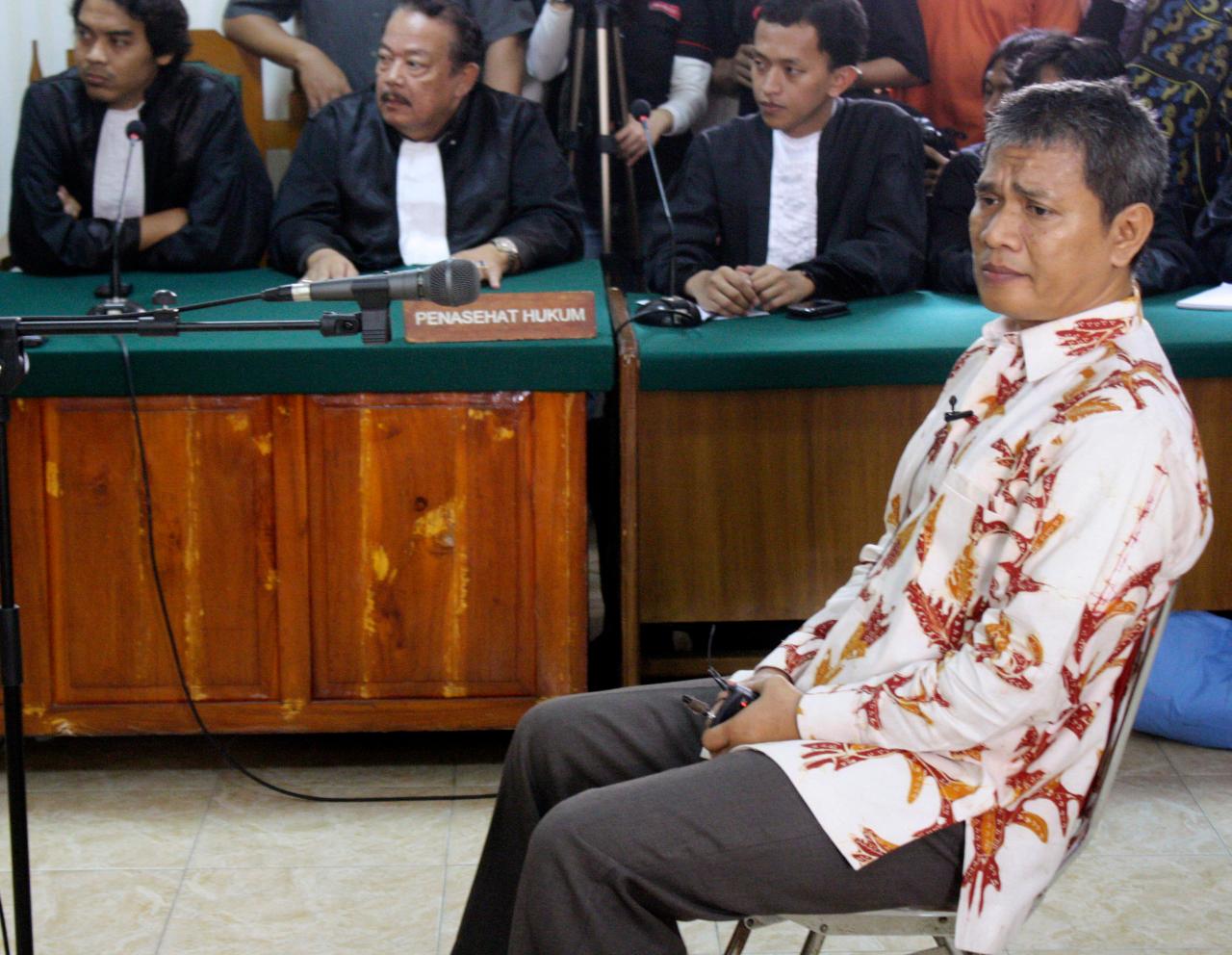
Member of Ahmadiyah sect Deden Sudjana, sits on the defendant's chair during his trial at a district court in Serang, Banten, Indonesia, Monday, Aug. 15, 2011. The man injured when Muslim hard-liners attacked members of his minority Islamic sect was sentenced Monday to six months in jail, more than some of the actual attackers. (AP Photo)
Member of Ahmadiyah sect Deden Sudjana, sits on the defendant’s chair during his trial at a district court in Serang, Banten, Indonesia, Monday, Aug. 15, 2011. The man injured when Muslim hard-liners attacked members of his minority Islamic sect was sentenced Monday to six months in jail, more than some of the actual attackers. (AP Photo)
JAKARTA, Indonesia (AP) — An Indonesian man wounded when Islamic hard-liners launched a deadly attack on his minority sect was sentenced Monday to six months in prison — more than some of those caught on video taking part in the lynching.

Human rights groups blasted the ruling, saying 48-year-old Deden Sudjana was acting in self-defense. They said it showed how the police, the judicial system and the government are helping fuel religious intolerance in the world’s most populous Muslim nation.

Sudjana was convicted of inciting violence because he defied police orders to leave the scene when the attackers arrived at a meeting of the minority Ahmadiyah sect. Sudjana instead fought back during the Feb. 6 incident in the village of Cikeusik in central Indonesia.

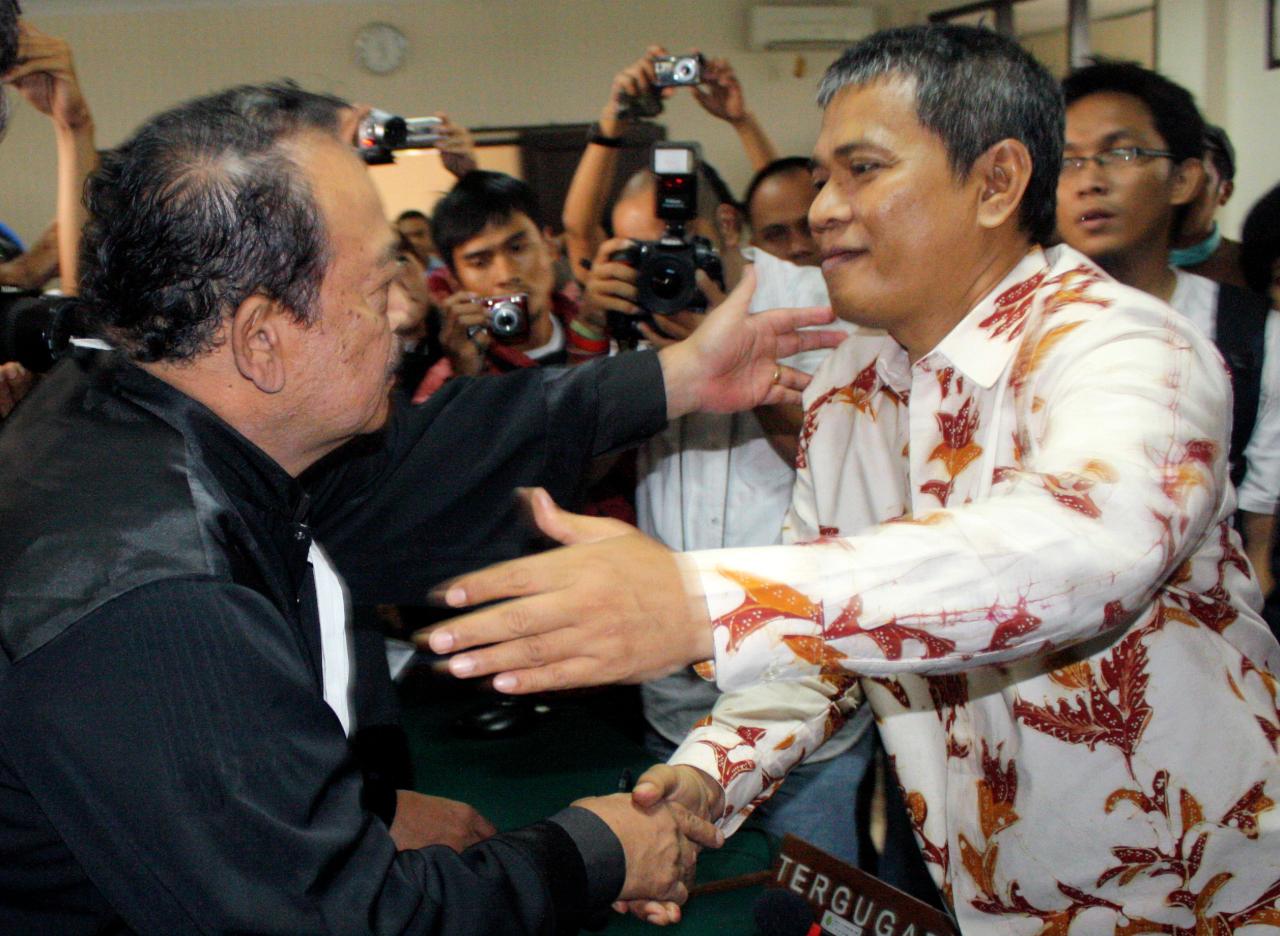
Member of Ahmadiyah sect Deden Sudjana, right, is greeted by his lawyer Nurcholis Hidayat, after the judge delivered his verdict during his trial at a district court in Serang, Banten, Indonesia, Monday, Aug. 15, 2011. The man injured when Muslim hard-liners attacked members of his minority Islamic sect was sentenced Monday to six months in jail, more than some of the actual attackers. (AP Photo)
Footage of the attack, which circulated widely on the Internet, showed 1,500 hard-liners descending on a house where 20 members of the sect had gathered. The attackers, carrying wooden clubs, machetes and rocks, killed three people and continued to pummel their lifeless bodies, chanting “God is Great!“ as police looked on.

Sumartono, presiding judge of the Serang District Court, gave Sudjana six months for resisting police orders and then beating one of the mob’s leaders.

Sudjana — whose hand was nearly severed by a machete during the attack — looked stunned as the verdict was read out.

“I’m the victim,” he told reporters as he was escorted from the courtroom. “Why am I getting a higher sentence than some of the perpetrators?“

Indonesia, a predominantly Muslim and secular nation of 240 million, has a long history of religious tolerance.

But a small, extremist fringe has grown more vocal and violent in recent years. They’ve been emboldened by the inaction of President Susilo Bambang Yudhoyono, who relies on the support of Islamic parties in Parliament, and does not want to offend conservative Muslims by taking sides.

Perpetrators of such violence often go unpunished.

Member of Ahmadiyah sect Deden Sudjana, center, speaks to the press after his trial at a district court in Serang, Banten, Indonesia, Monday, Aug. 15, 2011. The man injured when Muslim hard-liners attacked members of his minority Islamic sect was sentenced Monday to six months in jail, more than some of the actual attackers. (AP Photo)
Human rights groups say police, under pressure by hard-liners, did not carry out a proper investigation into the Feb. 6 attacks and that prosecutors, claiming the Ahmadis were instigators, didn’t call key eyewitnesses.

Andreas Harsono, of the New York-based Human Rights Watch, called it the Talibanization of Indonesia.

“We have the impression that the Indonesian justice system has surrendered to (those) who have decided to take the law into their own hands,” he said.

The decision to punish one of the victims will only encourage more such violence, he added.

So far, 12 members of the mob have been convicted, including one man who was captured on camera smashing in an Ahmadi member’s skull with a rock.

They were given between three to six months in jail.

The Ahmadiyah, which has followers around the world, is considered heretical by many Muslims and banned in many Islamic countries because of its belief that Muhammad was not the final prophet.

In recent years, hard-liners in Indonesia have attacked the sect’s mosques and intimidated some of its 200,000 followers, but the lynching in Cikeusik was by far the most brutal.

The latest attack occurred over the weekend in the South Sulawesi town of Makassar, where 30 members of the hardline Islamic Defenders Front attacked a mosque.

Two people also were beaten, sect members and a lawyer who tried to interfere, rights groups said.

Associated Press writers Niniek Karmini and Michael Holtz contributed to this report from Jakarta.

Copyright © 2011 The Associated Press. All rights reserved
URL: www.google.com/hostednews/ap/article/ALeqM5ihZBh...

Monday, August 8, 2011

Activists: Indonesia Hands Down Uneven, Unpredictable Justice

VOA News
Asia
Activists: Indonesia Hands Down Uneven, Unpredictable Justice
Solenn Honorine | Jakarta August 08, 2011
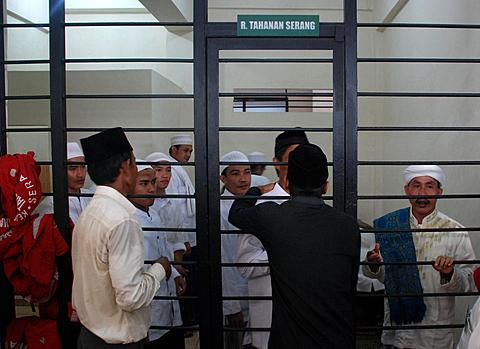
A group of Indonesian Muslims accused of attacking Ahmadiyah followers wait in a cell at a court room in Serang, Indonesia's Banten province July 28, 2011.Photo: Reuters
A group of Indonesian Muslims accused of attacking Ahmadiyah followers wait in a cell at a court room in Serang, Indonesia's Banten province July 28, 2011.

Last month, an Indonesian court sparked outrage over the light sentences handed out to 12 people accused of a deadly riot. The accused were part of a mob that targeted members of the Ahmadiyah Muslim minority sect, killing three of them.

Analysts say the light sentences were an example of what they say is Indonesia’s uneven justice system that can hand down unpredictable sentences.

An example is the case of Irwan Kristanto, who has been locked behind the doors of Pondok Rajeg prison for five months now. He is allowed to have visitors, but can not give a recorded interview.

The frail 29 year-old looks like he is barely 20. He explains that life here has been tough.

As a thief, the shy young man is forbidden to work in the orchard garden that stands in the middle of the concrete block. That is a job only accessible for those on a narcotics-related offense. But Irwan’s case is different from the murderers serving 20 year sentences. His crime was stealing two computer memory cards from an Internet café. Net value: $40.

Antonius Badar follows the Irwan case for the Indonesian legal aid group LBH Masyarakat. On Monday, he is visited Irwan’s parents, Hendri and Siti, to make sure they managed to get a copy of their son’s judgment.

“Sometimes, the district court doesn’t give this letter to the prison,” Badar says. “And the prison doesn’t know how long the prisoner should be in the prison. If Irwan didn’t have this letter, he could stay longer in prison.”

Irwan’s father, Hendri, describes a case that, he says, should not have ended with a young man with no prior police record sent to a hardcore jail.

Last February, he says, Irwan was spending time in an internet café, wondering how to better provide for his newly pregnant wife. In the spur of the moment he steals the two memory cards and leaves. But he forgot his cell phone and when he later returns to retrieve it, he is caught and sent to the police. A court later sentences him to 6 months in jail.

Rizal, owner of the Internet café, says that he now regrets having called the police. After a few hours Irwan apologized and his parents reimbursed the cost of the memory cards. Rizal says there was no real damage done and that should have been taken into account by the court.

Leopold Sudaryono, a researcher for the Asia Foundation, says the police have a quota system with financial incentives to prosecute such petty crimes.

“They have very limited amount of budget to process cases every month while at the same time each police station has quotas, a minimum amount of cases they have to bring to justice,” Sudaryono says. “Meaning what they are doing, they have to press charges for very petty crimes which will not require many operational costs to investigate. And usually the prosecutors just carry on with the cases.”

But there are other factors that contribute to uneven sentencing, which are highlighted in the Ahmadiyah case.

The maximum sentence given to the 12 people accused of taking part of the deadly attack on the minority sect was 6 months in jail. That is the same sentence Irwan received for his petty theft offense.

Leopold Sudaryono blames the police for the stark difference in the two sentences. He says police undermined the Ahmadiyah case after officers were widely accused of failing to stop the mob attack.

“So it is in the interest of the police, in the investigation of the case, not to substantiate that the violence is orchestrated,” he says.”If they investigate the case and provide the evidence otherwise, they will cut their own neck! That’s why they refer the case to the prosecutor as a weak case.”

Last week, Indonesia’s foreign minister refused to comment on the verdict or whether such light sentences would encourage more violence. Foreign Minister Marty Natalegawa told reporters the problem of religious intolerance is not Indonesia’s alone.

“I’m afraid when we speak of, for example, the whole issue of now outside the domain of the court, about the whole issue of religious intolerance or intolerance in general and all kinds of phobia, I’m afraid Indonesia doesn’t have a monopoly on that, unfortunately,” he said.

Indonesian public opinion polls indicate that law enforcement agencies are the least trusted institutions.

Irwan, the convicted thief, says as harsh as his sentence was, he has fared relatively well. He should be released on August 27, just in time he hopes, to be home for the birth of his first child, a baby girl, due on the same day.

Accepting Others Is Indonesia’s Homework

Jakarta Globe, Indonesia
OPINION
Accepting Others Is Indonesia’s Homework
Nicholaus Prasetya | August 08, 2011

A police talks with three defendants of Ahmadiyah attack in Cikeusik during the first trial at Serang District Court, Banten, April 26, 2011. (Antara Photo/Asep Fathulrahman)
Sadly, the barometer of intolerance continues to rise. While the perpetrators of the latest incident — in which two houses used as churches in Riau were burned to the ground — have not been found, it seems to be in line with many other acts of intolerance happening across Indonesia.

What makes the Riau incident worse is that it happened during the holy month of Ramadan, a time of peace and devotion recognized by Muslims around the world.

The attack also served to keep other similar events in the front of Indonesians’ minds. It was only about a week ago when the people who led the mob that attacked and killed members of the Ahmadiyah sect in Cikeusik were sentenced to just a few months in prison. One of the Ahmadiyah followers, meanwhile, was given a nine-month prison sentence. It also recalled the Temanggung rampage, when a Catholic church there suffered damage from a mob inflamed by religious intolerance.

Another lingering indication that intolerance is become the norm in Indonesia is the GKI Yasmin Church in Bogor. There is still no agreement on where the GKI members may conduct their services, since the local authorities have barred them from their church. They have been forced to pray on the side of the road, making them an easy target for passers-by, who shout in protest, objecting to the public display of a minority religion.

While church members are harassed for standing up for their beliefs, hard-line Islamic groups in Jakarta easily conducted protests and marches in advance of Ramadan, causing traffic chaos. The Islamic Defenders Front (FPI) met no resistance with their protest several days ago, where they demanded that the government ban Ahmadiyah. Indeed, the FPI seems to be able to do whatever it wants, wherever and whenever it wants, with no intervention by police or authorities. How is this justified?

What is at stake in all these incidents is Indonesia’s reputation for tolerance, which is often praised but in reality is no longer deserved. If we are a tolerant country, what, exactly, are we tolerating?

It appears that tolerance in Indonesia has come to mean tolerance based upon loyalty among people who share the same values. Or taking it further, tolerance is only for those who have power and dominate a given area or region.

This fact is clearly seen in the case of the FPI. Do the police “tolerate” the FPI simply because it has a large following and powerful leaders? Looking at it the other way, should Indonesia “tolerate” those who attacked and killed Ahmadiyah followers simply because the Ahmadiyah are a tiny minority? Does that justify the lenient court verdicts?

This is the paradox when it comes to discussing tolerance. On the one hand, tolerance is easily applied to members of the majority, even in cases where the law has been broken. On the other hand, people from religious minorities consistently bear the brunt of intolerance.

Real tolerance for minorities cannot come about just by listening to the words of our leaders. It has to take root in reality. Only talking about tolerance is nonsense, as can be seen from so many recent cases. Sadly, there is often simply no room for minorities.

This is also part of the paradox of a democratic country: the majority can easily control the law, and minorities, who are supposedly equal, are often repressed. This is a paradox that goes back as far as Socrates and is not easily resolved. In a democracy, what should be right can be made wrong, simply because enough people demand it. Those with the power and the numbers can enforce their will.

As a diverse country with a large Muslim majority, we must have the courage to not allow our many minorities to be dominated by the majority. Religious tolerance should not be based on power. But this seems hard to achieve given the existence of extremists who undoubtedly also play an important role in our democratic society. As a result, the Indonesian government fails to protect minorities and develop and promote the values of real tolerance. At a time when these values are most needed, the virtues of tolerance are being neglected.

Two things are lacking here. One is communication. As the philosopher Jurgen Habermas has noted, in a diverse democratic community, effective communication is vital because without it consensus cannot be reached.

But a consensus must be reached in Indonesia free of coercion and domination. The nature of the extremist groups in our society shows that they cannot share their ideology and thoughts in a peaceful manner; they will not engage in reasoned debate and discussion. Their manner is rigid and cagey — they feel they are always right. If they are opposed by anyone, they resort to intimidation.

We need to change our perception of the limits of freedom. Our social contract with one another imposes limits on our absolute freedom and those limits are what allow society to function. What one group believes is absolutely correct may not be consistent with the rights of others, especially religious minorities.

This is why people need to practice tolerance through communication in their daily lives. We need to build not simple relativism but a real appreciation of differing views.

This is the great homework that has to be done immediately by the Indonesian government and its people. If intolerance cannot be stopped, diversity in Indonesia will be lost.

Nicholaus Prasetya is currently a student at the Bandung Institute of Technology (ITB).

Wednesday, March 16, 2011

Seditious comments of the radical clergies

Weekly Blitz
VOLUME # 6, ISSUE # 12, DHAKA,
MARCH 16, 2011
Seditious comments of the radical clergies
By Salah Uddin Shoaib Choudhury
March 16, 2011

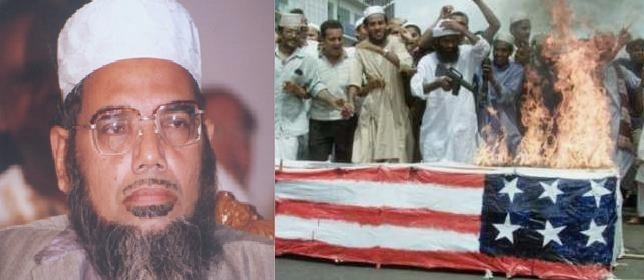
Notorious Islamist leader Mufti Fazlul Huq Amini
Notorious Islamist leader Mufti Fazlul Huq Amini.
Mufti Fazlul Huq Amini and Moulana Rezaul Karim are known as notorious Jihadists in Bangladesh. They not only give instigations to Jihad, but also are actively involved in recruiting locals and sending them to various countries in the world for taking part in Jihadist notoriety. Amini, a teacher with Jamia Qurania Arabia Madrassa at Lalbagh area in Dhaka is the son-in-law of late Moulana Mohammed Ullah aka Hafezzi Huzur. Since past few decades, Fazlul Huq Amini is involved in giving provocative lectures to Muslim youths with the agenda of poisoning their minds against United States, the West, Israel, India, Christians and Jews. Few years back, in a number of open rallies and public meetings in Bangladesh, Amini and his follower chanted slogan “We shall be Talibans – Bangla will be Afghan”.

Both Amini and Karim are categorically engaged in justifying Jihad and killing of non-Muslims as holy tasks for Muslims. They also are gaining strength with the goal of transforming Bangladesh into a Sharia state. Maulana Rezaul Karim runs a residential madrassa at Charmonai, southern part of Bangladesh. During the war hundreds of Hindu and non-Muslim women were violated by the Pakistani troops inside the campus of the Madrassa. His father, late Moulana Fazlul Karim is known as one of the notorious war criminals in Bangladesh. Fazlul Karim was also one of the top funders and patrons of anti-Ahmadiya activities inside Bangladesh, where Mufti Fazlul Huq Amini acted as virtual second-in-command of this man. During the atrocious activities of anti-Ahmadiya groups in Bangladesh, notorieties continues of this particular religious sect in the country as well as dozens of Ahmadiya mosques were attacked and demolished.

Recently, these two clergies made extremely seditious and offensive statements against Bangladesh in a public meeting, which was organized to press demand to lift High Court’s ban on Fatwa. They said, “if the ruling of the High Court banning Fatwa is upheld by the Supreme Court [judgement in this issue is expected to be declared on Marsh 21, 2011], we shall go for sacrificing lives en messe”.

The said, “hundreds and thousands of people will lay seize at the Supreme Court premises on march 21, 2011, when the court gives its judgement. And if any anti Islam ruling is given [upholding the ban on Fatwa], we shall seize the Prime Minister’s office, parliament and the Supreme Court”.

The clergies said, they want Bangladesh to be ruled under Sharia law.

Moulana Rezaul Karim said, “We shall see, how many people police can kill”. We shall color the streets with human blood if any decision against Islam is taken by the government or the judiciary in the country”.

Following this statement, the Muslim clergies are now engaged in collecting names of people who would be willing to sacrifice lives right from March 21, if the ban on Fatwa is continues. It may be mentioned here that, Moulana Rezaul Karim has a few million of supporters, while Mufti Fazlul Huq Amini is enjoying the status of a local version of Osama Bin Laden with his millions of followers and supporters within the Koranic madrassas in Bangladesh. Sensing the degree of severe consequence and extreme risk of lives of the civilians of the country, following the recent statement of these clergies, a Write Petition has already been filed with Bangladesh Supreme Court on March 13, 2011 bringing attention of the court to such activities of Mufti Fazlul Huq Amini and Moulana Rezaul Karim. Writ petition number: 2237. The matter was already raised before the court and the judge decided to hear the issue in presence of the Attorney General.

Meanwhile, hearing the news of this writ petition, Moulana Rezaul Karim in a public meeting held at the auditorium of Bangladesh Supreme Court on March 15, 2011 said, “Enemies of Islam are now conspiring to tarnish the image of Muslims and they are also actively working in seeing fatwa to be banned in the country”.

Karim said, “Enemies of Islam shall be given proper lesson in due course of time”.

It is important to mention here that, anticipating Supreme Court’s decision against fatwa, these Islamist clergies have already called for dawn-to-dusk general strike in Bangladesh on April 4. Notorious Islamist groups like Hizbut Tahrir and Hizbut Towhid have extended support to this general strike and other activities of the Islamist clergies in favor of Sharia law.

In a recent statement published at their website, the leader of Hizbut Towhid, Bayejid Khan Panni said, “Stay alert against the enemies of Islam and Judeo-Christian agents. We must wage war against these elements, to uphold the glory of Islam”.

Monday, February 28, 2011

Rights groups condemn local bans on Ahmadiyah

HEADLINES
Mon, 02/28/2011
11:38 AM
Rights groups condemn local bans on Ahmadiyah
Ina Parlina, The Jakarta Post, Jakarta
Groups condemned bans issued by local administrations on the followers of Ahmadiyah following a fatal mob attack in Cikeusik village, Banten.

The chairwoman of the Indonesian Legal Aid Foundation (YLBHI), Erna Ratnaningsih, said such policies would only erode the country’s diversity and violated the Constitution.

“Such policies violate people’s right to worship as stipulated by the Constitution,” she told The Jakarta Post via telephone Sunday.

She added that the ban was justification for and a tool of violence against religious minorities.

Ahmadiyah teachings are considered heretical and blasphemous against Islam by the Indonesian Ulema Council (MUI). Followers of the faith have been a target of mob attacks in recent years.

The latest incident in Cikeusik village in which three Ahmadis were murdered, raised public calls for the government to find a solution.

Saying it would prevent violence, several local administrations enacted bylaws prohibiting Ahmadis from practicing their faith.

A week after the Pandeglang administration banned Ahmadiyah activities, the Samarinda administration issued an order to seal off Ahmadiyah houses of worship and halt religious activities.

The YLBHI identified at least three similar discriminative regulations long imposed in Bogor and Kuningan, West Java, and in Lombok, West Nusa Tenggara.

Erna said she was concerned discrimination and violence were most likely to spread throughout the country if the central government left the policies unchecked.

“These policies set the stage for intolerance at the grass-roots level.”

Ridha Saleh from the National Commission for Human Rights shared Erna’s concerns, saying local administrations could not subjectively impose certain rulings to control people’s religious lives “because it does not only violate the Constitution, but also usurps the authority of the central government.

“Regulating such religious matters lies in the hands of the central government,” he told the Post.

Erna said the enactment of the local policies violated the 2004 Regional Autonomy Law because local regulations must be issued based on a higher law.

“In this case, local administrations violated the regional autonomy law, which stipulates that religion is one of five issues that are overseen by the central government,” she said, adding that many of those regulations were based on the wrong foundation: the intolerant fatwa (decree) of the MUI.

“I doubt the deliberations for these local regulations received public participation, as is required,” Erna said. “Ahmadiyah spokesman Ahmad Mubarik once told me these local administrations never sought their opinions.”

Both Erna and Ridha called on local administrations to revoke the policies. Ridha urged local governments not to jump the gun by issuing such regulations, but to let the central government solve the “problem” with Ahmadiyah.

The central government has not addressed the issue beyond reviewing a controversial 2008 joint ministerial decree on Ahmadiyah, which critics say is often used to justify violence against the religious sect.

“Such rushed decisions that eventually result in intolerant policies may be used by hard-line groups to mete out violence against Ahmadiyah,” Ridha said, adding that such regulations were prone to abuse and misinterpretation.

Copyright © 2008 The Jakarta Post - PT Bina Media Tenggara. All Rights Reserved
URL: www.thejakartapost.com/news/2011/02/28/rights...ahmadiyah.html

Ahmadis in C. Sulawesi told to stop using house as place of worship

ARCHIPELAGO
Mon, 02/28/2011
8:27 AM
Ahmadis in C. Sulawesi told to stop using house as place of worship
The Jakarta Post
An Ahmadiyah community in Sigi, Central Sulawesi, says its local House of Representatives (DPRD) was discriminating against them by demanding they stop using a house in the area as a place of worship.

“We have been in Sigi since the 1960s…We have never done anything to upset the community’s sense of security or disturb the region’s security,” Sigi Ahmadiyah leader Ahmad Najamuddin said Sunday, as quoted by Tempointeraktif.com.

Sigi DPRD chairman Gesang said the Ahmadiyah community must stop using the house as a place of worship or the government would force them to do so.

“Please use that Ahmadiyah mosque shaped like a house as a house, not a mosque,” Gesang said. He added that a permit from the local government was needed before establishing a place of worship.

Copyright © 2008 The Jakarta Post - PT Bina Media Tenggara. All Rights Reserved
URL: www.thejakartapost.com/news/2011/02/28/ahmadis...worship.html

Friday, February 25, 2011

Understanding right to religious freedom

OPINION
Fri, 02/25/2011
11:00 AM
Understanding right to religious freedom
Harison Citrawan, Jakarta
Attacks on Ahmadis in Cikeusik, Banten, and on three churches in Temanggung in Central Java a few weeks ago have once again sparked public debate. Subsequently, the debate leads the nation to a crossroad on whether or not Ahmadiyah should be banned.

In my view, this can actually serve as momentum for us to enhance a progressive discourse on human rights now that the government is working on the bill on religious harmony. Thus, this article attempts to construe the idea of religious freedom from a human rights point of view, particularly concerning the two problematic issues of limitations of such freedom and the concept of proselytism.

Article 18 of the International Covenant on Civil and Political Rights mentions that: (1) Everyone shall have the right to freedom of thought, conscience and religion. This right shall include freedom to have or to adopt a religion or belief of his choice, and freedom, either individually or in community with others and in public or private, to manifest his religion or belief in worship, observance, practice and teaching; (2) No one shall be subject to coercion which would impair his freedom to have or to adopt a religion or belief of his choice.

I would like to emphasize the state’s protection of individual’s freedom of religion. Nevertheless, on some occasions many Indonesians mix up the terms of religious tolerance and religious freedom.

It appears that when we tolerate one’s religion along with his/her religious activities, it demonstrates the degree of freedom of religion; and vice versa, the degree of tolerance depends on how free people are to hold and practice their religions. But, in my view both terms differ fundamentally from one another.

Religious freedom is a legal right. The Human Rights Committee in its General Comment on Article 18 elaborates such freedom as “the freedom to manifest religion or belief [that] may be exercised ‘either individually or in community with others and in public or private’.”

The concept of worship extends to ritual and ceremonial acts giving direct expression to belief, as well as various practices integral to such acts, including the building of places of worship, the use of ritual formulae and objects, the display of symbols, and the observance of holidays and days of rest.

In addition, the practice and teaching of religion or belief includes acts integral to the conduct by religious groups of their basic affairs, such as the freedom to choose their religious leaders, priests and teachers, the freedom to establish seminaries or religious schools and the freedom to prepare and distribute religious texts or publications.

This interpretation should be quite clear to implement and certainly Indonesia could adopt this authoritative interpretation made by the Committee as the Covenant has been enacted into national law in 2005.

Nevertheless, on the other side, religious tolerance signifies the acceptance of differing views of people in religious matters. Such concept of toleration emerges mostly in a religious authority state, and further it presupposes preferential treatment of a predominant religious group.

Thus, it is also worth noting that the law preserves individual freedom, not individual tolerance, to a different view or faith. In many religious violence cases around the country, it seems that the state merely preserves the predominant religious group’s toleration; hence all religions are not equal.

With the law enforcement officers reluctant to prosecute perpetrators of the violence, predominant religious group toleration would likely prevail over individual freedom.

Second is the issue of proselytism. I would base the argument from a liberal democracy perspective which provides freedom to all individuals to a marketplace of ideas. Freedom of thought, opinion and religion are to be put on one bucket list of ideas and the human rights law indeed protects individuals to exercise such freedom.

It is interesting to highlight a debate in the case of Kokkinakis v. Greece (1993) in the European Court of Human Rights. In this case, the claimant defended proselytism by stating that “religion was part of the ‘constantly renewable flow of human thought’” and it was impossible to conceive of its being excluded from public debate.

From the court’s assessment I conclude that there should be a distinction between bearing witness and improper proselytism. The former relates to true evangelism and is likely to be inherent to some major religions, and the latter refers to the form of activities offering material or social advantages with a view to gaining new members for a congregation or exerting improper pressure on people in distress or in need; it may even entail the use of violence or brainwashing.

In addition, Judge Pettiti in his concurring opinion went even further by mentioning that freedom of religion and conscience certainly entails accepting proselytism; a believer must be able to communicate his faith and beliefs in the religious sphere as in the philosophical sphere. He also mentioned that the only limits to the exercise of this right are “those dictated by respect for the rights of others where there is an attempt to coerce the person into consenting or to use manipulative techniques”.

The use of violence in proselytism is clearly not covered under freedom of religion, but proselytism per se cannot be regarded as a direct infringement of one’s right. Moreover, the mere discussion of religion, or to try to convince one’s neighbor about his belief by “proper” means are not contrary to the current human rights law regime.

An important aspect of these legal reasonings conveyed above is that the state has to assess the existence of possible interference in an individual’s right to freedom of religion upon two considerations: first, the maintenance of public safety, order or morals or importantly the fundamental rights and freedoms of others, and second, such interference should be proportionate to the legitimate aim necessary in a democratic society.

These two assessments consequently require the current government to define or to set criteria of religious freedom and adjust the bill on religious harmony to make it in line with the international human rights law.

It appears that in many aspects, the current bill is unlikely in accordance with the freedom protected in international human rights rules conveyed above, particularly concerning the issue of the limits of religious practice and proselytism.

Finally, as we still lack positive development of human rights — both in terms of system and practice — in construing the right to religious freedom the government and lawmakers may also have to take several human rights practices in well-established democracies into account.

In many religious violence cases around the country, it seems that the state merely preserves the predominant religious group’s toleration.

The writer is an alumnus of Rijksuniversiteit Groningen, the Netherlands

Copyright © 2008 The Jakarta Post - PT Bina Media Tenggara. All Rights Reserved
URL: www.thejakartapost.com/news/2011/02/25/understanding...freedom.html

Thursday, February 24, 2011

US, Australia warn RI about growing intolerance

WORLD
Thu, 02/24/2011
12:13 PM
US, Australia warn RI about growing intolerance
Zamzam Aden, The Jakarta Post, Jakarta
A United States congressman and Australian envoy as well as local and international experts expressed concerns over recent attacks on minority groups in Indonesia, warning that the attacks were a threat to freedom of expression.

US Congressman David Dreier, who met President Susilo Bambang Yudhoyono on Wednesday to hold talks on bilateral issues, told a press conference on Tuesday that he was willing to discuss the recent attacks on Ahmadis if the issue came up.

“The burning of churches is something I believe is anathema to the idea of allowing freedom of expression, which I know the Indonesian government supports,” said Dreier.

“We’re not here to intervene in internal affairs, but I know there is a great concern about the whole situation of any kind of religious intolerance.”

Recent attacks on the minority Ahmadiyah Muslim sect involved the killing of three men in Cikeusik village, Banten province, and attacks on three churches in Temanggung, Central Java.

Australian Ambassador to Indonesia Greg Moriarty said he was appalled by the killings “but similarly many Indonesians were appalled by those killings and violence” and that he believed President Yudhoyono was committed to bringing the perpetrators to justice.

“We have to take the President’s words at face value,” said Moriarty

Yudhoyono should not wait too long to act said political expert Nasir Tamara.

“The state should not be absent. Indonesia is a democratic country and the state should protect its citizens, including religious minorities,” said Nasir.

On Monday, Ahmadiyah spokesman Zafrullah Pontoh rejected a government proposal to deem the sect a new religion.

Nasir said the government should not attempt to corner Ahmadiyah with the proposal, which in effect would forcefully eject Ahmadis from Islam.

“This is nothing new; everyone knew it would happen,” said Nasir.

A visiting Australian professor of the Australia-Indonesia Institute Board, David Hill, said that like other communities, Indonesia’s acceptance of different religious views had not been as successful as many would have hoped.

“Indonesia certainly faces considerable challenges in that regard, but what is clear to me is the forces of tolerance far outweigh the voice of intolerance.”

Copyright © 2008 The Jakarta Post - PT Bina Media Tenggara. All Rights Reserved
URL: www.thejakartapost.com/news/2011/02/24/us...intolerance.html

Tuesday, February 8, 2011

Pakistan’s blinkered political class avoids the issue of Islamic blasphemy laws

Sepro News
Commentary:  Analysis
Pakistan’s blinkered political class avoids the issue of Islamic blasphemy laws
Tuesday, February 08, 2011
By Roderick Samson
The Pakistani government has bitten the dust and can’t be blamed too much because all opposition politicians too have behaved the same way while Muslim clergy upped the ante on blasphemy law.

The PPP ( Pakistan Peoples Party) lost its governor in Punjab at the hands of a religious fanatic which the police had ignored in its ranks; and its MNA Sherry Rehman has been made to take back her proposed legislation aimed at humanising the said law in Pakistan. The British Raj did much better with Muslims when the latter were a minority before the division of India into the present three contending states. When Muslims in India complained to the British that their religion was increasingly coming under communal attack, Article 295 was added to the Penal Code in 1927 under which ‘deliberate and malicious acts intended to outrage religious feelings of any class by insulting its religious belief’ became a culpable offence. It suggested a maximum of ten months in jail as punishment and the law did very well in the field. There were only 10 blasphemy cases in the 58 years between 1927 and 1985. Since that year, the number of blasphemy cases has soared to more than 1,200.

Journalists are not free of the blot of intolerance: the chief reporter for The News, Ansar Abbasi, wrote in Jang (12 Jan 2011) that he and a number of conservative lawyers in Lahore got together to file a petition in 1984 at the Federal Shariat Court asking for a law against insult to the Prophet Muhammad. In July 1984, a female attorney, Asma Jahangir, insulted Muhammad in Islamabad during a speech. This was followed by unrest in the meeting:

‘On this Appa Nisar Fatima, [mother of PML-N leader Ahsan Iqbal who hailed from General Zia’s conservative district of Jalundhar in India] presented the bill about 295-C of the Penal Code. It was approved but Law Minister Iqbal Ahmad Khan changed the text at the last minute to assign “death or life” as punishment for blasphemy. Nisar Fatima took the matter back to Federal Shariat Court saying the punishment for blasphemy was a hadd and could not be less than death. Hearing started on first April 1987. Dr Tahirul Qadri held that evidence of intent was not required (sic!) before quickly killing the blasphemer. The Court gave the government till 1991 to amend the Section 295-C. Prime Minister Nawaz Sharif had to obey’.

Associate Professor and Head of Department of Law & Policy, at the Lahore University faculty of Management Sciences, Osma Siddique and Oxford-grad Zahra Hayat, have contributed a paper on blasphemy law which notes that determination of ‘intent’ was no longer a requirement before punishing accused blasphemers.: ‘The absence of an intent requirement in Sections 295-B, 295-C, and 298-A has made it possible for blasphemy charges that may otherwise have failed the mens rea test to spawn lengthy trials continuing to the appellate level’.

Was the ‘nass’ (clear edict) of death for blasphemy mentioned in the Koran? Listen to a TV discussion here to find how Jamaat-e-Islami leader Fareed Paracha ‘proves’ this. He quotes Sura Ahzab verse number 56 saying: “Allah and His angels send Darood on the Prophet Muhammad.” Then he quotes verse 57 saying: whoever hurts the Prophet Muhammad will go to Hell. But after that he omits verses 58, 59 and 60 and quotes verse 61 instead, which says: kill them wherever you find them. The verses he omitted actually talk about munafiqeen (hypocrites).

Not even his spiritual mentor Maulana Maududi in his monumental work of exegesis ‘Tafheem al-Quran’ interprets the above verses to mean that blasphemers had to be punished with death. Today, we cope with the humiliation that comes from having this law on our statute books because no one is prepared to think rationally.

The minorities – the poorest stratum of our society who had received assurances of equal treatment from the founder of the state, Quaid-e-am Muhammad Ali Jinnah – have to bear the brunt of this hatred of ourselves. When the world is outraged by what we do to women and the minorities here, we respond with xenophobia.

Pakistan’s politicians, when not hiding their collective head in the sand, wear blinkers so as to avoid facing up to the moral fallout from the current blasphemy law.

The views and opinions expressed herein are those of the author only, not of Spero News.

© Copyright Spero, All rights reserved.
URL: www.speroforum.com/site/article.asp?idCategory=34...blasphemy+laws

Friday, January 21, 2011

In Pakistan, Islamic hard-liners expanding their grip on society

Los Angeles Times
WORLD
In Pakistan, Islamic hard-liners expanding their grip on society
The killing of a governor opposed to the nation's blasphemy law, and the warm reception for his accused killer, has exposed Islamic fundamentalists' growing sway over the nation.
Pakistanis chant slogans as they gather to show their support outside the Rawalpindi home of Mumtaz Hussain Qadri, who is accused of killing Punjab Gov. Salman Taseer. (Aamir Qureshi, AFP/Getty Images / January 21, 2011)
By Alex Rodriguez, Los Angeles Times
January 21, 2011

Reporting from Rawalpindi, Pakistan — Above a dank, darkened teahouse pungent with the aroma of green chili peppers, a bright blue banner depicts a neighborhood cleric, Qari Hanif Qureshi, declaring: “Anyone opposing laws protecting the sanctity of the prophet Muhammad is condemned!“

Such dire exhortations from local imams are embraced by millions of impoverished Pakistanis scraping by in squalid, dust-choked city neighborhoods and mud-hut settlements.

Mumtaz Hussain Qadri, a 26-year-old police commando assigned to guard Punjab Gov. Salman Taseer, says Qureshi’s preachings inspired him to assassinate Taseer on Jan. 4. And on a recent afternoon inside the teahouse, another Qureshi follower, Muhammad Zahir, said he was equally moved.

“If I were there, I would have done the same thing,” says Zahir, 26, scooping up boiled lentils with a piece of bread. “Qadri has brought honor upon his family. He’s a hero now.”

The killing, carried out by a man who saw Taseer as an apostate for opposing Pakistan’s blasphemy law, has exposed the rising influence that Islamic fundamentalism has over Pakistani society, a mind-set that increasingly radicalizes the nuclear-armed nation, breeds intolerance and further weakens Islamabad’s feeble civilian government.

Led by clerics at the helm of the country’s religious political parties and its hard-line mosques and madrasas, the extremists demonstrated their reach after Taseer was assassinated in an upscale neighborhood of Islamabad. Days later, fundamentalist clerics rallied more than 40,000 people on the streets of Karachi in support of Qadri. A day earlier in Qadri’s Rawalpindi neighborhood, at least 4,000 people had gathered in front of the accused assassin’s house, chanting, “Salute to your bravery, Mumtaz!“

At Qadri’s court appearances, lawyers have showered him with flower petals and kissed his cheeks, a worrisome sign that his support stretches far beyond Pakistan’s underclass and into the upper echelons of society.

Hard-line clerics are now turning their anger toward another leading member of the ruling Pakistan People’s Party, lawmaker Sherry Rehman, who, like Taseer, called for changes aimed at reforming the blasphemy law after a Pakistani Christian woman accused of insulting the prophet Muhammad was given the death penalty.

Journalist Ali Kamran Chishti attended a Jan. 7 gathering in Karachi at which Munir Ahmed Shakir, imam of the Sultan mosque, labeled Rehman an infidel for proposing changes to the law to remove the death penalty as an option for punishment and require prosecutors to prove that the alleged blasphemy was intentional and not inadvertent. Pakistan’s blasphemy law makes it a crime to defame the prophet Muhammad or Islam, but is often used as a tool to repress minorities.

“This kind of rhetoric radicalizes people,” Chishti said. Imams such as Shakir, he added, “are slowly poisoning minds and making people intolerant. Praising people like Qadri is indirectly saying to society that anyone who takes this line [against the blasphemy law] should be shot dead. This is wrong.”

The outpouring of praise for Qadri also sends disturbing signals to Washington. At a time when the Obama administration is hoping for a more reliable ally in the U.S.-declared war on terrorism, the Taseer assassination and its aftermath suggest extremism in Pakistan may be going mainstream.

“A mind-set has been created that has to be undone,” said Ijaz Khan, who heads the international relations department at the University of Peshawar. “It poses a serious existential challenge to the so-called liberal community of this country.

“We still do not know how many more Qadris are out there,” Khan added, “and what will happen next.”

Pakistan’s religious extremists thrive on street power rather than on ballot-box appeal. In elections in 2008, religious parties collectively garnered less than 5% of the vote. Founded as a moderate Islamic state, Pakistan is governed by the largely secular Pakistan People’s Party.

But in the thousands of mosques and madrasas across the nation, fundamentalists enjoy a captive audience. Hard-line clerics delivering fiery Friday sermons are seen as more credible than the country’s government leaders.

“If there was economic development and more job opportunities on the horizon, they wouldn’t be as apt to listen to these clerics,” said Hasan Askari Rizvi, a Lahore-based security analyst. “At least not all the time.”

The rise of the Islamists has its origins in the military rule of Gen. Zia ul-Haq, who in the 1980s forced a more conservative brand of Islam on the country. That resulted in the start-up of legions of madrasas, many of which became incubators for extremism.

Even state education under Zia “socialized young minds into religious orthodoxy,” Rizvi said. “Now these people who studied in high schools and state universities from 1985 onward are the ones who support this kind of far-right religious orientation.”

The large show of support for Qadri has both stunned and intimidated Pakistani secularists. Though several commentators on television and in newspapers have denounced the praise Qadri has received, top leaders within President Asif Ali Zardari’s administration have been conspicuously quiet amid the furor.

The government has even tried to sound conciliatory: This week Prime Minister Yousuf Raza Gilani stressed that authorities have no plans to tamper with the country’s blasphemy law — a clear attempt to appease hard-line religious leaders angered by talk of amendments to the law.

Whether such gestures calm the toxic debate over Taseer’s assassination remains to be seen. The Sunni Ittehad Council, an influential assembly of Pakistani Muslim clerics, has vowed to hold rallies in major cities in defense of the blasphemy law this month.

“If we want peace in our country,” said Hanif Tayyab, the council’s general secretary, “we should try to understand that freedom of expression has some limits.”

alex.rodriguez@latimes.com

Copyright © 2011, Los Angeles Times
URL: www.latimes.com/news/nationworld/world/la...3266594.story

Sunday, December 26, 2010

Blasphemy protests: Christian, Muslim protesters kept apart

Express Tribune, Pakistan
Pakistan
Punjab
Blasphemy protests: Christian, Muslim protesters kept apart
Rana Tanveer
December 26, 2010
People shout slogans during a rally in Lahore threatening anarchy if the Blasphemy Act is amended. PHOTO: FILE/AFP

LAHORE: The police claimed to have averted a clash between pro- and anti-blasphemy law protestors at Faisal Chowk on Christmas day.

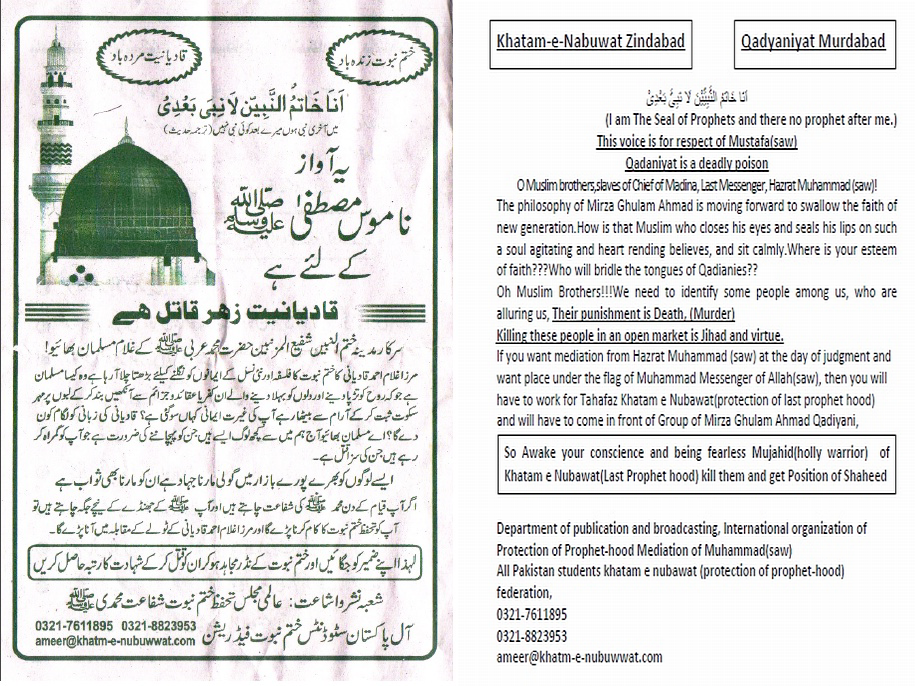
Around two dozen Tahaffuz-i-Namoos-i-Risalat (TNR) activists staged a sit-in at Faisal Chowk in the morning to press the government not to pardon blasphemy convict Aasia Bibi.

Meanwhile, a few dozen members of the Pakistan Christian Democratic Alliance, Masiha Milan Party and Human Liberation Commission began a rally from Davis Road. They carried crosses and banners demanding that the blasphemy laws be repealed and Aasia Bibi be released from death row.

When they reached Faisal Chowk, the two sides started competing over which could shout their slogans the loudest. Witnesses said that the TNR activists tried to head towards the Christian rally, but the police managed to keep them apart.

Deputy Superintendent of Police Pervaiz Butt, who was at the scene, said that both parties dispersed peacefully. He said there may have been a scuffle if the police had not been around.

Aslam Parvaiz Sahotra, president of the Masiha Milan Party, said that Christians had a right to protest and the government must ensure that this right is not usurped by religious extremists. “Were it not for the police, the TNR protestors would have pounced on us,” he said. He said the Christians’ protest was meant to be a response to the rallies in favour of the blasphemy laws, which he believed were meant to “ruin” the celebration of Christmas.

The Tehreek-i-Hurmat-i-Rasool, an offshoot of banned group Jamaatud Dawa, also held protests in favour of the blasphemy laws in Shehdadpur, Chakwal, Narowal, Pasroor, Faisalabad, Sargodha and Toba Tek Singh. Dr Mehdi Hassan, chairman of the Human Rights Commission of Pakistan, said that clerics should not be allowed to schedule protests during the celebration of Christmas and other religious holidays.

Published in The Express Tribune, December 26th, 2010.
URL: http://tribune.com.pk/story/94925/blasphemy-...-kept-apart/

Monday, December 13, 2010

In the name of religion: 32 blasphemy cases in Sindh

Express Tribune, Pakistan
PAKISTAN
SINDH
In the name of religion: 32 blasphemy cases in Sindh
June 07, 2010
Not only the accused, but the legal community also faces the ire of vigilantes.
KARACHI: According to the Sindh police, 32 blasphemy cases have been registered in the province this year, which include five in Karachi, six in the Hyderabad region and 21 in the Sukkur region.

While the Citizens Police Liaison Committee (CPLC) has a record of 11 blasphemy cases registered in Karachi from January to December 7, 2010, the Karachi police say they have not registered any case this year.

The Human Rights Commission of Pakistan (HRCP) knows of one incident in Karachi this year – a conviction in a 2006 blasphemy case. HRCP says a total of 24 cases and convictions have been recorded in Pakistan in 2010. Blasphemy cases in Sindh are believed to be less in number than in Punjab. HRCP director and activist IA Rehman told The Express Tribune that this is because, “Anti-Ahmadi sentiment is more prevalent in Punjab, where politics is also mixed with religion. The issue of Ahmadis in Punjab is where the blasphemy laws arose from.”

However, like Punjab, blasphemy cases in Sindh have had violent outcomes. Since 1986, at least three people have been murdered after being charged under the blasphemy laws, according to data compiled by the HRCP and the National Commission for Justice and Peace (NCJP). Jagdesh Kumar was killed in 2008 by colleagues at his workplace in Korangi, while Zafar Ahmad, from the Ahmadi community, was killed in Dadu in 2000. Anees Mallah, who was serving a jail term, was attacked by a mob of 200 people in the Sanghar prison on April 3, 2009. He was reportedly tortured before being shot dead. HRCP’s 2009 annual report quoted his brother as saying that he had been wrongly implicated. In March 2008, Mallah had crashed into a gate erected for a Milad event which angered the organisers, who implicated him in a blasphemy case.

According to the NCJP, three women have been accused in Sindh under the blasphemy laws. In 2009, Tabassum Malkana in Sanghar was accused of desecrating the Quran. In Karachi, Akhtari Begum was booked under Pakistan Penal Code Section 295-B in 2001 for claiming to be a prophet and Bushra Taseer was charged under Section 295-C in 1996 after a tailor alleged that she had given him cloth to stitch, which had a religious inscription on it.

A key issue in such cases is the lack of legal support and security for defendants and their legal counsel. Extra-judicial killings of those accused of blasphemy have taken place since 1990, but the legal community has also faced the ire. In 1997, Lahore High Court judge Arif Iqbal Bhatti, who had acquitted two Christians in a blasphemy case in 1995, was shot dead as he left the court.

Human rights lawyer Zia Awan says defending such cases “is a difficult job”. “We are living in a mad country. Even Islam allows people to defend themselves and so does our law. But the government should arrange for lawyers to defend those accused of blasphemy and provide protection to lawyers in such cases,” he told The Express Tribune. “Prosecutors of anti-terrorism courts recently went on strike for the same reason – to demand that they be provided security to do their job.”

I A Rehman says, “There are also professional complainants who accuse people of having committed blasphemy. Such people are present in Sindh too but in a smaller number.”

In May 2010, two Christian couples residing in Karachi were reportedly accused of blasphemy and went into hiding. According to the Asian Human Rights Commission, seven Hindus from the Bheemo Mal Megwar Para area in Mirpurkhas were reportedly arrested on blasphemy charges in August 2010 after an attack on August 23 by the area’s Muslim residents on a Hindu settlement.

Published in The Express Tribune, December 13th, 2010.

Tuesday, December 7, 2010

Blasphemy killings: 15 of 34 murdered were Muslims

Express Tribune, Pakistan
Pakistan
Blasphemy killings: 15 of 34 murdered were Muslims
December 07, 2010
Human rights organisations urge immediate repeal of blasphemy laws.

LAHORE: A total of 34 people were killed extra judicially in Pakistan during 1990-2010 following charges of blasphemy, The Express Tribune has learnt.

The information obtained by the Tribune revealed that 15 of those killed were Muslims and 31 were killed in the Punjab.

16 of the murdered people were Christians, 15 Muslims, two Ahmadis and one a Hindu. All these people accused, of crimes under the blasphemy laws, were either killed extra judicially or found dead in prison under dubious circumstances.

Eight of these people died in the police custody. Five were killed by the police. One of them committed suicide and two were found dead in prison with the cause of their death unknown. Dr Mehdi Hasan, Human Right Commission of Pakistan (HRCP) chairperson, said that he believed that the extrajudicial killings raised questions in relations to the failure of the police security. “The HRCP has always been condemning such tragic incidents. We have long been campaigning for repeal of these laws,” he added.

Ali Dayan Hasan, the senior South Asia researcher at the Human Rights Watch, said that Pakistan would remain a laboratory for rights abuse in the name of religion if blasphemy laws were not repealed.

National Commission for Peace and Justice (NCPJ) is among the organisations calling for blasphemy laws repeal. NCPJ Executive Secretary Peter Jacob said, “In a society like Pakistan where people can be easily instigated into taking law in their hands, such laws should be immediately abolished.”

Religious scholar Javed Ahmad Ghamidi said that the Quran does not lay down a punishment for blasphemy. “In talking about these laws, one should understand the circumstances in which Ziaul Haq introduced them,” he said. He also said that the current laws were not Islamic.

Published in The Express Tribune, December 7th, 2010.

Saturday, December 4, 2010

Blasphemy case: Cleric offers Rs500,000 for Aasia’s execution

Express Tribune, Pakistan
Pakistan
Blasphemy case: Cleric offers Rs500,000 for Aasia’s execution
December 04, 2010

PESHAWAR: A prominent cleric on Friday offered a reward of half a million rupees for executing Aasia Bibi, a Christian woman who was sentenced to death by a court on charges of blasphemy.

Maulana Yousaf Qureshi, the Khateeb of the historic Masjid Mohabaat Khan in Peshawar, offered a Rs500,000 reward for anyone who kills Aasia, Online news agency reported.

Qureshi also warned the government against any move to abolish or change the blasphemy law.

“No president, no parliament and no government has the right to interfere in the tenets of Islam. Islamic punishment (according to Muslim jurisprudence) will be implemented at all costs,” said Maulana Qureshi.

“We will strongly resist any attempt to repeal laws which provide protection to the sanctity of Holy Prophet Muhammad (PBUH),” Qureshi is reported to have told a rally. “Anyone who kills Aasia will be given Rs500,000 in reward from Masjid Mohabat Khan.”

“We expect her to be hanged and if she is not hanged then we will ask the mujahideen and the Taliban to kill her.”

Jamaat-i-Islami’s provincial spokesperson Israrullah has said that the case should be dealt with in accordance with the Constitution and laws of the land. He said that whatever Maulana Qureshi had said was his own personal opinion and not the party’s stated position.

Mian Iftikhar Hussain, the spokesperson for the Khyber-Pakhtunkhwa government, said that the case is still in court and its decision will be acceptable to everyone. He said such decisions cannot be taken on the streets.

Latif Afridi, a renowned lawyer and a former president of the Peshawar High Court Bar Association, said that no one in their right mind could make such a statement, referring to the Maulana’s statement regarding Aasia Bibi. He said that these are “a mad person’s words and are contrary to basic human rights”. He added that such remarks constituted an open threat to someone’s life and stern action should be taken against such an act. Article 506 of the Pakistan Penal Code can be applied in this case, he added.

SSP (operations), Peshawar, Ijaz Ahmed said that he was in no position to say anything definitive in this context but if a legal opinion comes from departments concerned, he would follow the law and take the prescribed route.

with input from REUTERS and our correspondent

Published in The Express Tribune, December 4th, 2010.

URL: http://tribune.com.pk/story/85412/blasphemy-case-...-offers-reward-to-kill-aasia/

Monday, November 22, 2010

Rights activists protest against Aasia’s sentence, blasphemy laws

Express Tribune, Pakistan
Pakistan
Punjab
Rights activists protest against Aasia’s sentence, blasphemy laws
November 22, 2010
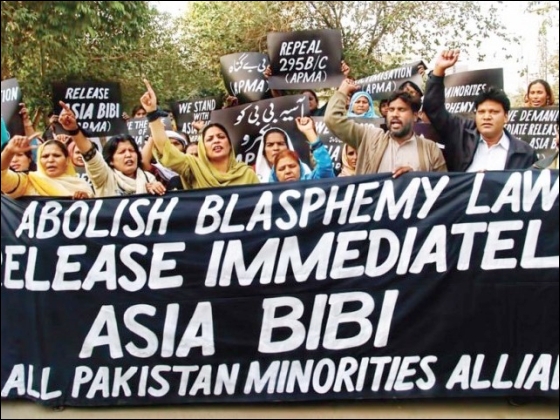
All Pakistan Minorities Alliance activists raise their voice against the blasphemy laws. Photo: Abid Nawaz/Express

LAHORE: Rights activists on Sunday staged a rally in front of the Lahore Press Club in protest against the death sentence handed to Aasia Bibi, the Christian woman charged with blasphemy by an additional district judge of Nankana Sahib on November 8.

Meanwhile, members of Tahafuz Namoos-e-Risalat Mahaz (TNRM) in a press conference vowed to resist any step taken by the government to strike down her sentence.

Protestors belonging to the All Pakistan Minorities Alliance (APMA) demanded the government set Aasia Bibi free. The protest was led by MPA Najmi Saleem. They chanted slogans against the blasphemy laws, calling them ‘black laws’ introduced by a dictator to prolong his rule. They held placards and banners saying, “We want immediate release of Aasia Bibi” and “Abolish blasphemy laws”. The protestors appealed to the Chief Justice of Pakistan to take suo motu notice of Aasia Bibi’s sentence.

Addressing the protest, MPA Saleem said that Aasia was innocent and was being charged with a crime she did not commit. She said minorities were being victimised under the blasphemy laws, adding that General Ziaul Haq introduced the laws for personal gain. “By promulgating such laws, Zia’s regime set the stage for religious extremism in the country,” she said.

Saleem said that sections 295-B and C of the Pakistan Penal Code were being used by some sections of society as a weapon against minorities. “Minorities in Pakistan are living under the constant threat of violence,” she added.

She said that the government should repeal the law or at least amend it to stop its misuse.

Representatives of Tahafuz Namoos-e-Risalat Mahaz, however, warned the government not to repeal the blasphemy laws. They said that they would resist any step taken by the government for ‘illegal’ release of Aasia Bibi.

Maulana Muhammad Ali Naqashbandi, the TNRM general secretary, criticised Governor Salmaan Taseer for issuing statements in favour of Aasia Bibi. He announced that the TNRM would organise a protest in front of Governor’s House on November 24, adding that calling Aasia innocent was tantamount to contempt of court as she had been given a death sentence by a competent court after following the due process of law.

Naqashbandi said that if the government sided with Aasia Bibi, it would hurt the sentiments of millions of Muslims and “force them to follow the way of Ghazi Ilmuddin Shaheed, who had killed a blasphemer”. He said that Aasia Bibi should only be allowed legal remedies for her release and deserved no special treatment. He called upon the parliament to review the law allowing the president to pardon a convict. Talking to The Express Tribune, he admitted that there was room to amend the blasphemy laws in order to stop its misuse. However, he said that the government should only move ahead with the amendments after consulting religious scholars.

Muhammad Ziaul Haq, Mufti Masoodul Rehman, Maulana Farman Ali Naqashbandi, Maulana Shahid Aziz, Muhammad Fiaz Jalali and Maulana Ghulam Abbas Faizi were also present at the TNSM press conference.

Published in The Express Tribune, November 22nd, 2010.

Saturday, August 7, 2010

Ahmadiyah children denied right to free education

HEADLINES
Sat, 08/07/2010
12:10 PM

Ahmadiyah children denied right to free education
Panca Nugraha, The Jakarta Post, Mataram

Sixth grader Muhyidin Sayid Ahmad returned home from school wearing a sad face. His school had just denied him the right to free education that has been provided by the West Nusa Tenggara provincial administration for poor students for the past two years.

Muhyidin is one of 40 children of Islamic sect Ahmadiyah who have been living in Wisma Transito in Mataram, West Nusa Tenggara, for the past four years, since they were driven out of their homes by an angry mob in Ketapang hamlet, Lingsar district, in West Lombok regency.

Apsotates?: Children of Jamaah Ahmadiyah members pose at a refugee shelter in Mataram, West Nusa Tenggara. The children, who have been persecuted by local Muslims and the authorities, have also been denied their right to a free education. JP/Panca Nugraha
Of the 40 children, 20 are in primary school, seven in high school and the rest are of preschool age. The boy’s father, Syahidin, said his son’s poor friends were getting cash assistance from the program — called the Assistance for Poor Students [BSM] — from his school, the nearby SDN 42 elementary school.

“But my son did not get the assistance despite the fact we’re so poor,” Syahidin told The Jakarta Post. Children of other Ahmadiyah refugees suffered the same gloomy fate.

“There are 40 children here. None of them received assistance for poor students,” said 45-year-old Syahidin, who is the refugee coordinator at the shelter.

Under the program, which disburses cash every three months, each needy elementary school student is entitled to receive Rp 15,000 [US$1.68] a month. Junior high school students get Rp 50,000 and high school students get Rp 75,000.

The provincial administration has provided more than Rp 124 billion annually through the BSM program since 2009.

However, the children of Ahmadiyah members have not been included in the program.

Syahidin said that as refugees, the sect’s members had been living with a social unclear status over the past year.

On the other hand, they have to survive, including to provide their children’s school needs, such as for transportation, books and uniform.

Each year, he said, the condition of refugees worsened.

The province’s Social Affairs Office stopped providing assistance to them in mid 2008 on the grounds that the assistance was allocated for only two years.

The provision of rice and cash for dishes also stopped and the refugees now have to fend for themselves. Many of the refugees, mostly farmers, ended up doing odd jobs, such as working as construction workers.

Over the past six months, they have been living in the shelter without electricity because they can not afford to pay the bills.

“We have tried everything to be able to return home to Ketapang but to no avail. We can only resign ourselves to our fate and hope for justice from God,” Syahidin said.

None of the refugees hold valid identity cards — which are required to be eligible for government assistance for the poor.

“Our Ketapang identity cards have expired. It is impossible for us to apply for ID cards here since we have been rejected everywhere,” Syahidin said.

“Without this card, we can’t apply to get free healthcare or education programs.”

The province’s Education Youth and Sports Office secretary M. Imhal said the BSM assistance aimed to reach every poor student.

However, he said, the program’s recipients were listed by school authorities, not his office.

“We get the data from schools. If the refugees’ children did not get the aid, they were probably not listed by their schools.”

The province’s Ahmadiyah advisor, Nasiruddin, said the refugees had been aided by overseas relief groups, human rights observers and foreign embassies, not their own government.

“Why does the international community care about us, while our own government thinks we don’t exist?” Nasiruddin said.

“The government should not shut their eyes and ears,” he said. “If they don’t wish to take any notice of us, that’s fine. But please take notice of the condition of our children.”

 
^ Top of Page