Showing posts with label mosque. Show all posts

Saturday, November 19, 2011

City closes Ahmadi mosque, denies religious prejudice

Jakarta Post, Indonesia
CITYSat, 11/19/2011 11:40 AM
City closes Ahmadi mosque, denies religious prejudice
Andreas D. Arditya, The Jakarta Post, Jakarta
The Jakarta administration denies any religious predilection in sealing off an Ahmadiyah mosque in East Jakarta this week.

Jakarta Deputy Governor Prijanto said that mosque was shut down because it violated a building permit.

Prijanto did not consider that the Ahmadis had unsuccessfully proposed to the local administration to convert the building permit from a private residence to a public building.

The Ahmadis had held religious services there for 21 years.

“Our local official sealed the building off after sending warning letters,” Prijanto told reporters at City Hall on Friday.

On Thursday, officials from the East Jakarta Building Supervisory Agency (P2B) and the City Public Order closed down At-Taqwa mosque after claiming that the owners of the premises had misused the building permit issued for the premises.

Prijanto said that issues regarding the Islamic sect had been decided by the central government through a ministerial decree.

The head of the East Jakarta branch of the Ahmadiyah, Aryudi Muhammad Shadiq, said the management of the mosque was fully aware of the building violation.

Aryudi said that they had been proposing to the local administration to convert the building permit from that for a private residence to one for a public building, but to no avail.

He questioned the city administration’s decision to seal off the mosque after allowing it to remain open for the past 21 years.

Following the closing of the mosque, a local Islam Defenders Front (FPI) branch said that they would monitor the sect’s activity and report to the city administration should the sect continue performing their religious services there.

Separately on Friday, Jakarta Police chief Insp. Gen. Untung Suharsono Radjab held a meeting with a number of mass organizations, including those notorious for their violent behavior, in Central Jakarta.

Untung said that the meeting was to seek input from the organizations regarding security issues in the capital. The police chief warned that members of any organization who resorted to violence and violated the law would be penalized. “We will process them according to the law.”

Three years ago, the central government issued a joint ministerial decree banning members of the Ahmadiyah Indonesia Congregation (JAI) from propagating their religious beliefs, but allowed them to maintain their faith and perform their daily religious duties.

The decree was followed by a number of regional administrations issuing bans to prevent members of the Ahmadiyah sect from practicing their faith in public.

Jakarta Governor Fauzi Bowo also planned to issue a similar ban, but backtracked after realizing that such bylaws were illegal.

The Coordinating Political, Legal and Security Affairs Ministry said that the local administration could not issue ordinances that went against the Constitution, which guaranteed the freedom of faith and worship.

Copyright © 2008 The Jakarta Post - PT Bina Media Tenggara. All Rights Reserved
URL: www.thejakartapost.com/news/...religious-prejudice.html

Friday, November 18, 2011

City seals off Ahmadiyah mosque in East Jakarta

Jakarta Post, Indonesia
CITYFri, 11/18/2011 10:41 AM
City seals off Ahmadiyah mosque in East Jakarta
The Jakarta Post
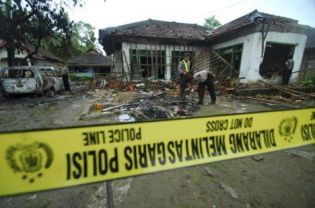
East Jakarta officials sealed off a mosque belonging to a group of Ahmadiyah followers in Duren Sawit on Thursday, saying that the place of worship violated zoning regulations.

Officials from the East Jakarta Building Supervisory Agency (P2B), accompanied by public order officers, closed down At-Taqwa mosque after claiming that the owners of the premises had misused the building permit issued for the premises.

In the eviction notice, the P2B said that a building permit had been issued for a private residence, but owners had used the premises as a house of worship. The agency claimed that three warning letters had been issued before the eviction.

The head of the East Jakarta branch of the Ahmadiyah, Aryudi Muhammad Shadiq, said the management of the mosque was fully aware of the building violation.

“We have been trying to convert the building permit from that for a private residence to one for a public building, but to no avail,” he told The Jakarta Post on Thursday.

Aryudi said that bureaucratic red tape had hampered the congregation in obtaining a new building permit. “We spent six months on completing all the required documents. But we didn’t get it,” he said.

He suspected that officials of the B2P had intentionally thwarted their efforts to get a new permit.

“We feel like the city administration doesn’t support our efforts to get a new permit for the mosque,” he said.

Aryudi also questioned the city administration’s decision to seal off the mosque after allowing it to remain open for the past 21 years. “Why now and not years ago? We have never caused problems in the community,” Aryudi said.

Since the founding of the mosque in 1990, members of the Ahmadi congregation have performed their rituals in peace and locals had never lodged any complaints.

A local Ahmadi cleric living in Duren Sawit, Muhammad Diantono, said the Ahmadi community had been in the area since 1967. “They are all locals who have lived in the area for years. They have become part of the community,” he said.

Diantono said that Ahmadis in the area had voluntarily reduced the time they spent on rituals in the mosque even though the East Jakarta administration had made no move to restrict their freedom.

Lately, At-Taqwa had held daily prayers only. Previously, the management of the mosque held a weekly sermon and Koran recitation for its 300 members.

“Ahmadis in several areas may deal with tighter local regulations, but we have been fine here. Yet, we decided to reduce the time we spent at the mosque to prevent possible conflict,” he said.

An East Jakarta Islam Defenders Front (FPI) member, Subhan Amir, said that it was still possible that conflict in the area could result from Ahmadis conducting their rituals at the mosque.

“The mosque is a dangerous place for people living nearby because the Ahmadis can be a bad influence. And now locals have realized how dangerous their beliefs are,” he said.

Subhan said the FPI supported the B2P’s decision to shut down the mosque.

“We will keep an eye on the mosque and if we find that the Ahmadis are still conducting their rituals, we will file a report with the city administration,” said Subhan. (lfr)

Copyright © 2008 The Jakarta Post - PT Bina Media Tenggara. All Rights Reserved
URL: www.thejakartapost.com/news/...east-jakarta.html

Thursday, November 17, 2011

Ahmadiyah Mosque in Duren Sawit Sealed

Berita Jakarta, Indonesia
Ahmadiyah Mosque in Duren Sawit Sealed

Ahmadiyah Masjid, Duren Sawit, Indonesia
BERITAJAKARTA.COM — 11/17/2011 7:42:52 PM

A building which used as Mosque by Ahmadiyah pilgrim on Jl Madrasah Block J No. 28 at RT 02/10, Durensawit, East Jakarta was sealed by East Jakarta Building Supervision and Control (P2B) Sub-Department on Thursday (11/17) due to its building had violated building permit. In the permit, two-story building which established above land with 200 square meters width was only a house. But in fact, the house was used as Mosque by the owner. In this sealing, there was no resistance from building’s owner in the location.

Task Executor (Plt) of East Jakarta Supervision and Control Sub-Department Head, Bambang Sudjimanto who led directly this sealing stated that his party has sent the first warning letter (SP) 1 until third warning letter before sealing. By sealing, he hopes there is no more activity which done by Ahmadiyah in the mosque. “We had sent warning letter. But, they ignored it until we finally did seal to its building,” he expressed, Thursday (11/17).

District Head of Durensawit, Wahyu Supriatna said that after doing sealing, his party will also control them every day for 24 hours. It is conducted as an effort to prevent conflict which can occur anytime. If there found the same activity, they will follow up it firmly.

Meanwhile, Azis (27), one of Ahmadiyah pilgrim who is also as mosque manager stated that since brawl in Cikeusik, Pandeglang, Banten some time ago, it causes no more activity in the mosque. If there any activity, it is only the implementation ied ul Adha prayer and slaughtering to the qurban cattle several days ago. In fact, only about 60 pilgrims from Duren Sawit, Kramatjati and Tebet who joined it.

As matter of fact, the activity inside the mosque has been going on since 1997 ago. But, after sealing, he plans to report it to Jakarta Ahmadiyah manager.

He continued that a house which used as the mosque is awqaf house from Abdul Somad who is a manager of Ahmadiyah in East Jakarta. “Previously, there were about 300 pilgrims who active in this mosque. Besides before brawl in Cikeusik, they routinely held recitation in the mosque,” he said. — Translator: adi

Tuesday, November 15, 2011

Ahmadis of Chantara are under Threat!

Ahmadiyya Muslim Jama'at, Bangladesh
Ahmadis of Chantara are under Threat!

After about an year and a half, Ahmadis of Chantara village under Ghatail Upozilla (Police Station) of Tangail district are under threat again!

Background:

Last year (18th June 2010) a makeshift Tin-shed Ahmadiyya mosque and a house were vandalized by some fanatic people led by Imam Mufti Nasiruddin. Daily Star Report, 19.06.2010.

After that there were further attacks on Ahmadis on 7th & 8th August, 2010, when almost all the houses of 40 (forty) Ahmadi families were vandalized, looted and many were injured. See the link below:


Again there was fresh attack on Ahmadis on 18th October, 2011, this time 6 Ahmadis including a lady were severely injured. See the link below:


Ahmadiyya Muslim Jama’at arranged Press Conferences, issued Press Notes and met and submitted documents to high-ups of the government including Ministers belongs to that area, MP of that area, IG of Police and sought justice and appealed to uphold the basic human and citizen rights of Ahmadis. We were assured that justice will be done and rights of Ahmadis will be protected.

Recent Incident:

On 13th November, 2011, almost one and a half years after, local Ahmadis of the village Chantara took initiative to set a tin-shed boundary to protect the place of mosque that was vandalized and looted by the fanatics in last year. But unfortunately, bowing down to the demand of fanatics Officer In-charge and UNO of Ghatail Upozilla stopped Ahmadis to erect the tin-shed wall and in their presence all the construction material were taken away.

Now the question are :

  • Aren’t the Ahmadis citizens of Bangladesh.
  • Don’t they have the rights to protect their own properties.
  • Isn’t their constitutional and basic human rights to build their place of worship/mosque and practice whatever they belief?
  • Can Administration do injustice to any of their citizens?

Govt need to act against Ahmadiyya tormentors

New Age, Bangladesh
15/11/2011 00:00:00
Home | EDITORIAL |
Govt need to act against Ahmadiyya tormentors

MEMBERS of the Ahmadiyya community, a minority sect of Islam, are once again exposed to intimidation. This time, they have been barred from building a mosque at a village in Tangail, although, in line with Article 41 of the constitution, ‘every citizen has the right to profess, practice or propagate any religion’ and ‘every religious community or denomination has the right to establish, maintain and manage its religious institutions’. According to a report published in New Age on Tuesday, the victims have pointed fingers to the law enforcers, who are supposed to protect their rights, for that violation. A local leader of the Ahmadiyya community alleged that while members of the Ahmadiyya community at Chantara village under Ghatail upazila started fencing their land in a bid to construct a mosque Monday morning, the police came to the spot and stopped their activities apart from pulling down the fencing.

It is pertinent to recall that Ahmadiyyas are a beleaguered community in Bangladesh. A section of religious bigots have sought to prevent them from practising their faith for years. Besides, they have clamoured during this period that the government declare Ahmadiyyas as non-Muslims which is altogether affront not only to democratic values but also to the spirit of religious harmony. Worse, they have unleashed attacks on them and their homes and places of worship on several occasions. Regrettably, however, successive governments have hardly taken any deterrent steps against these crimes. Rather, they appear to have pursued an appeasement policy when it comes to dealing with such bigotry. All this may have, on the one hand, emboldened the bigoted elements in society to continue their misdeeds and, on the other, prompted the law enforcing agencies to give indulgence to the tormentors of the Ahmadiyyas.

Most people in Bangladesh, irrespective of their religious faiths, believe in communal harmony; the bigots are essentially a minority. If the government is serious, it can tackle such bigotry that is posing a danger to our syncretistic social fabric, developed over centuries. Ironically, the denial of rights of a community occurs at a time when a political force, which usually loves to be identified as the defender of that secular entity of the country, is in power. The incumbents indeed need to do something decisive to ensure the rights of all minorities, including the Ahmadiyyas, as well as to thwart the overall activities of the bigots.

Tangail villagers stop Ahmadiyyas from building mosque

New Age, Bangladesh
15/11/2011 00:00:00
Home | FRONTPAGE |
Tangail villagers stop Ahmadiyyas from building mosque

Our Correspondent. Tangail

People in a Tangail village stopped the local members of the Ahmadiyya community from constructing a mosque for themselves on Monday.

Assistant superintendent of police Md Sajahan said that members of the Ahmadiyya community at Chantara in Ghatail started to build a mosque in the village about 11:00am but that other villagers stopped the work.

On hearing about the matter, the police from Ghatail police station went to the spot and removed both parties, he added.

Policemen have been deployed there to deal with any violence.

Local Ahmadiyya leader Rafiq Ahmed, however, said that local members of the community had started fencing their land to build a mosque but that the police had stopped their activities.

‘Not only that, but the police also broke our fencing and deployed extra policemen there,’ he said.

Friday, October 14, 2011

Indonesia: Open letter on human rights violations against the Ahmadiyya in West Java

Amnesty International
Indonesia: Open letter on human rights violations against the Ahmadiyya in West Java

Ref: TG ASA 21/2011.034
Index: ASA 21/032/2011

Gamawan Fauzi
Minister of Home Affairs
Ministry of Home Affairs
Jl. Medan Merdeka
Utara No.7
Jakarta 10110
Indonesia

14 October 2011

AMNESTY INTERNATIONAL INTERNATIONAL SECRETARIAT
Peter Benenson House, 1 Easton Street
London WC1X 0DW, United Kingdom
T: +44 (0)20 7413 5500 F: +44 (0)20 7956 1157
E: amnestyis@amnesty.org W: www.amnesty.org

Dear Minister,

OPEN LETTER ON HUMAN RIGHTS VIOLATIONS AGAINST THE AHMADIYYA IN WEST JAVA

We are writing to raise our concerns about intimidation, threats and violence against several Ahmadiyya communities at the hands of certain religious groups and organizations, as well government officials in the province of West Java. These include attacks on the property of Ahmadiyya members, closure or takeover of Ahmadiyya places of worship, and members of the community being threatened in attempts to force them to denounce their beliefs.

We are particularly concerned that government authorities – including the police – are failing to protect these communities and, in some cases, actively taking part in their persecution. There is also evidence that a provincial regulation entitled “Regulation of the Governor of West Java No. 12/2011 concerning Prohibition of Activities of the Indonesian Ahmadiyya Congregation in West Java” (Regulation of the Governor of West Java No. 12/2011) issued on 3 March 2011 is being used by attackers to justify such unlawful actions.

Article 3 of the Regulation, among other things, “prohibits followers of the Ahmadiyya community from carrying out activities… related to the spreading of interpretation and activities that deviate from the fundamental teachings of Islam”. These activities include spreading Ahmadiyya teachings, installing their signboards in public places and on their places of worship and educational institutions, as well as using anything that could identify them as Ahmadiyya followers.

Below we highlight a number of cases documented by Amnesty International in West Java province. We urge the Indonesian government to ensure prompt, independent, impartial and effective investigations into these reports and take steps to ensure such attacks are not repeated. Indonesia must abide by its international legal obligation to respect and protect the freedom of thought, conscience and religion of all individuals and communities in the country.

1. ATTACKS ON AHMADIYYA PROPERTY AND INTIMIDATION OF COMMUNITY

At 11pm on 29 March 2011 in the village of Sukagalih, Sukaratu sub-district, Tasikmalaya district, approximately 100 people reportedly attacked a house belonging to the Ahmadiyya. According to eye witnesses, some of the attackers were from the As-Syafiiyah Islamic boarding school in Cikatubang located 500m from the village. There were four people in the house: a man, aged 63; his wife, aged 55; their daughter, aged 21; and a wheelchair-bound grandmother, aged 86. The attackers smashed their windows with plant pots, stones and bricks while shouting obscenities and religious slogans.

After a few minutes, the attackers entered the house through the front door, smashing furniture and electrical goods. The attackers then moved on to a small bamboo house at the back of the main property. After the family living in this house escaped, it was set on fire and razed to the ground with all of its contents.

Within days of this attack, two banners were erected immediately outside the main house and at the entrance of the road leading up to the house. The banner outside the house read:

“We support the West Java Governor Regulation No. 12/ 2011 that the Ahmadiy[ya] does not put its name on any place of worship, educational institute or anything else that belongs to Ahmadiy[ya] and ask for a presidential decree to be issued soon to dissolve Ahmadiy[ya].”

The banner at the entrance to the road leading to the attacked house read:

“Thank you to the Governor of West Java for issuing Governor Regulation [No.] 12/2011 on the prohibition of Ahmadiy[ya] activities and the spreading of Ahmadiy[ya} teachings.”

Both the banners were signed by a coalition of groups including the Islamic Defenders Front (Front Pembela Islam, FPI) and the Islamic Reform Movement (Gerakan Reformasi Islam, GARIS).

On the morning of 30 March 2011 at least six students from the boarding school were reportedly detained by the police for their involvement in the attack and taken to the Tasikmalaya District Police Station (Polres). However, they were released without charge later that evening after a demonstration by students from the boarding school in front of the police station. The local military village “guidance” officer (Bintara Pembina Desa or Babinsa) told the Ahmadiyya victims that the police had received threats of more violence against Ahmadiyya houses if the detainees were not immediately released.

2. CLOSURE OR TAKEOVER OF AHMADIYYA PLACES OF WORSHIP

In the ten days after the Governor of West Java issued the Regulation, the Babinsa officer and the Bojongpicung Sub-district Police approached elders of the Ahmadiyya community in the village of Cipeuyem, Haruwangi sub-district and asked them to allow a non-Ahmadiyya preacher to use their place of worship at prayer time. The elders denied their request.

At around 2pm on 13 March 2011, a group of around 50 people from Cipeuyem village reportedly arrived at the Ahmadiyya place of worship led by the Head of the Indonesian Ulema Council (Majelis Ulama Indonesia, MUI) in the village. They then collected all the books they could find in the place of worship and set them on fire on the pavement.

Later the same day, members of the Bojongpicung Sub-district Police (Polsek), the Bojongpicung military (Koramil), the local village administration, and the same religious leader who had earlier led the book burning, reportedly called the Ahmadiyya elders to a meeting and pressured them to close the Ahmadiyya place of worship. On 17 March 2011 in a second meeting with the same people, under the pressure of intimidation, two members of the Ahmadiyya community were forced to sign a letter saying they agreed the place of worship should be closed. Following this incident, the local Ahmadiyya community has been too frightened to continue to use this place of worship.

In the nearby hamlet of Neglasari, Sukadana village, Campaka sub-district, Cianjur district, a non-Ahmadiyya preacher has taken over an Ahmadiyya place of worship.

After a banner supporting the Governor of West Java’s Regulation was put up near the main group of Ahmadiyya houses in Neglasari, members of the Ahmadiyya community were reportedly invited to a meeting on 16 March 2011 to brief them on the Regulation. The meeting was attended by local representatives of the Attorney General’s Office, the Cianjur District Police, local representatives from the Ministry of Religion and the village administration, as well as several religious leaders. Three days later, one of those religious leaders then visited the head of the Neglasari chapter of the Ahmadiyya asking to use the Ahmadiyya place of worship for a gathering of 1,000 of his followers. Alarmed at the large number of this congregation – usually the Ahmadiyya congregation is around 20-50 people – the Ahmadiyya elders asked the local police to intervene.

In a meeting held on 21 March 2011 at the Campaka Sub-district Police Station, the head of the local police reportedly called for the planned prayer gathering to be cancelled. Nevertheless, later that day, the non-Ahmadiyya leader turned up with a congregation of 500 people and used the Ahmadiyya place of worship without permission from the Ahmadiyya elders. In attendance were around 200 public order (Dalmas) police officers from the Cianjur District Police and officers from Campaka, Sukanegara, Pagelarang and Cibeber Police Sub-districts. The Ahmadiyya members present reported that the police officers did not take any steps to prevent this, but only stood and watched.

Since then, their place of worship has frequently been used by other leaders from around Sukadana village and some of these prayer meetings are organized to “educate” the Ahmadis about Islam. The Ahmadiyya community around the place of worship has been unable to use it for several months and complaints to police have not been followed up.

3. THREATENED IN AN ATTEMPT TO FORCE THEM TO DENOUNCE THEIR BELIEFS

On 1 April 2011 a local village head reportedly approached a family in Sukadana village, Campaka sub-district and told them they must make a decision to either leave the Ahmadiyya faith or leave their homes, and offered Rp 300,000 [US$ 35] if they signed papers denouncing their faith. The family decided to leave the area not long after and is now trying to collect money to build another house closer to the core Ahmadiyya community in Sukadana village.

Since the Regulation was issued, Ahmadiyya families in Sukagalih village, Sukaratu sub-district also reported receiving visits every few weeks by village administration staff and FPI members and associated leaders. The Ahmadiyya members reported being given invitation letters asking them to attend meetings where they would be expected to leave the Ahmadiyya faith. Those who agreed to attend are made to sign a register. Officials have reportedly informed the Ahmadiyya members that “if you do not want to sign, we will not be responsible for what might happen to you”.

Amnesty International has obtained a copy of one of the invitation letters (dated 9 May 2011) from a group called the Association of Victims of the Ahmadiyya Deviant Sect (Ikatan Masyarakat Korban Aliran Sesat Ahmadiyah, IMKASA) reportedly set up by the Soldiers to Defend Islam (Laskar Pembela Islam, LPI). The heading of this invitation says in big letters: “Don’t die unless you’re a Muslim”, which Ahmadiyya members have found threatening.

4. AMNESTY INTERNATIONAL’s CONCERNS

The duty of a state to respect and ensure respect for human rights is key to ensuring the enjoyment of these rights by individuals and communities within the state. This duty is provided for, among others, in the International Covenant on Civil and Political Rights (ICCPR), to which Indonesia is a state party. It includes the obligation of states to do their utmost to prevent people’s rights being violated or abused, both by state officials and by others. If abuse has taken place, a state is obliged to investigate and prosecute those responsible in fair proceedings, and ensure reparations for victims. The police, as the arm of government charged with law enforcement, has a key role to play in ensuring that human rights are not violated or abused, as well as in the investigation of such violations and abuses when they do occur.

Under Article 2(1) of the ICCPR, human rights must be protected “without distinction of any kind, such as race, colour, sex, language, religion, political or other opinion, national or social origin, property, birth or other status”.

In an authoritative General Comment on Article 2 (non-discrimination) of the ICCPR, the Human Rights Committee, the expert group tasked under the Covenant to oversee its implementation, has stated that “[t]here may be circumstances in which a failure to ensure Covenant rights as required by Article 2 would give rise to violations by States Parties of those rights, as a result of States Parties’ permitting or failing to take appropriate measures or to exercise due diligence to prevent, punish, investigate or redress the harm caused by such acts by private persons or entities”.

Article 14 (1)(g) of Law No. 2/2002 on the Indonesian National Police also provides that “the police have a duty to investigate all criminal acts in accordance with the Criminal Procedure Code and under relevant legislation”.

Indonesian police have failed to investigate these attacks and bring those responsible to justice. Amnesty International is concerned that this failure runs contrary to Indonesia’s obligations under both the ICCPR and Indonesian laws.

Amnesty International is also concerned that the Regulation of the Governor of West Java No. 12/2011 and the closure or takeover of Ahmadiyya community places of worship denies the Ahmadiyya community their right to freedom of religion or belief.

The right to freedom of religion or belief is guaranteed in Article 18(1) of the ICCPR which provides that:

“[e]veryone shall have the right to freedom of thought, conscience and religion. This right shall include freedom… either individually or in community with others and in public or private, to manifest his religion or belief in worship, observance, practice and teaching.”

The Human Rights Committee has stated that:

“[t]he freedom to manifest religion or belief in worship, observance, practice and teaching encompasses a broad range of acts. The concept of worship extends to… various practices integral to such acts, including the… display of symbols… and the freedom to prepare and distribute religious texts or publications.”

Further, threats by local government officials against the Ahmadiyya in an attempt to force them to denounce their beliefs are in violation of Article 18(2) of the ICCPR which provides that “[n]o one shall be subject to coercion which would impair his freedom to have or to adopt a religion or belief of his choice”.

According to the Human Rights Committee, “[a]rticle 18(2) bars coercion that would impair the right to have or adopt a religion or belief, including the use of threat of physical force… to compel believers or non-believers to adhere to their religious beliefs and congregations, to recant their religion or belief or to convert”.

The right to freedom of religion is also enshrined in the Article 28E (1) of the Indonesian Constitution which provides that “[e]very person shall be free to choose and to practice the religion of his/her choice”.

According to Indonesian human rights lawyers, the Regulation of the Governor of West Java No. 12/2011 is also in violation of the Article 10 (3)(f) of Law No. 32/2004 on Regional Autonomy. In the autonomy law, the powers to make regulations on matters of religion are in the domain of the central government. Provincial or local-level regulations are therefore invalid to the extent that they are inconsistent with higher laws, such as national laws or regulations, according to the hierarchy of laws in Article 7(1) of Law No. 10/2004 on Law-making.

5. Recommendations

In order to remedy this situation, Amnesty International calls on your department to immediately take the lead in ensuring the following:

  • Order the central police to undertake a thorough, independent and impartial investigation into the intimidation, threats and violence against the Ahmadiyya community in West Java;
  • Ensure that the findings of the investigation are made public and are submitted, wherever relevant, to the Public Prosecutor so that all those suspected of involvement in human rights-related offences are brought to justice in proceedings which meet international standards of fairness and without the imposition of the death penalty, and that victims are provided reparations;
  • Revoke the Regulation of the Governor of West Java No. 12/2011 and all other regional and national regulations that restrict the activities of the Ahmadiyya community in Indonesia or otherwise violate their right to freedom of thought, conscience and religion;
  • The central government must ensure that any regulations issued at the provincial and at the district level are in compliance with human rights protections as provided in the 1945 Indonesian Constitution and Indonesia’s obligations under international law, in particular the ICCPR; and
  • Denounce all public statements inciting discrimination and violence against the Ahmadiyya and take steps to ensure that all religious minorities in Indonesia, including the Ahmadiyya, are protected and allowed to practise their faith free from fear, intimidation and persecution.

Please do not hesitate to contact us if you have any questions. We would be pleased to discuss this matter with you.

Yours sincerely,

Donna Guest
Asia-Pacific Deputy Director

Cc: General Timur Pradopo
Head of the Indonesian National Police

Patrialis Akbar
Minister of Justice and Human Rights

Suryadharma Ali
Minister of Religious Affairs

Ahmad Heryawan
Governor of West Java Province

Ifdhal Kasim
Head of the National Human Rights Commission (Komnas HAM)

Human Rights Committee, General Comment No. 31 on Article 2 of the Covenant: The Nature of the General Legal Obligation Imposed on States Parties to the Covenant, UN Doc. CCPR/C/74/CRP.4/Rev.6, 21 April 2004, para. 8.

Human Rights Committee General Comment No. 22: The right to freedom of thought, conscience and religion (Article 18): UN Doc. CCPR/C/21/Rev.1/Add.4, 30/07/1993 para. 4.

Human Rights Committee General Comment No. 22: The right to freedom of thought, conscience and religion (Article 18): UN Doc. CCPR/C/21/Rev.1/Add.4, 30/07/1993 para. 5.

Monday, September 12, 2011

Pandeglang administration seals off Ahmadiyah mosque

Jakarta Post, Indonesia
ARCHIPELAGOMon, 09/12/2011 10:50 PM
Pandeglang administration seals off Ahmadiyah mosque
The Jakarta Post
Pandeglang administration seals off Ahmadiyah mosquePandeglang regency administration has reportedly sealed off a mosque belongs to Islamic sect Ahmadiyah at Kadu Kandel, Cisereh, Cisata, Pandeglang, Banten.


“The sealing off is in line with a consensus made during a meeting with the Coordinating Board for the Monitoring of Mystical Beliefs in Society (Bakor Pakem) today,” said head of Pandeglang public order agency, Mustandri, on Monday, as quoted by Antara state news agency.

Bakor Pakem is an institution assigned to oversee the groups and sects currently spreading within Indonesian society.

Mustandri said the authorities shut down the Baitul Tahir mosque to prevent possible clash with the locals.

“We strictly prohibit the Ahmadiyah congregation from using the 4 meters by 5 meters mosque,” he said.

According to the administration’s data, there are 20 Ahmadiyah members staying in Cisereh.

Copyright © 2008 The Jakarta Post - PT Bina Media Tenggara. All Rights Reserved
URL: www.thejakartapost.com/news/2011/09/12/pandeglang...mosque.html

Sunday, September 4, 2011

Caving in to pressure: Ahmadi place of worship demolished

Express Tribune, Pakistan
Pakistan
Caving in to pressure: Ahmadi place of worship demolished
By Owais Raza
Published: September 4, 2011
Destruction came in the wake of local demonstrations, minority community lodges peaceful protest. PHOTO: AFP/FILE
LODHRAN: The municipal administration has razed to the ground an under-construction Ahmadi place of worship in Jannat Wala, a village on the outskirts of Lodhran, after clerics staged protests.

Construction was suspended after labourers working at the site received death threats and some were forced to flee the village to save their lives. Muslim clerics pressurised the district government to take action when they came to know about the new place of worship. They organised processions against the government in surrounding villages and protested against what they deemed to be its ‘unwillingness to check the propagation of the Ahmadi religion.’

The government, however, denies that the destruction had anything to do with anti-Ahmadi sentiment in the community. The Tehsil Municipal Administration (TMA) razed the building on the orders of DCO Lodhran, Ghulam Fareed. More than 60% construction on the double storey building had been completed when it was torn down.

“The construction was not authorised nor was the building’s design approved by TMA which is why we have demolished it,” Fareed told The Express Tribune. “There is no other reason.”

It was declared as a store according to the DCO. Amir, a member of the Ahmadiya community, said they were not even given time to approach the courts. TMA officials said they had failed to follow the legal procedure which prompted the action.

Members of the Ahmadi community said they had protested peacefully before the DCO. This was confirmed by Maqbool Khalid, a journalist. Most of them refuse to come on record due to fear of death threats and live in fear of Ahle-Sunnat wal Jamaat members. They have been living in Adaa Zakheera, Kahroar Pakka, Dunyapur, Lodhran and Qutubpur. They have six places worship in the area.

Published in The Express Tribune, September 4th, 2011.

Copyrighted © 2011 The Express Tribune News Network
URL: http://tribune.com.pk/story/244500/caving-in...demolished/

Tuesday, August 16, 2011

Indonesia: new mob attack on Ahmadi minority condemned amid sentencing controversy

News & EventsAmnesty International
Indonesia: new mob attack on Ahmadi minority condemned amid sentencing controversy
Posted: 16 August 2011
The Indonesian authorities must act to halt attacks on the country’s Ahmadi minority, Amnesty International said today, after a radical Islamist group led an attack on the Ahmadiyya in Makassar, South Sulawesi.

Hundreds of members of the group the Islamic Defender’s Front (FPI) attacked a large group of Ahmadiyya in their place of worship on Sunday.

Armed with machetes and bamboo sticks, the FPI members stormed the building at around 1am and attacked worshippers, inflicting serious head injuries on at least one Ahmadiyya member.

Three local human rights defenders, two from the Indonesian Legal Aid Institute (LBH) in Makassar and one from the Indonesian Forum for the Environment (WALHI) were beaten by the mob while trying to stop the attacks. According to them, police officers who were present did nothing to stop the violence or protect the victims.

Amnesty International’s Asia-Pacific Deputy Director, Donna Guest, said:

The Indonesian authorities must immediately investigate and punish these attacks on the Ahmadiyya and human rights defenders in South Sulawesi.

We fear that some groups now think that they can attack religious minorities and human rights defenders without any fear of serious consequences.

The previous evening dozens of FPI members had ransacked the building, breaking its windows and damaging a vehicle.

Donna Guest added:

The Ahmadiyya are not receiving adequate protection from the security forces or the courts.

There are concerns that the authorities are not treating violence against the Ahmadiyya seriously. The Indonesian police must do more to protect religious minorities from attacks and intimidation.

The fresh attacks have taken place amid a sentencing controversy over a fatal mob attack in February in Banten province on the home of an Ahmadi leader by over a 1,000 people wielding rocks, machetes, swords and spears.

An Indonesian court yesterday sentenced Deden Sudjana of the Ahmadi community to six months’ imprisonment for incitement and ‘maltreatment’ during the February mob attack on the Ahmadiyya property. Three Ahmadis were beaten to death in the attack.

On 28 July, 12 of the attackers received sentences of three to six months, and none were tried for murder.

Meanwhile, in January 2011, hundreds of FPI members attacked an Ahmadiyya community centre in South Sulawesi, vandalising the building while the police looked on. Amnesty International is not aware of any investigation into the attacks.

There have also been reports of raids on entertainment outlets and food stalls by FPI members in Makassar since the beginning of Ramadan, the Muslim holy month of fasting.

South Sulawesi’s provincial government is reportedly preparing a regulation issued by the Governor that would unlawfully restrict Ahmadiyya activities in the province.

The Ahmadiyya are a religious group who consider themselves a part of Islam; however many Muslim groups say they do not adhere to the accepted belief system.

Tuesday, May 3, 2011

‘Victim’ Reveals Sinister Workings Of NII Recruiters

Jakarta Globe, Indonesia
HOME
‘Victim’ Reveals Sinister Workings Of NII Recruiters
Fitri R. | May 03, 2011

Rights activists have claimed to see disturbing similarity in the deadly mob attack on an Ahmadi community, above, in Cikeusik, Banten, in February, and religious violence targeting Christians in Central Sulawesi and Maluku, below, from 2000-07. Activists say both conflicts show evidence of being instigated by agent provocateurs. (AP, AFP, JG Photos)
After weeks of tweaking and trials and errors, an activist at a prominent human rights group was finally able to connect his laptop computer to an old 32-inch cathode-ray tube television at home.

Although he had seen it about 20 times already, Hendi (not his real name) was eager to watch the 40-minute video of the bloody attack on the Ahmadiyah minority sect in the Cikeusik subdistrict of Banten on a screen with a much bigger resolution than that of his laptop.

“I’m curious to learn who these people who wear the blue and green ribbons are. The fact that they wear ribbons to distinguish friends from foe suggests that they don’t know each other,” he told the Jakarta Globe after asking not to reveal his identity because he was far from concluding his research.

Witnesses say around 20 attackers wearing the ribbons on their jackets and shirts were among the first to arrive at the scene on Feb. 6 and could be seen provoking others to attack a house belonging to an Ahmadi. More than 1,000 people eventually joined the assault which resulted in the death of three Ahmadis.

Hendi said he was curious how the attackers, who witnesses say were not from the area, knew which house to attack.

Obsessed with learning who these people were, Hendi scrutinized every frame of the video, listening to a barrage of sounds and noises and scribbling in his notebook every time he heard an audible conversation.

“They were highly skilled in martial arts, can be seen provoking the masses to attack Ahmadiyah and simply vanished just minutes into the riot,” he concluded, adding that this was precisely the pattern found in scores of sectarian conflicts that sprung up after the fall of Suharto.

Finding the Mastermind

Hendi said that he became fixated on digging up the truth that many of his activist friends chose to ignore after the Al Jazeera television station in March reported closer ties being forged by hard-line groups and several retired military generals.

The activist said that unless police were able to apprehend the provocateurs, the mastermind behind the Cikeusik attack would never be revealed.

But Hendi is not alone. Mufti Makaarim, executive director of the Institute for Defense, Security and Peace Studies, also thinks that there is more to the attack than meets the eye.

“Rogue elements within the military have used radical Muslims as proxies before to create diversions or push certain political agendas. They don’t want to be linked directly to sectarian conflicts,” he said, adding that religious violence had been used in the past to de-legitimize civilian-controlled governments.

Chep Hermawan, head of the Islamic Reform Movement (Garis), a hard-line group, has said that several retired generals had approached radical Muslim groups one month prior to the Cikeusik attack in a bid to topple President Susilo Bambang Yudhoyono by exploiting mainstream Muslims’ resistance toward the Ahmadiyah.

Chep named them as former Army chief of staff Gen. (ret.) Tyasno Sudarto; Maj. Gen. (ret.) Muchdi Purwoprandjono, former commander of the Army’s Special Forces (Kopassus); Maj. Gen. (ret.) Kivlan Zen, former commander of the Army’s Strategic Reserve Command (Kostrad); and Gen. (ret.) Fahrul Razi, a former deputy chief of staff.

IDSPS’ Mufti seemed hardly surprised. “These are old players,” he said.

Similar Patterns

In his book, “Civil Islam: Muslims and Democratization of Indonesia,” anthropology professor Robert Hefner said that during the Suharto regime, the government made use of hard-liners to act as agent provocateurs to de-legitimize criticisms toward his rule, particularly when calls were mounting for him to step down at the height of the 1997-98 Asian Financial Crisis. In the book, Hefner details numerous reports and anecdotes that detail links between the military and hard-liners.

He writes that during the May 1998 riots in Jakarta, a group of unidentified men started burning and looting businesses and homes owned by ethnic Chinese. The men provoked ordinary civilians to follow suit and by the time security forces arrived they had vanished, similar to Hendi’s observations of the Cikeusik attack 12 years later.

A similar pattern was reported during a religious conflict in East Java a year earlier, with efforts to break ties between the Nahdlatul Ulama, led by future President Abdurrahman “Gus Dur” Wahid, and syncretist Javanese Muslims.

NU probes quoted witnesses as saying that groups of men dressed in “ninja” outfits had been killing Muslims clerics as well as people believed to be black-magic sorcerers. But a series of rumors that sprang up after the violence would omit mention of the ninja-clad attackers and allege that the Muslim clerics and sorcerers had in fact been killing each other.

It would not be the last time such tactics would be reported.

In 2000, a string of religious conflicts between Muslims and Christians erupted in Poso, Central Sulawesi, and Ambon, Maluku. Several rights groups cited witnesses reporting ninja-clad bands of people killing both Muslim clerics and Christian priests.

Then-President Gus Dur accused a Maj. Gen. “K” and a civilian named “Gogon” to be behind in the conflicts in Poso and Ambon. But until he was forced to resign in 2001, Wahid never disclosed the full identities of those he accused.

At the time, Kivlan was one of only two major-generals in the military with that initial.

“Gogon” is the reported nickname of Ahmad Sumargono of the conservative Indonesian Islamic Propagation Council (DDII), a long-time friend of Muchdi and later a politician of the Star Crescent Party (PBB.)

Conflicts in Ambon and Poso went on until 2007, ending after the National Police toured the area with FPI leader Rizieq Shihab, who urged remnants of the Muslim militias to join FPI and fight new enemies: immorality and blasphemous sects. Some former militia members chose to join the Jemaah Islamiyah terror network.

Military Might

After the fall of Suharto in May 1998, the new government formed fact-finding teams to investigate the cause of the Jakarta riots as well as the kidnapping and murder of 14 student activists, according to Hefner.

In October 1998, one team probing the kidnapping of activists released its findings and concluded that it was conducted by a special unit inside the Army Special Forces Command (Kopassus). The team deemed former Kopassus commander Prabowo Subianto and his successor, Muchdi, responsible for the crime.

Prabowo would later go on to found the Great Indonesia Movement Party (Gerindra). Muchdi would go on to head the National Intelligence Agency (BIN). In 2009 he would be controversially acquitted for the 2004 murder of rights activist Munir Said Thalib.

In a postscript addendum after he concluded research into his book in November 1999, Hefner wrote that most disturbances at the time bore the telltale signs of agent provocateurs.

“Although its leaders have been removed from the heights of government, advocates of state terror remain ensconced in segments of the military and bureaucracy. The dismantlement of their shadowy network of vigilantes and gangsters will be one of the greatest challenges facing democratic Indonesia,” he wrote.

For Hendi, the evidence is still up for debate. But the patterns he says he sees are undeniable.

“What is intriguing for me about the Cikeusik attack is that it doesn’t follow the same pattern as other cases of violence on Ahmadiyah involving hard-liners,” Hendi said. “The attack bears more resemblance to the ones seen during the sectarian conflicts in Ambon or Poso.

“I think there is a good indication that one of the martial arts groups associated with a military figure might be involved.

“But unless police are able to arrest one of the provocateurs or at least have someone who would identify who they are and where they’re from, we won’t know who the true masterminds are.”

Monday, May 2, 2011

Is Dislike of SBY Driving Military Old Guard to Hard-Liners?

Jakarta Globe, Indonesia
NEWS
Is Dislike of SBY Driving Military Old Guard to Hard-Liners?
Nivell Rayda | May 02, 2011

President Susilo Bambang Yudhoyono’s speeches often leave many Indonesians mystified, and the one he made shortly after a series of book bomb scares across the capital last month was no exception.

“To that group, [I say] if you don’t like me, don’t sacrifice the people. Don’t let them become victims,” he said on March 18, shortly after police discovered a fourth bomb sent to the house of a prominent music mogul.

To some, the president appeared presumptuous for assuming that he was the target, but Mufti Makaarim, executive director of the Institute for Defense, Security and Peace Studies, thinks that there is more to the remark than meets the eye.

“He knows that there are some people who benefit from religious violence and acts of terrorism. He senses that there are a few retired generals who would love to see him lose legitimacy to run this country,” he said. “For me the speech was clear. As vague and intriguing as it may seem to the rest of the nation, he was addressing military retirees.”

Connecting the Dots

Two other incidents that took place shortly after that speech seemed to crystallize what Yudhoyono meant.

On March 20, a little-known Islamic political analyst named Wachiduddin received thunderous applause from an audience of 500 veiled women and bearded men at a talk show organized by Hizbut Tahrir Indonesia, a hard-line group that seeks the formation of an Islamic caliphate.

Wachiduddin on that day said that it was important for hard-line Muslim activists to establish ties with warmongers and military officials. Excerpts and video recordings of the show have been circulating online since.

“Gaining support from ahlul quwwah [bearers of military might] in a revolution is a method exemplified by the great prophet, Muhammad,” he said. “The prophet and his disciples once convened with ahlul quwwahs throughout Mecca, asking them to convert to Islam and join his holy struggle.”

Muhammad eventually gained the support of Sa’ad bin Muaz, a prominent seventh-century warlord from Medina, Saudi Arabia, the self-proclaimed expert added. “Muslim activists [in Indonesia] must visit these generals. We must convince them that Islam is the only system blessed by Allah. Generals must become the 21st century Sa’ad bin Muaz,” Wachiduddin said.

On March 22, two days after the speech, Al Jazeera reported that “senior retired generals” were supporting the Islamic Defenders Front (FPI) and other hard-liners to incite religious violence and overthrow Yudhoyono.

The report included an interview with retired Army Chief Gen. Tyasno Sudarto, a staunch government critic who acknowledged his support for the groups that he said aimed to topple Yudhoyono in a “revolution.”

Coming Out

Besides Tyasno, there are more military men backing the hard-liners, according to Chep Hernawan, head of the Islamic Reform Movement (Garis). In an interview with the Jakarta Globe, he identified them as retired Maj. Gen. Muchdi Purwoprandjono, former commander of the Army’s Special Forces (Kopassus); retired Maj. Gen. Kivlan Zen, former commander of the Army’s Strategic Reserve Command (Kostrad); and retired Gen. Fahrul Razi, a former deputy chief of staff.

Chep said several meetings had already taken place since January between the ex-generals and conservative Muslim leaders to discuss their plans.

“We’re united by the Ahmadiyah issue, since these retired generals have also lost faith in how the president is managing the country. They are Muslims too and know very well that Yudhoyono’s hesitance in banning Ahmadiyah could spark public anger, particularly from Muslims,” Chep said.

He was referring to the minority sect deemed deviant by mainstream Muslims that has faced increasing persecution over the years, including from the state.

Islamic People’s Forum (FUI) secretary general Muhammad Al Khaththath had also acknowledged its movement to seek the dissolution of the sect was supported by retired generals but refused to divulge details into what sort of arrangements the hard-liners had with the generals.

‘Awan Merah’

A source inside the military retiree circle told the Jakarta Globe that the hard-liners had benefited financially as well as politically from the relationship.

“These generals always finance pesantrens [Islamic religious boarding school] and madrasahs [Islamic schools] owned by hard-line figures. Their houses are always visited by hard-line groups and some return with plenty of donations,” the source said on condition of anonymity.

“In return they pledge allegiance and consider these generals as their patrons. [Hard-liners] are often exploited for a certain political gain.”

But the source said that the retired generals had a more sinister plot. “The other retirees are calling their actions ‘Awan Merah’ [Red Cloud], short for ‘Aksi Purnawirawan Militer Berdarah’ [Bloody Actions of Military Retirees],” he told the Globe.

“Their aim was to create another religious conflict like the ones in Ambon [North Maluku] or Poso [Central Sulawesi]. But this time, they want it to be close to the capital. It is likely that their target would be Kuningan or Parung.”

Around 2,000 followers of the Ahmadiyah faith live in Manis Lor village in Kuningan district, West Java, making it the largest Ahmadi community in Indonesia. An attack on the community occurs almost every year.

Parung, a small town about halfway between Jakarta and Bogor, is home to an Ahmadiyah center. It was last attacked in 2008.

“Other retirees are not too sure about their strategies. Toppling a president is not that easy,” the source said. “But what these generals have in common is that they all hate SBY, they’re devout Muslims or what some would describe as ‘green generals,’ they have close ties with hard-liners and in the past they had their hands dirty in cases of religious violence.”

Mufti of the IDSPS said the retired generals were discontented with Yudhoyono because he had failed to provide enough political positions for members of his former corps.

Only two retired generals sit in Yudhoyono’s administration: State Secretary Sudi Silalahi and Deputy Defense Minister Sjafrie Sjamsuddin.

“The aim is to topple Yudhoyono through de-legitimization of his rule, to show that civilian-controlled government is failing and that we should go back to military rule,” he told the Globe. “That has happened during the administrations of [former presidents] [B.J.] Habibie and Gus Dur [Abdurrahman Wahid].”

Mutual Interests

Muchdi, the retired major general, has confirmed that he has close relationships with hard-line Muslim figures. “I have friends from almost every Muslim organization and yes, some of them are radicals,” he told the Globe.

He was cautious, however, about revealing the extent of those ties with radicals. “All I can say is that these [hard-liners] don’t have a political vehicle to channel their aspirations. They just want their voices heard by the government,” he said.

“I don’t agree with violence and every Muslim organization that I have talked to feels the same way. There is not a single political party that can facilitate their needs, that is why some rogue elements within the organizations feel frustrated and do [violent] things.”

Muchdi, the former head of the National Intelligence Agency (BIN) who was controversially acquitted in 2009 of the murder of rights activist Munir Said Thalib, has also been cited as a senior adviser of FUI publication Suara Islam and of Media Dakwah, a publication tied to the Indonesian Islam Propagation Council (DDII).

Although he is open about opposing the existence of the Ahmadiyah, he denied playing a part in religious violence.

“After the cases in Cikeusik [Banten] and Temanggung happened, text messages began circulating saying that me and Tyasno Sudarto were behind the melees,” he said, referring to a mob attack on Ahmadis in Banten that left three sect members dead and the violent riot in the West Java town after a blasphemy trial.

“To me, rumors like that happen almost on a daily basis. Some issues we have to fight back but some I chose to ignore. I don’t know why, but people see me as a hard-line Muslim myself.”

A long time critic of Yudhoyono, Tyasno has been participating in various rallies and activities to oust the president. His disapproval for his former classmate in the military academy had led him to form an unlikely bond with radical Muslims, secular nationalists and other groups frustrated with the sitting administration.

In March 2010, Tyasno joined hard-line Muslim activists in an event organized by HTI to denounce the growing economic influence of the United States in Indonesia.

The retired Army chief did little to hide his alliance with hard-line groups during the interview with Al Jazeera.

“We work together to enlighten each other. Our angle is different. They fight in the name of Islam, we use national politics. But we have a common goal, which is change. We want to save our country, not destroy it. The revolution should be peaceful, not anarchist or bloody,” he said.

Al Jazeera cited a Web site that detailed a proposed cabinet line-up for the so-called Islamic government — which included Tyasno — drafted by FUI’s Al Khaththath, himself a member of the HTI and former chairman.

Like Muchdi, Kivlan denied sponsoring religious violence and suggested Muslim groups channel their resentment toward the Ahmadiyah in a court of law.

“For me, the solution is simple. Launch a legal action [against the sect]. The same with Ahmadiyah, if they feel intimidated, report it. Don’t take this problem to the street … let the court decide. Only then will all problems be solved,” he told reporters after his name circulated as a mastermind of attacks against members of the sect.

Old Ties

But despite the denials, it is hard not to question how hardliners have continued to enjoy impunity without the presence of political support from powerful figures.

In February, hard-line groups began demanding that Yudhoyono step down unless he issued a decree banning the Ahmadiyah, just days after the president announced plans to disband organizations that used violence to further their goals.

“The fact that the government is reluctant to dissolve hard-line groups suggests that these organizations have support from powerful people. He wouldn’t even touch HTI, which is clearly trying to establish an Islamic state and replace our national ideology. That’s treason,” human rights activist and noted military critic Usman Hamid told the Globe.

In 1965, the military began establishing close ties with Muslim groups in order to fight communists. It is widely estimated that close to a million people were killed in an ensuing witch hunt for Indonesian Communist Party (PKI) supporters.

During the Suharto regime, the military maintained the relationships, including with former elements of the Darul Islam and the Islamic Troops of Indonesia (TII), which launched a widespread rebellion during the Sukarno era in a failed attempt to establish a theocracy.

The military allegedly capitalized on the relationships during the final days of Suharto’s 32-year regime by inciting hatred toward the Chinese ethnic minority through rumors that they had caused the Asian financial crisis of 1997-98. A widespread riot occurred in May 1998, targeting Chinese businesses and homes.

After the fall of Suharto, the ethnic violence spread throughout the islands of Java, Borneo, Sulawesi and the Malukus.

Witnesses detected a similar pattern in the seemingly separate conflicts and reported the presence of unidentified men provoking an attack on other religious groups. “What we are seeing today is a re-establishment of old ties. There is a good chance that similar conflicts would occur again,” Usman said.

In a recent interview with the Globe, Mahmudi Haryono, alias Yusuf, a former terrorism convict who once participated in religious violence in Poso, said that the best possible way to disrupt national stability in Indonesia would be to incite another violent religious conflict.

“There are thousands of us who ‘graduated’ from Moro, Poso and Ambon. This is a time of peace so most of us just carry on with our daily lives. But when there is another conflict, they would leave their job and everything they have and fight. A lot of people that I know feel that way,” he said.

“I realized, even back then, that the jihadist movement has been exploited by political power to destabilize the government. But blind faith and the notion that Muslims are under attack can prompt radical Muslims to do just about anything.”

Copyright 2010 The Jakarta Globe
URL: www.thejakartaglobe.com/indonesia/is-dislike.../438560

Saturday, April 30, 2011

Exclusive: Secret Report Reveals How BIN Misread Threat to Ahmadiyah

Jakarta Globe, Indonesia
NEWS
Exclusive: Secret Report Reveals How BIN Misread Threat to Ahmadiyah
Nivell Rayda | April 30, 2011

Defendants on trial for the gruesome slaying of three Ahmadiyah followers await there trial at a Banten courthouse on Tuesday. A document obtained by the Jakarta Globe reveals that the State Intelligence Agency totally misread the threat facing Ahmadiyah.
When the hard-line Islamic Defenders Front attacked demonstrators rallying in support of the embattled Ahmadiyah sect on June 1, 2008, many believed that fundamentalists would go to any length until they succeeded in ridding Indonesia of the minority Islamic group.

Many more had predicted that the issuance of a joint ministerial decree (SKB) — which bans Ahmadis from practicing their faith in public and proselytizing — a week after the rally would not be enough to halt intimidation and discrimination against members of the sect.

A secret document obtained by the Jakarta Globe, however, suggests there was one institution that believed otherwise: the State Intelligence Agency (BIN).

‘Unfounded Concerns’

A month after the June 2008 attack on the rally at the National Monument (Monas), BIN prepared a 180-page assessment on the expected implications of the decree. In the document, BIN claimed it had found no indications that persecution, torture or intimidation of the sect’s members would continue.

“Concerns that there would be an escalation of violence following the enactment of the SKB, prove to be unfounded,” according to the preface of this document, written by Bambang Karsono, a BIN expert on social and cultural affairs. “In fact, members of Ahmadiyah, who have become … targets of attacks, have so far been passive in response to the enactment.

“The reaction [to the SKB] from the opponents of Ahmadiyah appears to be modest. Although they still demand the complete disbandment of Ahmadiyah, apparently they feel that the banning of its [Ahmadiyah’s] activities is enough,” the document continues.

The same document, however, acknowledges the presence of hard-line groups that, according to BIN’s assessment, “have the potential to use violence to deal with Ahmadiyah.”

It then went on to identify the groups that might cause trouble: the Islamic Defenders Front (FPI), the Islamic People’s Forum (FUI), the Indonesian Committee for Solidarity with the Islamic World (Kisdi), Hizbut Tahrir Indonesia, Ittihadul Muballighin, the Indonesian Islamic Propagation Council (DDII) and the Islamic Union (Persis).

But BIN had focused its attention mainly on the expected reactions within Nahdlatul Ulama and Muhammadiyah, the country’s largest Islamic organizations, which have always chosen peaceful methods in voicing objections against the Ahmadiyah.

Mufti Makaarim, executive director of the Institute for Defense, Security and Peace Studies, said he had no doubts whatsoever the documents obtained by the Globe were authentic.

“This is not a top-secret operations document. This is more of an academic analysis that BIN obtained. Still, it is not meant for public scrutiny,” Mufti told the Globe, adding that the structure and format is consistent with other documents produced by the intelligence agency.

“BIN’s suggestions on the implications of the SKB on Ahmadiyah are deeply flawed, because none of its predictions came true. The data is quite comprehensive so I assume the problem lies with the analysis,” Mufti added.

Hard-Liners Underestimated

As events since the Monas rally have proven, attacks and persecution against Ahmadiyah communities nationwide grew at the hands of hard-line groups like the FPI, the FUI and the HTI.

Elaine Pearson, deputy Asia director at Human Rights Watch, said that Ahmadiyah communities in Indonesia have paid the price for BIN’s flawed analysis.

“The document suggests that BIN naively underestimated the Islamist militant groups [in its analytical report]. Attacks on Ahmadiyah have steadily increased following the 2008 decree,” she told the Globe.

Last year, an entire Ahmadiyah village in Bogor was ransacked. On Feb. 26, three Ahmadis were brutally murdered in the subdistrict of Cikeusik in Banten, by a lynch mob of some 1,500 people.

Ahmadis have not even found refuge in death. Last month, the grave of a recently deceased Ahmadi was dug up by a mob, and his body removed from a Bandung cemetery.

Instead of protecting the beleaguered community, the government has put the blame on Ahmadiyah, with Religious Affairs Minister Suryadharma Ali saying the sect should be disbanded.

A crucial tenet in Islam is that Muhammad was the final prophet. But mainstream Muslim organizations accuse Ahmadiyah of considering its founder, Mirza Ghulam Ahmad (1835-1908), to be a prophet as well.

Sect members have faced intense discrimination as a consequence. Ahmadis in West Nusa Tenggara live in abject poverty, shunned by mainstream Muslim communities. Ahmadiyah members say that in some areas the government refused to issue marriage certificates or renew their identification cards.

Limits to the Rule of Law

In its 2008 report, “Indonesia: Implications of the Ahmadiyah Decree,” the Brussels-based International Crisis Group predicted the SKB would increase the likelihood of religious vigilantism.

“The decree satisfied no one except a few members of the parliament,” ICG said.

“Hard-liners felt it did not go far enough and, scenting victory, pressed for more.”

BIN in its analysis assumed that mainstream Muslim groups would take any Ahmadiyah violations of the decree to the courts of law. But the intelligence agency underestimated the violent nature of hard-line groups.

FPI figures responsible for the June 2008 attack were later sent to prison for a year, a punishment many saw as too lenient in relation to the damage they had done to the nation’s image of religious tolerance and freedom.

Persecution against Ahmadiyah members occurred time and again because of police inaction, the Setara Institute for Peace and Democracy has said.

The Indonesian Ahmadiyah Congregation (JAI) recorded more than 150 cases of attacks and intimidation after the SKB was enacted. Perpetrators were brought to trial in just two cases. Those found guilty would be sentenced to less than a year in prison, while the actual masterminds behind the attack would often not even be prosecuted.

Perceptions and Promises

A 2010 study by the Indonesian Survey Circle (LSI) showed that 30.2 percent of 1,000 respondents supported acts of violence against the sect.

While making no connection to the issuance of the decree, LSI researcher Adrian Sopa said that this was a sharp increase to a similar survey in 2005 that showed only 13.9 percent of respondents backed such moves. The 2005 survey was conducted after the Indonesian Ulema Council (MUI) reaffirmed Ahmadiyah’s blasphemous status.

The MUI had declared Ahmadiyah deviant in 1980, but acts of violence against the sect were suppressed under former President Suharto’s iron-fisted rule. However, as soon as the regime was toppled, some Muslim groups brought up the issue again.

After former President Abdurrahman “Gus Dur” Wahid — who many deemed a champion of religious tolerance — stepped down in 2001, the call intensified and a string of violence against Ahmadiyah was set in motion.

The government also made empty pledges about the protection of Ahmadiyah’s right to practice its beliefs.

On Feb. 27, 2006, then Religious Affairs Minister Maftuh Basyuni said that if Ahmadiyah would call its founder Mirza Ghulam Ahmad a mere reformer and not a prophet of Islam “then all problems would be solved.”

On Jan. 14, 2008, then JAI chairman Abdul Basit issued a document titled “Twelve Commitments of Ahmadiyah” which stated that the Ahmadiyah community believes Muhammad to be the final prophet of Islam.

But despite JAI’s wish to be welcomed into the mainstream Muslim community, the ministry continued to push for the dissolution of Ahmadiyah or have it declared a separate religion, thus banning Ahmadiyah from using Islamic attributes like the Koran.

So far, the government has stopped short of disbanding Ahmadiyah altogether. The BIN document argues that Ahmadiyah met all of the formal requirements to legally exist.

‘International Embarrassment’

The BIN dossier also suggests the agency was concerned about Ahmadis members seeking asylum abroad, on the grounds of persecution. “This would be an international embarrassment. There is a need for diplomatic talks with countries presumed to be the destination of asylum seekers,” the document says.

“It’s disturbing that BIN seems more worried about the potential for embarrassment if Ahmadis seek refuge abroad than about their being beaten to death by other Indonesians,” HRW’s Pearson said.

Firdaus Mubarik, JAI spokesman, said BIN’s underestimating the anti-Ahmadiyah movement was to have dire consequences.

“They forgot about the potential for violence, which led to terror and murder.”

Copyright 2010 The Jakarta Globe
URL: www.thejakartaglobe.com/indonesia/exclusive.../438263

Tuesday, April 26, 2011

Ahmadiyah Attack Trial Begins Under Heavy Security

Jakarta Globe, Indonesia
NEWS
Ahmadiyah Attack Trial Begins Under Heavy Security
Jakarta Globe | April 26, 2011

Roni Pasaroni was one of three Ahmadiyah members killed by a 1,500-strong mob in Cikeusik, Banten, on Feb. 6. The trial for the 12 suspects in the case opens today. (Photo courtesy of JAI)
The opening trial for 12 men facing charges in relation to the deadly attack on an Ahmadiyah community in Cikeusik, Banten, started under tight security on Tuesday at the Serang District Court.

More than a thousand police officers were deployed to stand guard within a 200-meter radius from the court. Two water cannons and three Barracuda armored vehicles were also on stand by.

Police officers inspecting the damaged house of an Ahmadi after it was attacked by an Islamist mob in Pandeglang, Banten, on Feb. 6. The trial of 12 suspects in the attack, which left three Ahmadis dead, opened under heavy security on Tuesday.
“We deployed 1,095 officers,” Banten Police’s head of operations, Sr. Comr. Budiarto, was quoted as saying by the National Police Web site.

All those attending the hearing were required to go through three baggage checks and no private vehicles were allowed in the court parking lot.

Prosecutors were scheduled on Tuesday to read the indictments of the 12 defendants in bloody Feb. 6 incident that left three Ahmadis dead and five severely injured.

The attack, which was filmed and posted on YouTube, saw a mob of about a thousand attacking a house that sheltered 25 members of the minority Islamic sect.

Bebi, 45, is one of the survivors of the Cikeusik attack that saw three people killed. Critics say most media have failed to highlight the victims' plight and instead debated the validity of the unorthodox sect's teachings. (JG Photo/Nivell Rayda)
Human Rights Watch has issued a statement urging authorities to provide full protection for everyone attending the trial.

“For the Cikeusik trial to be a step toward ending religious violence in Indonesia, the police need to ensure the security of everyone in the courtroom,” said Elaine Pearson, deputy Asia director at Human Rights Watch.

“Witnesses brave enough to testify, as well as judges and prosecutors, should not have to face intimidation.”

Copyright 2010 The Jakarta Globe
URL: www.thejakartaglobe.com/opinion/as-terrorism.../437317

Monday, April 18, 2011

Indonesia Risks Taking Pakistan’s Path to Intolerance

Jakarta Globe, Indonesia
OPINION
Indonesia Risks Taking Pakistan’s Path to Intolerance
Ali Dayan Hasan | April 18, 2011

Radical cleric Abu Bakar Bashir, currently on trial on terrorism charges, is a symbol of religious intolerance in Indonesia. (Reuters Photo/Beawiharta)
Were a hundred Indonesians to die in a suicide bombing, one would expect Indonesian politicians, political parties and religious groups to condemn it no matter who the victims were. But when such an attack occurred last year in Pakistan, silence ruled the day. The one political leader who spoke out was the target of vitriol from religious parties and groups. Frighteningly, the series of events that led Pakistan down this path appears to be repeating itself in Indonesia.

On May 28, 2010, Islamist militants attacked two Ahmadiyah mosques in the central Pakistani city of Lahore with guns, grenades and suicide bombs, killing 94 people and injuring well over a hundred. The Punjabi Taliban, a local affiliate of the Pakistani Taliban, Tehrik-e-Taliban Pakistan, claimed responsibility. The Taliban have targeted not just Ahmadis but all Pakistanis — regardless of religious or sectarian affiliation. The Pakistani opposition leader Nawaz Sharif condemned this attack on “brothers and sisters who are Pakistani citizens.”

Yet his statement was greeted with anger by religious political parties and groups led by the Jamaat-e-Islami and the Pakistan branch of the Khatm-e-Nabuwat — an international Islamist umbrella organization dedicated to the “preservation of the finality of the Prophet Muhammad’s prophethood,” which considers Ahmadis heretics. It was a very ugly moment for Pakistani society.

The Ahmadiyah community has long been persecuted in Pakistan. What has happened in Pakistan is instructive in understanding the nature and potential objectives of those attacking — verbally and physically — the Ahmadiyah community in Indonesia. The situation for Ahmadis in Indonesia suggests a similar pattern of systematic persecution and a similar trend toward legalized discrimination against all Ahmadis for their religious beliefs and practices. Moreover, there are clear and specific ideological links between anti-Ahmadi organizations in Pakistan and Indonesia.

In 1974, Pakistan’s Parliament introduced constitutional amendments that defined the term “Muslim” in the Pakistani context and listed groups that were, under the law, to be considered non-Muslim. The amendment, which went into effect on Sept. 6, 1974, explicitly deprived Ahmadis of their identity as Muslims.

In 1984, five ordinances in Pakistan’s penal code were amended to explicitly target religious minorities: a law against blasphemy; a law punishing the defiling of the Koran; a prohibition against insulting the wives, family or companions of the Prophet of Islam; and two laws specifically restricting the Ahmadis’ activities. On April 26, 1984, Pakistani dictator Gen. Zia ul-Haq issued these last two laws as part of Martial Law Ordinance XX.

Ordinance XX undercut the activities of religious minorities generally, but struck at Ahmadis in particular by prohibiting them from “indirectly or directly posing as a Muslim.”

Ahmadis thus could no longer profess their faith, either orally or in writing. Pakistani police destroyed Ahmadi translations of and commentaries on the Koran and banned Ahmadi publications, the use of any Islamic terminology on Ahmadi wedding invitations, the offering of Ahmadi funeral prayers and the displaying of the Kalima — the statement that “there is no god but Allah, Muhammad is Allah’s prophet,” the principal creed of Muslims — on Ahmadi gravestones.

In addition, Ordinance XX prohibited Ahmadis from declaring their faith publicly, propagating their faith, building mosques or making the call for Muslim prayer. In short, virtually any public act of worship or devotion by an Ahmadi could be treated as a criminal offense.

With the passage of the Criminal Law Act of 1986, Parliament added Section 295-C to the Pakistan Penal Code. The “Blasphemy Law,” as it came to be known, prescribed the death penalty for blasphemy. With Section 295-C, Zia and the Pakistani government institutionalized the persecution of Ahmadis as well as other minorities in Pakistan. The Ahmadi belief in the prophethood of Mirza Ghulam Ahmad is considered blasphemous insofar as it “defiled the name of Prophet Muhammad.” Therefore, theoretically, Ahmadis can be sentenced to death for simply professing their faith.

As a consequence, Ahmadi mosques have been burned, their graves desecrated and their very existence criminalized. Since the 1980s, hundreds of Ahmadis have been formally charged in criminal cases for professing their religion. Scores of Ahmadis have been specifically charged with blasphemy; several have been convicted and face life imprisonment or death sentences, pending appeal. The offenses included wearing an Islamic slogan on a shirt, planning to build an Ahmadi mosque in Lahore and distributing Ahmadi literature in a public square. As a result, thousands of Ahmadis have fled Pakistan to seek asylum abroad.

Not surprisingly, anti-Ahmadiyah prejudice remains widespread in Pakistan. The foundation of legalized discrimination laid by the Pakistani state has played into the hands of the Taliban and other militant sectarian groups. The suicide bombings and other attacks on Ahmadis by these groups in recent times are only a deadly extension of the Pakistani state’s legal regime against its Ahmadi citizens since 1974. And all Pakistanis are affected: the Taliban demand that either Pakistanis accept their version of Islam as the true faith or face discrimination, flee or live in fear for their lives.

The horrific example of Pakistan should instill fear in the heart of every Indonesian. Last week’s suicide bombing attack on the Cirebon Police mosque in West Java provides an ominous foretaste of what lies ahead unless extremism nurtured by bigotry is checked before it consumes Indonesian society. For, much like their Pakistani counterparts, those who espouse extremism in Indonesia are turning on their own state and its security forces.

In Indonesia, as in Pakistan, Ahmadis are easy targets in times of religious and political insecurity. Following the June 2008 national decree that bans the Ahmadiyah from publicly practicing their faith, punishable by up to five years in prison, provincial governments have increasingly issued anti-Ahmadiyah bans —16 provinces and regencies have done so since 2006.

These provincial bans on Ahmadiyah activities breed intolerance, discrimination and, as the increasing attacks against Ahmadis in Indonesia show, violence. In February, Islamist militants beat three Ahmadis to death in Cikeusik village, Banten. President Susilo Bambang Yudhoyono should immediately void the 2008 national decree and all the provincial decrees. He should ensure that the police act quickly to protect the Ahmadiyah from violence and hold perpetrators accountable. Indonesia’s reputation as a tolerant society is at grave risk.

Today it’s the Ahmadis, tomorrow, as in Pakistan, it could be you.

Ali Dayan Hasan is the senior South Asia researcher at Human Rights Watch.

 
^ Top of Page