Showing posts with label Rabwah. Show all posts

Monday, December 5, 2011

ANALYSIS: Persecution of Ahmedis in the Islamic Republic

Daily Times, Pakistan
Monday,
December 05, 2011

ANALYSIS: Persecution of Ahmedis in the Islamic Republic — Yasser Latif Hamdani

Yasser Latif HamdaniThe basic premise on which we won ourselves Pakistan was that a permanent majority cannot and should not dominate a permanent minority on account of numeric strength. Yet contrary to that founding logic, Pakistan is today legally a totalitarian fundamentalist theocracy

A fresh round of hate has been unleashed against the hapless Ahmediyya community once again. A young woman has been expelled from her university for daring to stand up to hate speech against her community on campus in Lahore. In Rawalpindi, ignorant and boorish mobs have been agitating to close down an Ahmedi ‘place of worship’ for being ‘unconstitutional’. In other words, practising their own faith in their own space is deemed unconstitutional by a mob that has probably never opened the constitution. All the while this community goes on praying and fasting for Pakistan, where a majority continues to persecute them for believing differently.

Oliver Wendell Holmes, the great American Judge, wrote in his dissenting opinion in Abrams vs United States 250 US 616 (1919): “When men have realised that time has upset many fighting faiths, they may come to believe even more than they believe the very foundations of their own conduct that the ultimate good desired is better reached by free trade in ideas — that the best test of truth is the power of the thought to get itself accepted in the competition of the market.” If the Ahmedi beliefs are so patently false and ridiculous as our ulema (Islamic scholars) say they are, then why be so insecure as to shut them down completely? Why not allow them to be ridiculed in the marketplace of ideas?

Every citizen of Pakistan has the unfettered right to practice and propagate his or her religion and every religious denomination and sect thereof has the right to establish its places of worship and educational institutions according to Article 20 of the constitution of the Islamic Republic of Pakistan, 1973. These rights are paramount. Unlike other articles, this Article — the cornerstone of religious liberty in our country — is not restricted by reasonable restrictions but is subject to law, order and morality alone. This means that religious freedom and freedom of conscience cannot be restricted. Ahmedis might be non-Muslims for the purposes of law and constitution under Article 260 but that does not mean that they are not Pakistanis. Unfortunately, time and again the judiciary in Pakistan — whose basic function is to safeguard marginalised sections of our society — has upheld retrogressive laws that target the Ahmedis.

To begin with, let us put a popular notion to rest that if an Ahmedi calls himself a Muslim, he is violating the constitution. The most one can stretch Article 260, which is a definition clause, is to say that the state of Pakistan does not agree with an Ahmedi if he calls himself a Muslim and that laws and provisions specific to the Muslims will not apply to the Ahmedis. When Article 260 is read with Article 19 (freedom of speech and expression) and Article 20 (freedom of religion), it becomes clear that there is no constitutional bar against an Ahmedi citizen calling himself a Muslim, even if the Pakistani constitution and law does not agree with him. In these circumstances Ordinance XX of 1984 is a clear violation of the fundamental rights of an entire community to any sane and reasonable mind. However, two judges on a three member bench of the Supreme Court of Pakistan in Zaheeruddin vs the State 1993 SCMR 1718 did not think so. They felt — incredibly enough — that Ahmedis purporting to or even thinking themselves to be Muslims is a violation akin to violation of intellectual property rights. One of these judges went so far as to declare that it was reasonable for a Muslim to be outraged and therefore attack the Ahmedis on this ground. This is our Supreme Court for God’s sake. Check your religious biases on the door, Lordships. You cannot be partisan judges serving communitarian interests of the majority. You are justices of the superior judiciary of Pakistan, tasked with safeguarding fundamental rights of every citizen of Pakistan, whatever his faith maybe. The clearest duty on part of the Pakistani Supreme Court is to stand up for every citizen of Pakistan, be it an Ahmedi, Shia, Christian or Hindu. If you cannot be unbiased or if you cannot stand up or are too afraid to stand up for every citizen of Pakistan, then I implore you to resign and let men made of sterner stuff replace you.

Last but not the least, the history of Ahmedi persecution is as sordid as it is surreal. The anti-Pakistan Majlis-e-Ahrar-ul-Islam, which had opposed the Muslim League in the 1940s, enflamed passions on the Ahmedi issue to hit back at the Muslim League, which had many prominent Ahmedis in it. One particular Ahmedi target for this party was Chaudhry Zafarullah Khan who was Pakistan’s first foreign minister and in the words of Quaid-e-Azam Mohammed Ali Jinnah, the most able Muslim in his team. Jinnah himself would have been horrified at the persecution of the Ahmedis. He had dismissed appeals by the mullahs in his lifetime. saying that anyone who professes to be a Muslim is a Muslim. It was this statement that won him the eternal animosity of the Majlis-e-Ahrar-ul-Islam and other religious outfits. These religious organisations are today claimants of the protectors of Nazaria-e-Pakistan (Ideology of Pakistan).

The basic premise on which we won ourselves Pakistan was that a permanent majority cannot and should not dominate a permanent minority on account of numeric strength. Yet contrary to that founding logic, Pakistan is today legally a totalitarian fundamentalist theocracy. It will lead us to a dead end from which there will be no way out. It is time the Muslims of Pakistan halted and thought about where they intend to take this much abused, much maligned and much misunderstood Islamic Republic.

The writer is a lawyer based in Lahore. He is also a regular contributor to the Indian law website http://mylaw.net and blogs on http//globallegalforum.blogspot.com and http://pakteahouse.net. He can be reached at yasser.hamdani@gmail.com

Monday, September 19, 2011

CJ urged to take action against land grabbing

The daily Nation, Pakistan
 Monday, September 19, 2011
CJ urged to take action against land grabbing
Published: September 19, 2011

CHINIOT — Advocate Supreme Court Malik Rab Nawaz has appealed to the Chief Justice of Pakistan Iftikhar Muhammad Chaudhry to take suo motu action against Qadiani Jama’at which is not accepting the amendment in constitution that declares it as non-Muslim jama’at.

Addressing the 6th Khatam-e-Nabuwat Conference under the auspicious of Khatam-e-Nabuwat Lawyers Forum here on Thursday, he said that Qadianis had refused to accept the non-Muslim status and entering their names in voter lists as Muslims. He also urged Punjab Chief Minister Shahbaz Sharif to take notice of Qadiani land mafia which had grabbed hundred acres of govt land situated at Chenab nagar (Chak Dhigyan).

Rab Nawaz highlighted that Qadianis Jama’at had occupied all the land of high way, railway and mineral department and the land of River Chenab’s old bridge road in the name of grassy plots and tree plantation. He demanded the CM to direct the Chiniot DCO and Chenab Nagar TMA to get this land free.

He further said Qadianis, violating the rules and directions of State Bank, had made private exchange bank where hundi system was on the rise. He asked the Prime Minister Yousuf Raza Gilani to take immediate notice of this violation. He demanded the authorities concerned to create a column of non-Muslims in identity card for Qadianis.

Paying tribute to the leaders and workers of Tehreek Khatam-e-Nabuwat, he commemorated their sacrifices and struggles during the movement.

Friday, September 16, 2011

EDITORIAL: Religious freedom in Pakistan

Daily Times, Pakistan
Friday,
September 16, 2011

EDITORIAL: Religious freedom in Pakistan

US Department of State’s July-December, 2010 International Religious Freedom Report has documented “major developments with respect to religious freedom in 198 countries and territories”. The report placed China, Eritrea, Iran, Myanmar, North Korea, Saudi Arabia, Sudan and Uzbekistan as “countries of particular concern” regarding religious freedom while 10 other countries, including Pakistan, were cited for failing to sufficiently protect religious rights. The report has raised important points regarding our country. On Pakistan, it says: “The government did not reform a blasphemy law that had been used to prosecute those who belong to religious minorities, and in some cases Muslims who promote tolerance. The government also used provisions of the penal code to prevent Ahmedis from practicing their religion. Members of other Islamic sects, Christians, Sikhs, and Hindus also reported governmental and societal discrimination…The government of Pakistan rarely prosecuted perpetrators of extremist attacks, deepening the climate of impunity.”

When late Governor Salmaan Taseer raised the issue of amending the blasphemy laws, he was silenced by a fanatic’s bullets. With Mr Taseer’s death, the issue of blasphemy laws also died a silent death. Minorities Minister Shahbaz Bhatti was the second victim of the religious fanatics who opposed anyone challenging the flawed blasphemy laws. These laws have been used to settle petty feuds, personal rivalries, property disputes, etc, both against the Muslims and non-Muslims by people with vested interests. Many Islamic scholars are of the opinion that Pakistan’s blasphemy laws are man-made and thus can be changed since they are not based on Islamic teachings. Unfortunately, anybody who dares to challenge the veracity of these laws as per Islamic jurisprudence are threatened, harassed and/or killed. The government has, by the looks of it, given up on any debate regarding the blasphemy laws in view of two publicised killings of politicians this year — Punjab Governor Salmaan Taseer and federal Minorities Minister Shahbaz Bhatti. Blasphemy laws are not the only flawed laws present in Pakistan’s statute books. General Ziaul Haq might not have been responsible for declaring the Ahmedis non-Muslims but the laws promulgated under his command banning the Ahmedis from practicing their religion openly led to the persecution of the Ahmediyya community. The hate campaign against the Ahmedis continues to date. Just this year, Tehrik-e-Tahafuz-e-Khatm-e-Nabuwat took out pamphlets openly inciting violence against the Ahmedis in Punjab. It has led to various attacks on Ahmedi citizens resulting in the deaths. So far, the Punjab government has not just failed to nab the culprits but it has also turned a blind eye to such hate-mongering campaigns in the province. Sectarian violence is rampant all over Pakistan. Many Shias have lost their lives at the hands of banned sectarian outfits like the Lashkar-e-Jhangvi (LeJ) and Sipah-e-Sahaba Pakistan (SSP). These outfits have the overt and covert support of our intelligence agencies, which is why no action has been taken against them either. Christians, Hindus and Sikhs do not feel safe in this hostile environment. Religious minorities are treated worse than second-class citizens in our country.

There are many reasons for religious intolerance in Pakistan. Madrassas, jihadi organisations, textbooks with distorted history, sermons by illiterate and intolerance clerics, etc, are but a few reasons why Pakistan remains one of the most intolerant societies worldwide. The government must bring about educational reforms and close down religions seminaries or at least bring them into the mainstream. Hate literature should be banned. The military’s flawed policies of supporting sectarian outfits and other religious organisations must come to an end apart from making Pakistan’s constitution secular in letter and spirit. *

Monday, September 12, 2011

VIEW: A vote a day keeps the Ahmedi away

Daily Times, Pakistan
Monday,
September 12, 2011

VIEW: A vote a day keeps the Ahmedi away — Yasser Latif Hamdani

Yasser Latif HamdaniWhat I can gather from the Ahmedis now is that, while they consider the treatment meted out to them as unjust and immoral, they are willing to go about their lives if they are allowed to do so with dignity and the freedom to live their lives according to their own rights

As if widespread kidnappings and deteriorating law, order and sanitation were not enough, the Khadim-e-Aala-led Punjab government, on September 7, allowed yet again a large mass of ulema to gather in and terrorise the Ahmedi community in Rabwah — officially known as Chenab Nagar lest we recognise that those forced non-Muslims may also worship the same god. Surprisingly, and mercifully, the Punjab police managed to maintain law and order despite a rather unflattering reputation. Consider that, if you Google the terms ‘police’ and ‘clueless’ worldwide, the first 10 or so links are related to the Punjab police and its bloopers. Amazingly, the Ahmedis are not allowed to organise their own ijtimaas (gatherings) at any time during the year.

Another interesting fact about Rabwah is that, despite being heavily populated by the Ahmedi community, it has invariably been electing non-Ahmedi legislators for both provincial and federal legislatures since 1985 because the state has systematically disenfranchised them. This is because, from 1985 to 2001, elections were held on the basis of an unfair separate electorate system designed to marginalise minorities, which defeated the purpose of separate electorates in the first place. Ahmedis refused to be recognised separately from Muslims — a position based on their own opposition to the non-Muslim tag forced upon them. In 2002, General Musharraf restored the joint electorate system but the irony is, that while Shias, Sunnis, Christians, Hindus and Sikhs, etc, were put on one general list, a supplementary ‘non-Muslim’ list was prepared for the Ahmedis in particular. In other words, only the Ahmedis are, for purposes of voting, non-Muslims. This is absurd on so many levels, not the least of which is the fact that Jinnah, the founding father, had on several occasions refused to give in to the calls by right wing fanatics to expel the Ahmedis from the League. Even the classic consociationalist counterpoise that was the Two Nation Theory prescribed a test of nationality based on cultural and social distinctions between Hindus and Muslims such as names, cultural holidays, language, historical imagination and certainly not personal religious beliefs, which would have served to divide Muslims doctrinally. It was on this basis that the Muslim League laid claim to Qadian as a Muslim holy place both as a counterblast to Nankana Sahib and to argue that Gurdaspur should fall in Pakistan. Incidentally, Gurdaspur — that sob story we are all taught as kids — was Muslim majority only if you counted those Qadianis as Muslims.

However, from what I can gather from the Ahmedis now is that, while they consider the treatment meted out to them as unjust and immoral, they are willing to go about their lives if they are allowed to do so with dignity and the freedom to live their lives according to their own rights. The community as a whole is law abiding and constitutional in its approach. So, for example, when our courts decided that the Muslim Family Law Ordinance 1961 did not apply to them, they set up their own family arbitration councils. The state forbids them from calling their places of worship mosques and they oblige. So what then is the fear that our religious priestly class has in allowing them to vote like the rest of us? Their numbers, though significant, are not nearly enough to overturn the 1974 amendment.

The class component in this marginalisation cannot be ignored. As far as I know, Ahmedis, by and large, are part of the middle class. A great number of them are educated but socially conservative. They thus have the same concerns as any other member of the middle class in this country, i.e. the economy, corruption, opportunities and a better life. So who precisely would gain and who would lose if they were to vote in the elections? The mullahs can rest easy because Ahmedis just do not have the numbers to overturn the institutionalised discrimination against them. They do have the numbers however to upset the biradari and feudal politics in places like Punjab and Khyber Pakhtunkhwa. The idea of Ahmedis voting scares our entrenched status quo politicians who balk at any mention of the middle class, corruption, justice, etc.

Many Ahmedis I have spoken to admire Imran Khan as an honest and fair man. His stated agenda of a fair and just society based on justice appeals to them and many of them, if they were free to vote, would vote for him. Consider: according to the BBC, in the 2002 elections, the Ahmedis of voting age in Pakistan numbered between two and three million, when the total number of votes then was less than 30 million — you do the math. Ahmedis can afford to remain aloof from the electoral process but can Pakistan afford to keep them out?

The writer is a lawyer based in Lahore. He is also a regular contributor to the Indian law website http://mylaw.net and blogs on http//globallegalforum.blogspot.com and http://pakteahouse.net. He can be reached at yasser.hamdani@gmail.com


Saturday, September 10, 2011

Khatam-e-Nabuwat Conference: Ahmadis accused of working against Pakistan

Express Tribune, Pakistan
Pakistan
Punjab
Khatam-e-Nabuwat Conference: Ahmadis accused of working against Pakistan
By Shamsul Islam
Published: September 10, 2011
Three-day meeting 'celebrates' declaration of Ahmadis as minorities. PHOTO: REUTERS/FILE
Three-day meeting ‘celebrates’ declaration of Ahmadis as minorities. PHOTO: REUTERS/FILE
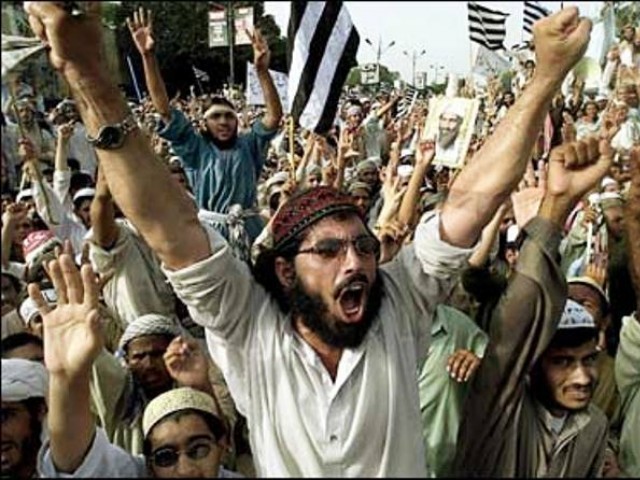
MULTAN: “Ahmadis are part of a Jewish conspiracy against Islam and Pakistan and are responsible for sectarianism and terrorism in the country,” claimed religious leaders at the conclusion of a three-day-long Khatme Nabuwwat conference in Chiniot.

Over 450 processions and gatherings were organised in Punjab to mark the Khatme Nabuwat declaration by the Supreme Court that declared Ahmadis as ‘non-Muslims’ in 1974.

“The option available for Ahmadis is to accept Islam and abandon conspiracies against Muslims and Pakistan,” speakers at the conference said.

The government should keep a check on Ahmadis purchasing property in Pakistan, they suggested, stressing on “the need to declare Ahmadis as terrorists.”

Heralding the “sacrifices of the right-wing parties to define Islam and declare Ahmadis as minorities,” speakers at the conference vowed to “protect the religious identity of Pakistan in the world.”

In a “message” to the Ahmadis, the speakers said they should either “accept Islam” or their legal status as minorities in Pakistan and “obey” the constitution of Pakistan.

On an ending note, the speakers vowed to “continue [their] struggle against Ahmadis across the world.”

Published in The Express Tribune, September 10th, 2011.

Copyrighted © 2011 The Express Tribune News Network
URL: http://tribune.com.pk/story/249286/khatam-e-nabuwat...pakistan/

Ahmadis criticise govt inaction over targeted killings

Express Tribune, Pakistan
Pakistan
Punjab
Ahmadis criticise govt inaction over targeted killings
By Shamsul Islam
Published: September 10, 2011
Ahmadis say their community is facing dire threat. PHOTO: EXPRESS/FILE
FAISALABAD: Ahmadis are completely at the mercy of assassins who are targeting and killing them with impunity and police and other law-enforcement agencies were doing nothing to thwart their actions, the secretary of the Faisalabad chapter of the Jama’at Ahmadiyya said in a letter sent to foreign missions and top government functionaries.

Syed M Mahmood, the secretary of the organisation’s general affairs, said that he had “sent a letter (containing) forewarnings regarding the plight of the Ahmadiyya community in Faisalabad”, but no action was taken on it.

The letter was dispatched to the Human Rights Watch, the Asian Human Rights Commission, US embassy in Islamabad, the British High Commission and the embassies of France, Germany, Belgium, Canada, Norway, Sweden and Denmark, Islamabad.

He said that several victims, including Laeeq Ahmed, who was a member of the local chapter of the Jama’at Ahmadiyya, were brutally murdered in public, but police was trying to look the other way.

Citing the example of Laeeq Ahmed’s murder, he said: “It is shocking to know that neither the empties in the car were taken into the possession by the police nor the car was examined.”

According to him, another Ahmadi, Naseem Ahmad Butt became the victim of a targeted killing, but his killers were “roaming free” and asking about the whereabouts of his brother.

He reminded that “both the killings (occurred) in the constituency of the controversial Punjab law minister, Rana Sanaullah, who sides with the extremist groups”.

Expressing his frustration, he said: “We cannot continue to see our dear ones murdered with impunity. I have no option but to send this report also to world organisations on human rights, to different embassies, to show them the disintegration and complete collapse of law and order in Punjab. We (fear) that this (city) might become a second Karachi.”

This letter was also sent to the governor of Punjab, the provincial home secretary, additional secretary (home), IG police, additional IG, RPO Faisalabad, CPO Faisalabad, SSP (Operations) Faisalabad and DCO Faisalabad,

In another letter sent to foreign missions in Islamabad and law-enforcement authorities, the Ahmadiyya community also protested over what they termed forced rustication of three female students from the National Textile University (NTU) in Faisalabad because of their faith.

It was pointed out, “NTU Faisalabad has become the hub of…extremist and militant groups”.

“There has been a planned subversion of all the decent norms of an educational institution. The target has been the Ahmadiyya Community and the weaker Ahmadi female students”.

“So much so, that all the female students had to leave the NTU Faisalabad. Their educational careers were abandoned midway. Moulvis were imported (to the campus) who harangued the students against the Ahmadiyya Community in such an abusive language which defies definition”.

The letter pointed out, “The parents of the students have been approaching the rector of the NTU Faisalabad, but he showed his inability to control the situation”.

“Even the magazine of the NTU, Faisalabad, exhorts that all Ahmadis should be killed.

“This is not a textile university, this is the killing factory of the Taliban.”

“This university, hotbed of extremism, should have no affiliation with any other educational institutions in the world. Otherwise, the name of other decent educational institution will be sullied.”

Published in The Express Tribune, September 10th, 2011.

Copyrighted © 2011 The Express Tribune News Network
URL: http://tribune.com.pk/story/249311/extremist-groups...killings/

Friday, September 9, 2011

Communal violence: Police clueless in attack on Ahmadi man

Express Tribune, Pakistan
Pakistan
Punjab
Communal violence: Police clueless in attack on Ahmadi man
By Rana Tanveer
Published: September 9, 2011
Ferozewala police have registered a FIR against three assailants.
LAHORE: The police said on Thursday it had no clue about the attackers who shot and injured an Ahmadi man in an attack which carried communal overtones on Wednesday.

Ferozewala police have, however, registered an FIR against three assailants for attacking Basheer Ahmed. No one has so far been arrested.

The complainant, on whose behalf the FIR was lodged, is the victim’s nephew, Zahid, who is not an Ahmadi. Local Ahmadis expressed reservations over the matter, saying that he ‘will favour the probable suspect’ in view of his beliefs.

Investigation officer, Assistant Sub Inspector Ishrat, talking to The Express Tribune also said that the complainant “is not cooperating with the investigation”.

A local Ahmadi questioned the complainant’s sincerity and said: “How can a Barelvi man take action against an accused of the same faith?”

He said that two witnesses identified in the FIR were also not Ahmadis.

The complainant, Zahid, told The Express Tribune that at this stage, he was trying to save his uncle’s life and he would take care of the assailants.

He said it was obvious his uncle was attacked for his beliefs, adding that he would take action against the attackers.

Talking about the FIR, he said he had clearly mentioned in the application that his uncle was an active member of the Jamat-e-Ahmadia and the local operatives of Khatam-e-Nabuwat organisation had attacked him with intent to kill.

He said that two years ago, an accused had confessed before the Shafiqabad police that a local office bearer of the Khatam-e-Nabuwat organisation, Qari Muhammad Ahmed Fareedi, had paid him to kill his uncle.

He said he had not mentioned this in the FIR. He added he wanted to offer “a reasonable cash prize to the person who will tell him about the real attackers”.

Published in The Express Tribune, September 9th, 2011.

Copyrighted © 2011 The Express Tribune News Network
URL: http://tribune.com.pk/story/248262/communal...ahmadi-man/

Thursday, September 8, 2011

Ahmadi shot, injured on ‘Khatam-e-Nabuwat Day’

Express Tribune, Pakistan
Pakistan
Punjab
Ahmadi shot, injured on ‘Khatam-e-Nabuwat Day’
By Rana Tanveer
Published: September 8, 2011
Relatives allege he was targeted for his religious beliefs. NEFER SEHGAL/FILE
LAHORE: A man, who was later identified to be an Ahmadi, was critically injured after being shot three times in Ferozewala of Sheikhupura district on Wednesday just as religious parties observed the ‘Tahafuz Khatam-e-Nabuwat Day’.

Relatives of the victim, Chaudhry Basheer Ahmed, alleged that he was targeted because of his religious beliefs as a result of the intensification of a hate campaign against Ahmadis in the area.

Tahafuz Khatam-e-Nabuwat Day marks the anniversary of the day in 1974, when Pakistan’s parliament declared Ahmadis to be a non-Muslim minority.

Basheer Ahmed was shot once in his abdomen and twice in his neck with a 30-bore pistol at close range.

Naseer Ahmed, one of Basheer’s relatives who witnessed the attack, said that they were “sure the attacker was one of the local activists of Khatam-e-Nabuwat”, adding that the murder attempt was made near the local chapter of the Khatam-e-Nabuwat office. He said that the assailant was a bearded man between 18 to 20 years of age.

Two armed men had attacked and killed a 70-year-old man in his shop in the presence of his sons in the same area. According to the prosecution, he was killed for his beliefs.

Naseer Ahmed said Ahmadis in Ferozewala and elsewhere are under constant threat because of an ongoing hate campaign.

SHO Ferozewala police station Faisal Abbas Chadhar said that relatives of the victim had “neither given an application, nor did they want to take legal action”.

He said that the attackers and their motive were still unknown.

He said that further legal action would be taken once an application for an FIR was filed.

Spokesperson of the Jamat-e-Ahmadia, Pakistan, Saleemudin criticised the government for supporting such events, and said that the government should, instead, take steps to stop such hostile campaigns.

Published in The Express Tribune, September 8th, 2011.

Copyrighted © 2011 The Express Tribune News Network
URL: http://tribune.com.pk/story/247482/ahmedi-shot...day/

Monday, September 5, 2011

A most dangerous place

Express Tribune, Pakistan
Opinion
Editorial
A most dangerous place
By Editorial
Published: September 5, 2011
Ahmadis may be killed with impunity because their persecution by a significant segment of society is ignored by the state and the government of the day. PHOTO: REUTERS
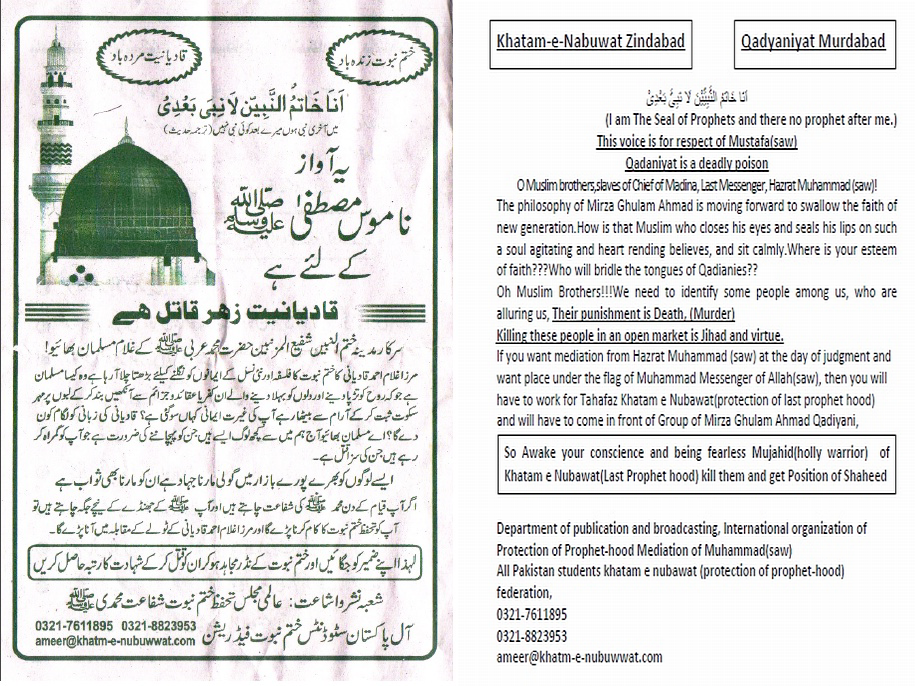
The All-Pakistan Students Khatam-e-Nabuwwat Federation has killed another Ahmadi in Faisalabad, the city where the Barelvi school of thought has been allowing itself to become dangerously aggressive. Naseem Ahmad Butt was shot to death by four youths calling him wajibul qatl (worthy of being killed). The wajibul qatl verdict was given in a pamphlet distributed in the city earlier by the authoritative-sounding Aalmi Majlis Tahaffuz Khatam-e-Nabuwwat and the All-Pakistan Students Khatam-e-Nabuwwat Federation, Faisalabad. The police were informed but they did nothing, feeling safe behind their routine categorisation of the crime as ‘blind murder’.

The state of Pakistan must look carefully at this pattern of behaviour. Ahmadis may be killed with impunity because their persecution by a significant segment of society is ignored by the state and the government of the day. Then comes the turn of the Shias and other sects who are not considered outside the pale of faith but who are still, nonetheless, target by extremist fellow Muslims who consider their views heretical. Faisalabad has been dominated for a long time by the Ahle Hadith and Deobandi schools of thought but the the Barelvis are also gaining in influence, and they are not to be left behind in their persecution of the Ahmadi community. This is ironic since the Deobandis, for instance, don’t see eye-to-eye at all with the Barelvis on most faith-related matters and both hurl invective, and sometimes much more, at one another.

The Punjab government has to answer for the deaths that have happened under its rule and this includes not just Ahmadis, but also others, including several Christians, all killed by sectarian and jihadi outfits, primarily in Lahore last year. In the public eye, the view that the Punjab government may perhaps have a soft spot for jihadis is reinforced when its law minister meets and campaigns, prior to a by-election, with the leader of a banned sectarian outfit. This could be part of its strategy to gain a foothold in southern Punjab, since long a PPP stronghold, but such a tactic could be lethal for the province’s population of vulnerable people. In the process, Pakistan and its social contract are dying a slow death. The pamphlet mentioned above lists 50 Ahmadis who have to be killed in order to “achieve entry into Paradise”. It says the killers will be given a place under the flag of Prophet Muhammad (pbuh) in the chosen place of luxury in the hereafter. The youths of Faisalabad, blighted by loadshedding and religious hatred, will now betake themselves seriously to the transaction of achieving precisely this, while the state sits by and does nothing. Quite shockingly, the Faisalabad police chief says he has no information about the pamphlets which brazenly name the threatening organisation. The fact of the matter is that the Punjab police is but a reflection of society in general, and is filled with people who have nothing but hatred for those from minority communities, or even for those who stand up in support of them. In Karachi, there is the Sunni Tehreek which is far more aggressive.

In June this year, an Ahmadi place of worship was threatened with assault from a nearby mosque. The threat came from a cleric who knew that his outfit was weaponised and could kill just as easily and with as much impunity as the Lashkar-e-Jhangvi. The Barelvis were never taken to jihad by the Pakistani state but they have made up in virulence by embracing two laws that have brought infamy to Pakistan: the Second Amendment apostatising the Ahmadis; and the Blasphemy laws.

The state of Pakistan, after having declared the Ahmadi community as non-Muslims, has to protect them the way it is committed, under law and religion, to protecting minority communities. Its failure in Faisalabad to come to the help of the targeted Ahmadis is symptomatic of the terminal phase of its existence. Hatred and extremism are becoming the hallmarks of the sociology of the state.

Published in The Express Tribune, September 6th, 2011.

Copyrighted © 2011 The Express Tribune News Network
URL: http://tribune.com.pk/story/245319/a-most-dangerous-place/

Suspected hate crime: Ahmadi man shot dead in Faisalabad

Express Tribune, Pakistan
Pakistan
Suspected hate crime: Ahmadi man shot dead in Faisalabad
By Shamsul Islam
Published: September 5, 2011
The minority has been under constant attack even though it keeps a low profile. DESIGN: SAMAD SIDDIQUI
FAISALABAD: In a suspected incident of hate crime against minorities, unidentified attackers killed an Ahmadi man in Faisalabad late Saturday night.

Naseem Ahmad Butt, 55, was shot dead by four men as he lay sleeping inside his house in Muzaffar Colony. According to his brother Khalid Pervez Butt, at about 1am on Saturday, the attackers entered by climbing over the walls.

“The boys were between 20 and 25 years old. Three of them kept a watch on the door as one kicked my brother. When he was awake, the killer said ‘you are Ahmadi and liable to be killed’,” Khalid told The Express Tribune.

The attacker then shot Naseem in the chest while another bullet ruptured his kidney, Khalid said. “My brother was lying in a pool of blood when we saw him. The sound of him crying woke us up.”

A car and a bicycle were used in the attack, Khalid said, and the assailants fled from the main gate of the house.

The family rushed an unconscious Naseem to the Divisional Headquarter Hospital, where he succumbed to his bullet wounds at 8.30am on Sunday.

Naseem, who worked at a power loom factory, leaves behind his widow, four daughters and a son.

Constant threat

According to Khalid, Naseem and other members of their family were under constant threat by a group of extremists who had repeatedly threatened to kill them for their faith.

(Read: Ahmadis in Karachi – Pulpit pounding, barricades, prayers but no peace)

“My first cousin Naseer Butt was also killed in a similar fashion last year. Police has made no effort to trace his killers and the case has been swept under the carpet by being declared ‘blind murder’,” Khalid said.

However, in hope of assistance, Khalid has registered a case with the Samanabad Police for the murder of Naseem. A FIR under Section 302 of the Pakistan Penal Code has been filed.

‘Hate crime’

An advocacy group based in Faisalabad has called Naseem’s murder hate crime and says it has contacted provincial and local police officials but in vain.

Over the past two years, as many as six Ahmadis have been killed in Faisalabad but no killer has been brought to book, said secretary of the secretary of the Faisalabad chapter of the Umoor-e-Aama Jama’at Ahmadiyya Mahmood Ahmad Shah.

“We have time and again contacted the Faisalabad police chief and other senior police officials throughout Punjab that a group of fanatics are threatening Ahmadis in the area.

A list of these names is being publicly circulated,” he said.

In June, Ahmad wrote an email to the province’s home secretary and police chief and Faisalabad’s regional police officer, following the distribution of pamphlets in the city that not only called Ahmadis wajibul qatl (liable to be killed) but also exhorted people to kill them to achieve martyrdom.

(Read: Targeting minorities – No friend to Ahmadis in Faisalabad)

The Punjab government’s record of protecting Ahmadis has been dismal.

In May last year, more than 88 people were killed in provincial capital Lahore when gunmen opened fire at two separate places of worship and, one year on, little progress has been made by investigators.

Published in The Express Tribune, September 5th, 2011.

Copyrighted © 2011 The Express Tribune News Network
URL: http://tribune.com.pk/story/245094/suspected...faisalabad/

Sunday, September 4, 2011

Caving in to pressure: Ahmadi place of worship demolished

Express Tribune, Pakistan
Pakistan
Caving in to pressure: Ahmadi place of worship demolished
By Owais Raza
Published: September 4, 2011
Destruction came in the wake of local demonstrations, minority community lodges peaceful protest. PHOTO: AFP/FILE
LODHRAN: The municipal administration has razed to the ground an under-construction Ahmadi place of worship in Jannat Wala, a village on the outskirts of Lodhran, after clerics staged protests.

Construction was suspended after labourers working at the site received death threats and some were forced to flee the village to save their lives. Muslim clerics pressurised the district government to take action when they came to know about the new place of worship. They organised processions against the government in surrounding villages and protested against what they deemed to be its ‘unwillingness to check the propagation of the Ahmadi religion.’

The government, however, denies that the destruction had anything to do with anti-Ahmadi sentiment in the community. The Tehsil Municipal Administration (TMA) razed the building on the orders of DCO Lodhran, Ghulam Fareed. More than 60% construction on the double storey building had been completed when it was torn down.

“The construction was not authorised nor was the building’s design approved by TMA which is why we have demolished it,” Fareed told The Express Tribune. “There is no other reason.”

It was declared as a store according to the DCO. Amir, a member of the Ahmadiya community, said they were not even given time to approach the courts. TMA officials said they had failed to follow the legal procedure which prompted the action.

Members of the Ahmadi community said they had protested peacefully before the DCO. This was confirmed by Maqbool Khalid, a journalist. Most of them refuse to come on record due to fear of death threats and live in fear of Ahle-Sunnat wal Jamaat members. They have been living in Adaa Zakheera, Kahroar Pakka, Dunyapur, Lodhran and Qutubpur. They have six places worship in the area.

Published in The Express Tribune, September 4th, 2011.

Copyrighted © 2011 The Express Tribune News Network
URL: http://tribune.com.pk/story/244500/caving-in...demolished/

Friday, July 15, 2011

In Ahmadis’s desert city, Pakistan closes in

Reuters, USA
Edition US
In Ahmadis’s desert city, Pakistan closes in
Rabwah
By Myra MacDonald
RABWAH, Pakistan | Fri Jul 15, 2011 9:04am EDT
(Reuters) — At the office of what claims to be one of Pakistan’s oldest newspapers, workers scan copy for words it is not allowed to use – words like Muslim and Islam.

“The government is constantly monitoring this publication to make sure none of these words are published,” explains our guide during a visit to the offices of al Fazl, the newspaper of the Ahmadiyya sect in Pakistan.

This is Rabwah, the town the Ahmadis built when they fled the killings of Muslims in India at Partition in 1947, and believing themselves guided by God, chose a barren stretch of land where they hoped to make the Punjab desert bloom.

Affluent and well-educated, they started out camping in tents and mud huts near the river and the railway line.

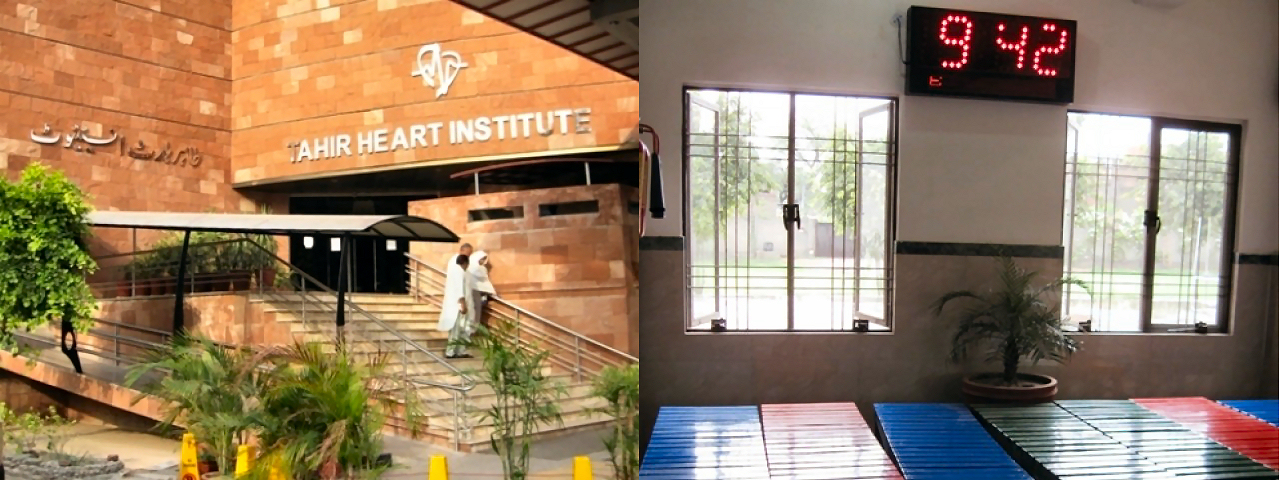
Now they have a town of some 60,000 people, a jumble of one- and two-storey buildings, along with an Olympic size swimming pool, a fire service and a world class heart institute.

Yet declared by the state in the 1970s to be non-Muslims, they face increasing threats of violence across Pakistan as the country strained by a weakening economy, an Islamist insurgency and internecine political feuds, fractures down sectarian and ethnic lines.

“The situation is getting worse and worse,” says Mirza Khurshid Ahmed, amir of the Ahmadi community in Pakistan. “The level of religious intolerance has increased considerably during the last 10 years.”

The town, renamed Chenabnagar by the state government since “Rabwah” comes from a verse in the Koran, is now retreating behind high walls and razor wire, awaiting the suicide bombers and fedayeen gunmen who police tell them are plotting attacks.

Last May, 86 people were killed in two Ahmadi mosques in Lahore, capital of Punjab; others were attacked elsewhere in the province. Many fled to Rabwah where the community gives them cheap housing and financial support.

Among them is 15-year-old Iqra from Narewal, whose shopkeeper father was stabbed to death last year as the family slept. “I was sleeping in another room when my father was attacked,” she begins in a small voice, pulling a black scarf across her face to cover her mouth in the style of Ahmadi women.

“The attacker wanted to kill all the Ahmadis in Narewal,” her brother Zeeshan continues. “My elder brother tried to help my father and he was stabbed and wounded too.”

Later police found the attacker hiding in a mosque. He had believed the mullahs when they told him that all Ahmadis were “wajib ul qatl”, or deserving of death.

BATTLEGROUND FOR POWER

The Ahmadis follow the teachings of Mirza Ghulam Ahmad, who in the town of Qadian in late 19th century British India called for a revival of a “true Islam” of peace and justice. His teachings were controversial with Muslims and Christians alike.

He argued that Jesus did not die on the cross but escaped and travelled to India and was buried in Kashmir. And he claimed to be the metaphorical second coming of Jesus, destined to put Muslims back on the true path.

Many Muslims were offended by the suggestion he had come as a prophet, breaching a basic tenet of Islam that there can be no prophet after Mohammad, whose teachings are believed to be based literally on the word of God, perfect and therefore final.

Yet his call for peace, hard work, temperance, education and strong community bonds resonated, and over the years the proselytizing movement acquired millions of followers worldwide.

At home, however, their history has been intimately bound up in Pakistan’s own descent from its relatively optimistic birth.

Lacking a coherent national identity, it has become a battleground for competing political, religious and ethnic groups seeking power by attacking others.

“The mistake of the Ahmadis was that they showed their political strength,” said an Ahmadi businessman in Lahore.

Better education he said, meant they obtained good positions in the army and civil service at first; strong community bonds made them an influential force in politics up to the 1970s.

But they also made an easy target for the religious right who could whip up anti-Ahmadi sentiment for political gain.

Ahmadis follow two different schools of thinking, but will argue, often with detailed references to the Koran in both Arabic and English, that they do not dispute the finality of the Prophet Mohammad. Their erudite theological arguments, however, had little chance against the power of the street.

After anti-Ahmadi violence, they were declared non-Muslims in 1974. In the 1980s, their humiliation was completed when legal provisions barred them from associating themselves with Islam, for example by using the call to prayer or naming their place of worship a “masjid” or mosque.

“You can say you don’t consider me to be a Muslim but you can’t force me to also say I am not a Muslim,” complains Ahmed, the amir, the pain clear in his voice.

Yet in the newspaper office in Rabwah, a white board displays the words they are not allowed to use – they could be accused of blasphemy, which carries the death penalty.

SPREADING TO OTHER SECTS

Many Pakistanis, if you ask about treatment of the Ahmadis, shrug it off – it’s an old story, they say, dredged up by westerners who do not appreciate the importance of the finality of the Prophet.

Yet there are signs the attitudes first directed toward Ahmadis are spreading to other sects. In a country which is majority Sunni, and where insurgents follow Sunni Islam, Shi’ites and even Sufi shrines have been bombed.

A 2010 study by Pakistani analyst Ayesha Siddiqa of students in elite colleges found that while 60 percent said the government was right to declare Ahmadis non-Muslims, a sizeable 18 percent believed Shi’ites were also non-Muslims.

These and other findings led her to conclude that radicalism was growing even among the educated youth – it is often, wrongly, blamed on poverty – which in its extreme form could lead people into violence.

Their tendency, she wrote, to see different groups with an unquestioned bias, she wrote, “especially coated with religious overtones or padded with religious belief prepares the mind to accept the message from militant organizations.”

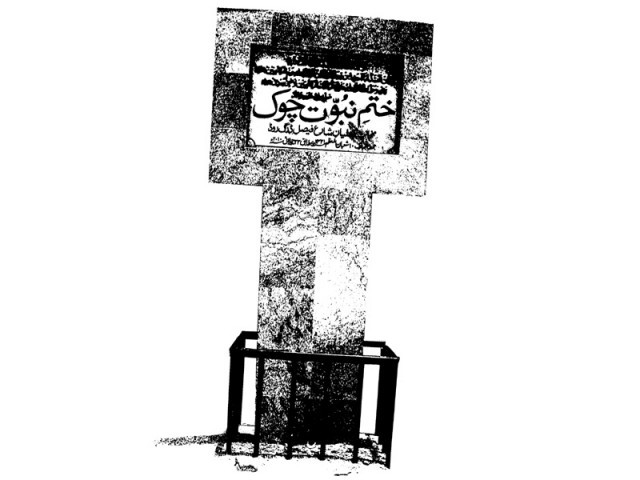
In the nearest town to Rabwah, the central square as been renamed “Khatme Nubuwwat” Chowk, meaning the finality of the Prophet. Beyond, low jagged hills spike up above the dusty land, the summits of much bigger rock formations below the surface.

Many of the Ahmadis had been active supporters of the movement which created Pakistan and when they first came here they were inspired by a verse in the Koran, describing “an elevated land of green valleys and springs of running water.”

Now they are surrounded by a very different country.

Rabwah itself is open to the outside world – despite the high walls guarding individual houses, it is not a walled town.

“Under the circumstances we try to take the best measures we can to protect ourselves,” says the amir. “But what we can do is very limited. We don’t have a mindset or training for that.

And in any case, he adds, “How many people can leave Pakistan or Rabwah?“

Tuesday, July 12, 2011

Ahmadis under attack: In Rabwah, every house has a story to tell

Express Tribune, Pakistan
Pakistan
Ahmadis under attack: In Rabwah, every house has a story to tell
By Saba Imtiaz
Published: July 12, 2011
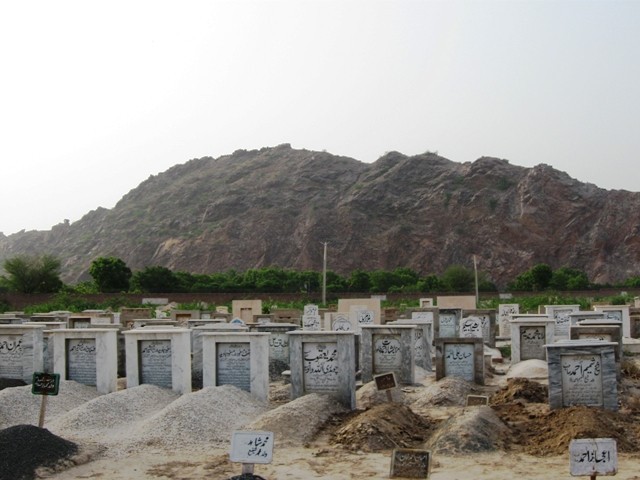
The tombstones in Rabwah's graveyards tell a macabre tale. PHOTO: SABA IMTIAZ/EXPRESS
RABWAH: The tombstones in Rabwah’s graveyards tell a macabre tale. The graves of the men killed in the attacks on Ahmadi places of worship in Lahore – retired army officers and young factory workers among them – rest with the dozens killed due to the persecution of the Ahmadiyya community.

The graveyards have been defiled in the past as locals have released animals in the graveyards or trod on the graves.

Other tombstones in a row show how entire families were systematically killed.

“If you knock at any door in Rabwah, you will find a story of persecution,” says Amir Mahmood, who works at the Jamaat Ahmadiyya’s press section.

One door leads to a prominent Ahmadi family from Mardan. Despite years of harassment, lawsuits, imprisonment and a kidnapping, the family’s men vowed to stay in Mardan. Four of them were gunned down. “After my father’s assassination I told my husband to be more careful. But he wasn’t scared,” says Rabia Mehmood, who was expecting her first child when her husband was killed.

Another door leads to Bushra Siddiqui’s family. She lives with her two widowed daughters, whose husbands were killed because of their faith.

Siddiqui’s daughter Asma Ahsan says her husband was praying at Darul Zikr in Lahore when it was besieged last May. She received a phone call from him, informing her that he was safe. Later, she learned that he had been killed. To add insult to injury, several neighbours did not offer condolences.

While the May 2010 carnage highlighted the systematic campaign of violence against Ahmadis, it did not end there. Three days later, a man entered Naimatullah’s house in Narowal district and stabbed him to death. His daughter Sidra recalls waking up to an “awful noise”. She rushed to the courtyard, where her dying father lay. The assassin was caught a few hours later, roaming around a seminary after Fajr prayers. He was reportedly ‘inspired’ to kill Naimutallah after being incited by local clerics.

“Nobody is safe in this country,” says Malik Munawwar Ahmad, the 78-year-old head of Darul Ziafat, which carries out the decades-old tradition in the community of housing and feeding travellers.

For Ahmadis, every day brings forth new incidents of harassment. In Vehari, clerics recently called for the Kalima to be erased from Ahmadi places of worship. The Jamaat’s representative in Vehari says the threat – from the Khatam-e-Nabuwwat movement and the Majlis-e-Ahrar – emanated from a land dispute over an Ahle Hadith mosque, which was unrelated to the Ahmadiyya community. He said the community would not give in to the clerics’ threats and would wait for the area administration’s decision.

“There was always opposition to us, but the 1974 and 1984 amendments created a storm,” says Ahmad. “But our silent protest is being recorded with God, and He will announce His decision.”

Published in The Express Tribune, July 12th, 2011.

Copyrighted © 2011 The Express Tribune News Network
URL: http://tribune.com.pk/story/207776/ahmadis...to-tell/

Monday, July 11, 2011

Thinking proactively: Ahmadis have found their own solutions in Rabwah

Express Tribune, Pakistan
Pakistan
Thinking proactively: Ahmadis have found their own solutions in Rabwah
By Saba Imtiaz
Published: July 11, 2011
Over 80% patients at the Tahir Heart Institute are not from community. PHOTO: SABA IMTIAZ/EXPRESS
RABWAH: When a fire broke out at a building in Chiniot, the district administration called the rescue service in Rabwah for help.

The irony that the Chiniot building was owned by a member of the Khatam-e-Nabuwwat movement is not lost to Rabwah’s rescue services. A former tae kwon do instructor with the Pakistan Army, Nadir Saidain says the fire service was started because the district administration refused to assist in rescue operations in Rabwah town.

The service, like many others in the area – such as a 200-bed guest house – is free. Other facilities, including a sports centre and swimming pool, are heavily subsidised.

Despite the ostracism of Ahmadis in mainstream society, the community’s facilities draw people of all faiths to Rabwah.

The gleaming 80-bed Tahir Heart Institute is one example. Over 80 per cent of its patients are not Ahmadis. Its head, Dr MMH Nuuri, says the hospital does not have any discriminatory policies. Admission forms do not ask for the patient’s religion, and preaching in the premises is not allowed.

Up to 300 people are treated daily, many of whom hide details of their visits. According to Dr Nuuri, “I overheard a patient talking on the phone and telling someone he was under treatment in Sargodha. The patient later said, ‘Sorry doctor, but if people know I am in Rabwah I will not be spared.’”

Treatment is free, but those who can afford it contribute towards the cost. Referrals come in from cardiologists across Pakistan, and it has attracted doctors from abroad to practice for short stints.

“Our doctors have to be committed towards their profession,” Dr Nuuri said. “Our philosophy is that the patient is always right and doctors have to abide by their wishes.”

The hospital is one of many in Pakistan built by the Ahmadiyya community. Healthcare, along with other areas that would normally be the domain of the district’s administration – such as security and sanitation – are all managed by the community, since the administration is lax in its duties.

Reminders of the government’s negligence are visible all over Rabwah. The community’s schools, which were nationalised in the 1970s, were never returned. Tahir Ahmad, who handles education projects, maintains a list of government officials he has met since 1996 to lobby for the return of the schools to the community’s control. Despite complying with the government’s requirement to deposit an amount comprising fees and schools’ staff allowances for six months to one year, the government refuses to denationalise the schools, citing “law and order” as a reason.

Ahmad recalls a conversation with then-outgoing Punjab Chief Secretary Kamran Rasool. “Young man, you are an Ahmadi,” Rasool reportedly said. “You are not going to get these schools back.”

The community has built new schools and provides scholarships and soft loans. As a result, Rabwah reportedly has a literacy rate of over 90 per cent. One such school – with a modern lab, well-stocked library and spacious classrooms – charges a monthly fee of Rs25.

The schools provide a safe environment for students who would be harassed elsewhere. Young graduates told The Express Tribune about being shunned for their faith or told to ‘join the right way’. One student who was asked to leave his hostel because of his faith has not recovered from the incident as yet, and is reluctant to complete his education.

Even though Ahmadi families were discriminated against during last year’s floods, the community has provided housing and aid to families – irrespective of their beliefs – in flood-affected areas. “We were taking relief goods to Rajanpur once,” recalls a representative. “We were stopped on the way and asked, “You are taking relief goods to Ahmadis? Don’t you know they are non-believers?”

Published in The Express Tribune, July 11th, 2011.

Copyrighted © 2011 The Express Tribune News Network
URL: http://tribune.com.pk/story/207111/thinking..rabwah/

Tuesday, May 31, 2011

Monthly Newsreport - Ahmadiyya Persecution in Pakistan - April, 2011

Assault on an Ahmadi

Sahiwal: Malik Majeed Ahmad Khan is the General Secretary of the Ahmadiyya community at the district level. His neighbor is a former student of a madrassah, and bears a grudge against Ahmadis.

A few days ago he came to Mr. Majeed’s shop and used profanities against him. Mr. Majeed kept his calm.

The next day, he came over again and physically attacked Mr. Majeed Khan who was injured. The police arrived at the scene and booked the attacker.

Ordeal of an Ahmadi principal

Lahore; April 2011: Mr. Nafeer A. Malik is serving as principal at the Quadi-e-Azam Law College, Lahore. Students wrote a letter to the director of the college demanding the removal of Mr. Malik for reciting the Kalima as an Ahmadi. Extracts from their letter are translated below:

… During the lecture the principal recited the Kalima and said that had he been the judge and his own brother had committed the murder, he would have given him capital punishment. We were surprised to hear the principal recite the Kalima as he is a (Qadiani/Mirzai) non-Muslim.
This injured our religious feelings that he recited the Kalima as a Qadiani and tried to deceive us. …
We are jointly writing this letter under oath. Take this matter seriously and relieve him from his duties. If you do not dismiss him within a few days, we would be compelled to protest against and take legal action in cooperation with all religious and political parties and bar councils. We would have our complaint registered against the pricipal, under PPC 298-C (copy attached) and have him punished by the court. This will affect the reputation of your colleges. …

Sectarian activities in Jhang

District Jhang is known for its sectarian and extremist culture. This has been promoted by mullas who reap political dividends from this environment. Their enmity is often directed against Shias. Gangs like Lashkar Jhangvi often have members and supporters in the federal and provincial capitals. Ahmadis are also considered fair game by Wahabi, Deobandi and even Brelvi mullas.

A conference was held on March 25, 2011 in Jamia Mahmudia, Jhang in the name of safeguarding the Honour of Prophethood and the Companions of the Prophet. Maulvi Muhammad Ahmad Ludhianwi, who is known for his extremist views and is a leader of a banned organization, spoke at the occasion on anti-Ahmadiyya issues. Other mullas also agitated the audience against Ahmadiyyat.

Another conference was held in Mohallah Sheikh Lahore on April 12, 2011. Maulvi Ludhianwi was again there along with Maulavis Masud-ur-Rahman, Kabir Ali and Abdur Rahim. They all spoke against Ahmadis, and told the audience, inter alia:

*
Qadianis have close links with Jewish organizations and with Black Water of the U.S.
*
Rabwah is a safe house for people like Raymond Davis.
*
Rabwah’s land was on lease which has expired. The government should have the town vacated.
*
Qadianis are Kafir; implement a complete boycott against them.
*
You agree to their extermination; so, let’s move and exterminate them. etc. etc.

Suspects found near Ahmadiyya mosques

Mugalpura, Lahore

April 15, 2011: A man approximately aged 30, came to the Ahmadiyya mosque in Mugalpura on April 15, 2011 at 12:45 before the Friday sermon. He came on a motorbike and stopped at a nearby shop. He remained there for 10 – 15 minutes. Ahmadi personnel on duty found him suspicious and asked the police constable on duty to check him. The police constable recovered a pistol (30 bore) and seven fully loaded magazines from him. The police took him to the police station.

Approximately 70 protesters, led by Naeem Butt and Saeed Butt, proclaimed offenders encircled the police station in the evening, blocked the road and demanded the release of the suspect. The police released him. However it is obvious that the more appropriate course of action would have been to carry out an investigation against him.

Karachi

April 15, 2011: Four men were located near the Ahmadiyya mosque in Karachi on April 15, 2011 during the Friday prayers. Their movements were suspicious and Ahmadi security personnel handed them over to the police.

Miscreants persist in their evil exertions

Rabwah: An incident was reported earlier, in August 2009, that mentioned the trouble makers of the Niazi family of the Muslim Colony who precipitated a law and order problem in Rabwah. The police intervened and calm was restored — at that occasion.

However, they are persistent in their mischief. Mr. Abdus Samad, an Ahmadi has reported over the past few months that he has been receiving obnoxious phone calls on his land-line. The caller thereafter shifted to SMS messages, and conveyed threats to his life and property. Mr. Samad was greatly disturbed on this and tracked the person harassing him.

It was confirmed that the miscreant is a member of the Niazi group. He was one of the gang who participated in the August 2009 incident in Rabwah. He has some link with Bhawana, a town approximately 35 kilometers from Rabwah.

Demands at a Khatme Nabuwwat conference in AJK capital

Muzaffargarh: April 21, 2011: Tehrik Tahaffuz Khatme Nabuwwat Azad Kashmir issued posters that it will hold its conference in the University Ground of Muzaffarabad on April 21, the Khatme Nabuwwat Resolution Day. They mentioned it in the poster that the President of the state, the Prime Minister and ‘all’ political leaders will also attend. The poster carried the following demands, inter alia:

*
April 29 should be celebrated officially in Azad Kashmir as Yom Khatme Nabuwwat and should be declared as official holiday.
*
Qadianis should be registered in Azad Kashmir as Non-Muslims with a separate identity.
*
Qadiani centers of apostasy that look like mosques should be destroyed without delay.
*
Qadiani daily, their TV channel MTA and all their literature should be banned.
*
A list of all Qadianis in government service should be promulgated, and those in the Education Department, in particular, should be fired.
*
All marriages between Qadianis and Muslims should be declared null and void.
*
Qadiani employees in the Nilum Jhelum Project should be fired, and the dismissed Muslim employees should be re appointed.

Such demands are made in a forum to be attended by the President and the Prime Minister AJK. This is not surprising as these high state functionaries have in past years attended these conferences where such conscienceless demands were made to them by the mullas who organized these conferences.

Khatme Nabuwwat conference in Jhelum

Jhelum; April 6, 2011: A major Khatme Nabuwwat conference was held in Syed Zamir Jafri Stadium, Jhelum on April 6, 2011. People reached there in numbers from different places like Mirpur (AJK), Chakwal, Rawalpindi, Gojar Khan etc. They raised anti-Ahmadiyya slogans while entering the city. This conference was advertised through banners and posters in the city.

As usual loathsome language was used by the speakers against the Ahmadiyya community. Several allegations like, Ahmadis are agents of Israel; 600 Ahmadis received training from the Israel army and are now recruited in the Pakistani army; Ahmadis are traitors of Pakistan etc, were made to infuriate and provoke the audience against Ahmadis.

Speakers demanded from the Government a Swat-like operation in Rabwah. They alleged that Ahmadis indulge in terrorist activities. They said that they would willingly shed their blood for the dogma of Khatme Nabuwwat. Approximately 5000 men participated in the conference. It started at about 22:00 and ended at 03:45 in the morning.

A conference in Chicha Watni

Chicha Watni; District Sahiwal: Anti-Ahmadi elements held their annual conference here in the memory of the ‘Martyrs’ of Khatme Nabuwwat Movement 1953. The event was organized by Majlis Ahrar Islam who were amply discredited for their leadership and role in the 1953 riots.

The number of ‘martyrs’ is quoted by the speakers, frivolously, ranging between 30,000 and 2,000. They have become conscious now, with experience, of the need for an agreed figure, so those who are discrete, often quote the figure of 10,000 martyred in 1953. However, the high level judicial inquiry that was held soon after the riots, counted the number of the rioters who died in various cities of the Punjab, as 37.

The conference was attended by Ata ul Muhaiman Bokhari, Hafiz Husain Ahmad and Zahid-ur-Rashidi among others.

Following are some of the statements and demands made in the conference:

*
Qadianis are playing a key role in destabilizing the country.
*
The writ of the state is being challenged in Rabwah. A (military) operation like that in Swat should be carried out in Chenab Nagar.
*
Sharia penalty for apostasy (death, according to the mulla) should be imposed.
*
Security should be provided to Muslims working in Rabwah.
*
Qadianis who do not accept the constitutional verdict of their non-Muslim status should be tried for treason. etc. etc.

Annual Report of HRCP

Islamabad; April 15, 2011: Human Rights Commission of Pakistan released its annual report and the daily Dawn reported its substance in a report on April 15, 2011. Extracts:

Govt personnel involved in rights abuse: HRCP
Islamabad; April 14: Describing 2010 as a particularly bad year for minorities, the Human Rights Commission of Pakistan (HRCP) has said the government did not even extend sympathies to the victims of faith-related killings.
All indications suggest that there are even worse times ahead, the report said.
Presenting the report, HRCP chairman Dr Mehdi Hassan said most of the human rights violations were being conducted by government functionaries, including police.
HRCP secretary general 1.A. Rehman said that in most of the religion-based killings the federal and the provincial government concerned even failed to express sympathy with victims. He referred to faith-based killing of 99 Ahmadis across the country.
The report highlighted a growing spread of hate literature and said it had been monitored that in the main-stream Urdu newspapers 1,468 news articles and editorials promoted hate, intolerance and discrimination against Ahmadis.
The report said little progress had been made in bringing to justice those involved in violence and arson against a Christian locality in Gojra in 2009.
About 25 per cent of the 102 Sikh families in Orakzai Agency were forced to leave their generations-old homeland after Taliban asked them to pay Jazia or leave the area. They were able to return after a military operation.
According to the Balochistan director of the federal human rights ministry, at least 27 Hindu families from the province sought asylum in India because of security threats.
Another 118 people were killed and 40 injured in 117 incidents of target killing in Balochistan, including 29 non-Baloch settlers and 17 members of the Shia Hazara community.
The bodies of 59 missing persons were found in Balochistan.

Mulla’s stranglehold

Lahore: The Pakistani state is apparently unmindful of the consequences when it frames religious laws to curry favour with mullas and the common man. All such laws can be seized upon by unscrupulous elements to gain advantage in ways that were neither intended nor visualized when framing those laws. A recent report in the Pakistan Today of April 21, 2011 demonstrates this phenomenon. Extract:

The Sunni Ittehad Council (SIC) will site Lahore DCO Ahad Cheema for blasphemy, Pakistan Today learnt on Wednesday. The decision was taken in a meeting of the SIC hierarchy in Lahore. A complaint in this regard will be submitted at a proper forum within two to three days. Blasphemy Laws will be invoked for the purported desecration of the Holy prophet’s (PBUH) name inscribed on hoardings, billboards and banners of the organization which were removed by the orders of the DCO from various parts of the city. The SIC alleged that the administrations shredded and flung to the ground posters carrying names of the Quaid-e-Azam, Allama Iqbal, Pir Syed Jamaat Ali Shah, Pir Mohyudeen Shah Golarvi and Maulana Shah Ahmad Noorani. A legal team headed by former federal deputy attorney general Mian Khalid Habib Elahi gave SIC leaders a detailed briefing on the implications of the legal process.

Mulla demands expulsion of Ahmadis from Pakistan

Faisalabad; April 5, 2011: Maulvi Faqir Muhammad the Information Secretary of the Aalami Majlis Tahaffuz Khatme Nabuwwat feels no pangs of remorse in demanding the expulsion of all Ahmadis from Pakistan for the reason that they interpret the Finality of Prophethood differently. The daily Aman of Faisalabad reported the following in headlines on April 5, 2011:

The business of fake prophethood should be closed down and Mirzais should be expelled from the country. — Maulvi Faqir Ahmad
Non-Muslim Qadianis, Ahmadis, Mirzais should be thrown out of Pakistan and told to run the business of fake prophethood in Gurdaspur, India.
The Blasphemy law is operative in Pakistan; the penalty for its violation is Death; as such, no denier of the End of Prophethood can claim to be a fake Prophet.
Faisalabad (Press Release) …

Threat to Ahmadis

Zubair Colony, Faisalabad

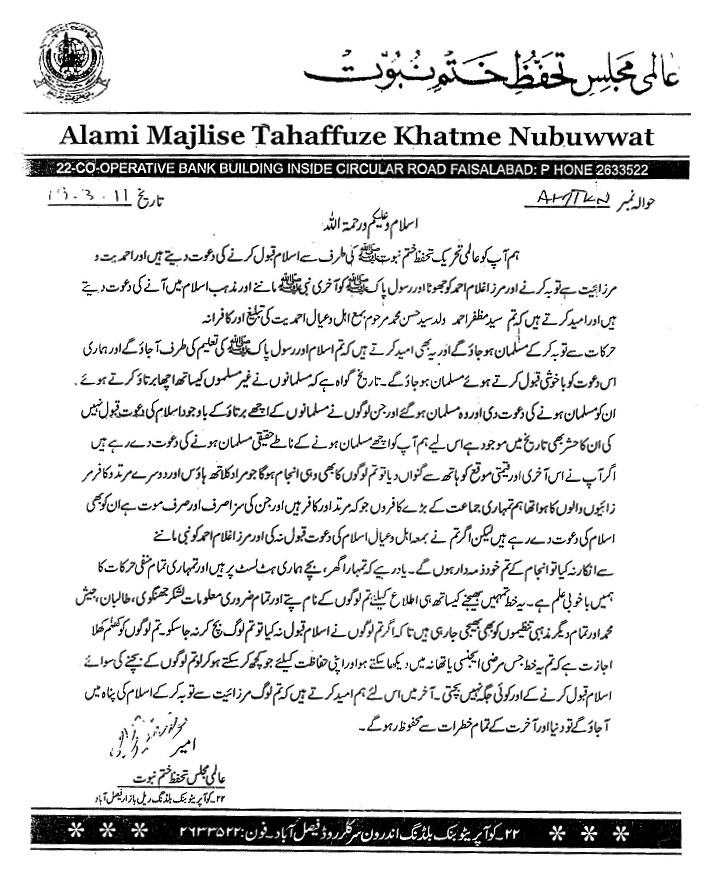
March 24, 2011: Syed Muzaffar Shah and Syed Mubashir Shah, two Ahmadi brothers live in Zubair Colony, Faisalabad. They received two identical letters from the Aalmi Tahaffuz Khatme Nabuwwat. These letters were written on the letter-head of the Aalmi Tahaffuz Khatme Nabuwwat and carried its address. These were signed by the Amir of this organization – Maulvi Hafeez Tarabi.

The letters carried threat to their lives if they did not recant and accept Islam; their end would be like that of owners of the Murad Cloth House, (Three members of the proprietors’ family were murdered in 2010). “Your names and addresses have been forwarded to Lashkar Jhangvi, Taliban, Jaish-e-Muhammad and other religious organizations for further action if you do not accept Islam. You are allowed to show this letter to any intelligence agency or police station to obtain security. You will not be spared. We hope that you will quit Mirzaiat and accept the shield of Islam to save yourselves from all the hazards of this life and the Hereafter,” the letter elaborated.

Copy of this letter is placed here. It carries the following address;

Alami Majlise Tahaffuze Khatme Nubuwwat
22- Co-operative Bank Building inside Circular Road Faisalabad: Phone 2633522
Threat letter from Majlis Thaffuz Khatame Nabuwwat, Faisalabad to an Ahmadi

Gojar Khan, Distt Rawalpindi

April, 2011: Khawaja Qamar-uz-Zaman S/O Khawaja Abdur Rahman owns a grocery store in the main market, Gojar Khan. He received a threatening letter that conveyed to him, “The punishment of apostasy is death. Stop preaching Mirzaiat at your shop, otherwise get ready for your end and be sacrificed for your false prophet. You are given fourteen days. Recant and accept Islam, or wait for your doom. This is the decree of destiny. Mirzaiat be perished. This is your last chance.”

Chak 299/JB, Distt Toba Tek Singh

April 10, 2011: Mr. Naseer Ahmad Mansoor, an Ahmadiyya religious teacher received a threatening call on his mobile at 17:45 to leave his village along with his children. “It would be very bad for you if you informed anybody,” he was told. He also received two text messages of the same kind. He received these messages and a call from mobile no. 0347-4048216. He registered his complaint in the City Police Station Gojra.

Chak 297/JB, Distt Toba Tek Singh

April 10, 2011: Mr. Samar Ahmad also received a threatening SMS on his mobile at 22:20 on April 10, 2011. He traced the sender which was identified as Imdadullah, distt Hafizabad.

Judge(r) Nazir Akhtar relocated

Lahore: Judge (Retd) Nazir Akhtar was known for his obscure and unjustifiable views at the Lahore High Court, years ago. However, he seems to have endeared himself to right-wing politicians. Although, he was not seen often in public, thankfully, but it is now learnt that he was still on the government pay roll in a top post as Ameen of the Punjab Baitul Mall Council in the province ruled by PML(N). He resigned recently for his own reasons, according to the daily DAWN of May 1, 2011. Some of his public pronouncements are interesting enough to be recalled:

Stay vigilant against those who are critical of the Blasphemy provisions. Every believer should be ever ready to play the role of Ghazi Ilm Din Shaheed to defend the honour of the Prophet.
The daily Nawa-i-Waqt, Lahore; February 5, 2001

While rejecting the plea for bail of an Ahmadi, president of a local community, who was booked for building a minaret and a niche in the Ahmadiyya mosque, Judge Nazir Akhtar observed:

The present case does not involve commission of an ordinary penal offence against one or more individuals but is an exceptional case involving commission of an offence against the society as a whole which may have national as well as international repercussions. I feel that interests of justice would be adequately met if the trial court is directed to conclude the trial within a period of three months… (and to) conduct proceedings on day to day basis.

This judge is known for his declared opinion that there is no need of any law to punish a man who is guilty of defiling the name of the Holy Prophet, and anyone who commits blasphemy against the Prophet can be dispatched to hell (The daily Jang, Lahore of September 5, 1999).

The following report was published in the Persecution of Ahmadis in Pakistan during 2000 — A Summary, quoting extracts from the national press:

A mulla in the garb of a judge

Judge Nazir Akhtar of Lahore High Court can be credited with openness if nothing else. He is frankly immodest and unblushing about his obscurantist opinions and views. He finds the rule, “a judge gives his opinion only through his judgments” too restrictive, so he continues to give vent lewdly to his spiteful and vulgar ideas in public. Three recent specimens from the national press:

The Ghazi Ilm Din Shaheed law is available to respond to any blasphemy against the Prophet; Justice Nazir Akhtar
The Daily Khabrain, Lahore: 28 August 2000
(Note: Ilm Din was a Muslim who in pre-partition days murdered a Hindu who committed blasphemy against the Holy Prophet. Judge Akhtar raises Ilm Din’s act of murder to the status of Law itself.)

Unity of the Muslim Ummah is essential to safeguard the doctrine of Khatme Nabuwwat. Ghazi Ilm Din law is available to deal with apostates; Justice Nazir Akhtar
The daily Insaf: 28 August 2000
(Note: The Judge, thus has openly instigated and urged the common Muslim to murder Ahmadis.)

We shall slit every tongue that is guilty of insolence against the Holy prophet; Justice Mian Nazir
The daily Din; 28 August 2000

Justice Nazir Akhtar is perhaps the only judge of a high court, in the whole world, who openly promotes terrorism on religious grounds. According to a press report, he has recently moved up in the ladder to become the senior most judge at Lahore High Court, after the Chief Justice.

The PML(N) party of Sharif brothers takes the credit for keeping track of such jewels from the judiciary and providing them employment from public purse, in top positions, even after their retirement.

Freedom House: Report on control of cyberspace

Karachi: Freedom House released a global study of internet freedom in 37 countries. It is titled: Freedom on the Net 2011. It assesses that successive Pakistani governments have “adopted various measures to exert some control over cyberspace and the sharing of information online.”

An excerpt from the Report, published in The Express Tribune on April 20, 2011 mentions an Ahmadiyya website:

“The report also highlights the block on the website of Lal Masjid and The Baloch Hal (which focuses on news from Baluchistan). However, it says the website of the World Sindhi Institute is blocked, which was accessible in Pakistan at the time of filing this report. Other websites to which access has been blocked off and on include thepersecution.org (focused on issues of the Ahmadiyya Community.)”
“It highlights that “by contrast, Facebook and Twitter postings by banned Islamic groups such as Hizbut Tahrir, including comments inciting violence against the Ahmadi religious minority, have been allowed to circulate with few restrictions.”

Ahmadis behind bars

Four Ahmadis, Mr. Naseer Ahmad, Mr. Ameer Ahmad, Mr. Ameen Ahmad and Mr. Shahid Ahmad of Lathianwala have been wrongfully charged for murder in district Faisalabad with FIR No 682/12.09.2011. A passerby was killed during an exchange of fire between Ahmadis and non-Ahmadis. The fire-fight broke out because Ahmadis had to defend themselves against perpetual harassment and aggression. The police could not specify whose bullet had caused the casualty; they arrested four Ahmadis, nevertheless. They have not been granted bail.

From the Press

*
Action against Qadiani for printing Quranic verses on calendar to promote Qadianiat
The daily Pakistan, Lahore; April 26, 2011
*
12 Qadianis accept Islam in Pasroor
The daily Nawa-e-Waqt, Lahore; April 18, 2011
*
Ahrar Khatme Nabuwwat Conference in Chicha Watni on April 7
The daily Ausaf, Lahore; April 5, 2011
*
Cricket match between Muslim and Qadiani boys should be disallowed. — Maulvi Faqir
The daily Aman, Lahore; April 24, 2011
*
Qadianis in Pak Army post sensitive secrets to enemies.IKNM
The daily Ausaf, Lahore; April 13, 2011
*
Chenab Nagar: Shopkeepers threaten strike over maltreatment by the Chief Officer
The daily Aman, Lahore; April 23, 2011
*
Chenab Nagar: Ceiling fan drops on students in local college. 5 injured grievously.
The daily Ausaf, Lahore; April 29, 2011
*
The business of fake Prophethood should be banned in Pakistan, and Mirzais should be expelled from Pakistan.
Non-Muslim Qadianis, Ahmadis, Mirzais should be deported so that they may run their business in Qadian, India, Gurdaspur. — Maulvi Faqir Muhammad
The daily Aman, Lahore; April 5, 2011
*
Swat-like operation should be carried out in Rabwah. — Khatme Nabuwwat Conference (in Jhelum)
We hear of 5 thousand Qadianis who entered Pakistan after receiving terrorism training in Israel.
The daily Din, Lahore; April 8, 2011
*
The US, Israel and Qadianis are involved in terrorist activities. — Maulana Abdullah Ludhianwi (of Majlis Khatme Nabuwwat)
The daily Jang, Lahore; April 2, 2011
*
Qadianis are conspirators; people should rise to rid country of American spies. Khatme Nabuwwat Conference in Chicha Watni
The daily Nawa-e-Waqt, Lahore; April 9, 2011
*
Qadianis are working for an Akhand Baharat (United India). — Ataul Muhamamin (Ahrari)
The daily Waqt, Lahore; April 9, 2011
*
Qadianis are busy destabilizing Pakistan. — International Khatme Nabuwwat Movement
The daily Post, Lahore; April 25, 2011
*
Carnage at shrine near D.G. Khan
Suicide strikes leave 42 dead, over 100 injured
The daily Dawn, Lahore; April 4, 2011
*
Dir post attack left 16 personnel dead
The daily Dawn, Lahore; April 23, 2011
*
Suicide bomber kills 12 in Charsadda
Fazl escapes second attack in two days
The daily Dawn, Lahore; April 1, 2011
*
Lower Dir suicide attack kills eight
The daily Dawn, Lahore; April 5, 2011
*
Terrorist attack navy buses; lady doctor among 4 killed.
The daily Dawn, Lahore; April 27, 2011
*
Sibbi: Terrorists set fire to passenger coach. 15 burnt alive.
The daily Express, Faisalabad; April 26, 2011
*
Karachi: Another bomb attack on Navy bus. 5 dead including 4 sailors; 13 injured
The daily Express, Faisalabad; April 29, 2011
*
Prayer leader gunned down in Karachi
The daily Dawn, Lahore; April 30, 2011
*
‘S. Punjab hub of suicide bombers’ — Sunni Ittehad Council
The daily Dawn, Lahore; April 5, 2011
*
Asma (Jehangir) blames media for growing intolerance
The daily Dawn, Lahore; April 18, 2011
*
Foreign Powers are not responsible for terrorism in the country, it is religious extremists. — Khurshid Shah (Federal Minister of Religious Affairs)
The daily Din, Lahore; April 21, 2011
*
Girls are being purchased in Pakistan to turn them into suicide bombers - Ansar Burney (former Federal Minister)
The daily Express, Faisalabad; April 5, 2011
*
U.S. is the mastermind behind suicide attacks on Fazlur Rehman. — Liaquat Baloch (of JI)
The daily Jang, Lahore; April 1, 2011
*
Unrepentant pastor (Terry Jones) intends to further stoke hate and fear
The daily Dawn, Lahore; April 4, 2011
*
UN condemns desecration of Quran
The daily Dawn, Lahore; April 7, 2011
*
Blasphemy committed by Terry Jones is a conspiracy against the minorities all over the world. — J. Salak (Christian, former Federal Minister of Minority Affairs)
The daily Aman, Faisalabad; April 2, 2011
*
Archbishop urges US to detain pastor
The daily Dawn, Lahore; April 6, 2011
*
Man held for desecration of Bible (in Lahore)
The daily Dawn, Lahore; April 9, 2011
*
Veil ban enforced in France
The daily Dawn, Lahore; April 12, 2011
*
El Baradei suggest war crimes probe of Bush team
The daily Dawn, Lahore; April 23, 2011
*
US feared London mosque (Finsbury Park) was extremists’ ‘haven’: Leaks
The daily Dawn, Lahore; April 27, 2011
*
UK places ISI on terror list: WikiLeaks
The daily Dawn, Lahore; April 26, 2011
*
Pakistan and Saudi Arabia agree to enhance ties
The daily Dawn, Lahore; April 25, 2011
*
Moonis (Ilahi) ‘pocketed’ Rs. 320m in NICL scam
The daily Dawn, Lahore; April 12, 2011
*
MQM enters Punjab. Modest show of strength in Lahore
The daily Nation, Lahore; April 11, 2011
*
Rabbani quits HR portfolio (over HRCP report for 2010 as bad year)
The daily Dawn, Lahore; April 16, 2011
*
Reference filed in SC for review of Bhutto case (of death penalty)
The daily Dawn, Lahore; April 3, 2011
*
CJ asks officials not to follow illegal orders
The daily Dawn, Lahore; April 10, 2011
*
Power shortfall increases to over 5000MW
The daily Dawn, Lahore; April 23, 2011
*
Mukhtar Mai case verdict disappoints HRCP
The daily Dawn, Lahore; April 23, 2011
*
Aafia ‘was at heart of Al Qaeda cell’
The daily Dawn, Lahore; April 27, 2011
*
Bhutto told Zia: ‘I shall weave shoe laces with your moustache’, that sealed his fate the same day. Maqbul Ilahi (former Advocate General, Punjab)
The daily Alsharaq, Lahore; April 4, 2011
*
Man, two women held for cannibalism (in Multan)
The daily Dawn, Lahore; April 4, 2011
*
Economy has stabilized: Zardari
The daily Dawn, Lahore; April 10, 2011

 Op-eds

*
Opportunity in Khyber
Mangal Bagh and his organization – named the Lashkar-i-Islam (LI) but really just a group of criminals and thugs who have cloaked themselves in the veneer of Islam – continue to remain a serious threat in Khyber and beyond.
The daily Dawn editorial, Lahore; April 4, 2011

Documents
 
^ Top of Page