Showing posts with label Militants. Show all posts

Tuesday, July 12, 2011

Ahmadis under attack: In Rabwah, every house has a story to tell

Express Tribune, Pakistan
Pakistan
Ahmadis under attack: In Rabwah, every house has a story to tell
By Saba Imtiaz
Published: July 12, 2011
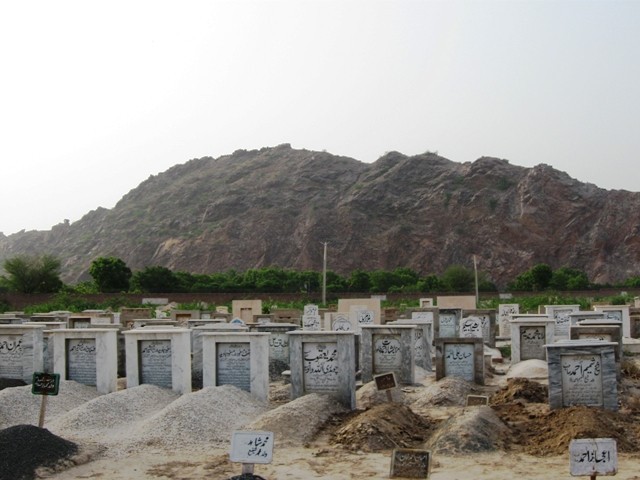
The tombstones in Rabwah's graveyards tell a macabre tale. PHOTO: SABA IMTIAZ/EXPRESS
RABWAH: The tombstones in Rabwah’s graveyards tell a macabre tale. The graves of the men killed in the attacks on Ahmadi places of worship in Lahore – retired army officers and young factory workers among them – rest with the dozens killed due to the persecution of the Ahmadiyya community.

The graveyards have been defiled in the past as locals have released animals in the graveyards or trod on the graves.

Other tombstones in a row show how entire families were systematically killed.

“If you knock at any door in Rabwah, you will find a story of persecution,” says Amir Mahmood, who works at the Jamaat Ahmadiyya’s press section.

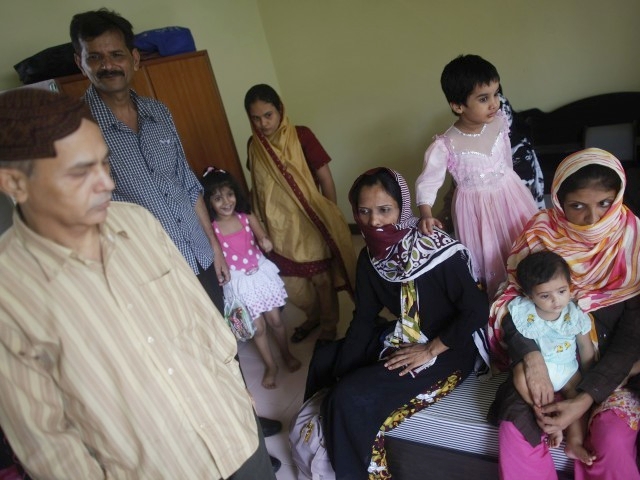
One door leads to a prominent Ahmadi family from Mardan. Despite years of harassment, lawsuits, imprisonment and a kidnapping, the family’s men vowed to stay in Mardan. Four of them were gunned down. “After my father’s assassination I told my husband to be more careful. But he wasn’t scared,” says Rabia Mehmood, who was expecting her first child when her husband was killed.

Another door leads to Bushra Siddiqui’s family. She lives with her two widowed daughters, whose husbands were killed because of their faith.

Siddiqui’s daughter Asma Ahsan says her husband was praying at Darul Zikr in Lahore when it was besieged last May. She received a phone call from him, informing her that he was safe. Later, she learned that he had been killed. To add insult to injury, several neighbours did not offer condolences.

While the May 2010 carnage highlighted the systematic campaign of violence against Ahmadis, it did not end there. Three days later, a man entered Naimatullah’s house in Narowal district and stabbed him to death. His daughter Sidra recalls waking up to an “awful noise”. She rushed to the courtyard, where her dying father lay. The assassin was caught a few hours later, roaming around a seminary after Fajr prayers. He was reportedly ‘inspired’ to kill Naimutallah after being incited by local clerics.

“Nobody is safe in this country,” says Malik Munawwar Ahmad, the 78-year-old head of Darul Ziafat, which carries out the decades-old tradition in the community of housing and feeding travellers.

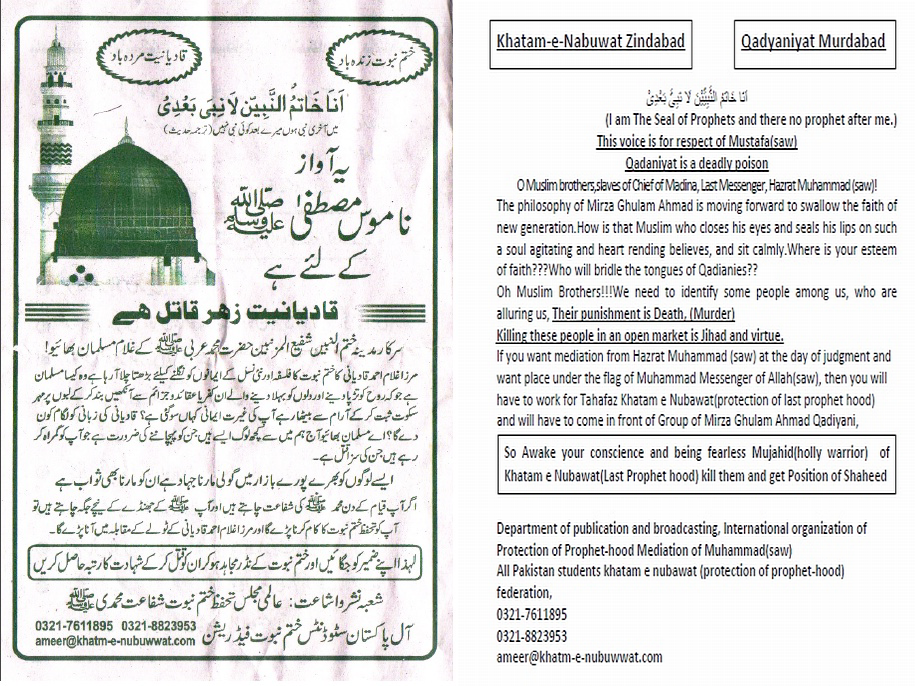
For Ahmadis, every day brings forth new incidents of harassment. In Vehari, clerics recently called for the Kalima to be erased from Ahmadi places of worship. The Jamaat’s representative in Vehari says the threat – from the Khatam-e-Nabuwwat movement and the Majlis-e-Ahrar – emanated from a land dispute over an Ahle Hadith mosque, which was unrelated to the Ahmadiyya community. He said the community would not give in to the clerics’ threats and would wait for the area administration’s decision.

“There was always opposition to us, but the 1974 and 1984 amendments created a storm,” says Ahmad. “But our silent protest is being recorded with God, and He will announce His decision.”

Published in The Express Tribune, July 12th, 2011.

Copyrighted © 2011 The Express Tribune News Network
URL: http://tribune.com.pk/story/207776/ahmadis...to-tell/

Monday, July 11, 2011

Thinking proactively: Ahmadis have found their own solutions in Rabwah

Express Tribune, Pakistan
Pakistan
Thinking proactively: Ahmadis have found their own solutions in Rabwah
By Saba Imtiaz
Published: July 11, 2011
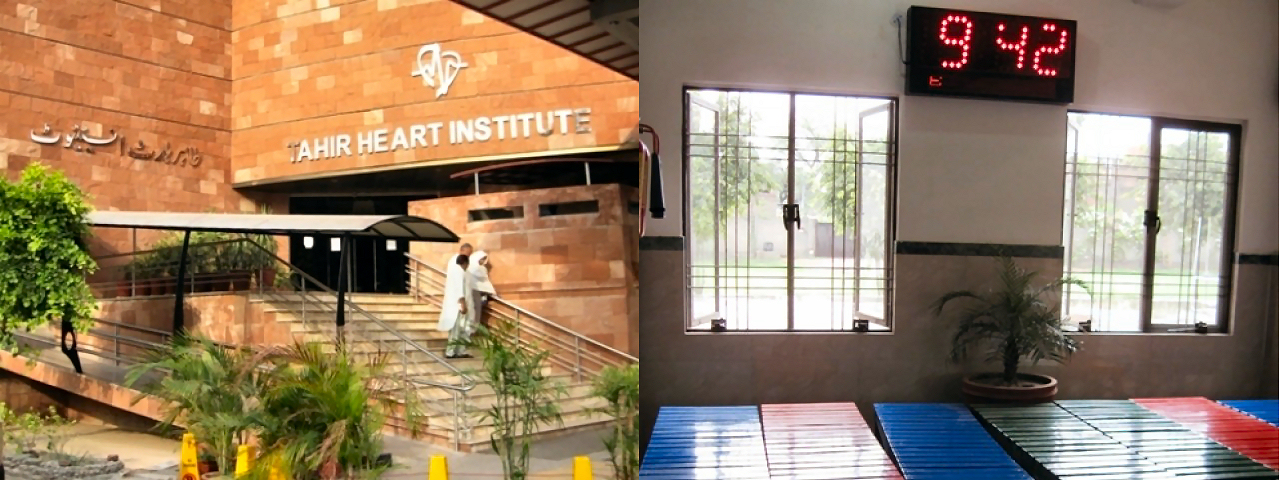
Over 80% patients at the Tahir Heart Institute are not from community. PHOTO: SABA IMTIAZ/EXPRESS
RABWAH: When a fire broke out at a building in Chiniot, the district administration called the rescue service in Rabwah for help.

The irony that the Chiniot building was owned by a member of the Khatam-e-Nabuwwat movement is not lost to Rabwah’s rescue services. A former tae kwon do instructor with the Pakistan Army, Nadir Saidain says the fire service was started because the district administration refused to assist in rescue operations in Rabwah town.

The service, like many others in the area – such as a 200-bed guest house – is free. Other facilities, including a sports centre and swimming pool, are heavily subsidised.

Despite the ostracism of Ahmadis in mainstream society, the community’s facilities draw people of all faiths to Rabwah.

The gleaming 80-bed Tahir Heart Institute is one example. Over 80 per cent of its patients are not Ahmadis. Its head, Dr MMH Nuuri, says the hospital does not have any discriminatory policies. Admission forms do not ask for the patient’s religion, and preaching in the premises is not allowed.

Up to 300 people are treated daily, many of whom hide details of their visits. According to Dr Nuuri, “I overheard a patient talking on the phone and telling someone he was under treatment in Sargodha. The patient later said, ‘Sorry doctor, but if people know I am in Rabwah I will not be spared.’”

Treatment is free, but those who can afford it contribute towards the cost. Referrals come in from cardiologists across Pakistan, and it has attracted doctors from abroad to practice for short stints.

“Our doctors have to be committed towards their profession,” Dr Nuuri said. “Our philosophy is that the patient is always right and doctors have to abide by their wishes.”

The hospital is one of many in Pakistan built by the Ahmadiyya community. Healthcare, along with other areas that would normally be the domain of the district’s administration – such as security and sanitation – are all managed by the community, since the administration is lax in its duties.

Reminders of the government’s negligence are visible all over Rabwah. The community’s schools, which were nationalised in the 1970s, were never returned. Tahir Ahmad, who handles education projects, maintains a list of government officials he has met since 1996 to lobby for the return of the schools to the community’s control. Despite complying with the government’s requirement to deposit an amount comprising fees and schools’ staff allowances for six months to one year, the government refuses to denationalise the schools, citing “law and order” as a reason.

Ahmad recalls a conversation with then-outgoing Punjab Chief Secretary Kamran Rasool. “Young man, you are an Ahmadi,” Rasool reportedly said. “You are not going to get these schools back.”

The community has built new schools and provides scholarships and soft loans. As a result, Rabwah reportedly has a literacy rate of over 90 per cent. One such school – with a modern lab, well-stocked library and spacious classrooms – charges a monthly fee of Rs25.

The schools provide a safe environment for students who would be harassed elsewhere. Young graduates told The Express Tribune about being shunned for their faith or told to ‘join the right way’. One student who was asked to leave his hostel because of his faith has not recovered from the incident as yet, and is reluctant to complete his education.

Even though Ahmadi families were discriminated against during last year’s floods, the community has provided housing and aid to families – irrespective of their beliefs – in flood-affected areas. “We were taking relief goods to Rajanpur once,” recalls a representative. “We were stopped on the way and asked, “You are taking relief goods to Ahmadis? Don’t you know they are non-believers?”

Published in The Express Tribune, July 11th, 2011.

Copyrighted © 2011 The Express Tribune News Network
URL: http://tribune.com.pk/story/207111/thinking..rabwah/

Tuesday, July 5, 2011

Pakistan’s persecuted minorities: For Ahmadi refugees in Thailand, problems double back home

Express Tribune, Pakistan
Pakistan
Pakistan’s persecuted minorities: For Ahmadi refugees in Thailand, problems double back home
By Abdul Manan
Published: July 5, 2011
A Pakistani refugee who is a member of the Ahmadiyya, an Islamic minority sect, carries his daughter as he is released from a detention centre in Bangkok June 6, 2011. PHOTO: REUTERS/ FILE
BANGKOK: Irfanul Mulk may have been able to find temporary shelter in Thailand, but those who forced him out of Pakistan are now flexing their muscles to bring him back.

Irfan, 27, left his village Taban in Punjab’s Sheikhupura district after he and his two brothers Furqanul Mulk, 21, and Umer Sultan, 31, were held under Pakistan Penal Code’s Section 298-C which prohibits Ahmadis from calling themselves Muslim or “in any manner whatsoever outrages the religious feelings of Muslims”. A police case was lodged against them but residents refused to calm down, and the three men decided to leave the country.

“When people of the village learnt about our detention and asylum applications, they approached the Sheikhupura District police chief and submitted an application seeking our repatriation to Pakistan calling us traitors who had maligned the country abroad,” Irfan told The Express Tribune.

Since then, the police have raided their home several times and their elder brother Haider Sultan, who stayed back in Pakistan, is facing constant threats.

Representatives of the Tehrik-i-Khatm-i-Nubuwat, an organisation that has repeatedly attacked the Ahmadiyya community for its religious beliefs, have even written to the US Embassy in Pakistan, warning them against giving American nationality to Irfan and his brothers.

But while Irfan and his brothers had to suffer at the hands of their neighbours, there are others who have been persecuted by their own families.

Syed Altaf Hussain Bukhari, the grandson of a renowned pir* whose shrine is located on the outskirts of Islamabad, moved to Thailand in November 2010 with his wife Sadia and their two children. They were forced to flee after his family cut off ties with them for having converted in 1996 to the Ahmadi faith and even subjected him to physical torture.

“When I announced that I was becoming an Ahmadi, my brothers and a cousin, who was the caretaker of the shrine at that point, immediately denounced their relationship with me,” he said. His brothers started telling followers that he was not their real brother as their father had adopted him. Pamphlets bearing his photograph were distributed in Sheikhupura, calling him liable to be murdered.

To protect his wife and children, Altaf, who survived the deadly attacks on Ahmadiyya worship places in Lahore in May 2010, left his ancestral village to move to Sheikhupura and eventually, in 2003, he moved to Lahore where they went into hiding.

Once his people back home learnt that he was seeking asylum in Thailand, they started threatening his father-in-law as well.

Shahid Mehmood, who fled from Multan where he had an established business, said that he had witnessed the beheading of two Ahmadi doctors in March 2009 and insisted on registering an FIR against a pir for instigating his followers to murder Ahmadis. “His followers would visit my shop daily and try to persuade me to withdraw the case,” says Mehmood. “I went to three senior police officers who threw the file in my face and told me that they were followers of [the pir] and could not dare to proceed against him.”

But after another Ahmadi man Rana Ataul Kareem was murdered in August 2009 and the case was traced back to the pir, Mehmood started to receive threats. In September 2010, Mehmood, his wife and four children, arrived in Bangkok.

Back home, Mehmood’s shops have been closed and his house has been sealed.

Many families decided to send younger members abroad while parents stayed back. Aamir Ali, 22, left his village Pasrur in Punjab’s Sialkot district along with his three sisters. But after news of them seeking asylum spread, villagers started to taunt their mother, who has had to regularly switch homes.

* The name of the pir is being withheld on the request of Bukhari.

Published in The Express Tribune, July 5th, 2011.

Copyrighted © 2011 The Express Tribune News Network
URL: http://tribune.com.pk/story/202641/pakistans-persecuted.../

Monday, July 4, 2011

Insecure minorities: Threatened at home, jailed abroad

Express Tribune, Pakistan
Pakistan
Insecure minorities: Threatened at home, jailed abroad
By Abdul Manan
July 04, 2011
The refugees, all members of the Ahmadi community, had been in detention for more than six months. PHOTO: REUTERS/FILE
BANGKOK: Tahir Mehmood Adil, an Ahmadi from Sialkot, was kidnapped in 2009 by militants, held captive for 36 days and threatened with beheading. His cousin, Sajjad, negotiated successfully for his release. A few days later, however, Sajjad was shot dead and Adil received a text message saying he would be next.

That was when Adil fled to Thailand with his wife and three children. On arrival, he was arrested by Thai immigration authorities who tore up their asylum papers and took them to Bangkok’s notorious Immigration Detention Cell (IDC). The family was detained here for the next seven months in the most inhumane conditions.

Detained refugees

Adil is one of 96 such refugees from Pakistan whose fate hangs in balance as they are transferred from one detention centre to another, despite having their status recognised by the United Nations High Commission for Refugees (UNHCR).

By December 2010, the Thai immigration bureau detained 91 Pakistanis seeking asylum on grounds of religious persecution in their home country. Another 38 were detained in the early months of 2011.

Of the 131 Ahmadis at Bangkok’s Suan Phlu IDC, 35 were sent back in the last week of December. The remaining 96 refused to budge on grounds that it amounted to suicide. These persons were finally released with the support of the Thai committee for refugees in June.

The group now reports to the immigration bureau every month. Their situation has improved as compared to their time in the IDC but they are not allowed to leave their residence without permission from the local police.

Inhumane conditions

This group, including 34 children, now lives in two separate confinement centres and apartments in a Bangkok suburb. Each family has a single room. For them there is some light at the end of the tunnel. The refugees are awaiting resettlement to third countries, mainly the US.

The conditions at the detention centre were worse, says Adil as he looks back at his time there. The cells where they were detained were designed to hold around 40 but housed 150 detainees. Women and children were separated from the men.

The choice was clear. Stay in the IDC or go back to Pakistan. It is an unending battle. Two of the detainees who have been in IDC for 23 months were granted bail but the UNHCR refused to recognise their status. Two others who were at the last step of their resettlement process were told to repeat the entire process.

Painful process

Adil told The Express Tribune that everyone had a story to tell. He acknowledged that even though they were aware of Thailand not being a signatory to the UNHCR’s convention on refugees, their fate in Pakistan was one which would be worse and that is why they decided to come here.

Adil said that the process of seeking asylum and refugee status from UNHCR was lengthy and painful. He said interviews don’t take place for months, much beyond the mandatory three-month period. The resettlement is another lengthy process in which refugees are informed about their final destination.

Individual stories

The stories go on. Qamar and Mansoor who had been in the centre for the last two years had been granted bail but they were later refused refugee status. After their release, their resettlement process had slowed down.

One Rana Qamar had been detained along with his two children while his wife was in Pakistan. Qamar’s 11 year old daughter, Areesha, was detained for seven months all alone.

Another detainee, Adnan Rashid, said that he was in detention but his wife and two children were not. He feared for them.

Doctors who escaped targeted killings at home are also part of the group. Dr Hafeez Ahmad, who hails from Karachi said that after his colleagues, Dr Hameedullah Shah and Dr Najamul Hassan were shot dead he decided to leave. But not after shifting his clinic four times in a bid to discourage those targeting him.

Kashif Butt whose wife gave birth to their child in the IDC recalls his horrible experience. When his wife was taken to the nearby hospital, her legs were tied so she could not run away. In another case, a Pakistani woman’s feet were bound when she went in for a caesarean procedure.

Every day is a living hell for many. The Ahmadiyya Community representative in Thailand Imran Ahmad told The Express Tribune that the future of those family members who later joined their next of kin hangs in balance.

Despite all the frustration and the fear, most are fearful of returning to Pakistan. Some laugh and others cry at the mention of their home country. But all pray for their future and for those left behind.

Published in The Express Tribune, July 4th, 2011.

Copyrighted © 2011 The Express Tribune News Network
URL: tribune.com.pk/story/202056/insecure-minorities.../

Thursday, April 14, 2011

Pakistan militants killed 2,500 in 2010, report says

South Asia
14 April 2011 Last updated at 17:11 GMT
Pakistan militants killed 2,500 in 2010, report says

Hundreds were injured in militant attacks - most victims were civiliansHundreds were injured in militant attacks — most victims were civilians

More than 2,500 people were killed in militant attacks in Pakistan in 2010, according to the independent Human Rights Commission of Pakistan (HRCP).

Nearly half of victims were civilians killed in suicide blasts. There were 67 such attacks last year, the group said.

The report also said at least 900 people had been killed in US drone strikes during the same period.

The number of people killed by the army is not mentioned, but it estimated to be in the region of 600-700.

Pakistani troops are battling insurgents across the north-west. Many of those it has killed are believed to be militants, but civilian lives have been lost too.

The HRCP is the main human rights watchdog in the country. Its findings are often disputed by the authorities, the BBC’s Syed Shoaib Hasan in Karachi says.

The group’s findings show a rise in the numbers being killed in Pakistan’s conflict.

BBC research published last July suggested 1,713 people had been killed by militants over the preceding 18 months, while 746 people had died in drone attacks during the same period.

‘Increasing intolerance’

The HRCP released its data in its annual report on the state of human rights and security in Pakistan between January and December 2010.

“Pakistan’s biggest problem continues to be violence carried out militants,” HRCP chairman Mehdi Hasan said.

“In 2010, 67 suicide attacks were carried out across the country in which 1,169 people were killed,” he said. “At least 1,000 of those were civilians.”

Dr Hasan said that in all 2,542 people had been killed in militant attacks in the country last year.

He said the most glaring example of government oversight had been in Balochistan province, where targeted killings shot up rapidly with 118 people being killed in 2010.

Dr Hasan said the figure was set to increase in 2011, as the government seemed unconcerned about the unravelling of the law and order situation in Balochistan.

The HRCP report also spoke about increasing intolerance against religious minorities in the country.

It said 99 members of the Ahmedi (Qadiani) sect had been killed in attacks in 2010, while 64 people had been charged under the country’s blasphemy law.

There was no immediate response to the report from the Pakistani authorities, nor was there any word from militant groups.

Thursday, February 3, 2011

“No option” but to abide by PM’s decision on blasphemy: Sherry

Daily Dawn, Pakistan
Pakistan
“No option” but to abide by PM’s decision on blasphemy: Sherry
AFP
February 03, 2011
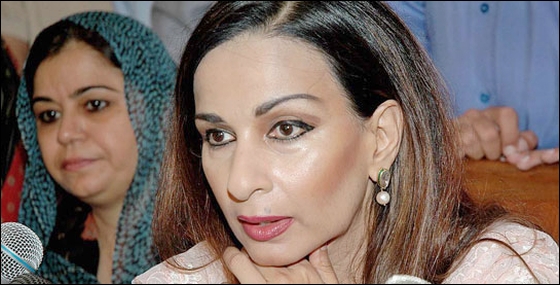
Sherry Rehman — (File Photo)

ISLAMABAD: A liberal lawmaker on Thursday accused Pakistan’s prime minister of sabotaging efforts to reform blasphemy laws that have been widely condemned by rights groups.

“Appeasement of extremism is a policy that will have its blowback,” said Sherry Rehman, a lawmaker for the main ruling Pakistan People’s Party (PPP).

The former information minister petitioned parliament to reform the legislation in November after a Christian woman was sentenced to death, but the private member’s bill was never listed on parliament’s agenda.

Despite escalating international condemnation and the murder of politician Salman Taseer for backing reform, the government refuses to consider any amendment, bowing to protest from the nation’s powerful religious right-wing.

Prime Minister Yousuf Raza Gilani on Wednesday told lawmakers that Rehman “agreed to withdraw her bill according to party policy”.

“The prime minister categorically made it clear that government has no intention to amend the law. Neither he nor the speaker of the national assembly has constituted any committee to consider the amendment bill,” his office said.

A furious Rehman disagreed, but said she had “no option” but abide by the decision after the prime minister ruled out any discussion.

“It was a question of protecting our citizens from injustice done in the name of a religion that values peace and tolerance more than anything else,” she said.

The government had pledged to keep intact the blasphemy law on December 30, in a bid to head off threatened protests.

The move exposed Rehman and Taseer as lone campaigners. Five days later Taseer was murdered outside an Islamabad cafe by his bodyguard, since lauded a hero by hundreds of religious conservative clerics, student activists and lawyers.

The law stirred fresh controversy this week after the arrest of a 17-year-old boy for allegedly writing a blasphemous comment in a school exam.

Human rights campaigners say the law encourages Islamist extremism and is too often used to settle personal scores.

“Pakistan has set the standard for intolerance when it comes to misusing blasphemy laws, but sending a schoolboy to jail for something he scribbled on an exam paper is truly appalling,” said Human Rights Watch.

While the law carries a maximum penalty of death, those sentenced to hang in the past have had their sentences overturned or commuted on appeal.

©2010 DAWN Media Group. All rights reserved
URL: www.dawn.com/2011/02/03/no-option...sherry.html

Wednesday, January 26, 2011

Kidnapping for ransom a boon for militants

Daily Dawn, Pakistan
Pakistan
Kidnapping for ransom a boon for militants
From the Newspaper
January 26, 2011

ISLAMABAD, Jan 25: Kidnapping for ransom has always been a well-paying crime but the entry of militants has made this more profitable, which is why the incidence of the case is continuously rising.

Senior investigating officers of police claim that militants are involved in kidnapping cases in all corners of Pakistan.

“They are directly involved in kidnapping in Punjab, Khyber Pakhtunkhwa, Sindh, especially in Karachi, and Islamabad,” one police officer tells Dawn.

Senior police officers say that money is the main reason for the increased incidence of kidnapping though the militants have also started using it as a tactic to pressure law enforcement and intelligence agencies; in a number of cases they refuse to accept money in exchange for the hostage and ask for the release of their arrested accomplices.

“A third reason is also to spread fear,” says a senior policeman.

However, a new trend is the links the militants and the criminal gangs are forming with each other at different levels. These had first been established when kidnappings were carried out by the two groups together. By now it is routine practice for the kidnapping to be carried out by the local criminals of the area the hostage lives in either out of choice or because they have been asked to do so by militants.

In cases where the objective is to collect ransom, the local criminals continue to keep the hostage in their custody. The hostages are said to be kept in hideouts in Khyber Pakhtunkhwa and Central Punjab.

“But at times, especially when the militants want to spread fear, the hostage is kept in their custody,” says a police officer, adding that the Tehrik-i-Taliban militants have an exclusive committee (Shura) which decides the fate of the victims – exchange for ransom, exchange for militants in state custody or spread fear.

With the entry of militants, religion also tends to play a role in the kidnappings from the act to the negotiations to the release. In some cases, militants have picked up hostages, assuming that they were Ahmedi or Shia. The later realisation that the victims were Sunni compelled the militants to accept a reduced ransom. Some years ago a businessman from Islamabad was kidnapped only to be released when he and his kidnappers were intercepted at a checkpost as they were exiting Islamabad.

During interrogations, the kidnappers revealed that they had kidnapped the businessman because they thought he was a Qadiani. A similar perception about a law enforcement personnel’s faith also led to him being kidnapped.

Dawn has learnt that in many cases, religio-political leaders or religious leaders have helped at the negotiation stage. In such cases, the police react according to the politicians, who negotiate with the militants over the ransom, they added.

For instance, even the negotiations over the release of a Polish engineer, Piotr (Peter) Stanczak, were carried out with the help of a religio-political leader. But as the militants demanded the release of their accomplices arrested in connection with suicide attacks in Islamabad, the two sides could reach no agreement. It was after this that the kidnappers killed the engineer.

In some cases, however, as a last resort, prisoners have been exchanged for hostages. This is what happened in the case of foreign engineers from an East Asian country.

As their captors refused to accept ransom money, the government had no choice but to release militants in exchange.

The ‘business’ has spread so far that separate groups of militants have been formed who ‘specialise’ in kidnappings – they select victims, collect information such as financial wherewithal, carry out the reconnaissance of the area. This information is passed on to the militants who then carry out the kidnapping themselves or pass it to other criminal gangs.

“In some kidnapping cases, the hostages’ families were even informed of their bank balances when the ransom was being negotiated,” an officer adds.

One such group is said to be headed by Mullah Sabir and Mullah Rahim which operates from South Waziristan.

Before they used to work independently but later they started kidnapping for ransom for the Tehrik-i-Taliban Pakistan, said an official.

©2010 DAWN Media Group. All rights reserved
URL: www.dawn.com/2011/01/26/kidnapping...militants.html

Tuesday, June 29, 2010

Militants threat witnesses, police, judges to be silent in Pakistan

People's Daily Online, China
Home » World » Asia/Oceania
.
Militants threat witnesses, police, judges to be silent in Pakistan
22:07, June 29, 2010

Militants groups in Pakistan are being proven so strong that they manage the acquittal of their colleagues from cases and proceedings against them in courts by threatening the families of judges, witnesses and police officers, local media reported on Tuesday.

According to reports, hundreds of militants have been successfully released from jails due to non-availability of witnesses and proofs enough to sentence them according to law.

Recently Pakistan’s Lahore High Court took a strict notice about the acquittal of a criminal from a lower court who was arrested red-handed with a grenade during a terrorism attack on a police training academy in March 2009.

In another case family of anti-terrorism judge Mohammad Asim Imam performing duty in Pakistan’s northwestern Malakand Division, received threats from the armed Taliban, who visited their residence few days back.

The judge is currently dealing with terrorism cases of Sufi Mohammad, Pakistani Taliban’s spiritually whip, arrested last year during the military operation in the area.

Taliban visited their place, left a message for the family and the judge to fall in line or be ready for the consequences. They also ordered the family cook to tell the judge that they were after him and would soon sort him out.

This is the first time since the completion of the military operation in Swat last year that a judge dealing with the anti- terrorism cases has received threats from the Taliban.

The family of anti-terrorism judge Imam lives in Peshawar, capital of the northwestern province Khyber-Pakhtunkhwa, where his wife works as senior research officer at the provincial assembly secretariat.

Immediately after the incident, the government has provided security to the family but they are still worried about the safety as they are living in the danger zone.

“This is a common practice in Pakistan, not only Taliban even small criminal groups use these tricks to get their friends free from the courts, when there is no proof or witness, the court will have to free them,” said Khalid Mahmood, a former police office in Punjab Province.

“Now in some cases, judges’ names are kept secret and they hear the case proceeding in jail with covered faces to avoid any recognition by the accused,” Khalid told Xinhua.

Source: Xinhua

Copyright by People's Daily Online, All Rights Reserved
 
^ Top of Page