Showing posts with label kidnapping. Show all posts

Thursday, February 3, 2011

“No option” but to abide by PM’s decision on blasphemy: Sherry

Daily Dawn, Pakistan
Pakistan
“No option” but to abide by PM’s decision on blasphemy: Sherry
AFP
February 03, 2011
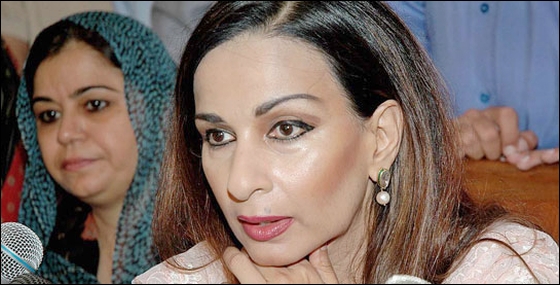
Sherry Rehman — (File Photo)

ISLAMABAD: A liberal lawmaker on Thursday accused Pakistan’s prime minister of sabotaging efforts to reform blasphemy laws that have been widely condemned by rights groups.

“Appeasement of extremism is a policy that will have its blowback,” said Sherry Rehman, a lawmaker for the main ruling Pakistan People’s Party (PPP).

The former information minister petitioned parliament to reform the legislation in November after a Christian woman was sentenced to death, but the private member’s bill was never listed on parliament’s agenda.

Despite escalating international condemnation and the murder of politician Salman Taseer for backing reform, the government refuses to consider any amendment, bowing to protest from the nation’s powerful religious right-wing.

Prime Minister Yousuf Raza Gilani on Wednesday told lawmakers that Rehman “agreed to withdraw her bill according to party policy”.

“The prime minister categorically made it clear that government has no intention to amend the law. Neither he nor the speaker of the national assembly has constituted any committee to consider the amendment bill,” his office said.

A furious Rehman disagreed, but said she had “no option” but abide by the decision after the prime minister ruled out any discussion.

“It was a question of protecting our citizens from injustice done in the name of a religion that values peace and tolerance more than anything else,” she said.

The government had pledged to keep intact the blasphemy law on December 30, in a bid to head off threatened protests.

The move exposed Rehman and Taseer as lone campaigners. Five days later Taseer was murdered outside an Islamabad cafe by his bodyguard, since lauded a hero by hundreds of religious conservative clerics, student activists and lawyers.

The law stirred fresh controversy this week after the arrest of a 17-year-old boy for allegedly writing a blasphemous comment in a school exam.

Human rights campaigners say the law encourages Islamist extremism and is too often used to settle personal scores.

“Pakistan has set the standard for intolerance when it comes to misusing blasphemy laws, but sending a schoolboy to jail for something he scribbled on an exam paper is truly appalling,” said Human Rights Watch.

While the law carries a maximum penalty of death, those sentenced to hang in the past have had their sentences overturned or commuted on appeal.

©2010 DAWN Media Group. All rights reserved
URL: www.dawn.com/2011/02/03/no-option...sherry.html

Wednesday, January 26, 2011

Kidnapping for ransom a boon for militants

Daily Dawn, Pakistan
Pakistan
Kidnapping for ransom a boon for militants
From the Newspaper
January 26, 2011

ISLAMABAD, Jan 25: Kidnapping for ransom has always been a well-paying crime but the entry of militants has made this more profitable, which is why the incidence of the case is continuously rising.

Senior investigating officers of police claim that militants are involved in kidnapping cases in all corners of Pakistan.

“They are directly involved in kidnapping in Punjab, Khyber Pakhtunkhwa, Sindh, especially in Karachi, and Islamabad,” one police officer tells Dawn.

Senior police officers say that money is the main reason for the increased incidence of kidnapping though the militants have also started using it as a tactic to pressure law enforcement and intelligence agencies; in a number of cases they refuse to accept money in exchange for the hostage and ask for the release of their arrested accomplices.

“A third reason is also to spread fear,” says a senior policeman.

However, a new trend is the links the militants and the criminal gangs are forming with each other at different levels. These had first been established when kidnappings were carried out by the two groups together. By now it is routine practice for the kidnapping to be carried out by the local criminals of the area the hostage lives in either out of choice or because they have been asked to do so by militants.

In cases where the objective is to collect ransom, the local criminals continue to keep the hostage in their custody. The hostages are said to be kept in hideouts in Khyber Pakhtunkhwa and Central Punjab.

“But at times, especially when the militants want to spread fear, the hostage is kept in their custody,” says a police officer, adding that the Tehrik-i-Taliban militants have an exclusive committee (Shura) which decides the fate of the victims – exchange for ransom, exchange for militants in state custody or spread fear.

With the entry of militants, religion also tends to play a role in the kidnappings from the act to the negotiations to the release. In some cases, militants have picked up hostages, assuming that they were Ahmedi or Shia. The later realisation that the victims were Sunni compelled the militants to accept a reduced ransom. Some years ago a businessman from Islamabad was kidnapped only to be released when he and his kidnappers were intercepted at a checkpost as they were exiting Islamabad.

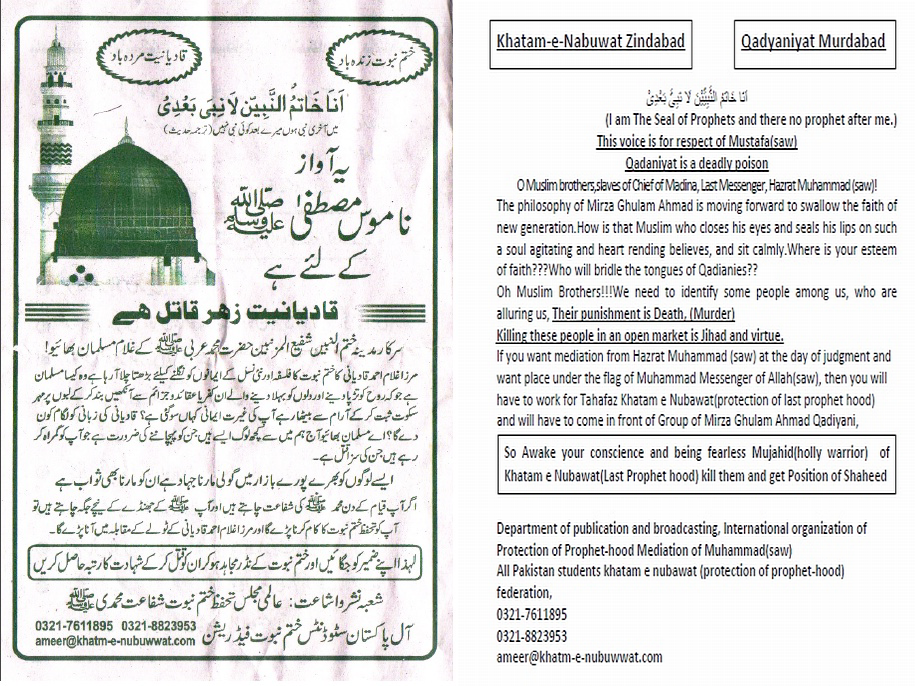
During interrogations, the kidnappers revealed that they had kidnapped the businessman because they thought he was a Qadiani. A similar perception about a law enforcement personnel’s faith also led to him being kidnapped.

Dawn has learnt that in many cases, religio-political leaders or religious leaders have helped at the negotiation stage. In such cases, the police react according to the politicians, who negotiate with the militants over the ransom, they added.

For instance, even the negotiations over the release of a Polish engineer, Piotr (Peter) Stanczak, were carried out with the help of a religio-political leader. But as the militants demanded the release of their accomplices arrested in connection with suicide attacks in Islamabad, the two sides could reach no agreement. It was after this that the kidnappers killed the engineer.

In some cases, however, as a last resort, prisoners have been exchanged for hostages. This is what happened in the case of foreign engineers from an East Asian country.

As their captors refused to accept ransom money, the government had no choice but to release militants in exchange.

The ‘business’ has spread so far that separate groups of militants have been formed who ‘specialise’ in kidnappings – they select victims, collect information such as financial wherewithal, carry out the reconnaissance of the area. This information is passed on to the militants who then carry out the kidnapping themselves or pass it to other criminal gangs.

“In some kidnapping cases, the hostages’ families were even informed of their bank balances when the ransom was being negotiated,” an officer adds.

One such group is said to be headed by Mullah Sabir and Mullah Rahim which operates from South Waziristan.

Before they used to work independently but later they started kidnapping for ransom for the Tehrik-i-Taliban Pakistan, said an official.

©2010 DAWN Media Group. All rights reserved
URL: www.dawn.com/2011/01/26/kidnapping...militants.html

Sunday, May 2, 2010

HRCP Annual Report 2009

---The News International, Pakistan
Sunday, May 02, 2010, Jamadi-ul-Awwal 17 , 1431 A.H
HRCP Annual Report 2009
Suicide bombings, target killings add to common man’s insecurity

Sunday, May 02, 2010
By our correspondent

Karachi

A comprehensive report titled ‘State of the Human Rights in 2009’ by the Human Rights Commission of Pakistan (HRCP) sheds light on the deplorable situation of human affairs in the country

Marred by suicide bombings, target killings and rampant violence, 2009 was another year in which a common man remained deprived of his fundamental rights. While anarchy and bloodshed reigned the year, the state of important sectors such as education and health deteriorated further.

But all was not bleak in 2009. In the same year, the country saw the restoration of the judiciary, striking down of the National Reconciliation Order (NRO) and the passing of a law promising better protection against sexual harassment to women.

The report focuses on issues pertaining to citizens and discusses 18 such topics in detail.

HRCP has not only pinpointed the problems existing in various sectors but have also stated concrete recommendations at the end of each chapter. HRCP has also discussed its own role and activities of the previous year and at the end presented a list of Pakistani prisoners in foreign countries.

Below are some excerpts from the book on different topics, highlighting state of human rights as well as the prominent incidents and issues of the year 2009.

Laws and Law-making: The report states that the parliament did not perform well in terms of legislation and passed only four acts. On the other had, around 61 federal ordinances were issued.
.
The domestic violence bill lapsed unable to be approved by the Upper house. To this day, it has been not passed

Administration of Justice: The deposed Chief Justice Iftikhar Muhammad Chaudhry and other judges were restored through an executive order.

On December 16, the Supreme Court struck down the national reconciliation ordinance (NRO).

At the end of 2009, 1.52 million cases were pending in the superior and lower courts of the country.

Law and order: In 2009, about 3,021 people were killed and some 7,334 were injured in 2,586 incidents of terrorism. Out of these, 1,300 were killed in 108 suicide bombings.

The highest number of kidnappings took place in the province of NWFP (now Khyber-Pakhtunkhwa) 592, followed by 241 in Balochistan, 224 in Punjab and 163 in Sindh.

More than 1,600 people committed suicide.

In Karachi alone, 747 people were killed, out of which 291 succumbed to target killings.

Jails, prisoners and ‘disappearances’: Majority of enforced disappearances cases were from Balochistan. At the end of the year, around 133 persons on HRCP’s list submitted to the Supreme Court are still missing.

Prisons in the country remain overcrowded and congested. In Camp Jail Lahore, 4,651 prisoners were detained in a facility with a capacity for only 1,050.

As many as 54 prisoners were killed in prisons during the year 2009.

Freedom of thought, conscience and religion: Increase in organized attacks including Taiser Town and Gojra on religious minorities. More than 41 complaints of blasphemy were reported.

At least five members of the Ahmadi sect were murdered in target killings raising the number to 100 since the introduction of anti-Ahmadiyya laws in 1984.

Nearly 80 percent of the minorities live below the poverty line and are ignored in various government support programs.

Freedom of expression: Seven journalists lost their lives in the line of duty; four others were killed in crime related incidents.

A campaign by Jang group for expeditious implementation of the Supreme Court verdict in the NRO cases and on corruption charges against the President angered the government, resulting in withholding government advertisements from the group.

Women and children: Around 1,404 women were murdered, including 647 in the name of ‘honour’. Around 928 women were raped and some 563 committed suicide.

Cases of domestic violence shot from 137 in 2008 to 205

Government failed to enforce a new law to deal with domestic violence

NA passed amendments in PPC and CrPC to define sexual harassment and propose enhanced punishments for offenders. The bill was passed by Senate in 2010.

Almost 20.30 million of as 70 million aged less than 18 years did not go to school.

Other alarming figures including: 20,000 children die of diarrhea every year, around 52 percent of children studying in seminaries experience sexual harassment, 58 percent of the girls in rural areas are married before the age of 20. Around 3.5 million children below 15 years are child laborers. 39 percent of children are malnourished. 968 children, 285 boys and 683 girls were sexually abused. Number of street children rose to 1.5 million. There were around 1,800 minor prisoners in 2009.

Labor: Estimated labor force in the country was 51.78 million.

Around 285,000 people lost their jobs in banking sector, 61,200 in computer industry, 115,000 in construction, and 120,200 in electronic and 69,000 in telecommunication.

Education: Pakistan was ranked 117 out of 134 countries in terms of quality of primary education in world economic forum’s global competitiveness index for 2009.

An estimated 35 to 40 percent of children of school going were out in streets.

Terrorist destroyed more than 187 schools and damaged 318 forcing 50,000 stay at home.

Health: There is only one doctor for 1,212 persons, one dentist for 18,010 persons and one hospital bed for 1,575 persons.

There were 85,000 individuals infected with HIV-AIDS in Pakistan, two percent under the age of 14.

85,812 deaths from cancers were reported.

Environment: 38 percent of Pakistan’s irrigated land was waterlogged.

More than 60 percent of the country’s population was without access to safe water drinking water.

Some 23,000 people died in the country due to air-pollution.

More than 400 million gallons of untreated industrial waste were being discharged into the Arabian Sea daily out of which 80 million gallons were contributed by Karachi.

Refugees: There were 1.25 million IDPs.

Only 50,000 afghan refugees were repatriated to Afghanistan in 2009. There were nearly 1.7 million registered Afghan refugees in the 2009. — RA

URL:
www.thenews.com.pk/daily_detail.asp?id=237035

Saturday, October 3, 2009

Threats to the state

---The News, Pakistan - Internet Edition

Threats to the state

Saturday, October 03, 2009
Farzana Bari


The multiple crises the state is faced with today bring home the stark realisation that the policies pursued by the state elite over the last 62 years for national security in Pakistan were incorrect and misplaced. The territory-centered state security paradigm has resulted in a lack of human security that is now posing the biggest internal threat to the country. Massive economic insecurity, illiteracy, rising unemployment, inflation, energy and water shortages, food insecurity, inaccessibility to social sector services, militancy, sectarianism and extremism, rampant kidnapping and killing for ransom and the complete breakdown of law and order are some of the real existential threats to the security of the state today.

Pakistan appears to be crumbling down not because of external threats but from the internal crisis intensified by the competing forces within the state elite and institutions. The contemporary crisis of the state and its internal contradictions can only be understood in its historical and colonial context.

Pakistan inherited internal and external security dilemmas from the colonial rule as part of independence. The major internal threat to the state stems from the very ideology of Pakistan itself. In the absence of a commonly shared notion of nationhood, the post-colonial state establishment started using Islam as a unifying force to keep the ethnically and culturally diverse population together. The state was Islamised through the Objectives Resolution in 1949. Thus, the ideology of Pakistan created a need for a strong centre. Despite the initial contract between the centre and the various federating units that the latter would be sovereign and autonomous, the centre refused to grant provincial autonomy to its federating units in the successive military and civilian governments for the last 62 years. The over-centralised state created tension between the federal and provincial units. The independence of Bangladesh was a nail in the coffin of the ideology of Pakistan.

However, no lessons were learnt. The centre continued to exploit provincial resources, refused to abolish the concurrent list and did not work out a power and resource sharing formula between the federal and provincial governments. As a result of this, the national question emerged as one of the most serious threats to the state security. Some of these nationalist forces are now turning into secessionist movements.

Another major threat to the state is from rising religious militancy and extremism. After independence, Pakistan inherited the disputes of Kashmir with India and Durand Line with Afghanistan. To respond to these perceived security threats from neighbouring countries, the Pakistani establishment crafted the policy of support to non-state actors and trained Islamist militants who were fighting in Indian held Kashmir. The annexation of the Objectives Resolution with Pakistan’s first constitution was followed by declaring Ahmadiyya sect as non-Muslims in 1974. The policy of appeasement of religious forces was at its peak during the military dictators of Ziaul Haq and Pervez Musharraf’s military rule.

Ziaul Haq nurtured Islamist militants with the support of the US to fight Soviet Union in Afghanistan. The radical Islamists were given tremendous financial and political support to establish religious madaris to produce and train militants for Afghan jihad. Musharraf’s regime secured the electoral victory of the Muttahida Majlis-e-Amal (MMA) through manipulation of elections in NWFP. During the five-year-rule of MMA (2002-2007) in NWFP, radical militant groups in FATA became strong.

In the post-9/11 scenario, the Pakistani establishment was forced by the US to withdraw traditional state support to these militant groups who then turned against the country. Today, the rise of neo-Taliban insurgency in the shape of Tehreek-e-Taliban (TTP) is posing a threat to the state.

Rising poverty, illiteracy and disease are other formidable threats to state security. In the name of territorial security, the state provided justification to spend a bulk of its financial resources on defence and the development of nuclear capability. Investment on education, health and creating employment opportunities lagged far behind the ever-rising defence budget. The state compromised human security and failed to diverge from state centric to people-centric security paradigm. Today nuclear Pakistan is unable to provide personal security to its citizens from rising extremism and Talibanisation, sectarian violence, suicide bombing, kidnapping and killing, crushing poverty and disease.

The criminal neglect of human security concerns and lack of investment in human capital by the self-serving state elite is the most serious threat to Pakistan – not external but emanating from within the national borders.

To save the country from contemporary traditional and non-traditional security threat, the new social contract is the need of the day. The key element of this new contract must include the separation of religion from state, complete provincial autonomy, balance between the security needs of the individual, community and state, massive investment in human capital, inclusion of citizens in governance, gender equality and an independent foreign policy.

The writer is acting director of the Centre of Excellence in Gender Studies at Quaid-e-Azam University. Email: farzana @ comsats.net.pk

URL: www.thenews.com.pk/daily_detail.asp?id=201353
 
^ Top of Page