Showing posts with label blasphemy law. Show all posts

Sunday, November 20, 2011

Banner against Ahmadis not removed despite passing 10 days

The daily Nation, Pakistan
 Sunday, November 20, 2011
Banner against Ahmadis not removed despite passing 10 days
By: Syed Danish Hussain | Published: November 20, 2011

anti-Ahmadiyya hate banner in Rawalpindi
RAWALPINDI — It seems that city administration is waiting for occurrence of some untoward incident against Ahmadi community, as despite passage of several days the administration has not removed a number of banners demanding end to religious activities of the community on every Friday in a house located in E-block of Satellite Town.

It was approximately 10 days ago when residents of E-Block, who at all don’t have any problem with holding of religious activities by Ahmadi community on every Friday in a building near Holy Family hospital, saw hanging banners around the locality demanding “immediate end of unconstitutional activities by Qadyanis in E-block.”

The banners are displayed by some “action committee” which wants an immediate end to religious gatherings of the community people at their worship place.

As, according to them, the security measures taken by police as well as administration of the worship place are bothersome for the residents of the area.

A resident of the area, whose house is located few yards away from the worship place of Ahmadis, when interviewed, said that these banners were leaving a bad image on the hearts and minds of his schoolchildren. He said, though a link road in front of the worship place is closed down for every kind of movement for one hour on every Friday, it never created trouble for them.

He said such banners were a source of distress for them more than the activities of Ahmadis. He also said that those who were hanging banners in the area mentioning “area residents” on them were not at all living in the area.

He also criticised the administration of the city for not removing at earliest all such stuff from the streets and roads of the area that were creating hatred for the minority.

When contacted, one of the members of the administration of worship place of Ahmadis, termed such banners a conspiracy and a source of great danger for the community.

Wishing not to be named, he said the banners were getting the attention of more and more people with each passing day and it was alarming.

“We are frightened of being targeted on this baseless propaganda. It is like playing with the emotions of minority that is already facing a social boycott like situation in the country,” he added.

He also argued that people behind this activity were of the view that Ahmadis were using a residential building for worship place but it is a matter of fact that hundreds of residential units across the city were converted into mosques.

He said if something wrong occurred or someone tried to attack their worship place in the area, the administration of the city would be responsible for that.

He said the community was not doing anything unconstitutional, as inscribed on the banners.

The building belongs to Jamaat-e-Ahmadiyya, a registered organisation, he added.

DCO Rawalpindi Saqib Zafar did not respond to several calls made by this scribe for his comments on the issue.


Minority report

The News - Internet Edition
Sun, Nov 20, 2011,
Zilhaj 22, 1432 A.H
Opinion
Minority report

Sana Bucha
Sunday, November 20, 2011

Blood, meat and hides marked the first day of Eid-ul-Azha in Pakistan. While most Muslims celebrated their holy festival by sacrificing animals, some decided to achieve new levels of faith by targeting Hindus in Shikarpur. Three doctors were shot dead in broad daylight in Chak Town, allegedly, after a conflict arose between the Bhayo tribe and the Hindu community over a dancing girl.

Prior to the murders, the issue had already captured the attention of the local elders and a jirga was to be convened after Eid. Threats were issued to the Hindu community and reported to the local police but to no avail. Why is it that the government machinery only comes into motion after a tragedy has unfolded? The president and prime minister have both condemned the murders and ordered an inquiry. The police have since been prompt in arresting many from the Bhayo tribe. As anybody in Pakistan will tell you, arrests don’t necessarily mean justice. This is not the only case of Hindus being discriminated against in Pakistan – Sindh, long known for the wisdom of renowned Sufis and saints, is now home to a whole new brand of faith.

This ghastly incident takes me back to another instance in Lahore last year, when two shrines of the minority Ahmadi sect were attacked, leaving more than 90 people dead. Threats to Ahmadis were ignored then too, and calls for greater government protection in the future fell on deaf ears.

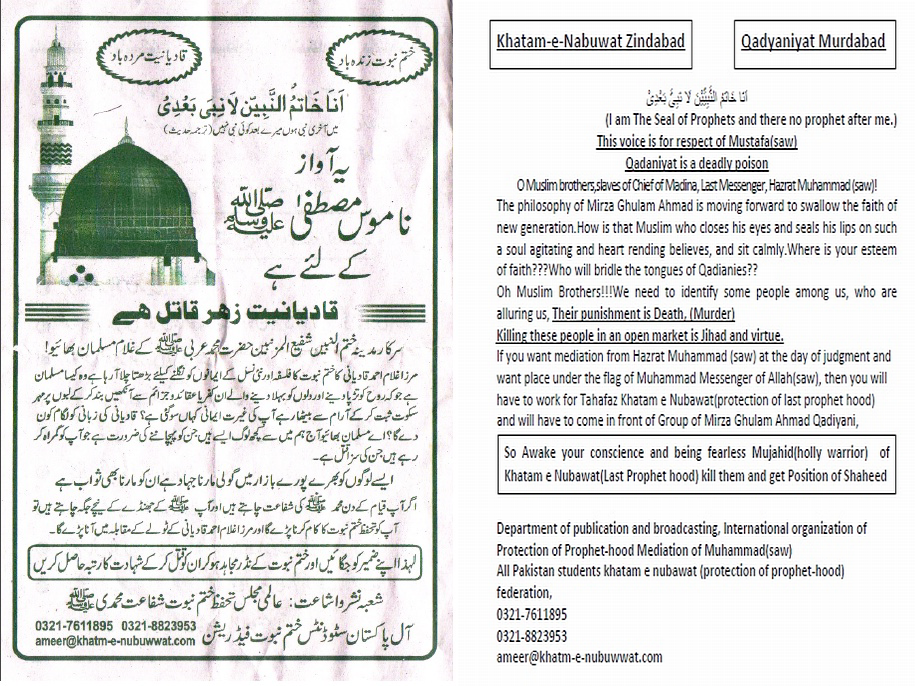
A few months ago, Faisalabad was witness to brazen warnings on Ahmadis; pamphlets labelling members of the Ahmadi community “wajib-ul-qatal” were distributed comprising names and identities of Ahmadi industrialists, doctors and businessmen. Most recently, Ahmadi residents in Lahore’s Satellite Town have been asked to leave or face dire consequences. This because they have established their place of worship which is deemed ‘unconstitutional’ by some.

It surprises me that we have forgotten those very people who helped draft the resolution that gave us Pakistan. Mohammad Zafarullah Khan was an Ahmadi but it was he who drafted the Pakistan Resolution and represented the Muslim League’s view when it came to deciding the future boundaries between India and Pakistan. He also served as Pakistan’s first minister for foreign affairs. Jinnah with his liberal views chose men to represent his country on merit, not religion, caste or creed. Pakistan’s first law minister was a Hindu who had more faith in Jinnah’s liberal views than the Congress’ secular ones; hence he decided to stay in Pakistan. Mandal was supposed to draft the first constitution of Pakistan; however he never got around to staying here long enough to see that to fruition. He resigned from the cabinet due to the consistent persecution of Hindus in Pakistan and moved back to India shortly after Jinnah’s death.

Encouraging persecution of minorities in Pakistan allows intolerance to flourish and has created precisely the kind of second-class citizenry in Pakistan – with uncertain rights and prejudiced values – that the country’s democratic principles were expected to avoid. For 64 years the whole point has been to come to some sort of conclusion as to whether this Islamic Republic of Pakistan can accommodate minorities without threatening their person, faith and livelihood. The idea has been to remove ambiguities and knock off a predominant holier-than-thou attitude towards Christians, Hindus, Ahmadis and Parsis. That clarity was in part, intended for the welfare of the existing minorities, so they could break free from their trap of uncertainty and insecurity. With a secular party at the helm, was this too much to ask for?

As religious historian Karen Armstrong stated recently: “like art, religion is difficult to do well and is often done badly.” The way to experiencing art is through an artist’s eyes. Similarly, religion is usually judged by how it is followed. The secular Pakistan Peoples Party distanced its views from those of Maulvi Nawaz Sharif’s – the alleged closet Taliban. However, it was “Maulvi Sahib” who made his way to Chak town and personally conveyed his condolences to the bereaved Hindu families. It was Sharif who pleaded to the Hindu community not to leave Pakistan, not our “secular” ruling party or its equally “secular” allies, the ANP or the MQM.

Pakistan’s minority dilemma is complex because secularism and conservatism don’t go their separate ways, but come together. Zulfikar Ali Bhutto was considered Pakistan’s most secular and liberal leader, however by adopting the Objectives Resolution in the 1973 constitution, he ended up empowering conservative forces.

Similarly, the man who promised Pakistan “enlightened moderation” also gave way to the Muttahida Majlis-e-Amal. General (r) Pervez Musharraf’s regime gave more power to the maulvis than any other government in Pakistan. Claiming to be Pakistan’s ray of hope, Imran Khan too has disappointed his secular voters (and some party workers). In an interview with Indian journalist Karan Thapar, Khan said he realised the need to ban militant organisations however, when asked to take names, he refused. Khan said he knew the threat that looms large since the Governor of Punjab, Salmaan Taseer, was murdered and hence would not endanger his own life by taking names. And his motto is? You guessed it! Change.

However, it seems the most conservative leader has turned out to be the most secular. From his proposed policy of looking inward for a solution to the war on terror, to envisioning an open trade and better relations with India, Nawaz Sharif has ended up doing what the PPP has long promised. But there are still question marks on some of his party’s leaders harbouring relations with banned outfits and participating in their rallies. His own brother and chief minister of Punjab had previously pleaded with the Taliban not to attack Punjab because of their anti-US policy. As if the other three provinces are in complete disagreement with the views of the TTP and therefore deserve to die.

Persecution of minorities in Pakistan is on a steady rise. It’s not only non-Muslims who are under threat; the minority Muslim sects are also bearing its brunt. In the last two years, almost every important day in the Shiite calendar has been witness to attacks. There have also been attacks on religious shrines of Data Darbar, Abdullah Shah Ghazi and Baba Farid. Scholars who disavowed this form of brutal violence as un-Islamic were either martyred like Maulana Sarfaraz Naeemi and Maulana Hasan Jaan, or they had to flee the country.

Come to think of it, one way or the other, we are all minorities – Punjabis in Balochistan, Mohajirs in Punjab, Pashtuns in Sindh, Baloch in Khyber Pakhtunkhwa – we are all victims of this prejudice. Will we realise, in time, what we don’t condemn today for others could very well be our fate tomorrow.

The writer works for Geo TV.

The News International - Copyright @ 2010-20
URL: www.thenews.com.pk/TodaysPrintDetail.aspx?ID=78453&Cat=9

Friday, October 14, 2011

Blasphemy Law: Coming a full circle

Dawn.com Blog
Blasphemy Law: Coming a full circle
by BUSHRA S on October 14th, 2011 |
It was bound to happen. When you have a vaguely worded law with so many loopholes, and a clergy hell bent on defining religion in asphyxiating, rigid boundaries, its supporters and enablers were bound to get scorched themselves. The law was eventually going to come and bite them in the back and that is exactly what happened two weeks ago.

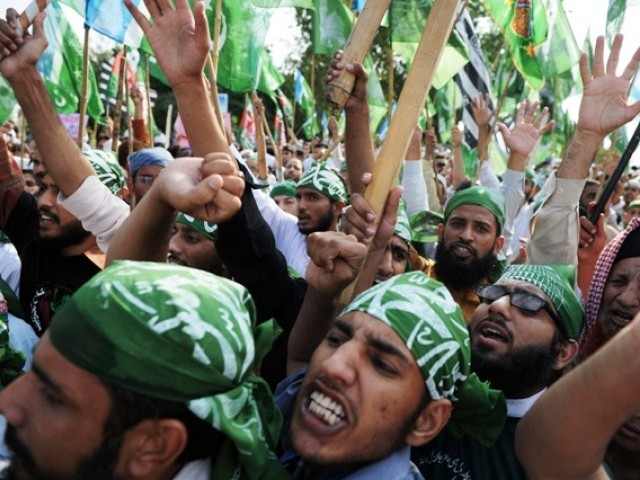
According to the news story, a student of a religious seminary in Chakwal, Junaid Ahmad was arrested for being blasphemous. He was apparently seen burning pages of Quran a week ago, was beaten by a crowd and handed over to the police. Ironically, however, a shaken and frightened Junaid claimed that he was in reality disposing off Quran’s loose pages to save them from desecration.

The story behind Junaid’s action was simple enough. His teacher, who belongs to Tehrik Khuddam Ahl-i-Sunnat, had told him that burning Quranic pages was a legitimate way of disposing them along with putting them in flowing water (stream etc) and burying them. As he was unable to find the other two options, Junaid resorted to the third one. It was just his luck that the man who saw him as he set the pages on fire had heard from another cleric that burning the Quran amounted to desecrating it. What followed is an ominous reminder of sharply converging, and rigid, interpretations among various schools of religious thought.

Diversity, whether religious or cultural, is always a good thing. But here, this diversity of belief within sects and sub-sects is stamped with unflinching righteousness, intolerance, and violent knee-jerk reactions. Leaving the organised sectarianism between Shias and Sunnis aside, these widely varying interpretations in such an environment result in friction and veiled hatred towards other sects within one’s circle. In such a situation, incidents like the one in Chakwal are in reality a mere prelude to what can follow. One of the most obvious possibilities, while remaining within the ambit of law, is the misuse of the blasphemy law against those who are fanatically in favour of it.

This misuse has already started albeit it is infrequent at the moment. In January this year, an imam and his son from Dera Ghazi Khan were convicted for life for committing blasphemy. They were accused of ripping posters from outside their grocery shop which advertised an event to observe Eid Milad un Nabi (the birth and death anniversary of Prophet Muhammad). There was strong speculation that the issue was not of blasphemy but difference of belief. The Deobandi philosophy, to which the imam and his son prescribed, do not believe in commemorating such days. So where the incident might have simply been that of removing a poster from their personal property, it was forcefully catapulted in the sphere of intentional blasphemy.

The problem, boiled down to its essence, is this: In all this ritualistic madness, this manic obsession with the act rather than the intention behind it, these “men of faith” have lost the plot. And that is an under-statement. Here school girls are ostracised for misplacing a dot in a word. Doctors are locked up for throwing away a person’s visiting card who shared the prophet’s name. People are persecuted for greeting others in Arabic language. Supporters of blasphemy laws obsessively defend its need to deter people from taking the law in their own hands; but when a man defies this very logic and kills a sitting governor whom he had taken an oath to protect, they cheer and holler themselves hoarse in his support.

So far, most of the victims of these laws are minorities and those belonging to lower and lower-middle income groups. But it won’t remain the same forever. With ferocious intolerance being allowed to breed unchecked in our country, it was only a matter of time before the factions started using this law to target religious rivals at will.

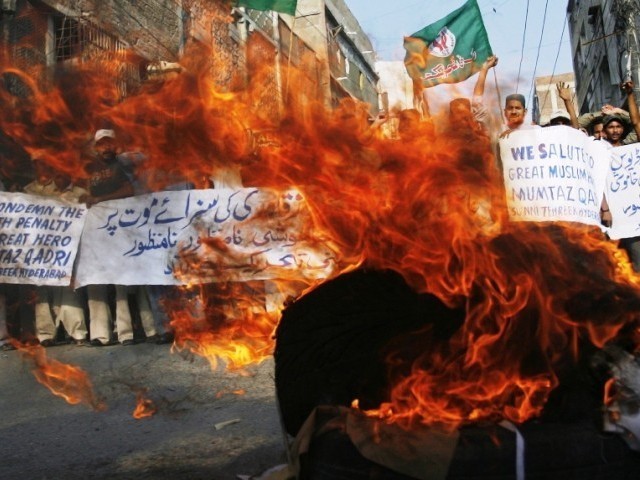
Right now a broad spectrum of religious right is united in its defence of murderer Mumtaz Qadri. Their slogans, demonstrative of their tunnel-minded support for his actions, should be deafening alarm bells for the rest of us.

It is a matter of time before these stout believers, momentarily united in their hate against “liberal fascists”, turn on each other. With such varied interpretations of religion, how will the courts interpret criteria of blasphemy? Will they take the easiest way out and just continue sentencing people in the hope the High Courts will correct the injustice? Will these cowardly actions really serve as a long-term pre-emptive solution or will the religious factions soon interlock horns?

If there is a legal or public showdown between people of different beliefs, the result will be more bloody, brutal and long drawn out than we can imagine. With all sides equally sure of their virtue and willing to die or kill for it, there might not be anyone standing at the end.

On a sardonic note, that will work out just right for the rest of the country.

Bushra S is an editor based in Lahore and can be found conversing on twitter here

©2011 DAWN Media Group. All rights reserved
URL: www.dawn.com/2011/10/14/blasphemy-law-coming-a-full-circle.html

Thursday, October 13, 2011

Intolerance in the curriculum

The News - Internet Edition
Thu, Oct 13, 2011,
Ziqad 14, 1432 A.H
Opinion
Intolerance in the curriculum

Kamila Hyat
Thursday, October 13, 2011

There have been several shocking incidents over the past week or so that go only to highlight the kind of intolerance we are facing in our society and the manner in which this is spreading. Worst of all the spirit of hatred has also seeped into classrooms, and is being used to poison the minds of children.

This process will of course lead to the emergence, even before our watching eyes, of yet another generation persuaded that it is acceptable to discriminate on the basis of beliefs or other factors, or that minority groups are inherently inferior to the majority – deserving no place in mainstream society.

Just a few days ago, 10 Ahmadi children, seven of them girls, were expelled from a school in the Hafizabad area, simply on the basis of their religious identity. The incident took place soon after preachers promoting anti-Ahmadism had visited the town and lashed out with familiar vitriol against a religious group that has been thrust out of the mainstream and then subjected to years of vicious discrimination.

The feeble plea by the principal of the private school, that he did not wish to turn away the children from the school doors but had no choice in the face of threats made by villagers, just goes to show how weak we have become.

No one has answered the question of the distraught father of three of the girls driven away from school who asks how his daughters will now receive an education. Beyond the representatives of the Ahmadi community in Rabwah and some human rights groups, no one has spoken out in their support.

The issue has not been discussed by furious media anchors, even though the Constitution of our land lays down in unequivocal terms that every citizen has a right to education and cannot be denied this under any circumstances.

Such silence is perhaps the most dangerous element of all. The streets and other public places have been left to bigots, such as those who have been on the streets demanding the immediate release of Mumtaz Qadri, the man sentenced to death for the murder of Salmaan Taseer.

Precisely the same silence prevailed after yet another horrendous incident at a school a few weeks ago when an eighth-grade Christian girl was turned out of a POF-run school in the town of Havelian after making a minor spelling mistake in an Urdu paper.

Her teacher interpreted the mistake as an act of blasphemy, publicised the matter – which essentially revolved around one dot in a paragraph about a ‘naat’ – and as clerics staged protests the powerful POF management chose not only to expel the girl, but also to transfer her mother, a nurse at a hospital.

Such incidents have occurred elsewhere too. Ahmadi children have been punished in schools, their faith ridiculed and admission denied simply on the basis of their religious beliefs. Amidst all this, we talk of ‘the silent majority’. But do we really know what people believe and think?

It is true that many, indeed most, do not agree with the rabid views of the extremists. We would like to believe this is true. But popular thinking has been warped over the years by all kinds of factors that began essentially with the deliberate and evil distortions initiated in the early 1980s when our society first began its most serious transformation into an uglier, nastier place.

Discrimination is not based on religious beliefs alone. At an elite Lahore private school, a child from a different ethnic background was mocked and subjected to continuous ridicule for his appearance. It seems that the school management didn’t do very much to check this behaviour or persuade the majority of students who had resorted to uncivilised conduct towards the student to correct their ways.

Racism and bigotry of course need to be stopped using some degree of force within an environment in which the two have spread quite far and grown deep roots. African students based in colleges in Lahore and other cities will no doubt testify to the kind of treatment they face, solely on the basis of their skin colour.

One question that we all need to ask is why the government sits by as a silent spectator while all this happens. It needs to play a far more proactive role. We stand where we are today as a result of carefully thought out behaviours and policies put in place in the past. They succeeded in twisting minds and creating an atmosphere in which hatred, distrust and intolerence could blossom.

The need now is to begin an immediate reversal of this process. In the first place, the relevant authorities need to take notice of the instances of expulsion from schools on the basis of open and undisguised discrimination; this would put in place a good example of what should be done and where right separates from wrong, like oil from water.

There is no time to lose. It is quite obvious that things are growing worse and worse virtually by the day. Our only hope for the future lies in nurturing a generation that is able to think more openly and adopt an approach which is different to the destructive one that has become a normal part of our society today.

The provision that all citizens are equal needs to be turned into reality and not just a clause in a document that fewer and fewer people seem to be very bothered about.

How do we begin this? Schools are a good place to start. Government schools are perhaps the best, given the number of children attending them and the control the administration should have over them. Through curriculums and training for teachers, both children and those entrusted with the delicate task of educating them need to learn to think differently.

This is not an easy task of course. But it has been done elsewhere; Ireland, where Protestants and Catholics were deeply divided in the north for so many years, is one example where attempts towards greater harmony through schools have met with some success.

There are other examples in the world. We need to emulate them and move towards building a place where people are ready to speak out for what is right and refuse to allow extremist elements – who attempt to validate their intolerant ways by citing a distorted version of religion – to dictate how we live and what we do.

The writer is a freelance columnist and former newspaper editor
Email: kamilahyat@hotmail.com

The News International - Copyright @ 2010-20
URL: www.thenews.com.pk/TodaysPrintDetail.aspx?ID=72295&Cat=9
...

Monday, October 10, 2011

Qadri supporters rail against US, Ahmadis

Express Tribune, Pakistan
Pakistan
Punjab
Qadri supporters rail against US, Ahmadis
By Rana Tanveer
Published: October 10, 2011
Sunni Ittehad announces ‘Remove government’ train march on Nov 21. PHOTO: AFP
LAHORE: Speakers at the Sunni Ittehad Council’s (SIC) National Khatam-i-Nabuwat Conference railed against the death sentence handed to Mumtaz Qadri for the murder of Salmaan Taseer, as well as Ahmedis and America, on Sunday.

SIC Chairman Sahibzada Fazle Karim announced that they would hold a ‘Remove government’ train march from Rawalpindi to Karachi on November 21 to press for Qadri’s release. “We will not let them hang Mumtaz Qadri,” he said to loud cheers. He said that Islam allowed the killing of a blasphemer.

Karim said Ahmedis were conspiring with America against Islam. He said that the SIC would fight for Islamic rule in Pakistan. They would also stop “the US dream of Indian supremacy in the subcontinent” from becoming a reality. He said the Sunni Tehrik was being victimised in Karachi and demanded that the government release its workers and leaders.

Jamat Ahle Sunnat (JAS) Nazim Aala Allama Syed Riaz Hussain Shah also spoke out against Ahmedis, saying they were “agents of anti-Pakistan forces” and involved in anti-state activities.

JAS Ameer Syed Mazhar Saeed Kazmi said appointing Ahmedis to key posts was a violation of the Constitution. He demanded that all Ahmedis be expelled from key posts. He said Ahmedis were created by the British.

At the end of the conference, the participants passed a resolution demanding the government end unemployment and power outages, and the president pardon Mumtaz Qadri.

Published in The Express Tribune, October 10th, 2011.

Copyrighted © 2011 The Express Tribune News Network
URL: http://tribune.com.pk/story/270591/qadri-...us-ahmedis/

Saturday, October 8, 2011

Ahmadi students, teacher expelled from Pak schools

Zee News India
South Asia
Ahmadi students, teacher expelled from Pak schools
Last Updated: Saturday, October 08, 2011, 12:53
SBY
Islamabad: Ten students, including seven girls, and a woman teacher belonging to the minority Ahmadi sect have been expelled from two schools in Pakistan’s Punjab province amid a hate campaign against the community, a media report said on Saturday.

They were expelled from Chenab Public School and Muslim Public School at Dharanwali in Hafizabad.

A public meeting held recently in Dharanwali had spread hatred against Ahmadis, Jamaat Ahmadiyya Pakistan spokesman Saleemuddin said.

The expulsions came in the aftermath of intolerance that some religious preachers were bent on evoking among local residents, Saleemuddin told ‘The Express Tribune’ daily.

“They went so far as to say that they would never allow for an Ahmadi to be buried in their graveyard, let alone allow an Ahmadi to study in a school with their children,” Saleemuddin alleged.

Soon after the hate speeches, 10 Ahmadi students and the teacher were expelled from the schools.

Khalil Ahmad, whose three daughters were among the expelled students, said: “It is extremely unfortunate that my daughters are being deprived of the most basic and fundamental human right such as education…all because of religious intolerance.”

He said: “I have no alternative to ensure that their education continues.”

He questioned why authorities were not implementing Constitutional provisions that ensure equal rights for all.

“I’ve never seen Christians and students belonging to other religions ever having to deal with such restrictions,” he said.

Muslim Public School principal Yasir Abbas said he had “personally opposed the expulsion on the basis of faith”.

He said: “This is not my decision… the entire village unanimously pressed me to expel all Ahmadis from the school, or else they would forcibly shut the school down.”

The Punjab government’s initiative allowing people to register for schools online makes it mandatory to disclose their religion, including whether they are Muslim or non-Muslim.

“This was never the case previously. It’s very simply a calculated move to subject the Ahmadiyya community to discrimination and deprive them of their right to education,” Saleemuddin alleged.

Ahmadis do not refer to themselves as “non-Muslim”, but that does not stop them from being kept away from educational institutions.

For the first time ever, authorities have introduced a system whereby religion is displayed on roll number slips.

“It’s like they’re making a conscious effort to mentally torture us,” Saleemuddin said.

Dozens of members of the Ahmadi sect have been killed in terror attacks in the past two years.

PTI

© 1996-2011 Zee News Limited, All rights reserved
URL: http://zeenews.india.com/news/south-asia/ahmadi...735559.html

Ahmadis expelled from school

Express Tribune, Pakistan
Pakistan
Ahmadis expelled from school
By Shamsul Islam
Published: October 8, 2011
10 students, teacher forced out of schools because of their faith.
FAISALABAD: At least 10 students, including seven girls, and a female teacher were expelled from Chenab Public School and Muslim Public School, Dharanwali area of Hafizabad, for being Ahmadis.

“It is extremely unfortunate that my daughters are being deprived of the most basic and fundamental human right such as education … all because of religious intolerance,” Khalil Ahmad, whose three daughters were expelled, told The Express Tribune. “I have no alternative to ensure that their education continues,” he added.

What about the constitutional provisions which ensure equal rights for all? What about the rule of law that says no discrimination can be made on the basis of faith, race, cast and creed, he questions.

“I’ve never seen Christians and students belonging to other religions ever having to deal with such restrictions,” the distraught father says.

“I personally opposed the expulsion on the basis of faith,” Muslim Public School Principal Yasir Abbas responds when contacted by The Express Tribune.

“This is not my decision … the entire village unanimously pressed me to expel all Ahmadis from the school, or else they would forcibly shut the school down,” he added.

A public meeting held in Dharanwali recently was spreading hatred against Ahmadis, Jamaat Ahmadiyya Pakistan spokesperson Saleemuddin says, adding that expulsion came in the aftermath of the intolerance that some religious preachers were bent on evoking amongst locals in the area.

“They went so far as to say that they would never allow for an Ahmadi to be buried in their graveyard, let alone allow an Ahmadi to study in a school with their children,” Saleemuddin alleges.

Soon after the hate speech, ten Ahmadi students and a teacher were expelled from local schools.

The Punjab government’s initiative allowing people to register for schools online makes it mandatory for one to disclose their religion – whether they are Muslim or Non-Muslim. “This was never the case previously. It’s very simply a calculated move to subject the Ahmadiyya community to discrimination and deprive them of their right to education,” Saleemuddin says.

Ahmadis never refer to themselves as “Non-Muslim”, but that doesn’t keep them from being kept away from educational institutions. Similarly, for the first time ever, they’ve introduced this system where religion is displayed on the Roll Number slips. “It’s like they’re making a conscious effort to mentally torture us,” he says.

Published in The Express Tribune, October 8th, 2011.

Copyrighted © 2011 The Express Tribune News Network
URL: http://tribune.com.pk/story/269390/ahmadis-expelled-from-school/

Friday, October 7, 2011

Incitement goes unchecked as hatred is spewed at rallies

Express Tribune, Pakistan
Pakistan
Incitement goes unchecked as hatred is spewed at rallies
By Saba Imtiaz
Published: October 7, 2011
Protests against Salman Taseer's murderer Qadri's death sentence.
KARACHI: The judge who sentenced former Punjab Governor Salmaan Taseer’s assassin, Malik Mumtaz Hussain Qadri, to death has been forced to go on leave after threats, banners and slogans at rallies proclaiming him a non-Muslim and an Ahmadi.

His court in Rawalpindi was also attacked by lawyers.

The irony is that the judge of an anti-terrorism court (ATC) is dealing with an ‘action’ of terrorism that is defined in the Anti-Terrorism Act (ATA).

The law states that acts of terrorism include the “[incitement of] hatred and contempt on religious, sectarian or ethnic basis to stir up violence or cause internal disturbance”.

This basic definition has not stopped the ongoing campaign of inciting hatred.

But building a case against these individuals requires determining violations of the ATA, particularly incitement. While law enforcement and intelligence agencies are tasked with the job, their assessments are often based on their operatives’ views and biases.

For example, a Jamaat Ahmadiyya representative told The Express Tribune that when police officers entered the places of worship in Lahore after scores of Ahmadis were massacred in 2010, among their first few words were: “Saare hi marr gaye ho ya koi bacheya vi aye?” [Are all of you dead, or did someone survive?].

Former IG Sindh police Aftab Nabi says that the police should depute officers with different backgrounds to get a broader analysis. This, he says, would help overcome any limitations the officer has.

Despite this, law enforcement agencies have monitored people known for inflammatory speeches, such as Lashkar-e-Jhangvi’s (LeJ) Malik Ishaq, who was recently detained under the Maintenance of Public Order (MPO) Act.

Secondly, provincial governments also allow and provide security to rallies where incitement occurs. Rallies in Lahore supporting Qadri continue to be held, highlighting state complicity.

In a United States Institute of Peace report on police reforms, author Hassan Abbas referenced analysis by Khaled Ahmed on the issue: “Throughout the 1990s one or two intelligence officers in each district of Pakistan were tasked to help out members of the state-supported militant groups if the police ‘create[d] any problems for them’.”

The report further adds, “In private discussions police officers routinely mention apprehending militants and criminals but quickly receiving ‘requests’ from intelligence agencies (civilian or military) to let them go. Although the intensity of such practices has decreased in the post-9/11 environment, even today the police hesitate to pursue militants and activists associated with groups generally known for their close relationship with the intelligence services.”

Criminal lawyer Zulfiqar Abbas Naqvi disagrees with the perception that the ATA is insufficient or that the courts and police don’t do their job. “The real issue is of evidence. People need to come forward and testify. They do have fears, but what they don’t realise is that they may be setting a murderer free who will later either shoot them or someone else. A man will be caught red-handed kidnapping someone but the victim will say in court, ‘I don’t recognise this person.’ What is the court supposed to do?”

A witness protection programme has been in the works in Sindh for several months now, but has not been implemented yet.

Naqvi says suspects have also become savvier. “Suspects in terrorism cases are often picked up by the intelligence agencies who detain them for one or two months. During this time, their organisations file writ after writ about the illegal detention and rile up the public. By the time the police make a formal arrest, the court will not accept their reasons for the delay. To avoid this, the police should make the initial arrest and then the agencies can interrogate the suspect. They could also amend the period of remand.”

Published in The Express Tribune, October 7th, 2011.

Copyrighted © 2011 The Express Tribune News Network
URL: http://tribune.com.pk/story/268509/incitement...at-rallies/

Monday, October 3, 2011

Pakistan’s blasphemy laws have left even judges in fear of their lives

Guardian, UK
Comment is free > Cif Belief
Pakistan’s blasphemy laws have left even judges in fear of their lives
The furore over the killing of Punjab governor Salmaan Taseer for allegedly licentious behaviour is merely the latest and most extreme example of an appallingly divisive issue
Declan Walsh
Declan Walsh
guardian.co.uk, Monday 3 October 2011 20.00 BST
Mumtaz Qadri, sentenced to death for killing Taseer Photograph: STRINGER/PAKISTAN/REUTERS
Mumtaz Qadri, sentenced to death for killing Taseer
Photograph: STRINGER/PAKISTAN/REUTERS
So he’s going to swing — perhaps. On Saturday a Pakistani judge sentenced Mumtaz Qadri, the police bodyguard who assassinated the Punjab governor Salmaan Taseer, to death by hanging. The young policeman smiled and thanked God. “My dream has come true,” he reportedly said.

It was a predictably theatrical turn from Qadri, a former nobody who murdered Taseer in cowardly fashion – shooting the governor 27 times in the back – and who has since revelled in the notoriety of his blood-stained celebrity. Equally predictable, alas, was the reaction on the streets outside.

Close to the courtroom in Rawalpindi, angry young men attacked a monument to the former prime minister Benazir Bhutto, defacing her image on the spot where she died in a suicide bombing in 2007. Down in Lahore, turbaned men with long sticks surged through the ancient Anarkali bazaar, thrashing traders who refused to shutter their shops in sympathy for Qadri.

Meanwhile the clerics engineering the protests – old men with soft palms and tinder-dry beards – issued po-faced statements decrying the sentence. Qadri was a good Muslim, they insisted, and Taseer got what he deserved. The governor had offended them by advocating reforms to Pakistan’s antiquated blasphemy laws. In particularly they hated him for defending Aasia Bibi, a Christian mother-of-five sentenced to death under those laws last November. He deserved to die, they said.

Taseer’s wife and children, in contrast, were silent. They stayed at home, busy worrying about their son and sibling, Shahbaz. The 27-year-old was kidnapped in August as he purred through Lahore in a sports Mercedes – his father’s old car, in fact. Word has it he is being held in the tribal badlands of Waziristan; whether his captors are religious extremists, common criminals, or both, remains unclear.

The family is also reeling from character assaults. When Taseer was still alive, conservatives circulated photos of his children, lifted from their Facebook pages, showing them engaged in objectionable activity, such as dating and swimming in a swimming pool. After Taseer died, Qadri’s lawyers aired allegations about his sex life, drinking habits and apparent taste for pork – proof, they said, of a licentiousness that justified his cold-blooded murder.

The distasteful spectacle is partly a product of Pakistan’s social gulf. The Taseers inhabit the gilded bubble of a tiny elite whose westernised lives play out in Hello!-style photospreads of society magazines. In fact the Taseers own one of the most popular magazines. But it also goes to the heart of a bigger ideological crisis.

In theory, Pakistan is a country that welcomes all creeds and castes. But in practice it is proving to be anything but. Ask Faryal Bhatti, a teenage girl recently expelled from school for the crime of bad spelling.

A week ago last Thursday, the 13-year-old Christian girl was sitting an Urdu exam which involved a poem about the prophet Muhammad when she dropped a dot on the Urdu word naat (a devotional hymn to the prophet), accidentally turning it into lanaat, or damnation. Spotting the error, her teacher scolded her, beat her and reported the matter to the principal. The news soon flamed through her community in Havelian, 30 miles north of Islamabad.

Mullahs raged against Bhatti in their sermons; a school inquiry was hastily convened to examine the matter. Bhatti was expelled; her mother, a government nurse, was banished to another town, and the family has since fled Havelian in fear of their lives. All over a missing dot.

What accounts for such madness? In some parts Taseer’s death has inspired a McCarthyite atmosphere in which nobody wants to seen to be soft on blasphemy. But there is also a more profound reason. Devotion to the prophet Muhammad is central to the faith of the Barelvi Sunnis, who make up the majority of Pakistani Muslims. Even a whiff of insult to the prophet can whip up feverish anger.

The core problem, in fact, is that the blasphemy furore exposes the fragility of the Pakistani state – ideological, legal and security-wise. The mixing of religion and politics has long troubled Pakistan, but over the past 30 years that dangerous cocktail has been spiked by the army’s policy of nurturing extremists – hence men like Qadri who believe they have a right to kill in the name of God.

Meanwhile President Asif Ali Zardari’s government has shown zero leadership when it comes to reforming the blasphemy law – in fact, cowardly ministers have run a mile from any suggestion of change. And those who do dare to stand up for progress – or just the rule of law – live in fear of the next Qadri-style hit.

In truth, Taseer’s baby-faced killer is unlikely to be hanged any time soon. A lengthy appeals process is just starting, and the Zardari government has imposed an unofficial moratorium on capital punishment. But the judge who sentenced him, Pervez Ali Shah, faces perhaps shorter odds.

Judges who rule the “wrong” way on blasphemy face immense dangers in Pakistan. In 1997 extremists burst into the chambers of a high court judge who acquitted an accused blasphemer three years earlier, and shot him dead. Justice Shah will be fearing a repeat.

Reporters at Qadri’s hearing on Saturday noted that the judge slipped from the courtroom via the back door. He knows he is a marked man. Now only time will tell if the discredited Pakistani state can stand up for at least one good man.

© Guardian News and Media Limited 2011
URL: http://www.guardian.co.uk/commentisfree/...blasphemy-laws

Ahmadi schoolteacher shot dead in Sheikhupura

Express Tribune, Pakistan
Pakistan
Ahmadi schoolteacher shot dead in Sheikhupura
By Rana Tanveer
Published: October 3, 2011
Dilawar Hussain was shot twice at the government school where he taught.
LAHORE: As his students watched, a recent convert to the Ahmadi faith, Dilawar Hussain, 42, was shot dead at a government primary school in a village in Sheikhupura on Saturday.

According to the FIR registered, the deceased was shot twice while he was taking a class at the primary school in Dere Golianwala.

Hussain, along with his wife, Ishrat Bibi, and four children, had recently converted to the Ahmadi faith. His family was the only one in the village belonging to the Ahmadiyya community, Sheikhupura’s Ameer Jamaat Ahmadiyya Chaudhry Abdul Hameed Bhatti told The Express Tribune.

He said the deceased’s siblings boycotted him after his conversion and other relatives went against him when local clerics declared him “liable to be killed”.

Bhatti said even his brothers, one of whom is a police officer, did not want to register an FIR and become a complainant. Instead, they made Ishrat Bibi the complainant and prepared the application themselves.

Hussain’s relatives refused to own his body. At the same time, they created obstacles for his widow to take the body away from the village to Rabwah, the headquarters of the Ahmaddiya community. However, under police security, she finally managed to take the body away.

Sheikhupura SHO Shahid Zafar Gujjar said that as the FIR was registered against two unidentified people, they had no information about the murderers.

The SHO said authorities will be able to trace out the assailants once the witness identifies them. He added that the police had completed the legal requirements by getting autopsy of the body and registering the FIR. He revealed FIR # 1146/11 under section 302 of the Pakistan Penal Code had been registered against the assailants.

Saleemuddin, a spokesperson for Jamat-e-Ahmadiyya Pakistan, condemned the murder and demanded the immediate arrest of the accused. He said fatwas declaring members of the Ahmadi sect “liable to be killed” were being issued in different parts of the country and these religious edicts were being published in vast numbers. This, according to Saleemuddin, has resulted in target killings of many Ahmadis.

Published in The Express Tribune, October 3rd, 2011.

Copyrighted © 2011 The Express Tribune News Network
URL: http://tribune.com.pk/story/265652/ahmadi-schoolteacher-shot...

Monday, September 19, 2011

Jinnah’s Pakistan, hijacked by clerics

The Express Tribune Blogs
Opinion
The Verdict
Kashif ChaudharyJinnah’s Pakistan, hijacked by clerics
Posted by Kashif Chaudhry
Published: September 19, 2011
Jinnah founded Pakistan with the dream of it being a secular state where people could live as free citizens. However, today, Pakistan finds it hard to uphold the very ideals it was founded upon
Jinnah founded Pakistan with the dream of it being a secular state where people could live as free citizens.However, today, Pakistan finds it hard to uphold the very ideals it was founded upon
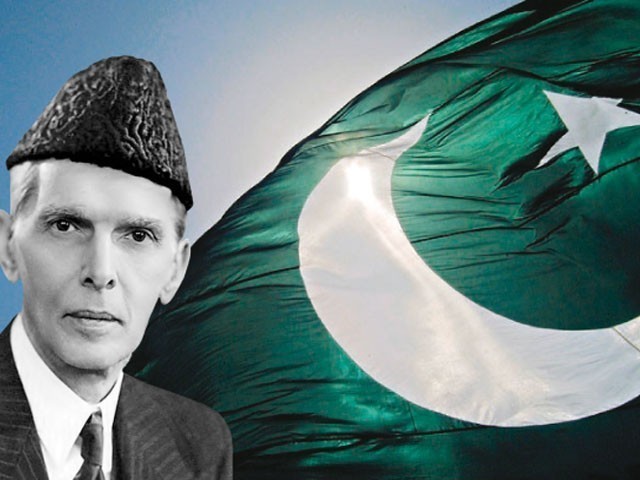
With the partition of the Indian subcontinent, Pakistan came into existence on August 14, 1947. The valiant and astute Muhammad Ali Jinnah led the minority Muslim community of united India to a separate homeland to fulfill the demand for freedom of religion, profession, and speech.

Jinnah was an outstanding lawyer who had studied law in London. He had a modern outlook on the world and was strongly secular. Part of the oath under which he took office reads:

“No subject … in Pakistan shall, on grounds only of religion, place of birth, descent, color or any of them be ineligible for office.”

He was absolutely clear that the new state he was founding would accommodate people of all faiths and descent without any prejudice. To assert this point, he appointed a non-Muslim as his first law minister. The Muslims in his cabinet consisted of Sunni, Shia, and Ahmadis alike. He believed that Islam endorsed a secular democracy and the two were perfectly compatible.

“The great majority of us are Muslims. Consequently, we have a special and a very deep sense of unity. But make no mistake: Pakistan is not a theocracy or anything like it” he said in an address in 1948.

He believed in a Pakistan wherein the mosque would be separate from the state.

“You are free; you are free to go to your temples, you are free to go to your mosques or to any other place of worship in this State of Pakistan. You may belong to any religion or caste or creed that has nothing to do with the business of the State” he said.

In the struggle for Pakistan, Jinnah was not faced with the Indian Congress and the British alone. He also had to endure intense animosity from hard-line Muslim clerics and counter their vile propaganda. He was accused, by the ultra right-wing, of blasphemy, and they considered him a great heretic for his secular ideology.

Prominent clerics like Maulana Maududi urged common Muslims not to side with Jinnah. Maududi wrote:

“It is forbidden to vote for [Jinnah’s] Muslim League.”

Despite this, the resolute Jinnah was successful in garnering support from the masses in most Muslim-majority areas.

Today, the nation finds it hard to uphold the very ideals it was founded upon. As it passes through dangerously volatile times, it has forsaken its founding principles of freedom and secularism.

But how and why did Pakistan turn against itself?

Even though he tried his best to steer it toward a secular democracy, Jinnah did not live long enough to see it become one. Over the coming years, Pakistan took a very troubling turn. In a matter of nine years, it became an “Islamic Republic,” and in a little over two decades, it had essentially become a theocracy.

The same extremist clerics who had opposed Jinnah and his struggle for Pakistan gradually claimed ownership of the State. They formed political groups that used religion to amass public support. Their demonstrations of street power, frequently violent, meant that sectarian hatred and intolerance was the order of the day.

Even governments avoided a clash with the radical right and became increasingly wary of arousing any negative religious sentiment and consequently losing popular vote. This only furthered the extremist cause, and in time, the original path Pakistan started on was completely forsaken. Pakistan, it is now said, was formed for the Muslims and is meant to become an Islamic theocracy where the Shariah, as interpreted by the hard-liners, is to be the ultimate law.

One tragedy after another, Jinnah’s Pakistan was dealt with massive blows. His Pakistan was no more his; it had been hijacked by forces of extremism and intolerance.

Non-Muslims could not hold the highest office in any of the core institutions anymore.

In 1953, there were widespread riots against the Ahmadi Muslims, a sect that extremists considered heretics.

The harassment of Shia Muslims and other minority groups also increased and went largely unchecked.

In 1974, the government yielded to intense pressure and declared the Ahmadiyya sect non-Muslim.

Tout de suite, the State had taken authority to decide its people’s religion, and the two were no longer separate.

General Zia ul Haq took over the country and became its third military president in 1977. To legitimize his dictatorship, he sought to please the right-wing and set to Islamize Pakistan. Amongst other things, he introduced the controversial blasphemy laws that stated death as the punishment for any derogatory remark against the Quran, Prophet Muhammad (PBUH), and other Islamic holy personages.

For Ahmadis, Zia also promulgated an ordinance in 1984 that criminalized the practice of their faith. Zia’s rule was the toughest for citizens who did not adhere to what had now become the state-backed perversion of Islam. Jinnah’s secular Pakistan had drifted into the hands of his enemies.

Jinnah had warned of this in his August 11th, 1947 address to the Constituent Assembly of Pakistan. He said:

“As you know, history shows that in England, conditions, some time ago, were much worse than those prevailing in India today. The Roman Catholics and the Protestants persecuted each other. Even now there are some States in existence where there are discriminations made and bars imposed against a particular class. Thank God, we are not starting in those days.” He continued: “Today, you might say with justice that Roman Catholics and Protestants do not exist; what exists now is that every man is a citizen, an equal citizen of Great Britain and they are all members of the nation.”

In the same address, he said:

“My guiding principle will be justice and complete impartiality, and I am sure that with your support and cooperation, I can look forward to Pakistan becoming one of the greatest nations of the world.”

Jinnah knew that a secular form of government could bridge differences and bring together people of all faiths and backgrounds to build a strong Pakistan. Just as the Catholics had learned to live with the Protestants, he was optimistic that the Pakistan he was founding would be a successful nation, a beacon of tolerance and an example of unity in diversity. However, the men who opposed Jinnah’s ideals before partition stood in his way yet again.

Founded on freedom of religion and practice, Pakistan is one of the biggest violator of religious freedom today. For Pakistan to succeed, it will have to reverse the dangerous turn it took and get back on the path that Jinnah laid before it. The blasphemy laws must be amended, everyone must be equal citizen of the state, the anti-Ahmadi laws must be revisited and the state must remain separate from the mosque at every cost. Pakistan must educate itself and look for the unity that Jinnah so cherished in the diversity across the land.

In February 1948, Jinnah said in an address:

“You have to stand guard over the development and maintenance of democracy, social justice and the equality of manhood in your own native soil. With faith, discipline and selfless devotion to duty, there is nothing worthwhile that you cannot achieve.”

Unfortunately, recent events have shown that Pakistan is still far away from taking that vital turn. The government has shown little resolve to go after the perpetrators of religious hate and violence and definitely no will to even trigger a dialogue on the controversial laws of the land. With Pakistan headed toward a steep decline, the solution lies in bold courage and reform. Jinnah’s Pakistanis will have to wake up sooner than later and reclaim the land from his opponents. Pakistanis must bring about a rebirth of Pakistan – Jinnah’s Pakistan.

Copyrighted © 2011 The Express Tribune News Network
URL: http://blogs.tribune.com.pk/story/8046/jinnahs-pakistan-hijacked-by-clerics/

CJ urged to take action against land grabbing

The daily Nation, Pakistan
 Monday, September 19, 2011
CJ urged to take action against land grabbing
Published: September 19, 2011

CHINIOT — Advocate Supreme Court Malik Rab Nawaz has appealed to the Chief Justice of Pakistan Iftikhar Muhammad Chaudhry to take suo motu action against Qadiani Jama’at which is not accepting the amendment in constitution that declares it as non-Muslim jama’at.

Addressing the 6th Khatam-e-Nabuwat Conference under the auspicious of Khatam-e-Nabuwat Lawyers Forum here on Thursday, he said that Qadianis had refused to accept the non-Muslim status and entering their names in voter lists as Muslims. He also urged Punjab Chief Minister Shahbaz Sharif to take notice of Qadiani land mafia which had grabbed hundred acres of govt land situated at Chenab nagar (Chak Dhigyan).

Rab Nawaz highlighted that Qadianis Jama’at had occupied all the land of high way, railway and mineral department and the land of River Chenab’s old bridge road in the name of grassy plots and tree plantation. He demanded the CM to direct the Chiniot DCO and Chenab Nagar TMA to get this land free.

He further said Qadianis, violating the rules and directions of State Bank, had made private exchange bank where hundi system was on the rise. He asked the Prime Minister Yousuf Raza Gilani to take immediate notice of this violation. He demanded the authorities concerned to create a column of non-Muslims in identity card for Qadianis.

Paying tribute to the leaders and workers of Tehreek Khatam-e-Nabuwat, he commemorated their sacrifices and struggles during the movement.

Friday, September 16, 2011

EDITORIAL: Religious freedom in Pakistan

Daily Times, Pakistan
Friday,
September 16, 2011

EDITORIAL: Religious freedom in Pakistan

US Department of State’s July-December, 2010 International Religious Freedom Report has documented “major developments with respect to religious freedom in 198 countries and territories”. The report placed China, Eritrea, Iran, Myanmar, North Korea, Saudi Arabia, Sudan and Uzbekistan as “countries of particular concern” regarding religious freedom while 10 other countries, including Pakistan, were cited for failing to sufficiently protect religious rights. The report has raised important points regarding our country. On Pakistan, it says: “The government did not reform a blasphemy law that had been used to prosecute those who belong to religious minorities, and in some cases Muslims who promote tolerance. The government also used provisions of the penal code to prevent Ahmedis from practicing their religion. Members of other Islamic sects, Christians, Sikhs, and Hindus also reported governmental and societal discrimination…The government of Pakistan rarely prosecuted perpetrators of extremist attacks, deepening the climate of impunity.”

When late Governor Salmaan Taseer raised the issue of amending the blasphemy laws, he was silenced by a fanatic’s bullets. With Mr Taseer’s death, the issue of blasphemy laws also died a silent death. Minorities Minister Shahbaz Bhatti was the second victim of the religious fanatics who opposed anyone challenging the flawed blasphemy laws. These laws have been used to settle petty feuds, personal rivalries, property disputes, etc, both against the Muslims and non-Muslims by people with vested interests. Many Islamic scholars are of the opinion that Pakistan’s blasphemy laws are man-made and thus can be changed since they are not based on Islamic teachings. Unfortunately, anybody who dares to challenge the veracity of these laws as per Islamic jurisprudence are threatened, harassed and/or killed. The government has, by the looks of it, given up on any debate regarding the blasphemy laws in view of two publicised killings of politicians this year — Punjab Governor Salmaan Taseer and federal Minorities Minister Shahbaz Bhatti. Blasphemy laws are not the only flawed laws present in Pakistan’s statute books. General Ziaul Haq might not have been responsible for declaring the Ahmedis non-Muslims but the laws promulgated under his command banning the Ahmedis from practicing their religion openly led to the persecution of the Ahmediyya community. The hate campaign against the Ahmedis continues to date. Just this year, Tehrik-e-Tahafuz-e-Khatm-e-Nabuwat took out pamphlets openly inciting violence against the Ahmedis in Punjab. It has led to various attacks on Ahmedi citizens resulting in the deaths. So far, the Punjab government has not just failed to nab the culprits but it has also turned a blind eye to such hate-mongering campaigns in the province. Sectarian violence is rampant all over Pakistan. Many Shias have lost their lives at the hands of banned sectarian outfits like the Lashkar-e-Jhangvi (LeJ) and Sipah-e-Sahaba Pakistan (SSP). These outfits have the overt and covert support of our intelligence agencies, which is why no action has been taken against them either. Christians, Hindus and Sikhs do not feel safe in this hostile environment. Religious minorities are treated worse than second-class citizens in our country.

There are many reasons for religious intolerance in Pakistan. Madrassas, jihadi organisations, textbooks with distorted history, sermons by illiterate and intolerance clerics, etc, are but a few reasons why Pakistan remains one of the most intolerant societies worldwide. The government must bring about educational reforms and close down religions seminaries or at least bring them into the mainstream. Hate literature should be banned. The military’s flawed policies of supporting sectarian outfits and other religious organisations must come to an end apart from making Pakistan’s constitution secular in letter and spirit. *

Thursday, September 15, 2011

Religious freedom report: Pakistan one of 10 countries ‘failing to protect minorities’ rights’

Express Tribune, Pakistan
Pakistan
Sindh
Religious freedom report: Pakistan one of 10 countries ‘failing to protect minorities’ rights’
By Atika Rehman
Published: September 15, 2011
US state department report states that the Pakistani govt failed to protect minorities against abuse, discrimination. PHOTOS: FILE
KARACHI: Pakistan was cited among 10 countries “failing to sufficiently protect religious rights”, in a report regarding religious freedom released by Washington on Wednesday.

The other countries, mentioned in the US State Department’s International Religious Freedom report for the second half of 2010, included Afghanistan, Egypt, Iraq, Nigeria, Russia, Tajikistan, Turkmenistan, Venezuela and Vietnam.

However, Pakistan was not included in the list of ‘countries of particular concern’ regarding religious freedom – much to the dismay of the US Commission on International Religious Freedom (USCIRF). The list named China, Saudi Arabia, Myanmar, North Korea, Eritrea, Iran, Sudan and Uzbekistan.

“… the current list continues with glaring omissions, such as Pakistan and Vietnam. We respectfully urge Secretary Clinton to consider the six additional countries we recommended for designation,” said USCIRF Chair Leonard Leo.

The report details actions such as active state repression, violence against religious groups, apostasy and blasphemy laws, anti-Semitism and restrictions on religious attire and expression.

The report bluntly states that the constitution and laws in Pakistan “restricted religious freedom and, in practice, the government enforced these restrictions.”

Citing acts of violence against religious minorities as well as societal and governmental discrimination, it states that “the government rarely investigated or prosecuted the perpetrators of increased extremist attacks on minorities and the majority promoting tolerance, which deepened the climate of impunity.”

The report includes a long list of case studies of violence and discrimination against Ahmadis, Christians, Sikhs, Hindus and other Muslim sects.

The controversial blasphemy law, Aasia Bibi’s case in particular, and discrimination against the Ahmadiyya community take centre stage in the 30 pages of the report dedicated solely to Pakistan. “The government did not undertake reform measures to prevent the abuse of the blasphemy laws.

Toward the end of the reporting period the public discourse regarding the blasphemy laws became increasingly heated, which contributed to the government’s reluctance to address the issue. For example, after initially signalling he was considering pardoning Aasia Bibi’s death penalty sentence for alleged blasphemy, President Zardari refrained from doing so,” the report states.

It adds that the government, in fact, distanced itself from a bill introduced by a member of the ruling party that would have amended the blasphemy laws to prevent abuse.

Terming the blasphemy laws “a legal weapon against religious minorities and other Muslims”, the report says that the government’s failure in addressing religious hostility fostered intolerance and acts of violence against minorities and Muslims alike.

However, the report gives credit to the slain minorities minister Shahbaz Bhatti for promoting religious tolerance and taking an active role in assisting victims of religiously motivated attacks on Christians and Ahmadis.

The report states that, according to the National Commission for Justice and Peace (NCJP), between 1987 and 2010, a total of 1,068 persons were charged under the blasphemy laws. In 2010, blasphemy complaints were registered with the police against 17 Christians, eight Muslims, five Ahmadis, and seven Hindus, according to the report.

(ADDITIONAL INPUT FROM AFP)

Published in The Express Tribune, September 15th, 2011.

Copyrighted © 2011 The Express Tribune News Network
URL: http://tribune.com.pk/story/252659/religious...rights/

Wednesday, September 14, 2011

Count Pakistan among countries violating religious freedom: US commission

Express Tribune, Pakistan
Pakistan
Thinking proactively: Ahmadis have found their own solutions in Rabwah
By Atika Rehman
Published: September 14, 2011
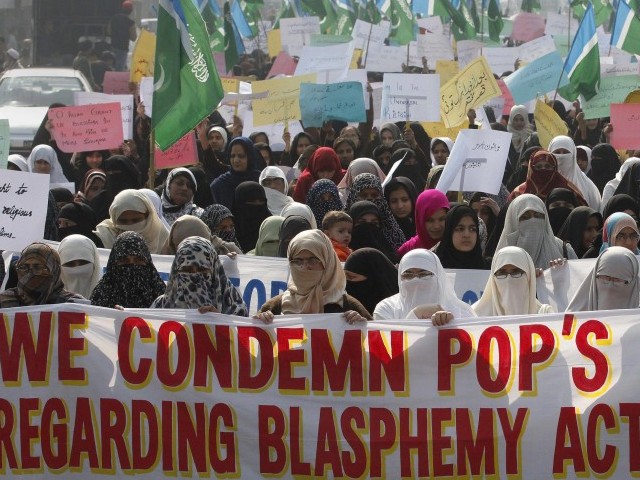
Female supporters of Jamaat-i-Islami (JI) hold placards and banner during a protest regarding the Pope's statements on Pakistan's blasphemy law. PHOTO: AFP/FILE
Female supporters of Jamaat-i-Islami (JI) hold placards and banner during a protest regarding the Pope’s statements on Pakistan’s blasphemy law. PHOTO: AFP/FILE
WASHINGTON: The United States Commission on International Religious Freedom (USCIRF) expressed concern over Pakistan’s omission from the list of eight countries termed “countries of particular concern” with regards to violation of religion freedom.

The list was published by the US State Department in a report which listed Burma, China, Eritrea, Iran, North Korea, Saudi Arabia, Sudan and Uzbekistan as countries where religious rights were severely infringed.

Although Pakistan was omitted from the list, the report stated that Pakistan’s laws restrict religious freedom and that the government enforced these restrictions. It also adds that investigation and prosecution of perpetrators in the case of extremist attacks on minorities are rare.

Citing the blasphemy law and Aasia Bibi’s case, the report suggests that the Pakistan government distanced itself from a bill proposed by an MNA to repeal the “discriminatory” law.

It also mentions that the Ahmadiyya community along with members of other Islamic sects, Christians, Sikhs, and Hindus face governmental and societal discrimination.

The report noted, however, that the government took some measures to improve religious freedom. It mentioned the late Federal Minister for Minorities, Shahbaz Bhatti’s attempts to assist victims of religiously motivated attacks.

The commission on Tuesday remarked that it is concerned that no new countries were added to the list.” said

‘Don’t forget Pakistan’

“Repeating the current list continues glaring omissions, such as Pakistan and Vietnam … we respectfully urge Secretary Clinton to consider the six additional countries we recommended for designation,” said Leonard Leo, USCIRF Chair.

The other four countries recommended by the commission are Egypt, Iraq, Nigeria and Turkmenistan.

Commenting on the report, US Secretary of State Hillary Clinton urged governments Tuesday to do more to defend religious freedom as Washington released a report citing eight countries with troubling records on the issue.

“We reaffirm the role that religious freedom and tolerance play in building stable and harmonious societies. Hatred and intolerance are destabilizing,” Clinton said.

Copyrighted © 2011 The Express Tribune News Network
URL: http://tribune.com.pk/story/252125/count...commission/

Thursday, June 2, 2011

A question of faith: ‘Repeal blasphemy law or make it flawless’

Express Tribune, Pakistan
Pakistan
A question of faith: ‘Repeal blasphemy law or make it flawless’
Published: June 2, 2011

Report documents the deteriorating state of minorities in Pakistan.
A Think Tank working on minority issues in Pakistan has called upon the government to repeal the blasphemy law, or at least amend it to remove all vague terminology to prevent its misuse.

The Jinnah Institute’s report, “A Question of Faith”, also calls for addition of a section in the Pakistan Penal Code making advocacy of religious hatred or incitement to discrimination or violence a punishable offence.

The institute has published 23 recommendations, including the removal of impunity for prayer leaders in mosques, police and judicial reforms and clarification of the status of Federal Shariat Court and the Council of Islamic Ideology. It also calls for an appointment of a “Special Ombudsman” to protect the rights of women and minorities.

The research team interviewed 125 people including minority representatives, victims and non-governmental organisations’ workers all over Pakistan between December 2010 and April 2011. It documents the deterioration in the political, social and economic status of members of religious minorities in Pakistan, “particularly the rising tide of vigilante violence against them”, according to a press release issued by the institute.

The report focuses on Christians, Hindus and Ahmadis, three prominent minority groups in the country. According to the report, the conditions for Christians have deteriorated over the years. The Christians “are on the frontline of the persecution and violence against minority communities.”

Interviews with Christians of different age groups and professions revealed that many of them felt they “are treated as second-class citizens and discriminated against in all aspects of life.” Moreover, most of those who can, do move away from Pakistan. Those who choose to stay back do so because of a “strong sense of commitment to the country and being ‘Pakistani’.”

Christians in rural areas have to deal with instances of their land being grabbed by local Muslim residents and in some of the more serious incidents, the Christian residents did not come back to their homes.

Eighty per cent of the Hindus in Pakistan live in Sindh, and “are victims of caste and wider religious discrimination,” said the report. They do not own lands and work on daily wages, a consequence of them not having any permanent settlement. The report said, “One day, they are with one landlord, the next day with another. And this is how they spend a life of debt, with no accountability or education.”

Their castes have translated into daily life. For instance, Hindus from a lower caste might be restricted to a separate water well in a school, “from which even the Muslims will not drink”.

Higher caste Hindus have their own set of problems to contend with. They live in a state of insecurity and are frequently kidnapped for ransom. For instance, 82-year-old Lakki Chand Garji, a prominent Hindu spiritual leader, was kidnapped on December 21, 2010 and is yet to be traced and rescued.

Then there’s the matter of Hindus being suspected of having sympathy for India. Some Hindus said that “they dealt with the repercussions of the destruction of the Babri Masjid across the border in India in 1992.”

Violence against the Ahmaddiya community has also been on the rise in the past three years, according to the report. The report attributed the increase in violence to maulvis “promoting such attacks and inciting violence in their sermons and in the media.”

Sherry Rehman, President of Jinnah Institute, introduced the report on Tuesday and spoke about the need to reinstate the model of inclusive citizenship envisioned by Mohammed Ali Jinnah.

Published in The Express Tribune, June 2nd, 2011.

Wednesday, June 1, 2011

Report on status of religious minorities launched

The News - Internet Edition
Wednesday, Junne 1, 2011,
Jamadi-us-Sani 28, 1432 A.H.
Islamabad
Report on status of religious minorities launched

Wednesday, June 01, 2011

A report on the status of religious minorities in Pakistan, titled ‘A Question of Faith’, was launched by the Jinnah Institute. The report is a research study, compiled over the period December 2010-April 2011 and documents the deterioration in the political, social and economic status of members of religious minorities in Pakistan, particularly the rising tide of vigilante violence against them, says a press release.

The report was prepared in consultation with members of several religious minorities across the country, human rights organisations and policy experts. It lists recommendations for the redressal of grievances through constitutional amendments, political and judicial reform, sensitisation of media and revision of educational curricula that imparts discrimination or hatred against minorities.

Findings of the report indicate that minorities in the country connect strongly with a Pakistani national identity, even as they are persecuted on the basis of their religion. It is emphasised that the Pakistani state needs to take steps towards ensuring that citizens of the country do not continue to fall victim to cruelty and vigilantism and that a critical mass of Pakistanis has to help arrest the discrimination and persecution against minorities.

Sherry Rehman, President of Jinnah Institute, introduced the report and spoke about the need to reinstate the model of inclusive citizenship envisioned by Mohammed Ali Jinnah. Mariam Faruqi, lead researcher and author of the report, gave a presentation on the findings and key recommendations contained in the study. Advisor to Prime Minister, Paul Bhatti, stated that a collective effort was required by all concerned to uphold values of human dignity, justice and peace and to create rights for minorities. Joseph Francis, Director CLAAS recalled the historical discrimination against the Christian population and pointed towards laws that lead to systemic discrimination. Krishan Sharma, prominent minority rights activist, presented a list of recommendations from his research paper that demanded repeal of those laws. Ali Dayan Hasan of Human Rights Watch commented on how laws relating to minorities in Pakistan were effectively instruments of coercion and questioned the sustainability of liberal pluralism in the country.

 
^ Top of Page