 |
LIFE & TIMES |
Jakarta Journo: SBY’s Legacy Soiled On Freedom of Faith
Armando Siahaan | March 20, 2011
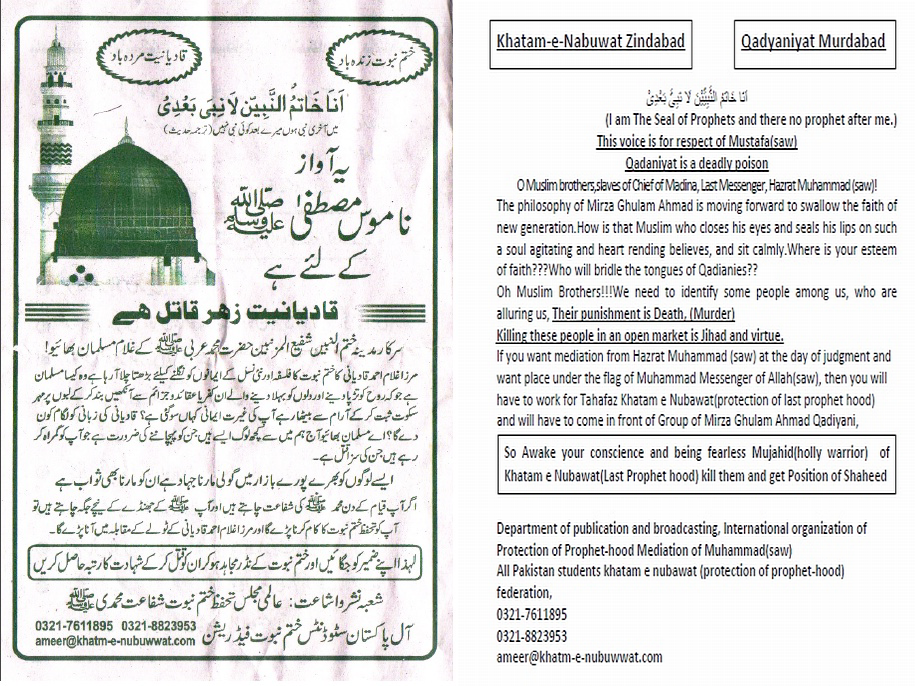
President Susilo Bambang Yudhoyono will be remembered for a lot of things, but being a bastion of pluralism is definitely not one of them. Just look at the recent spate of religious violence — chaos left nearly unchecked by the national government, which seems afraid to touch issues such as the Ahmadiyah with a 10-foot pole. It’s enough to make me question if things have actually improved at all since the Suharto era.
Suharto’s New Order regime severely curtailed religious freedoms, tearing apart the 1945 Constitution, which guaranteed citizens the freedom to adopt any religion, thus changing Indonesia into a country that recognizes just five official faiths. Then in 1978, the Ministry of Home Affairs issued a directive obligating all Indonesians to disclose their religious affiliations on their identity cards and, bizarrely, forcing us to pick from one of five recognized religions.
But the real root of the country’s religious intolerance is the 1965 Blasphemy Law, which was drafted under Sukarno, but adopted and enforced by Suharto.
The law prohibits any alternative interpretations of the official religions, giving the government the right to restrict and ban deviant sects, and imprison their followers for faith crimes. The Blasphemy Law effectively destroys the separation between church and state, which many argue is a necessary component to a functioning democracy.
Moreover, through totalitarianism and his draconian foot soldiers, Suharto made sure that religious groups, including Muslim hard-liners, were never given the chance to grow into influential forces in society.
Post-Suharto Indonesia has been praised by many foreign commentators as a poster child for democracy in Southeast Asia and the Muslim world. But as recent events suggest, religious freedom has been left in the dust on our glorious march to democracy. A truly democratic Indonesia would revoke the 1965 Blasphemy Law, but reality suggests institutional support for the law will not wane anytime soon.
In fact, instead of rescinding the law, the administration issued a 2008 joint ministerial decree on the Ahmadiyah, based on the law, which severely curbs the minority Islamic sect’s rights.
A series of violent attacks against the Ahmadis followed the decree, and hard-liners felt the attacks were completely justified because of the law. Yudhoyono repeatedly condemned the attacks, but consistently defended the 2008 anti-Ahmadiyah decree.
In the latest development, dozens of Ahmadis in East and West Java converted to mainstream Islam, with widespread rumors that the military pressured the sect’s followers into renouncing their faith. The government and the military denied this claim.
The conversions may represent a triumph for hard-liners, but they are certainly a massive blow to our country’s democratic image.
The corrosion of our religious freedoms has generated criticism both here and abroad. The United States and the European Union have conveyed concern over the escalation of religious tensions in light of the recent killings of three Ahmadis in Banten and the burning of churches in Central Java. Furthermore, a group of 27 US lawmakers last week sent a letter to Yudhoyono demanding that the government overturn the 2008 decree on the Ahmadiyah, as it “runs contrary to the principles of international human rights.”
Suharto severely limited religious freedom, but also prevented religious extremists from harassing minority groups. Yudhoyono’s administration has not only failed to repeal Suharto’s discriminatory laws, but has also given unchecked freedom of speech to all major religious groups, giving hard-liners a megaphone to voice their hate speech and a free pass to act on it.
If Suharto’s era was marked by out-and-out tyranny, it seems Yudhoyono’s era will be remembered for allowing the tyranny of the majority. He still has three years left to make things better, but I’m not holding my breath.
Suharto’s New Order regime severely curtailed religious freedoms, tearing apart the 1945 Constitution, which guaranteed citizens the freedom to adopt any religion, thus changing Indonesia into a country that recognizes just five official faiths. Then in 1978, the Ministry of Home Affairs issued a directive obligating all Indonesians to disclose their religious affiliations on their identity cards and, bizarrely, forcing us to pick from one of five recognized religions.
But the real root of the country’s religious intolerance is the 1965 Blasphemy Law, which was drafted under Sukarno, but adopted and enforced by Suharto.
The law prohibits any alternative interpretations of the official religions, giving the government the right to restrict and ban deviant sects, and imprison their followers for faith crimes. The Blasphemy Law effectively destroys the separation between church and state, which many argue is a necessary component to a functioning democracy.
Moreover, through totalitarianism and his draconian foot soldiers, Suharto made sure that religious groups, including Muslim hard-liners, were never given the chance to grow into influential forces in society.
Post-Suharto Indonesia has been praised by many foreign commentators as a poster child for democracy in Southeast Asia and the Muslim world. But as recent events suggest, religious freedom has been left in the dust on our glorious march to democracy. A truly democratic Indonesia would revoke the 1965 Blasphemy Law, but reality suggests institutional support for the law will not wane anytime soon.
In fact, instead of rescinding the law, the administration issued a 2008 joint ministerial decree on the Ahmadiyah, based on the law, which severely curbs the minority Islamic sect’s rights.
A series of violent attacks against the Ahmadis followed the decree, and hard-liners felt the attacks were completely justified because of the law. Yudhoyono repeatedly condemned the attacks, but consistently defended the 2008 anti-Ahmadiyah decree.
In the latest development, dozens of Ahmadis in East and West Java converted to mainstream Islam, with widespread rumors that the military pressured the sect’s followers into renouncing their faith. The government and the military denied this claim.
The conversions may represent a triumph for hard-liners, but they are certainly a massive blow to our country’s democratic image.
The corrosion of our religious freedoms has generated criticism both here and abroad. The United States and the European Union have conveyed concern over the escalation of religious tensions in light of the recent killings of three Ahmadis in Banten and the burning of churches in Central Java. Furthermore, a group of 27 US lawmakers last week sent a letter to Yudhoyono demanding that the government overturn the 2008 decree on the Ahmadiyah, as it “runs contrary to the principles of international human rights.”
Suharto severely limited religious freedom, but also prevented religious extremists from harassing minority groups. Yudhoyono’s administration has not only failed to repeal Suharto’s discriminatory laws, but has also given unchecked freedom of speech to all major religious groups, giving hard-liners a megaphone to voice their hate speech and a free pass to act on it.
If Suharto’s era was marked by out-and-out tyranny, it seems Yudhoyono’s era will be remembered for allowing the tyranny of the majority. He still has three years left to make things better, but I’m not holding my breath.
Copyright 2010 The Jakarta Globe
URL: www.thejakartaglobe.com/lifeandtimes/sbys-legacy...
URL: www.thejakartaglobe.com/lifeandtimes/sbys-legacy...






 Posts
Posts


