 |
OPINION |
As Terrorism Takes on a New Face, the President Needs to Find His Backbone
Bramantyo Prijosusilo | April 26, 2011
The recent arrests of suspected terrorists reveal that our new generation of extremists has little contact with the older generations, who were radicalized and trained through direct experience and contact with international networks.
These new terror suspects, the police say, have more or less radicalized themselves relatively independently from the traditional connections to conflict areas in Central Asia or the Philippines. This new generation of suspects consists of individuals who studied in universities who radicalized themselves through jihadi Web sites and discussion forums on the Internet, and through the study of jihadi books and videos that are disseminated in Indonesia through the Internet.
In other words, this new breed of suspected terrorists is the fruit of the labors of such Web sites as arrahmah.com, almuhajirun.net and other active sites of various shades of Islamist fundamentalism and extremism. The proliferation of such sites, from the pseudo-intellectual offerings of the one managed by Hizbut Tahrir Indonesia and bizarrely obnoxious sites such as that of the Islamic Defenders Front (FPI), to the Web site of the state-sponsored Indonesian Ulema Council (MUI) means that we have no shortage of online material needed to radicalize a young man or woman and make them hate this country and the democratic, pluralist society we are developing here.
The fact that so many sites and organizations can actively incite hatred against our republic and against different groups in our society, to the point that they blatantly support the use of violence against the state and against fellow members of our society, testifies of the weakness of our government and our laws.
As a nation we have had traumatic experiences with the use of rubber-band laws that in the past were employed by the government to silence critics and dissenters, so we are cautious not to give the government too many powers that they can use against critics.
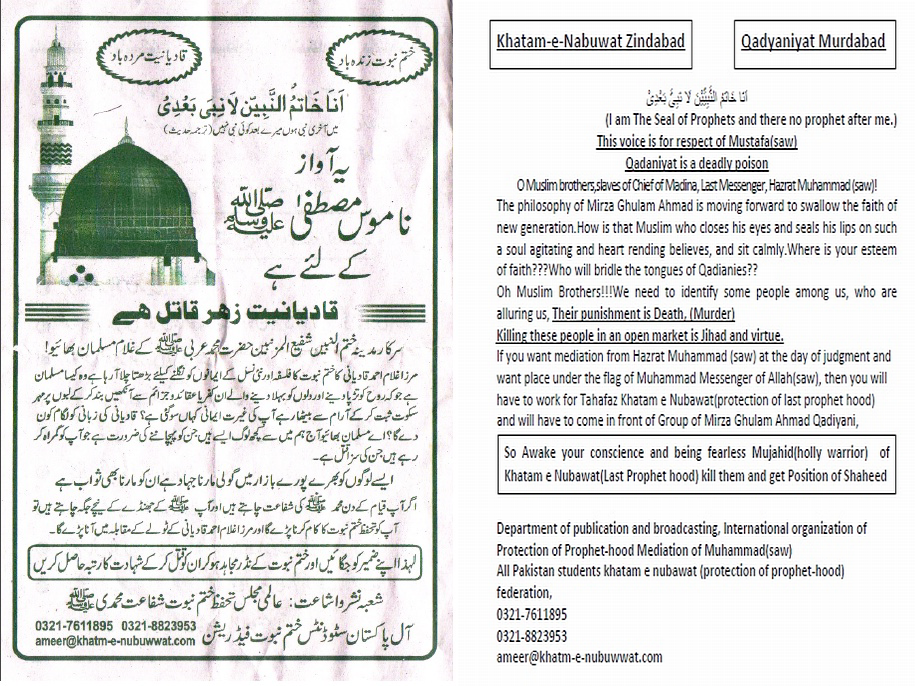
But when people like Sobri Lubis from the FPI scream at an audience of a religious gathering, urging them to kill Ahmadiyah followers, declaring that their blood is halal and that he will take responsibility for their killing, there should be legal ways to hold him to account — especially after we have seen that Ahmadiyah followers have been brutally killed by a mob reportedly affiliated with the FPI.
Sadly, our president has not the courage that this nation expects from its leaders, and he has even let the Islamist mobs go so far as threatening to bring about a revolution while at the same time calling the head of state vile names. Not only did these people get away with slandering the president and inciting murder, when these people demonstrated in front of the palace they were actually invited to come in for a chat!
It appears that Islamist fundamentalism in our country works on two fronts. The first hides under a cloak of legitimacy and steers away from appearing directly involved in violence but it actively preaches hatred against democracy, secularism, pluralism and religious liberalism. This group maintains a respectable image and has exponents in respectable institutions such as the MUI. These people a few years back began their offensive against secularism, pluralism and liberalism, by, among other things, defining pluralism as “the belief that all religions are the same.”
This apparently intentional misreading of pluralism is one of the bases of the argument that the MUI uses to declare that because secularism, liberalism and pluralism are threatening the basic tenets of Islam (such as the belief in the superiority of Shariah law), they are evil.
These evils, the MUI says, would lead people to follow manmade laws instead of Shariah. In other words the MUI is saying that our Constitution and our state are wrong and evil and we should adopt religious law instead.
What utter audacity from a state-sponsored institution that is also considered by graft watchdogs to be one of the most corrupt institutions in the country! Critics have also pointed out that the unconstitutional and uncivilized prosecution of the Ahmadiyah Muslims was also driven by the theological support of a fatwa by the MUI.
If the MUI declared liberal Islam as haram, then Rizieq Shihab on his FPI Web site has added a dose of vitriol to the brewing hate stew. According to him, liberal Islam is more satanic than Satan himself! So it comes as no surprise if some young university graduates who, wanting to contribute in the worldwide jihad to establish an Islamic caliphate that implements the one and only true Islam, should also learn how to make a bomb “in your mother’s kitchen” and package it in a book to send to one of the pioneers of the liberal Islam network here, the Democratic Party politician Ulil Abshar-Abdalla. That a poorly trained policeman lost his hand in the explosion that followed is further evidence of just how ill-prepared we are to rise up to the challenge of this new generation of terrorists.
To stop this deeply disturbing development in the recruitment of terrorists in our country, the president should demonstrate at least a minimum of firmness. Who would believe that we are a nation that fought a war of independence against the might of the Japanese, the British and the Dutch, considering all the meetings it took before any kind of military decision was taken in response to the kidnapping of our sailors by Somali pirates?
All throughout society people are talking about how fearful President Susilo Bambang Yudhoyono is to take any position on any issue. Rumors are that he is held hostage by his political enemies and the skeletons in his cupboards. If this is true, he should be a patriot and step down, for this country deserves a president who can and will fight for the Constitution and protect its citizens. If it is not true then he should immediately make moves to erase the image of cowardice and rein in those who are attacking the foundations of our state, particularly as some of those are ministers in his cabinet.
The names that people have called the head of state, and the liberties taken in disregard of the Constitution, are attacks that cannot be left unpunished.
Bramantyo Prijosusilo is a writer, artist and broadcast journalist in East Java.
These new terror suspects, the police say, have more or less radicalized themselves relatively independently from the traditional connections to conflict areas in Central Asia or the Philippines. This new generation of suspects consists of individuals who studied in universities who radicalized themselves through jihadi Web sites and discussion forums on the Internet, and through the study of jihadi books and videos that are disseminated in Indonesia through the Internet.
In other words, this new breed of suspected terrorists is the fruit of the labors of such Web sites as arrahmah.com, almuhajirun.net and other active sites of various shades of Islamist fundamentalism and extremism. The proliferation of such sites, from the pseudo-intellectual offerings of the one managed by Hizbut Tahrir Indonesia and bizarrely obnoxious sites such as that of the Islamic Defenders Front (FPI), to the Web site of the state-sponsored Indonesian Ulema Council (MUI) means that we have no shortage of online material needed to radicalize a young man or woman and make them hate this country and the democratic, pluralist society we are developing here.
The fact that so many sites and organizations can actively incite hatred against our republic and against different groups in our society, to the point that they blatantly support the use of violence against the state and against fellow members of our society, testifies of the weakness of our government and our laws.
As a nation we have had traumatic experiences with the use of rubber-band laws that in the past were employed by the government to silence critics and dissenters, so we are cautious not to give the government too many powers that they can use against critics.
But when people like Sobri Lubis from the FPI scream at an audience of a religious gathering, urging them to kill Ahmadiyah followers, declaring that their blood is halal and that he will take responsibility for their killing, there should be legal ways to hold him to account — especially after we have seen that Ahmadiyah followers have been brutally killed by a mob reportedly affiliated with the FPI.
Sadly, our president has not the courage that this nation expects from its leaders, and he has even let the Islamist mobs go so far as threatening to bring about a revolution while at the same time calling the head of state vile names. Not only did these people get away with slandering the president and inciting murder, when these people demonstrated in front of the palace they were actually invited to come in for a chat!
It appears that Islamist fundamentalism in our country works on two fronts. The first hides under a cloak of legitimacy and steers away from appearing directly involved in violence but it actively preaches hatred against democracy, secularism, pluralism and religious liberalism. This group maintains a respectable image and has exponents in respectable institutions such as the MUI. These people a few years back began their offensive against secularism, pluralism and liberalism, by, among other things, defining pluralism as “the belief that all religions are the same.”
This apparently intentional misreading of pluralism is one of the bases of the argument that the MUI uses to declare that because secularism, liberalism and pluralism are threatening the basic tenets of Islam (such as the belief in the superiority of Shariah law), they are evil.
These evils, the MUI says, would lead people to follow manmade laws instead of Shariah. In other words the MUI is saying that our Constitution and our state are wrong and evil and we should adopt religious law instead.
What utter audacity from a state-sponsored institution that is also considered by graft watchdogs to be one of the most corrupt institutions in the country! Critics have also pointed out that the unconstitutional and uncivilized prosecution of the Ahmadiyah Muslims was also driven by the theological support of a fatwa by the MUI.
If the MUI declared liberal Islam as haram, then Rizieq Shihab on his FPI Web site has added a dose of vitriol to the brewing hate stew. According to him, liberal Islam is more satanic than Satan himself! So it comes as no surprise if some young university graduates who, wanting to contribute in the worldwide jihad to establish an Islamic caliphate that implements the one and only true Islam, should also learn how to make a bomb “in your mother’s kitchen” and package it in a book to send to one of the pioneers of the liberal Islam network here, the Democratic Party politician Ulil Abshar-Abdalla. That a poorly trained policeman lost his hand in the explosion that followed is further evidence of just how ill-prepared we are to rise up to the challenge of this new generation of terrorists.
To stop this deeply disturbing development in the recruitment of terrorists in our country, the president should demonstrate at least a minimum of firmness. Who would believe that we are a nation that fought a war of independence against the might of the Japanese, the British and the Dutch, considering all the meetings it took before any kind of military decision was taken in response to the kidnapping of our sailors by Somali pirates?
All throughout society people are talking about how fearful President Susilo Bambang Yudhoyono is to take any position on any issue. Rumors are that he is held hostage by his political enemies and the skeletons in his cupboards. If this is true, he should be a patriot and step down, for this country deserves a president who can and will fight for the Constitution and protect its citizens. If it is not true then he should immediately make moves to erase the image of cowardice and rein in those who are attacking the foundations of our state, particularly as some of those are ministers in his cabinet.
The names that people have called the head of state, and the liberties taken in disregard of the Constitution, are attacks that cannot be left unpunished.
Bramantyo Prijosusilo is a writer, artist and broadcast journalist in East Java.
Copyright 2010 The Jakarta Globe
URL: www.thejakartaglobe.com/opinion/as-terrorism.../437317
URL: www.thejakartaglobe.com/opinion/as-terrorism.../437317








 Posts
Posts


