Showing posts with label Indonesians. Show all posts

Thursday, July 28, 2011

Indonesia sends ‘chilling message’ in mob trial: HRW

Daily Dawn, Pakistan
World
Indonesia sends ‘chilling message’ in mob trial: HRW
July 28, 2011AFP
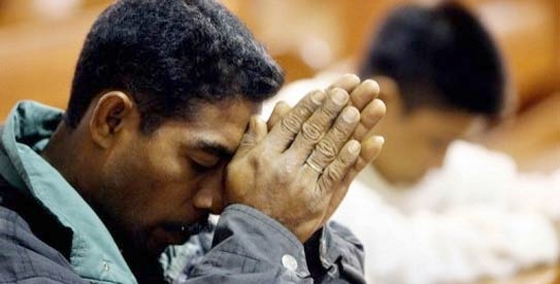
Two days after a Muslim lynch mob killed members of a minority Islamic sect two churches have been set alight. – AFP Photo
Two days after a Muslim lynch mob killed members of a minority Islamic sect two churches have been set alight. — AFP Photo
SERANG: An Indonesian court on Thursday sentenced religious fanatics who killed three members of a minority Muslim sect in a frenzied mob attack to between three and six months in jail.

Dani bin Misra, a 17-year-old who smashed a victim’s skull with a stone, received three months for manslaughter.

Idris bin Mahdani, who led the mob of more than 1,000 Muslims in the February attack, was convicted of illegal possession of a machete and received five months and 15 days in jail.

Twelve people stood trial but none faced murder charges in what human rights activists said was a travesty of justice in the world’s most populous Muslim-majority country.

The unprovoked violence against the Ahmadiyah sect members in Cikeusik, western Java, was one of the most horrific in a long line of attacks on the minority group in Indonesia in recent years.

A secretly filmed video of the attack brought religious violence in Indonesia under the international spotlight, and provoked condemnation from the United States, Italy and international rights groups.

“When the Cikeusik video went viral, people around the world were shocked and appalled by the savagery of the mob kicking and slashing three men to death,” Human Rights Watch Deputy Director for Asia Phil Robertson said.

“But instead of charging the defendants with murder and other serious crimes, prosecutors came up with an almost laughable list of ‘slap-on-the wrist’ charges.

“The Cikeusik trial sends the chilling message that attacks on minorities like the Ahmadiyah will be treated lightly by the legal system. This is a sad day for justice in Indonesia.”

©2010 DAWN Media Group. All rights reserved
URL: www.dawn.com/2011/07/28/indonesia-sends...hrw.html

Tuesday, March 15, 2011

Explosion hits office of liberal Indonesian Islamic group

Reuters Blogs, USA
Explosion hits office of liberal Indonesian Islamic group
JAKARTA | Tue Mar 15, 2011 6:12pm IST

(Reuters) — A small explosion on Tuesday hit the Jakarta office of the Liberal Islamic Network, an Indonesian group that has defended the rights of minority Islamic sect Ahmadi, a witness said.

The explosion, which injured three people, comes a month after a mob beat to death three followers of the Ahmadi sect, considered heretical by mainstream Muslims.

Indonesia has won praise for largely defeating Islamic terror, but a recent spike in religious intolerance could heighten risk concerns for foreign investors counting on improved stability in Southeast Asia’s largest economy and the world’s most populous Muslim nation.

Ade Wahyudi, a manager at KBR68H radio that shares the office with the pluralist Liberal Islamic Network, said the office had called police to open a package that contained a book with wires sticking out of it. The police officer who opened the package was among the injured.

“I was on a different room, upstairs, and heard a bang, like thunder,” Wahyudi told Reuters by telephone.

Indonesian authorities have said they are investigating last month’s brutal mob killing, but human rights activists say authorities have not taken a strong stance against attacks on Ahmadis in the past.

Rights activists and several parliamentarians said on Tuesday that military personnel in western Java island recently summoned Ahmadi leaders to identify Ahmadi followers in their area and asked them to return to mainstream Islam.

“This goes to show a strengthening movement in government institutions trying to persecute Ahmadis. This is a worrying turn,” said Haris Azhar of local rights group Kontras.

Military leaders denied the allegations of attempts at forced conversions.

Eva Kusuma Sundari, a member of the parliamentary legal commission from opposition party PDI-P, said the government should clarify the “disturbing” reports.

“It’s deeply concerning. It reminds us of the past when the military was meddling into local politics and public order,” she told Reuters by telephone.

(Reporting by Olivia Rondonuwu; Editing by Neil Chatterjee)

Monday, August 16, 2010

Religious minorities in Indonesia push back

Daily Dawn, Pakistan
World
.
Religious minorities in Indonesia push back
   Monday, 16 Aug, 2010

Protesters cover their mouths as a sign of protest during a rally in Jakarta August 15, 2010. Several hundred Indonesians rallied in Jakarta on Sunday demanding that the president do more to protect freedom of religion and to punish hardline Muslim groups which have attacked minority faiths. - Reuters Photo
Protesters cover their mouths as a sign of protest during a rally in Jakarta August 15, 2010. Several hundred Indonesians rallied in Jakarta on Sunday demanding that the president do more to protect freedom of religion and to punish hardline Muslim groups which have attacked minority faiths. — Reuters Photo
.
BEKASI: Tired of government inaction, Christians and other religious minorities in Indonesia are pushing back against rising violence by Islamic hard-liners.

Christians were warned last week against worshipping on a field that houses a shuttered church in the industrial city of Bekasi, but 20 members of the congregation showed up anyway, opening their service with a hymn.

The act of defiance enraged 300 Islamic hard-liners, many of whom hurled shoes and chanted death threats before pushing past a row of riot police, chasing down members of the group and beating some with sticks.

“It’s nonsense,” said Yudi Tambunan of the Batak Christian Protestant Church, vowing to return every Sunday until their request for a house of worship, made more than two years ago, is approved.

“The constitution guarantees our right to practice our religion,” he said. “And we want to do that on our own property, in our own church.”

Indonesia, a secular country of 235 million people, has more Muslims than any other in the world. Though it has a long history of religious tolerance, a small extremist fringe has become more vocal in recent years.

Hard-liners have also become more violent, according to the Setara Institute for Peace and Democracy, a human rights group, which said there have already been 28 attacks on religious freedom in 2010, including everything from preventing groups from performing prayers to shutting down or burning houses of worship.

The institute said there were 18 such incidents in all of 2009 and 17 in 2008.

Although most Indonesians are moderate and oppose violence, President Susilo Bambang Yudhoyono’s government has been slow to intervene because it relies heavily on the support of Islamic parties in parliament.

Hundreds of people held an inter-faith rally the capital Sunday critisizing his soft line.

“Those attackers have to be arrested, otherwise they will feel their actions are right,” said Saur Siagain, a rally organizer, standing in front of a banner that said: “The president has to be responsible in guaranteeing freedom of religion.”

In some cases, provincial leaders even appear to be fanning the flames.

Acting on the orders of local officials, police helped hard-liners forcibly close several mosques owned by Ahmadiyah, an Islamic sect they call “deviant,” last month in Manis Lor, a village in West Java province.

But members of the sect, who differ from other Muslims about whether Muhammad was the “final” monotheist prophet, are refusing to buck under.

“We’re tired of being harassed and attacked,” said Yati Hidayat, a 48-year-old Ahmadiyah member. “We have the right to pray just like any other religious community. If anyone tries to stop us, we’re ready to fight.”

Recent attacks have largely been led by the Islamic Defenders Front, or the FPI, which is pushing for the implementation of Islamic-based laws in regions across the nation.

They are known for smashing bars, attacking transvestites and going after those considered blasphemous with bamboo clubs and stones.

Minority groups, who represent less than 15 percent of the population, have long tried to keep a low profile.

Christians have quietly applied and reapplied for permits so they could build their own churches, sometimes putting construction on hold for years as local authorities weigh the risks of angering hard-liners.

In the meantime, some congregations have held services in apartments, office buildings and even shopping malls.

But as attacks become more frequent and more brutal they – together with moderate Muslims – appear to be losing patience.

“The Batak Christian Protestant Church and Ahmadiyah were around long before FPI,” said Hilmar Farid from Indonesia’s Social History Institute. “They are getting tired of being intimidated.”

They are also weary of government inaction.

Yudhoyono has in recent days urged his countrymen to be tolerate of others, especially during the Islamic holy month of Ramadan. But he has not made any direct reference to recent violence.

Though police were present during the Aug. 8 attack in Bekasi, 25 miles (40 kilometers) east of the capital, they made little effort to stop FPI members as they got more and more vitriolic.

“The Batak Christians deserve to be stabbed to death,” yelled Murhali Barda, who heads the local chapter of FPI. “If they refuse to go home we are ready to fight.”

An argument broke out between Barda and three female members of the congregation.

He grabbed one by the neck and other hard-liners started punching them. All the while, men chanted from a truck and clerics made speeches saying “Leave … We will not let you perform prayers here!”

“God is great!” the crowd cheered in response.

Political analysts warn that unless the government steps in to end persecution of religious minorities soon, groups like FPI will get bigger and more powerful. – AP

©2010 DAWN Media Group. All rights reserved

Sunday, August 15, 2010

Hundreds protest in Jakarta, urge religious freedom

Reuters Blogs, USA

Hundreds protest in Jakarta, urge religious freedom
Sun Aug 15, 2010 3:04pm IST
Protesters cover their mouths as a sign of protest while gesturing during a rally in Jakarta August 15, 2010. Credit: Reuters/Supri
Protesters cover their mouths as a sign of protest while gesturing during a rally in Jakarta August 15, 2010.
Credit: Reuters/Supri

By Karima Anjani

JAKARTA (Reuters) — Several hundred Indonesians rallied in Jakarta on Sunday demanding that the president do more to protect freedom of religion and to punish hardline Muslim groups which have attacked minority faiths.

The protest reflects growing public alarm over recent attacks on churches, Christian prayer gatherings, and on mosques used by the Ahmadiyya, an Islamic sect that some Muslims deem heretical.

Such attacks have hurt Indonesia’s reputation for religious tolerance, and could potentially threaten the status of Southeast Asia’s biggest and most-populous economy as an attractive investment destination, in turn derailing growth and development.

Indonesia is officially secular and recognises six main faiths – Islam, Christianity, Catholicism, Buddhism, Hinduism, and Confucianism – of which Islam is the most widespread, accounting for about 85 percent of the population and making Indonesia the world’s most populous Muslim country.

In the past, attacks on minority religions in other parts of the country have led to wider outbreaks of violence, for example in the aftermath of President Suharto’s ouster in 1998.

Several of the recent attacks have involved members of Muslim gangs such as the Islamic Defenders Front or FPI, a hardline group whose members are considered as little more than thugs and racketeers because of their suspected links to the police and use of intimidation and violence.

Many Indonesians were outraged when Jakarta’s governor, Fauzi Bowo, and the head of the Jakarta police, attended the FPI’s 12th anniversary celebration recently – a move seen as an official endorsement of the group’s vigilantism.

On Sunday, about 500 people, many carrying red-and-white Indonesian flags and red ribbon arm bands, chanted “freedom of worship, freedom for all religions,” and sang religious songs as they rallied around the National Monument in Jakarta.

“We’ve been patient enough over these recent incidents of violence and brutality, even against women and children. We have reported these criminal acts to the police, and we’ve seen no firm response against the attackers,” said Saor Siagian, spokesman of The Forum for Religious Freedom Solidarity.

“If this escalates it could potentially lead to a more dangerous situation and poses a real threat to this nation. So far, the president hasn’t taken any firm action.”

The Setara Institute for Democracy and Peace last month reported an increase in the number of attacks by “intolerant groups”, citing forced closures of churches, the withholding of building permits for churches, and torching of church buildings.

Many of the attacks have taken place in the areas around the capital Jakarta, including Bekasi, Bogor and Tangerang, which have become strongholds for hardline groups.

These areas increasingly support sharia law and want it to be compulsory for women to wear the headscarf, according to a recent survey by Roy Morgan, whereas nationwide support for sharia law has declined over the past nine months.

“It is easy for Muslims to build a place of worship, while the others find it difficult to get a permit from the government,” said Faisal Rahman, a Muslim who joined the protest.

“Islam and the prophet’s teachings show that all religions should be treated equally. This is not an Islamic nation. People should be able to worship freely.”

(Writing by Sara Webb; Editing by Sanjeev Miglani)

URL: http://in.reuters.com/article/idINIndia-50855020100815

Wednesday, August 11, 2010

Indonesia and Religious Violence

   August 11, 2010
Wall Street Journal, USA
Indonesia and Religious Violence
Arresting radicals like Abu Bakar Bashir is only half the battle.

Indonesia notched another big victory in the antiterror fight this week with the re-arrest of Abu Bakar Bashir, the al Qaeda-linked spiritual leader linked to the 2002 Bali bombings, as the Australian National University’s Greg Fealy explains on a nearby page. If only the country’s leaders would pursue Islamic vigilante groups just as aggressively.

Since Suharto fell in 1998, these thugs-for-hire have proliferated in the world’s most populous Muslim-majority country. The most prominent, the Islamic Defenders Front (FPI), yearns for a Shariah state, and has been fingered for burning down Christian churches; attacking the Ahmadiyya, a minority Muslim sect; and beating up peaceful NGO activists. The latest misadventure came Sunday when goons beat up 20 Christians in Bekasi, West Java. (FPI denies involvement.)

Far from distancing themselves from this kind of behavior, public figures have recently started to court the group. Jakarta Governor Fauzi Bowo and Police Chief Timur Pradopo attended FPI’s 12th anniversary celebration Saturday, giving the group a taste of political legitimacy. The governor even invited FPI into the capital to police Muslims’ behavior during Ramadan, which began on Wednesday.

Thankfully, the majority of Indonesians are moderate and perceive the real threat FPI presents to their way of life and precious civil liberties. Twitter groups, editorial pages and NGOs erupted in protest over the Jakarta governor’s invitation. FPI head Habib Rizieq was forced to back down and pledged to let the police enforce Ramadan laws.

That’s all to the good. But what happens the next time FPI hooks arms with the police and local politicians? President Susilo Bambang Yudhoyono has voiced “concern” over violence against minorities, as he did after Sunday’s attack, but has largely bowed to the police to enforce the rule of law. Parliament has made similar noises. The result? As the Wahid Institute has chronicled, attacks are creeping upward, to 60 incidents last year from 55 in 2008. And that doesn’t even count attempts to impose Shariah through legislation, which has proliferated in recent years.

This cycle won’t be broken until President Yudhoyono exerts some leadership. This could be tough for a president who has tried to court the hardline Muslim vote since he first took office in 2004, from freezing the activities of the Ahmadiyya to enacting a radical antipornography law that limits free speech.

But as Yenny Wahid, the daughter of former president and respected cleric Abdurrahman Wahid, told us earlier this week, groups like FPI “carry the banner of Islam; therefore they act with impunity.” Surely that makes the violent FPI just as dangerous as men like Mr. Bashir.

 
^ Top of Page