Showing posts with label hard-liners. Show all posts

Thursday, May 14, 2009

Kalla Seeks Out Parties Irked by SBY’s VP Pick

---Jakarta Globe, Indonesia
May 14, 2009
Febriamy Hutapea, Markus Junianto Sihaloho & Amir Tejo

Kalla Seeks Out Parties Irked by SBY’s VP Pick

The Golkar Party is intensifying efforts to approach parties disgruntled by President Susilo Bambang Yudhoyono’s decision to pick Bank Indonesia Governor Boediono as his running mate in the July presidential election.

Agung Laksono, Golkar’s deputy chairman, said his party had opened communications with the National Mandate Party (PAN), the United Development Party (PPP), and the Prosperous Justice Party (PKS), all of whom have threatened to leave the coalition led by Yudhoyono’s Democratic Party.

However, Agung admitted that communications between those parties have not entered a higher level. “We still don’t know whether they really want to join us or not. The approach is still on the level of political communication,” Agung said.

“As the first party to announce a presidential and vice presidential ticket, we’re hoping many parties join with us. The larger the better,” said Agung, who is also the House of Representatives’ speaker.

Golkar, who came second in the April legislative election with 14.45 percent of the vote, has nominated chairman Jusuf Kalla as its standard bearer in the presidential election, with Wiranto from the People’s Conscience Party (Hanura) as his running mate.

Kalla and Wiranto were scheduled to register their candidacy with the General Elections Commission (KPU) on Wednesday, but they failed to show up.

Rully Chairul Azwar, Golkar‘s deputy secretary general, played down the no-show.

“The reason is just because Kalla wants the registration date to be on his birthday on May 15,” Rully claimed.

That date, Friday, is the last day for presidential and vice presidential candidates have to register with the KPU.

Kalla and Wiranto traveled to Surabaya, East Java, on Wednesday to open the Islamic organization Nahdlatul Ulama’s Social Emergency Response Agency and to visit several Islamic boarding schools.

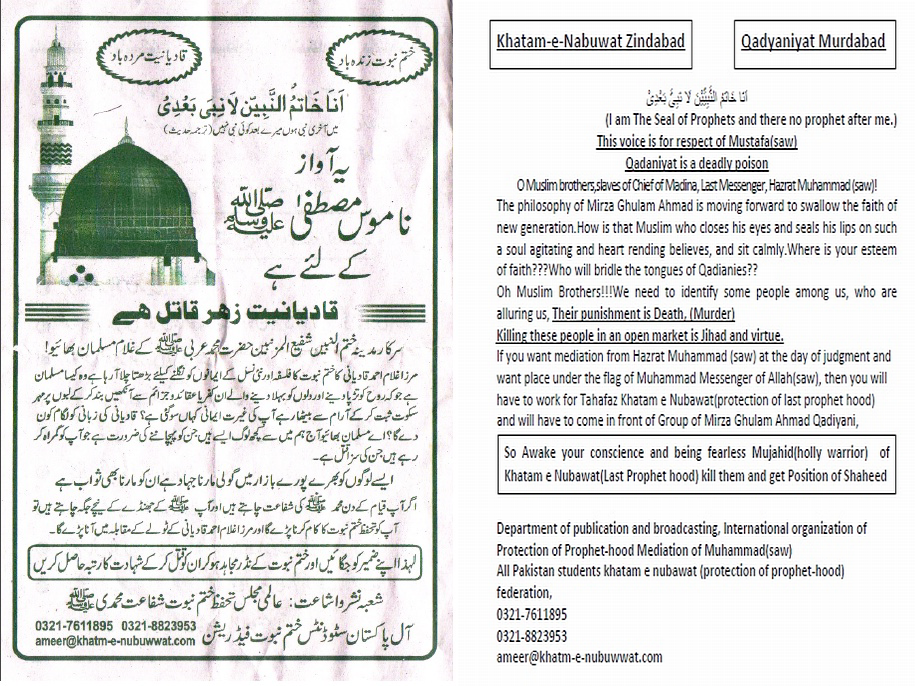
During the visit, Muslim leaders pledged to support the pair and asked them to disband all deviant Muslim sects, including the heavily- threatened Ahmadiyah.

“We will fully support candidates who are committed to disbanding all deviant religious groups, including Ahmadiyah,” NU’s Hilmi Basaiban said.

Kalla responded by saying that the government and religious leaders should work hand in hand to deal with groups considered deviant. “Religious leaders have to deal with them first, and if those groups cannot be rectified, the government will deal with them,” he said.

Meanwhile, in Jakarta, senior Democrat Anas Urbaningrum said his party would not prevent the PKS from joining the Golkar-Hanura coalition.

He said Yudhoyono and his party had given explanations to its coalition friends over the reason why he picked up Budiono as a vice presidential candidate. “But if any of our coalition friends cannot understand and accept the explanations, we have no right to force them [to stick to the coalition with Yudhoyono and the Democrats],” Anas said.

“But we are also sure that our coalition friends have commitments to placing the national interest over personal or group interests,” he added.

Copyright 2009 The Jakarta Globe
URL: www.thejakartaglobe.com/home/article/19726.html

Friday, April 3, 2009

Ahmadiyah Ploy By Islamic Parties

Ahmadiyah Ploy By Islamic Parties
---Jakarta Globe
April 03, 2009
Muninggar Sri Saraswati

Ahmadiyah Ploy By Islamic Parties

This week’s campaign sorties saw at least two Islamic parties try to boost their sagging popularity by calling for the government to outlaw Ahmadiyah, a controversial Islamic sect.

The Ahmadiyah, which has been in the country since 1920, has become a rallying point for Muslim hardliners since it was declared a deviant sect by the country’s highest authority on Islam, the Indonesian Council of Ulema, in 2008

Suryadharma Ali, the chairman of the United Development Party, or PPP, the country’s fourth largest party, addressing about 10,000 supporters at a party campaign rally here, called on the government to dissolve Ahmadiyah.

The call came as various l surveys showed that PPP’s popularity was on the wane and that Islamic political parties stood no chances against the secular nationalist ones in the April 9 legislative elections.

Another call for the dissolution of the group came from Yusril Ihza Mahendra, chairman of the supervisory council of the Crescent Star Party, or PBB, another party that had been singled out by surveys as facing a tough battle to win votes this year. Yusril, a former state secretary, told thousands of supporters during his party’s campaign rally in Padang, the capital of West Sumatra Province, that the president should disband Ahmadiyah and order it to form a new religion separate from Islam.

Komaruddin Hidayat, rector of the state-run Syarif Hidayatullah State Islamic University, said targeting Ahmadiyah as an enemy was not relevant to Indonesian voters at present.

“Campaigning for the elections is about offering ideas, not selling an issue to lure voters,” he said. Syamsuddin Haris, a political researcher for the Indonesian Institute of Sciences, or LIPI, said the use of Ahmadiyah in the parties’ campaigns was “stupid” and “unsuitable.”

“It will not be productive in attracting voters,” he said.

Copyright 2009 The Jakarta Globe
URL: www.thejakartaglobe.com/home/article/15184.html

Sunday, March 29, 2009

Indonesia: Islamic Party PPP Woos Hard-Liners

--- Jakarta Globe, Indonesia
National
March 29, 2009

Muninggar Sri Saraswati

Islamic Party PPP Woos Hard-Liners

The United Development Party, or PPP, has resorted to calling on the government to dissolve the controversial Islamic sect Ahmadiyah in an effort to appeal to conservative Muslim voters ahead of the April 9 legislative elections.

PPP chairman Suryadharma Ali, who is a member of President Susilo Bambang Yudhoyono’s cabinet, asserted during a campaign rally on Sunday that the Ahmadiyah sect had violated Islamic teachings, state-run Antara news agency reported.

“Ahmadiyah must be dissolved because it has disrespected the feelings and honor of Muslims,” he told more than 10,000 party supporters in Jakarta.

Suryadharma said the growing number of cases of insults against religion, be it Islam or the other state-recognized religions, had occurred due to what he called “over-the-line democracy,” where freedoms had been taken too far after the end of the late President Suharto’s authoritarian New Order regime.

“It is fine to be free, but every freedom has its limit,” he said.

An Islamic party set up during the New Order era, PPP has seen its popularity suffer over the last decade. In elections in 1997, shortly before the end of Suharto’s rule, it gained 20 percent of the vote, while in 1999 it secured 11 percent, and in 2004, only 8 percent.

The Ahmadiyah community has become a target in recent years for hard-line Muslims, who consider it “heretical.” Attacks against Ahmadiyah escalated in mid-2008, culminating in the government issuing a joint ministerial decree banning its activities, in particular “spreading interpretations and activities that deviate from the principal teachings of Islam.”

There are approximately 200,000 followers of Ahmadiyah who believe the sect’s founder, Mirza Ghulam Ahmad, was the last prophet of Islam — contradicting one of the fundamental doctrines of orthodox Islam.

Copyright 2009 The Jakarta Globe
URL: www.thejakartaglobe.com/news/national/article/14564.html

Tuesday, October 7, 2008

Islamic group gains power in Indonesia

- International Herald Tribune

By Peter Gelling
Published: October 7, 2008

JAKARTA: In a sign of its growing prominence, Indonesia’s Council of Ulemas moved its headquarters from the basement of a major mosque here into an expensive new office tower in the heart of downtown.


The council was established in 1975 as a quasi-governmental body of Muslim scholars by Suharto, the country’s leader for three decades, partly as a tool to keep politically minded Islamic organizations in check. But in the decade since the dictator’s fall, the group — whose leaders have increasingly espoused a radical form of Islam — has worked to establish itself as an assertive political force.

The group, known as MUI, built an impressive network of offices throughout the country, staffed by people who promote the council’s view of Islam. It logged its first major political success this summer when the government agreed to severely restrict the activities of a Muslim sect that does not believe that Muhammad was the last prophet.

Advocates of religious tolerance worry that the council’s new clout could signal the start of religious radicalization in a country known for its moderate brand of Islam.

“Islamists use the MUI as a major base of operations, coordinating support for the Islamist agenda,” said Holland Taylor, founder of LibForAll Foundation, an American and Indonesian nongovernmental group that promotes religious pluralism.

Among the goals of some prominent council members is the imposition of Shariah, or Islamic law, throughout traditionally secular Indonesia.

But other experts, even some concerned about the council’s conservative leanings and newfound influence, see the broader radicalization of Indonesian Islam as unlikely. They point out that Indonesia’s largest Islamic association, the Nahdlatul Ulama, promotes tolerance and religious pluralism and that Islamic political parties have struggled to gain ground in recent years.

Beyond that, broad antipornography legislation, which had been championed by the Council of Ulemas and its allies in Parliament, has been scaled back after a public backlash that included large street protests.

“I don’t think the Council of Ulemas is going to turn Indonesia into the Sudan,” said Sidney Jones, director of the International Crisis Group in Jakarta, citing “many other balancing forces.”

The council is an umbrella group that represents established Muslim organizations. In addition to advising the government on religious issues, it distributes fatwas, or religious directives, advising Muslims on how to practice their faith. Its fatwas are nonbinding.

Maruf Amin, the council’s deputy chairman, describes it as a moderate organization that represents the views of more than 60 Islamic groups in this overwhelmingly Muslim country.

“Our job is to communicate to the government the aspirations of Muslim people in Indonesia and to protect the Islamic population here from any bad influences that might lead them to deviate from their faith,” he said in an interview.

But some analysts who have studied the group say Islamic hard-liners have had an increasingly dominant role in the council in the last few years.

“The council has a long history of moderation, but lately it has been infiltrated by some hard-liners,” said Azyumardi Azra, director of the graduate school at Syarif Hidayatullah State Islamic University in Jakarta. “I have told its leaders that if they want to remain a representative organization, they need to be aware of this infiltration.”

The growing prominence of radical voices is partly a byproduct of the transition to democracy. Radical religious leaders who were often silenced during Suharto’s rule now have the freedom to propagate their views and have often proven adept at using the democratic system.

The growing relevance of the Council of Ulemas is partly a result of a budget some analysts believe is growing. (Neither the council nor the government would provide numbers.) Besides government financing, the council has sole authority to license halal food and medicine.

More recently, the council has tapped into Indonesia’s lucrative Islamic banking industry. It acts as one of several organizations overseeing banks that refuse loans to companies in businesses that run contrary to Islamic values, like those producing alcohol or selling pork.

These financing sources have allowed it to purchase its new office tower and to operate more than 150 satellite offices.

But analysts say the group has also benefited from its relationship with President Susilo Bambang Yudhoyono. Although the president is considered moderate, he said last year that after the council issues any fatwas, “the tools of the state can do their duty.”

“Hopefully our cooperation will deepen in the future,” he said during the speech, according to translations by the International Crisis Group.

Some experts said they suspected he was supporting the Council of Ulemas to shore up Muslim backing in elections next year. A coalition of Islamic political parties backed him when he first ran for president in 2004.

The council’s biggest coup so far was Yudhoyono’s decision in June to restrict the practices of Ahmadiya, a minority Muslim sect.

The council had been calling for a ban on Ahmadiya since 2005 when it issued two fatwas, one against the sect for not believing Muhammad is the last prophet and another calling on Muslims to reject “pluralism, liberalism and secularism.”

On June 1 in Jakarta, opponents of Ahmadiya, some affiliated with Forum Umat Islam, an organization formed to promote the council’s fatwas whose leaders include several prominent council members, clashed with demonstrators supporting the sect. Dozens were injured.

Despite an outcry over the incident, the government ordered Ahmadiya members to “stop disseminating interpretations that deviate from the main tenets of Islam” or face legal action. The government then asked the Council of Ulemas, with its network of chapters, to monitor Ahmadiya’s compliance.

A report in July by the International Crisis Group, which analyzed the conditions leading to the decree, laid significant blame on the dominance of radicals within the council and the council’s growing influence.

Several of those members are leaders of groups blamed for burning mosques and houses belonging to Ahmadiya adherents.

In its annual report on religious freedom in September, the United Sates State Department singled out the Council of Ulemas as “influential in enabling official and social discrimination” against minority religious groups in the last year in Indonesia.

Still, most of Indonesia’s Muslims remain moderate, and some have begun to fight back.

Taylor, whose group promotes religious tolerance, said moderate groups would need to try to take control of the council or press the government to privatize or dissolve it.

URL: www.iht.com/articles/2008/10/07/asia/07indo.php
 
^ Top of Page