Showing posts with label Religious Minorities. Show all posts

Tuesday, December 6, 2011

2011 Yet Another Bad Year for Human Rights: Setara

Jakarta Globe, Indonesia
HOME
2011 Yet Another Bad Year for Human Rights: Setara
Ulma Haryanto | December 06, 2011

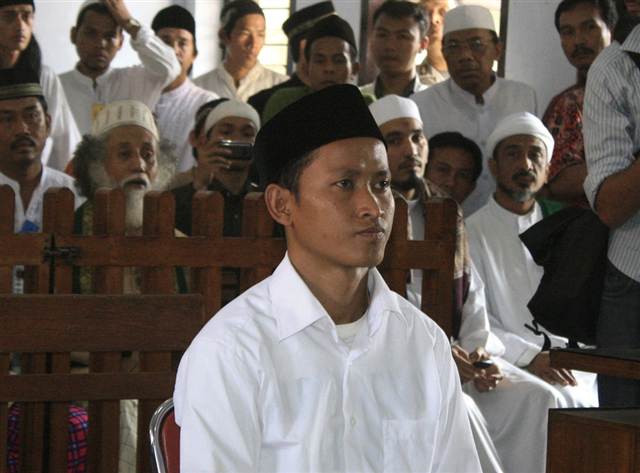
Only a handful of those involved in the attack on a small Ahmadiyah community in Cikeusik, Banten, were charged, and they only received prison sentences of just a few months. An Ahmadi survivor who almost had his hand hacked off, though, was charged with provoking the attack and sentenced to six months in prison, half a month longer than his attacker. (JG Photo)
The year 2011 has been yet another period of abject failure by the government to protect human rights, according to the results of a survey released on Monday.

Bonar Tigor Naipospos, deputy chairman of the Setara Institute for Peace and Democracy, said the survey of leading rights activists, community and religious leaders and bureaucrats showed no improvement in the state’s efforts to protect rights.

“There has been no significant change or effort from the government to uphold human rights compared to the previous year,” he said.

“The survey used a similar approach as last year. The Setara Institute grouped the variables in eight categories and measured how these items were perceived by our 71 respondents.”

Bonar said the category respondents rated the lowest was the resolution of past human rights violations, which received a score of 1.4 on a scale from 0 to 7. Last year’s worst-performing category, the perception of religious freedom, improved from a score of 1.0 to 2.3, while elimination of discrimination dropped from 4.0 to 2.8.

“Even though the score for religious freedom improved, one item in that group that still received a low score was the handling of cases of violence against minority groups,” said Ismail Hasani, a researcher at the Setara Institute.

He said that this year the worst of those incidents was the attack by a mob of 1,500 on a small Ahmadiyah community in Cikeusik, Banten province. That attack, in February, led to the deaths of three members of the beleaguered sect.

Only a handful of the perpetrators were charged, and wound up receiving prison sentences of just a few months. An Ahmadi survivor who almost had his hand hacked off, though, was charged with provoking the attack and sentenced to six months in prison, half a month longer than his attacker.

Hendardi, the Setara Institute chairman, called on President Susilo Bambang Yudhoyono to “construct policies that uphold human rights through the resolution of past human rights abuses, end impunity and provide legislation enabling the enforcement of human rights.”

“Compared to previous presidents, Yudhoyono has the strongest political backing because he was directly elected by the people,” he added.

“So there’s no excuse for him for not to uphold human rights.”

Researchers said that on the positive side, survey respondents were more satisfied with the performance of state bodies such as the National Commission on Violence Against Women (Komnas Perempuan), the Indonesian Commission for Child Protection (KPAI), and the National Commission on Human Rights (Komnas Ham).

“Komnas Perempuan received the highest score, with a 3.7, while the KPAI got 3.6 and Komnas HAM got 3.4,” Ismail said.

“Another government initiative that received a higher score was terrorism eradication.”

The survey questioned 71 respondents across 13 provinces in the country. It was carried out in September and October and focused on items in international covenants on human rights.

Copyright 2010 The Jakarta Globe
URL: www.thejakartaglobe.com/home/2011-yet-another.../482919

Friday, November 18, 2011

The Thinker: Open or Closed?

Jakarta Globe, Indonesia
OPINION
The Thinker: Open or Closed?
Elaine Pearson | November 18, 2011

“Now we are vilified,” an Ahmadiyah imam told me last week at a mosque outside Jakarta that is threatened with closure. This is not the Indonesia that US President Barack Obama described last year on his visit to Jakarta, when he said, “Even as this land of my youth has changed in so many ways, those things that I learned to love about Indonesia — that spirit of tolerance that is written into your Constitution, symbolized in mosques and churches and temples standing alongside each other, that spirit that’s embodied in your people — that still lives on.”

In Bali this week, Obama should urge President Susilo Bambang Yudhoyono to protect the rights of religious minorities and take urgent steps to protect religious freedom.

Religious tolerance in Indonesia is in danger. There has been a surge in deadly sectarian attacks against religious communities and dozens of mosques and churches have been forced to close. In the first nine months of 2011, the Setara Institute, which monitors religious freedom in Indonesia, documented 184 incidents of religious violence — a higher rate than the annual average of 204 such attacks over the last four years. About 80 percent of these attacks took place on Java, which is predominantly Sunni Muslim, and targeted Christians, Shia Muslims, Bahai, and the Ahmadiyah, who consider themselves Muslim but whom many Muslims consider heretics.

As Obama said, religious freedom is protected under the nation’s Constitution. But as freedom of expression in Indonesia has grown since the fall of Suharto in 1998, so has intolerance and violence. Instead of protecting minorities, the government has promoted and enforced discrimination.

The Ahmadiyah mosque I visited last week in the Jakarta suburb of Bekasi is facing increasing pressure to close. The imam told me: “We’ve been here for 22 years. We have never faced these problems before. We are a part of this community.” The imam showed me threatening SMS messages warning him of violence if the mosque doesn’t close.

Indonesia’s national Ahmadiyah association, Jemaat Ahmadiyah, estimates that at least 30 Ahmadiyah mosques have been closed in recent years. In 2008 the national government passed a decree that prohibits the Ahmadiyah from practicing their faith. So far 16 provinces and regencies have followed suit, issuing local decrees banning the Ahmadiyah.

On Oct. 13, the mayor of Bekasi issued a decree banning all “Ahmadiyah activities” in the city. The exact meaning of “activities” is unclear, but every Friday since then the local Muslim clerical council, police and the military have gone to the community center to urge the Ahmadiyah to stop their religious services.

Attacks against the Ahmadiyah have gotten increasingly violent because perpetrators know sectarian violence is not seriously prosecuted in Indonesia. In a deadly attack in February, a 1,500-strong mob of Islamist militants beat three Ahmadiyah men to death and seriously injured five others in the village of Cikeusik, Banten. Although the brutal violence was captured on film, only 12 of the attackers were tried and they received prison sentences of just three to six months. The prosecutors claimed the Ahmadiyah provoked the attack and sentenced one victim who nearly lost an arm to six months in prison for assault and disobeying police orders.

The Ahmadiyah are not the only victims. This year, militants have burned down Christian churches in Temanggung, Central Java, and a suicide bomber targeted a church in Solo, killing himself and wounding 14 churchgoers. Churches in Riau were burned down in August and now, perhaps in retaliation, a mosque in predominantly Christian West Timor is facing similar pressure to close.

The upsurge in religious violence and the lack of state protection is akin to what happened in Pakistan, where the Ahmadiyah faced systematic and legalized persecution. This played into the hands of the Taliban and other militant sectarian groups. Now fewer and fewer voices in Pakistan are willing to speak up for religious minorities because they themselves wind up targets of deadly attacks.

Given Obama’s words on religious tolerance during his last visit, ignoring the growing religious violence now would show he is out of touch with reality in Indonesia. The United States has an interest in a stable, democratic Indonesia, and that demands a country that respects religious freedom. Urging Yudhoyono to speak out against religious intolerance and to seek a repeal of laws that inflame sectarian violence and discrimination should be at the top of Obama’s agenda.

Elaine Pearson is deputy director of the Asia Division at Human Rights Watch.

Wednesday, November 16, 2011

Human Rights Watch Calls on Obama to Tackle Indonesian Abuses

Jakarta Globe, Indonesia
NEWS
Human Rights Watch Calls on Obama to Tackle Indonesian Abuses
November 16, 2011

Armed soldiers patroling the Nusa Dua beach front area on Indonesia's holiday island of Bali on Wednesday. The 16 leaders and heads of state of the Association of Southeast Asian Nations (Asean) and East Asia Summit participants are gathering in Nusa Dua's convention and resort enclave for this week's annual meeting where world leaders from US, Russia, China, India and Japan will be attending. (AFP Photo)
Armed soldiers patroling the Nusa Dua beach front area on Indonesia’s holiday island of Bali on Wednesday. The 16 leaders and heads of state of the Association of Southeast Asian Nations (Asean) and East Asia Summit participants are gathering in Nusa Dua’s convention and resort enclave for this week’s annual meeting where world leaders from US, Russia, China, India and Japan will be attending. (AFP Photo)
Human Rights Watch on Wednesday urged United States President Barack Obama to tackle Indonesia’s leaders during his visit this week on issues including outbreaks of mob violence against religious minorities.

The New York-based watchdog said that despite warming ties with Indonesia, Obama should be forthright when he meets President Susilo Bambang Yudhoyono during this week’s East Asia Summit held on the resort island of Bali.

Local and international human rights groups have expressed outrage over light sentences handed out to members of a religious lynch mob who killed three members of the Ahmadiyah minority sect in February.

The same court on Java island in August jailed one of the Ahmadiyah survivors of the attack, a man who almost lost his hand in the violence, for six months for defending himself and his friends.

“The Obama administration’s deepening relationship with Indonesia means being frank about Indonesia’s serious human rights challenges,” said Elaine Pearson, deputy Asia director at Human Rights Watch.

“Indonesian government indifference to mob violence against religious groups and brutality by soldiers against peaceful protesters are good places to start,” she said in a statement.

Pearson called on Obama to push Yudhoyono to end discriminatory laws and protect religious minorities in the world’s most populous Muslim nation.

“Obama needs to temper his past praise of religious tolerance in Indonesia with some tough talk on religious freedom,” she added.

Indonesia’s constitution guarantees freedom of religion but rights groups say violence against minorities including Christians and the Ahmadiyah Islamic sect has escalated since 2008.

In February, a 1,500-strong mob of Muslims set two churches alight and ransacked a third in the town of Temanggung, on Java island, as they demanded that a Christian man be sentenced to death for insulting Islam.

More than 80 percent of Indonesia’s estimated 240 million people are Muslim. Five percent are Protestants and three percent Catholic.

Human Rights Watch said Obama must address “the lack of accountability of security forces for continuing abuses” as well as the 90 prisoners in the restive provinces of Papua and Maluku jailed for peaceful political activity.

“Obama should point out that as long as soldiers who commit torture get a few months in jail while peaceful activists get sentenced for years, Papuans are unlikely to have faith in Indonesian rule,” Pearson said.

Jakarta has faced a low-level insurgency in Papua ever since its 1969 takeover of the vast, mineral-rich territory which borders Papua New Guinea and has its own ethnically distinct population.

Washington and Jakarta have reinforced ties in recent years, signing new trade agreements and strengthening military and anti-terror cooperation.

Agence France-Presse

Copyright 2010 The Jakarta Globe
URL: www.thejakartaglobe.com/news/...indonesian-abuses/478849

Monday, October 3, 2011

Rabwah: an oasis of tranquility amidst raging storms

The Friday Times Blog
October 07-13, 2011
Vol. XXIII, No. 34
Blog » By Tariq Bashir
Rabwah: an oasis of tranquility amidst raging storms
Tahir Heart Institute

Apart of the city caught fire or, more probably, was set on fire and under cover of the fire, a mob started targeting a religious minority killing a few big names of the community. Terrified of impending death at the hands of the baying crowd, the remainder took refuge in a building where the ruler was under a legal obligation to protect their lives only to be butchered on coming out even though they had been promised a pardon if they renounced their faith. 150 people died but the perpetrators were only punished lightly with fines; their biggest protector being the fact that they all belonged to the majority religion of the land. In case you are wondering, no, the incident didn’t take place in Lahore on 28 May 2010 against Ahmadis although the murderous human instincts usually reserved for religious/ethnic minorities, almost similar modus operandi and chillingly identical sequence of events with minor changes remain the same almost a millennium later.

The above refers to the infamous Clifford’s Tower massacre of Jews, one of the fiercest and racist pre-expulsion pogroms in medieval York, England in March 1190 which took place a mere six months after the coronation of King Richard I. Try to change the names, location year and especially the eventual rap-on-the-knuckles punishment for the perpetrators from York in 1190 to almost a thousand years later in Lahore in 2010, you will find overwhelming similarities in both incidents extremely disturbing. That’s not all, identical public opinions , in both medieval England and 21st century Pakistan regarding minorities when they are invariably blamed for being at fault when persecuted is chillingly shocking. Emotional scars are seldom healed especially when the victim is a whole group of people. Human history is replete with such mob killings and the apparent “crime” for attracting such gruesome mass punishment, incidentally, has often been their membership of a certain religion or ethnic group.

Perched on the unenviable position of the most oppressed religious minority in Pakistan by far the Ahmadis of Pakistan have been bearing the brunt of the indigenous clergy’s venom hell bent upon decimating them if they refuse to renounce their faith for almost six decades. A visit to Rabwah in order to get a perspective on things was a must. After picking up my contact, Imran from Chiniot, a small town only a few kilometers apart from Rabwah on the main Faisalabad-Sargodha highway, it was time to enter the leafy hamlet.

Planned and built in the same era with its wide roads, semi curves, neat roundabouts and, amongst others, eucalyptus trees, Rabwah feels like Model Town, the upscale suburb of Lahore. The mid morning sun was fast threatening to assume its furious glow and the tiny puddles of water accumulated from the overnight rain had started to give off steam. Driving through the furrows made in the muddy, half-broken road by vehicles’ tyres near the busy market place with greengrocers hawking their merchandise and men, women and children noisily haggling, the scene could have been that of any small town Sunday market in Pakistan.

In Pakistan’s political calendar 1974 looms large as the year when the society at large happily embraced gradual erosion of its core social values of tolerance and religious freedom failing to cherish and guard the same as happens in most civilized societies. Eversince that lamentable parliamentary over-reaction under pressure from the religious right the collective slow trot on the road to perdition-and now having been worked up into a swift gallop-is dotted with a number of milestones of shame, many stained with the blood of religious minorities.

Like a Mormon town Rabwah’s religious symbols are the first to greet the visitor especially the distinct black caps worn by men and boys making one feel like being in a different place from the rest of rustic, rural Punjab. Even the burkas women wore were cut and stitched in the 70s style as was commonly worn by women of my mother’s generation of the same era when the impossible duality of figure hugging and hijab could go hand in hand. Does that signify the community’s abrupt isolation from the mainstream since 1974 like a clock rendered out of order after a bomb explosion showing the exact time of the blast? Although I did not try to find the answer, privately, my answer to that was a yes.

Mr Khan, the retired, grey-haired civil servant out of the three gentlemen that I was supposed to meet had a more secular and egalitarian outlook on the whole issue. The other two, Shakeel, a prayer leader from a nearby district and Asim, a volunteer in his early thirties seemed more orthodox in their approach in terms of religion to the point of proselytizing. After lunch at Darul Ziafat and during tea and cookies I was shown examples of such milestones, posters inciting people to murder apostate and perfidious fifth columnists Qadianis, discriminatory land auction advertisements expressly excluding Ahmadis from taking part, the kind of overt racism West Indian blacks and Irish immigrant workers had to endure in the 50s London barring perhaps the death threats.

While sitting in the shadow of the portraits of bearded and turbaned religious leaders of the faith, past and present, adorning the walls of the sitting area adjacent to the dining table where lunch was served earlier by efficient waiters, the conversation invariably veered towards religion and theological differences between creeds and sects. Although as per our mutually agreed arrangement only human rights angle of the abuses had to be discussed but the exchange on comparative religions was getting quite engrossing.

On February 27 1842 a brilliant comet belonging to the Kruetz Sungrazing Comet Group passed only 126,000 miles from Sun’s photoshere which appeared to the naked eye as “an elongated white cloud”. Passengers on board the ship Owen Glendower, off the Cape of Good Hope, described it as a “short dagger like object” that closely followed the Sun towards the western horizon. William Sears, an American convert to Baha’ism, mentions this comet in his riveting read, Thief in the Night as a proof of the fulfillment of Biblical and Islamic prophecies concerning the second coming of the Messiah. Intriguingly at about the same time when Baha’ism was being born in Shia Iran Qadiani faith was launched in British India. Even more intriguing was the fact that both claimed the advent of the promised Messiah; I could not help but ask my hosts the obvious question.

“Do you rely on the sighting as a sign of the second coming like the Baha’is?“ No was the definitive answer from Mr Khan, the effete septuagenarian who looked surprisingly fit for his years. “But the choice is between Baha’ism and Ahmadiyya [when it comes to the second coming of Jesus]“, he chuckled with an intelligent shine in his eyes living upto his palpably relaxed demeanour causing a rather long pause of silence in the conversation. Quite frankly, the picture one gets these days of smaller religious groups is that of being increasingly anxious to ensure their physical well being rather than care about their creed being superior, Ahmadis being no exception. When will this atmosphere of intolerance and inhuman hatred ease up and who will pull the plug? The cliched but true answer to the latter part of my question was trotted out by those present in unanimity; the military establishment who propped up the half baked, semi literate mullah to create a perpetual constituency for itself will have to pull the plug and walk out of this dangerous and pernicious state policy.

As our vehicle slowly trudged out of that well kempt oasis of tranquility after saying our farewells amidst mutual feelings of doom and gloom, my mind went back to what Khan had remarked earlier about the westernized liberal elites equally if not more to blame for extremism to take root since they are the ones who have, over the years, kept the dream of rule of law and constitutionalism alive. One could easily add another much bigger section of the population which, dare I say, is the silent majority; those straddling the liberal-conservative divide that usually choose not to voice their concerns when it comes to the constitutional right to life, never mind the freedom to practice religion.

Food for thought? Indeed.

Names of people mentioned in the piece have been changed.

The author can be reached at bashirtariq33@yahoo.co.uk and on twitter @Tariq_Bashir


Copyright © 2011 by The Friday Times, Inc. or related companies. All rights reserved.
URL: www.thefridaytimes.com/beta2/tft/blog.php?blogstory=17

The dying canary and Indonesia’s religious freedom

Jakarta Post, Indonesia
OPINIONMon, 10/03/2011 7:57 PM
The dying canary and Indonesia’s religious freedom
Tobias Basuki, Jakarta
“Religious liberty is the proverbial canary in the mine,” according to Doug Bandouw, a senior fellow at the Cato Institute. Canaries are often used by miners as an early-warning signal for poisonous gases. When the small birds stop singing and suffocate, miners know toxic gases have polluted the area and something is wrong.

The right of religious freedom for small groups within a country is a vital indicator of the health of society. Religious freedom is the most basic freedom. Without it, it is doubtful that the lives and dignity of its citizens is truly respected.

Religious minorities in Indonesia have recently been systematically and aggressively silenced. Repression is allegedly perpetrated by religious extremists. The state is not without blame either.

The state partakes in the oppression of its own citizens, first through oversight and omission, and second by undertaking discriminatory actions and policies. The Blasphemy Law and a joint ministerial regulation on the Ahmadiyah minority Islamic sect are proof.

Two cases illustrate the dire condition of religious freedom in Indonesia.

First is the plight of the Ahmadis. The Ahmadis were part of our archipelago’s society even before independence and partook in the independence movement. The sect has now been cast aside and discriminated against.

Physical and verbal attacks against them have intensified in the past five years. One attack culminated in the slaughter of three members in Cikeusik, Banten.

Adding greater madness to the brutality was the gross injustice of our judiciary.

Those who participated in the vicious attacks were sentenced to jail for terms as little as three to six months. Deden Sudjana, whose house the Ahmadis were protecting, received a harsher sentence than those convicted of instigating the violence, who were hailed as heroes upon their release.

The Ahmadis understandably decided not to pursue and prolong the case considering the amount of prejudice and unfair treatment they have had to endure.

It was the first sign that the canary was not doing well.

The Blasphemy Law and the logic used to apply it is schizophrenic. Here is an example: The Blasphemy Law prohibits the existence of religions that resemble a major religion and also prohibits programming based on such religions from being broadcast.

In one city, an Ahmadiyah mosque was attacked and closed because it had a sign identifying it as an Ahmadiyah place of worship. The sign was considered “broadcasting” under the law. In another city, an Ahmadiyah mosque was attacked and closed because it had no signs on it and was accused of luring Muslims inside for conversion.

There are some well-intentioned arguments that state the Ahmadis should declare a new religion to avoid further prosecution. But the same logic would immediately put them in the crosshairs again.

The sect’s similarity to Islam puts it at odds with the law and prejudice against them. Labeling is not the issue; it is the bigoted view and actions of the few that are the main problems.

Another poignant example is the case of GKI Taman Yasmin. The congregation obtained a permit to build a church in July 2006. The construction, however, was stopped in 2008 by the head of Bogor’s Urban Planning and Landscaping Agency.

The church challenged the decision in court, which annulled the suspension issued by the city.

The annulment was disregarded and the church took its plight to the Supreme Court, which also ruled in favor of the church. Obstinately, the Bogor government under Mayor Diani Budiarto has chosen to blatantly disobey the Supreme Court’s ruling.

Opposition to the church’s construction is based on feeble grounds and outright ridiculous statements involving alleged counterfeit signatures, obstructing businesses and the infamous “no church should be on a street named after a Muslim”.

The reasoning proposed by the officials begs a serious question about the real motives behind the church ban. I attended one of the outdoor services conducted by the congregation in front of the sealed church.

None of the “public inconvenience” accusations held true. Even with a large number of visitors and an outdoor service, traffic was barely disturbed. There were no visible or plausible disturbances to businesses or the community.

However, one thing is clear. The mayor has broken the law on several accounts. First, he ignored court rulings, including a ruling from the Supreme Court. Second, the city violated the Regional Autonomy Law, which states that religion is the jurisdiction of the central government, not the local government.

Last but most flagrantly, Diani violated the Constitution and his oath of office. His repeated disregard of a court decision has made him a law breaker. The mayor should be impeached at the very least.

The canary is not dead … yet.

Indonesia as a nation faces two towers of evil. The first is epidemic corruption. It is like anemia. It is fatal, widespread and will kill us slowly. The second is radicalism and narrow-minded bigotry. Many say the radicals are few. It is true, but these few let loose will wound the nation and bleed us.

It is like a flesh wounds. It may not necessarily be fatal, but with a cancer draining our blood, a small wound can worsen and break us apart.

The writer is a graduate of Northern Illinois University and a lecturer at Pelita Harapan University, Tangerang.

Copyright © 2008 The Jakarta Post - PT Bina Media Tenggara. All Rights Reserved
URL: www.thejakartapost.com/news/2011/10/03/the-dying...freedom.html

Tuesday, August 9, 2011

‘Hero’? No shame for religious killings in small town

Today News
‘Hero’? No shame for religious killings in small town
Once the preserve of hard-line preachers, hatred toward Muslim sect now appears to be spreading among pockets of ordinary Indonesians
Dani bin Misra was a member of the frenzied mob who killed three Ahmadis in February.
Dani bin Misra was a member of the frenzied mob who killed three Ahmadis in February. (AP File)
By NINIEK KARMINI
Source AP
updated 8/9/2011 7:02:45 AM ET

CIKEUSIK, Indonesia — When Dani bin Misra was released from prison last week after serving just three months for smashing in the skull of a member of a Muslim sect, this conservative Indonesian town let out a triumphant cry.

“He’s a hero!“ Rasna bin Wildan said of the teenage killer.

The ferociousness of the attack, captured on video and circulated widely on the Internet, guaranteed no one from the Ahmadiyah group would dare set foot in Cikeusik again, the 38-year-old farmer said as others nodded in agreement.

Their reaction is part of a wider wave of intolerance against religious minorities that is challenging Indonesia’s image as a beacon of how Islam and liberalism can coexist.

Once the preserve of hard-line preachers, the hatred of Ahmadis now seems to be spreading among ordinary people in pockets of the world’s most populous Muslim nation. Whether the government can check this and other intolerance could be key to how Indonesia, home to 240 million people and one of the world’s fastest growing economies, evolves in the 21st century.

There are reasons to worry, analysts say.

Mosques torched
President Susilo Bambang Yudhoyono, who relies heavily on Islamic parties for support in parliament, has remained silent as hard-liners shuttered Christian churches, threw Molotov cocktails at one of their theology schools, and attacked worshippers and priests with knives and clubs as they headed to morning prayers.

These members of the Ahmadiyah sect fled their homes after the lynching that killed three fellow followers in February. (Dita Alangkara/AP)
A string of attacks on the Ahmadiyah — including the torching of mosques and homes — only got worse after a 2008 government decree that said those who follow their practices or proselytize could face up to five years in prison.

Soon after, residents in Cikeusik, a rough-and-tumble farming community less than 120 miles from Jakarta, elected a new village chief, Muhammad Johar — the only candidate pledging to take a tough stand against the sect.

Many mainstream Muslims consider the Ahmadis heretics because they do not believe Muhammad was the final prophet. (**)

In the eyes of the villagers, Dani and other members of the frenzied mob who killed three Ahmadis in February were just helping get the job done. Six were wounded, and the others fled with only the clothes on their backs, their houses destroyed and looted.

“I do feel bad people had to die,” said Asep Setiadi, 40, as he headed out to his rice field. “But I’m grateful that they’re finally gone.”

‘We had to clean our village’
Holding her baby girl in a sling as she chatted with a neighbor, 28-year-old Siti Zubaidah had nothing but praise for Dani.

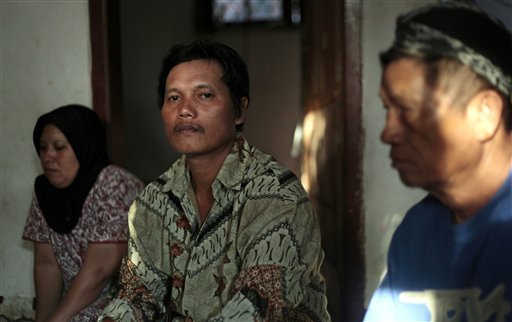
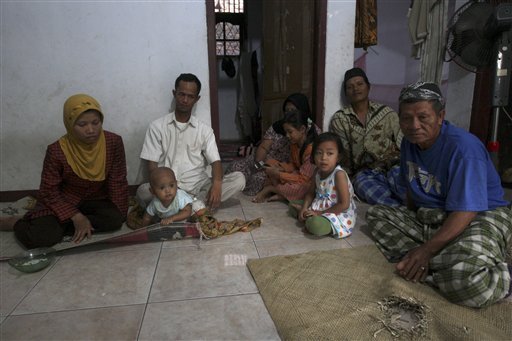
Members of Ahmadiyah sect who fled their homes following the lynching that killed three of the sect followers in February, sit inside their safe house in Banten in the outskirt of Jakarta, Indonesia. (Photo AP)
“We had to clean our village,” added Wildan bin Satim, 72. “This is no place for the followers of a cult.”

The Ahmadiyah, established in 1889 in India, consider its founder Mirza Ghulam Ahmad to be a savior and messiah, counter to traditional Islamic teaching. They have tens of millions of members worldwide and around 200,000 in Indonesia.

They were not always unwelcome in Cikeusik, where men carry swords as they walk the dusty, potholed roads after nightfall to ward off beggars, thieves and other potential troublemakers.

Matori Abdullah was the first Ahmadi to arrive.

He, his wife and eight children lived peacefully alongside other Muslims in the 1980s and early ‘90s, attending the same mosque and religious ceremonies.

But the situation began to deteriorate after the ouster in 1998 of longtime dictator Suharto, who had suppressed hard-liners and even discouraged the wearing of headscarves by women.

Conservatives in Cikeusik used a newfound freedom of expression to insult the Ahmadiyah, who by then numbered about 35, most of them part of Abdullah’s extended family.

Clerics raised questions during sermons about the validity of their faith, and residents whispered as they passed in the streets.

“Sometimes teachers would tell the class the Ahmadis are heretics,” said 15-year-old Arief Muhammad Zainal, now living in fear in the outskirts of Jakarta with others from the village. “The other students would point and stare. Other times kids would pinch or slap me, muttering ‘Ahmadiyah boy’ as they passed.”

Over time, the Ahmadis started to withdraw. In 2009, they used a $15,000 donation to build a concrete house for their religious ceremonies and stopped going to the mosque.

“They refused to pray with us,” said Johar, the village chief. “So how should we consider them as Muslim?“

Visitors would flock to the house from neighboring towns, sparking rumors they were trying to recruit new members.

‘Kill! Kill!‘
On Feb. 6, as the Ahmadis were preparing to entertain guests from Jakarta, a mob of 1,500 from Cikeusik and neighboring villages approached with machetes, rocks and wooden clubs.

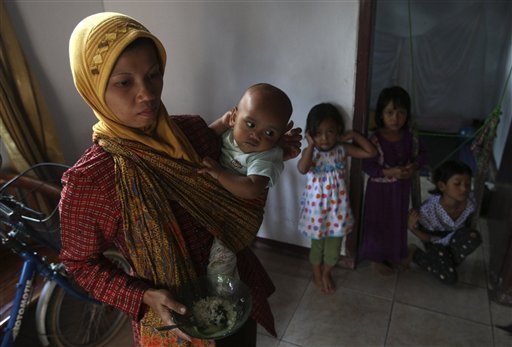
Nurhayati, a member of Ahmadiyah sect, who had to flee her home following the lynching that killed three of the sect followers in February, carries her 9-month-old baby in a safe house in Banten in the outskirt of Jakarta, Indonesia. (Photo AP)
They surrounded the house and set it ablaze.

Women and children fled, screaming. Some of the men stood firm, fighting back with whatever they could grab, but they were far outnumbered.

“Kill! Kill!“ the crowd chanted. “Burn! Burn!“

By the time a video camera was rolling, two men lay naked and lifeless in the mud. The attackers continued to hammer their bodies with bamboo sticks, each thud met with a cheer.

Dani, wearing a black leather jacket and a white skull cap, was the most brutal. The 17-year-old smashed a rock repeatedly into the skull of Roni Pasaroni as the crowd yelled “Allahu Akbar” or God is Great.

Global condemnation
The attack, just a few months after U.S. President Barack Obama held up Indonesia as an example of religious tolerance, sparked global condemnation.

In a rare departure, Yudhoyono called for the perpetrators to be caught and punished, leading to the arrest and trial of Dani and 11 other suspects.

But human rights groups say police, under pressure by hard-liners, did not carry out a proper investigation. Prosecutors, claiming the Ahmadis were instigators, didn’t call key eyewitnesses.

The relatively lenient sentences handed down last week — three to six months — surprised even Dani’s family. Taking into account time served, the teen was released almost immediately. He returned to the nearby village of Cikadu, where he was shielded from the media by his parents.

The Ahmadis from Cikeusik are in hiding. “We live in fear now,” said Nayati, a mother of four. “Everyday we are afraid they’ll find us and kill us all.”

The statement is erroneous. Hadhrat Mirza Ghulam Ahmad of Qadian did not make any such claim of being last prophet. Please visit Alislam.org/messiah for further info.

Copyright 2011 The Associated Press. All rights reserved.
URL: http://today.msnbc.msn.com/id/....killings-small-town/

Thursday, July 28, 2011

Youth Gets Three Months’ Jail for Brutal Ahmadiyah Attack

Jakarta Globe, Indonesia
HOME
Youth Gets Three Months’ Jail for Brutal Ahmadiyah Attack
Jakarta Globe | July 28, 2011

Indonesian Police are putting on a massive display of force as the trials of 10 defendants charged in the brutal violence against members of the minority Ahmadiyah religion in Banten conclude with the verdicts on Thursday morning.

One verdict has already been passed, with one youth, Dani bin Misra, 17, being jailed for three months. Dani is the teenager made infamous when a video of him striking one of the Ahmadis in the head with a large stone as he lay on the ground was broadcast around the world.

He was found guilty of assault, public incitement, property destruction and an attack that caused death, according to Andreas Harsono from Human Rights Watch.

Considering the amount of time already served, Dani should walk of jail any day.

Police in the provincial capital Serang said 1,200 officers had been deployed both in and outside the court “to anticipate unwanted things.”

Serang Police Chief Adj. Sr. Comr. Krisnandi told the Jakarta Globe that three layers of security had been applied.

“Officers are deployed inside the courtroom, the court parking lot and the street in front of it,” Krisnandi said.

Police snipers were also in position, he said.

Police are concerned that violence will erupt if supporters of the defendants are unhappy with the verdicts.

The defendants, charged with crimes ranging from provoking violence to assault, received sentence demands in the five to seven-month range — far below the maximum of six years for the lesser charge of provocation.

Prosecutors have said the sentencing requests were light because they believe the group of 25 Ahmadis played a part in provoking the attack in Cikeusik on Feb. 6.

Three Ahmadis were killed in the attack by an enraged mob who believe Ahmadis are members of a deviant sect. Ahmadis consider themselves Muslims.

The attacks — and other religious-based violence — have brought international condemnation and concerns that many in Indonesia are becoming more and more intolerant.

Copyright 2010 The Jakarta Globe
URL: www.thejakartaglobe.com/home/youth-gets.../455728

Thursday, July 21, 2011

INDONESIA: Ahmadiyah community faces ongoing discrimination

AHRC Logo
Opinions / Interviews / INDONESIA: Ahmadiyah community faces ongoing discrimination
INDONESIA: Ahmadiyah community faces ongoing discrimination

July 21, 2011

An interview with Zaenuda Ikhwanul Aziz from the Indonesian Ahmadiyah Community (JAI) published by the Asian Human Rights Commission regarding the situation faced by Ahmadis in Indonesia.

Zaenuda Ikhwanul AzizZaenuda Ikhwanul Aziz, is the secretary of the legal committee of the Indonesian Ahmadiyah congregation (Jamaah Ahmadiyah Indonesia — JAI). He is actively involved in the struggle of the Ahmadiyah in the country.


How do you feel about what is happening to the Ahmadiyah community in Indonesia?

We feel that we are being discriminated against, especially the Ahmadiyah communities at the localities outside the capital of Jakarta. For example, the government does not give identification cards and marriage certificates to Ahmadiyahs.

At the economic sector many Ahmadiyahs have had to change the location of their businesses. Even in some provinces, the people from the community are intimidated not to buy products from Ahmadiyah shops and businesses and this has resulted in a serious reduction of our income.

In the social sector we also are excluded and intimidated. We are not allowed to be involved in social gatherings.

At the religious sector the Minister of Religion prohibits us from conducting the Hajj, (the pilgrimage to Mekka) and even when we pray, members of the local communities attack our mosques. Sometimes, our villages are also attacked.

Also, in the health sector, many people reject Ahmadiyahs as patients. We therefore feel discriminated against in most, if not all, sectors.

When did you start to feel the discrimination?

The discrimination started when the Indonesian Ulama Assembly (Majelis Ulama Indonesia - MUI) declared Ahmadiyah as an errant sect in 1980. This fatwa brought to light the differences between Ahmadiyahs and the community. The people followed the fatwa believing that Ahmadiyah is errant without seeking any further explanation or consideration.

The main actors involved are the Indonesian government, central and local law enforcement authorities and several Ulama members who influence the people to attack Ahmadiyah communities. This is especially so with those persons who live within Ahmadiyah communities.

In your opinion, what is the reason for the increase of the aggression against Ahmadiyahs in the last few years?

There are several reasons, not the least of which is that the government is indecisive about law enforcement. If the joint ministerial decree against JAI still prevailed then the government could not allow the local regulations in the provinces to declare Ahmadiyah as an errant sect. Unfortunately, the government did nothing to prevent this from happening.

The aggressors see Ahmadiyah as a threat because the numbers of Ahmadiyah communities is increasing and they are scared that they will lose their followers.

Also, the content of the joint ministerial decree has been misinterpreted. There are local regulations which use the joint resolution decree to declare Ahmadiyah as errant whereas there is no such statement in the decree itself. The JAI think this happened because the government is trying to distance itself from the joint of resolution decree.

Is the state doing anything to protect the Ahmadiyahs?

We feel the state protection is still minimal. There is still turmoil because there is no law enforcement. It is seldom that perpetrators of violence against Ahmadiyahs are arrested and they are never prosecuted in the courts.

What do you feel about the work of the police?

In general, the work of the police is still far from professional. However, we must acknowledge that in some areas, there are some good police officers working in relation to Ahmadiyahs.

What about the work of the courts?

Judges are deficient at searching for the truth. Their efforts are deficient when examining at a trial, investigating the witness and proof, such as happened at Cisalada trial. Even the verdict against the Ahmadiyah victim was heavier than that of the perpetrators.

What is the Ahmadiyah community doing in their own defence?

Our representatives visit government officials, legal enforcement authorities, and the community in general. Relating to the legal dealings, we entrust this to our legal counsel.

The result of our visits are promising in that there are several communities and authorities who opened up and accepted us such as in Bandung, Central Java, and Wonosobo. But there have also been rejections such as in Cianjur, Bogor.

What is your ultimate goal in this struggle?

All we ask for is the right to live like other citizens and that these rights are fulfilled by the government

————————
The views shared in this article do not necessarily reflect those of the AHRC, and the AHRC takes no responsibility for them.

Wednesday, July 20, 2011

Rights Group Calls on Clinton to Address Injustice During Indonesia Trip

Jakarta Globe, Indonesia
NEWS
Rights Group Calls on Clinton to Address Injustice During Indonesia Trip
Lauren Zumbach | July 20, 2011

Human Rights Watch has called on US Secretary of State Hillary Clinton to focus on military abuses, freedom of expression and religious minorities’ rights during her visit to Indonesia from Thursday to Sunday.

In a statement released to Clinton on Tuesday, the rights group’s deputy Asia director, Elaine Pearson, criticized the United States for failing to promote action to address “military atrocities” despite the fact that closer military ties between that country and Indonesia were to be “a reward for better behavior by Indonesian soldiers.”

The plan to increase military cooperation was announced last year during a visit to Indonesia by then-US Defense Secretary Robert Gates.

“This is an important opportunity for Clinton to speak publicly about the need for genuine reform,” Pearson said in the statement, which described cases like the May 2010 torture of two farmers in Papua. Though soldiers were captured on video kicking the victims and touching one’s genitals with a piece of burning wood, none of the soldiers were charged with torture, instead receiving eight- to ten-month sentences for “disobeying orders.”

In addition to concerns over military abuses, the letter asked Clinton to address Indonesian laws inhibiting free expression and the continued imprisonment of over 100 activists.

Pearson added that laws against dissent and attacks on religious minorities were “getting worse,” citing attacks on Ahmadiyah mosques in the wake of President Susilo Bambang Yudhoyono’s 2008 decree restricting the Islamic sect’s activities.

“If the US really wants to support Indonesia as a rights-respecting democracy, then Clinton should not shy away from stressing the importance of rolling back practices that undermine freedom of religion and speech,” Pearson said.

Wednesday, May 18, 2011

UN High Commissioner urges for Special Rapporteur visit

Jakarta Post, Indonesia
NATIONALWed, 05/18/2011 9:29 PM
UN High Commissioner urges for Special Rapporteur visit
The Jakarta Post, Jakarta
The United Nations’ High Commissioner for Human Rights, Navanethem Pillay, has urged the government to accept the request of the Special Rapporteur on freedom of religion or belief to visit the country this year.

The call came in a letter sent to Foreign Affairs Minister Marty Natalegawa, a copy of which was obtained by The Jakarta Post on Wednesday.

In the letter, dated April 26, Pillay expressed his concern over reports of violence against members of religious minorities in Indonesia.

He said he had received reports of widespread violence and discrimination against the Ahmadiyah community in Indonesia, including the issuance of several decrees banning their activities in certain regions.

He had also received reports concerning harassment and violence against members of other religious minorities, he said.

“In Bogor, West Java, I am informed that local authorities have closed off the Indonesian Christian Church of Taman Yasmin and prevented them from conducting religious services,” Pillay wrote in his letter.

There were also reports of Christian groups being attacked and Christian churches being burned in several regions. He further mentioned reports that a Buddhist community in North Sumatra was ordered to dismantle a Buddha statue at a temple that was considered by some to be a challenge to Islam in that area.

Pillay said he hoped that his office “might be able to contribute in some meaningful and constructive way to the discussion and law reform efforts taking place within Indonesia and would welcome the opportunity to discuss this further” with the Indonesian government.

“In this regard, I strongly encourage the Government of Indonesia to accept the request of the Special Rapporteur on freedom of religion or belief to undertake a visit to the country later this year,” he added.

Copyright © 2008 The Jakarta Post - PT Bina Media Tenggara. All Rights Reserved
URL: www.thejakartapost.com/news/2011/05/18/un-high...visit.html

UN tells RI to review laws restricting religious freedom

Jakarta Post, Indonesia
NATIONALWed, 05/18/2011 8:15 PM
UN tells RI to review laws restricting religious freedom
The Jakarta Post, Jakarta
The United Nations’ High Commissioner for Human Rights Navanethem Pillay has urged Indonesia to review its laws restricting religious expression and practice.

In a letter sent to Foreign Minister Marty Natalegawa, a copy of which was obtained by The Jakarta Post on Wednesday, Pillay expressed his concern over reports of violence against members of religious minorities in Indonesia.

“I have been particularly disturbed by the widespread violence and discrimination reported against the Ahmadiyya community which has included the state-sanctioned closing of Ahmadi mosques, the burning of homes and places of worship, and even physical violence and murder,” Pillay wrote in his letter dated April 26.

Three Ahmadis were killed when Islamic hard-liners attacked a small Ahmadiyah community in Cikeusik, West Java, on Feb. 6 this year. Several local and provincial administrations have since issued decrees banning Ahmadiyah activities in their respective regions.

Pillay said reports had said that since the new regulations were issued, “further acts of harassment and violence have taken place”.

He pointed out that Indonesia had ratified the International Covenant on Civil and Political Rights (ICCPR), which guarantees the right to freedom of religion.

“Government at both national and provincial levels should comply with the guarantees contained in the Indonesian Constitution and in the international treaties in which Indonesia is a party. All laws, particularly those restricting religious expression and practice, should be reviewed to ensure they comply with these standards,” he said.

He also urged the Indonesian government to ensure the legal accountability of all perpetrators, including the imposition of penalties.

Copyright © 2008 The Jakarta Post - PT Bina Media Tenggara. All Rights Reserved
URL: www.thejakartapost.com/news/2011/05/18/un-tells...freedom.html

Tuesday, May 17, 2011

UN ‘Disturbed’ by Indonesia’s Religious Violence

Jakarta Globe, Indonesia
HOME
UN ‘Disturbed’ by Indonesia’s Religious Violence
Camelia Pasandaran & Cameron Bates | May 17, 2011

The United Nations has written to the Indonesian government expressing “concern” about the increasing number of reports about violence committed against religious minorities.

The Ministry of Foreign Affairs, however, says it is yet to receive a copy of the letter, dated April 26, 2011, from UN High Commissioner for Human Rights Navanethem Pillay. The letter was also copied to the National Commission on Human Rights (Komnas HAM) and a number of other Indonesia institutions.

Pillay also reveals a proposed visit by the UN’s special rapporteur on freedom of religion or belief to visit Indonesia this year to investigate the allegations.

In the letter, a copy of which was obtained by the Jakarta Globe on Sunday, Pillay says she is writing to the Indonesian government to “express my concern over the large number of letters and reports I have received in recent months concerning violence against members of religious minorities in Indonesia.”

“I have been particularly disturbed by the widespread violence and discrimination reported against the [Ahmadiyah] community, which has included the state-sanctioned closing of Ahmadi mosques, the burning of homes and places of worship, and even physical violence and murder.”

Pillay said that since the violent attack that left three Ahmadi dead in Cikeusik, West Java, on Feb. 6, several government authorities had responded by issuing new regulations and decrees that allowed “further acts of harassment and violence” to occur.

Pillay also noted a number of other reported incidences of religious intolerance, including the ongoing stand-off between the Bogor government and the Indonesian Christian Church (GKI) Yasmin.

“Christian groups have reportedly been attacked and Christian churches have reportedly been burned in Gebyog, Klaten and Tegal in Central Java. In North Sumatra, a Buddhist community was ordered to dismantle a Buddha statue at a temple that was considered by some to be a challenge to Islam in that area.”

The commissioner said the incidents put at risk the human rights guaranteed in the Constitution and the International Covenant on Civil and Political Rights, to which Indonesia is a signatory.

“The General Assembly and Human Rights Council have repeatedly urges States to take all necessary and appropriate actions, in conformity with international human rights standards, to combat hatred, discrimination, intolerance and acts of violence, intimidation and coercion motivated by intolerance based on religion or belief, as well as incitement to hostility and violence, with particular regard to members of religious minorities.”

Pillay said she understood that discussions were ongoing between the government, Komnas HAM, civil society and religious groups concerning the issue.

“I encourage the government of Indonesia to take this opportunity to support reflection and action at various levels to address the broader issues behind religious intolerance and discrimination.”

She said that laws that restricted religious expression and practise “must be reviewed to ensure they comply with these standards” and well as ensuring that justice was upheld against those found to have committed wrongdoing.

Pillay also “strongly encouraged” the government to accept a proposed visit by the United Nation’s special rapporteur on freedom of religion or belief to visit Indonesia this year.

Rev. Ujang Tanusaputra of GKI Yasmin said the letter was “a bad assessment of Indonesia in the context of religious freedom.”

“As a nation that is based on [the state ideology] Pancasila with its motto Unity in Diversity, the government should uphold and implement the pillars of Indonesia.”

Copyright 2010 The Jakarta Globe
URL: www.thejakartaglobe.com/home/united-nations.../441540

Thursday, April 7, 2011

INDONESIA: Increasing attacks on religious groups demands central government action

AHRC Logo
NEWS
INDONESIA: Increasing attacks on religious groups demands central government action
April 7, 2011

Dear friends,

We wish to share with you the following statement from Amnesty International, KontraS, Imparsial, Elsam, Setara Institute, ICRP, HRWG, ANBTI, ILRC and Wahid Institute.

Asian Human Rights Commission
Hong Kong

FOR IMMEDIATE RELEASE
AHRC-FST-025-2011
April 7, 2011

A Statement from Amnesty International, KontraS, Imparsial, Elsam, Setara Institute, ICRP, HRWG, ANBTI, ILRC and Wahid Institute forwarded by the Asian Human Rights Commission

INDONESIA: Increasing attacks on religious groups demands central government action


The Indonesian government must do more to stop the rising number of incidents of violence, intimidation, harassment and discrimination against religious minorities, said a group of Indonesian and international human rights organizations today.

Amnesty International, along with KontraS, Imparsial, Elsam, Setara Institute, ICRP, HRWG, ANBTI, ILRC and Wahid Institute voiced their concern about the growing environment of discrimination and harassment against religious minorities, in particular the Ahmadiyya community.

KontraS has documented at least 62 incidents between January and March 2011 only against the Ahmadiyya community. According to data collected by HRWG, the pace of such attacks has increased sharply in 2011 compared with the previous two years. There are also concerns about continuing attacks against Christians.

A particularly alarming development was the involvement of the Indonesian military and police in intimidation and forced conversion of members of the beleaguered Ahmadiyya community. KontraS has documented at least 20 cases in March and early April 2011 where military and police have been involved in cases of intimidation, harassment and forced conversion.

Amnesty International shared the concerns raised by Indonesian human rights groups with the senior leadership of the Indonesian National Police on 5 April.

Amnesty International also met some of Indonesia’s largest mass religious organizations, including Muhamadiyyah, Nahdlatul Ulama, and the Communion of Churches in Indonesia (PGI), an umbrella group for Protestant Churches.

Alarmed by the deteriorating situation, and in light of the positive meetings with police officials and religious leaders, the human rights groups issued the following recommendations:

— The central government must fulfill its obligation to ensure that all citizens, regardless of their religious beliefs, benefit from the human rights enshrined in the 1945 Indonesian Constitution and the International Covenant on Civil and Political Rights, which Indonesia ratified in 2005 as provided by Law No. 12/2005;

— The central government, through the Ministry of Home Affairs, should immediately assert its exclusive authority to regulate religious affairs under the 2004 Law on Regional Autonomy and ensure that any regulations issued at the provincial as well as at the district level are in compliance with human rights protections as provided in the 1945 Indonesian Constitution and Indonesia’s obligations under international law, in particular the ICCPR;

— The Joint Ministerial Decree of 2008, which placed significant restrictions on the activities of the Ahmadiyya religious community, has served to foster a climate conducive to violence and vigilanteism, and should be immediately repealed;

— The Indonesian police should restate publicly its commitment to protecting the rights of all citizens regardless of their religious beliefs and put in place a proactive strategy for preventing and addressing incidents of religiously based violence. The groups welcomed the efforts to address the incidents in Cikeusik and Temanggung and look to the government and police to ensure that the trials proceed without intimidation of the victims, witnesses and their lawyers. The police should also ensure they register and investigate all cases of religious-based violence, regardless of the religious background of the victim.

— Central and local government officials should emphasize the basic protections for religious belief, expression, and association included in the 1945 Indonesian Constitution and international law and refrain from making comments stigmatizing religious minorities, which has created a climate fostering discrimination and violence.

Jakarta, 6 April 2011

Monday, March 21, 2011

INDONESIA: Rule by violence

AHRC Logo
NEWS
INDONESIA: Rule by violence
March 21, 2011
Bombing of NGO office following religious standoff while US Congress urges President to revoke decrees
Archive photo, Ahmadiyya homes in Indonesia set on fire, source: Ahmadiyya Times
Following a series of violent incidents against religious minorities, including the Ahmadiyah community, two regional administrations in Indonesia had issued local decrees banning the Ahmadiyah followers. On February 6, in Cikeusik Banten for example three Ahmadiyah followers were killed and several injured after an angry mob attacked them. The few police officers present at the incident did little to stop the violence. An internal investigation by the police only named a few lower ranking officers as suspects of negligence but did not address the structural police involvement in such incidents of fundamentalist violence. Violence and protests against Ahmadiyah followers also took place in other provinces. The bombing of a Jakarta based NGO office advocating religious freedom completes the picture of Indonesian authorities that are not taking the side of the law and who appear unable to withstand the pressure from extremists.

On March 15, 2011, 27 members of the US Congress signed a letter to President Yudhoyono calling for the 2008 decree against Ahmadiya religions promulgation to be revoked as well as the regional decrees which banned the Ahmadiyah followers from exercising their religion. The letter is available here. Article 18 of the ICCPR protects the right of everyone to choose and exercise their religion and requires every government to protect this fundamental freedom as a human right. However, the government responded to the call to revoke the decrees by declaring that it reserves the right to treat the Ahmadiyah religious sect in any manner it likes, the Jakarta Post reported. While the Indonesian government acceded to the International Covenant on Civil and Political Rights (ICCPR) in 2006 it now openly ignores its earlier commitments to human rights.

On Tuesday March 15, 2011 a letter mail was sent to the co-founder of the Liberal Islamic Network (JIL), Ulil Abshar Abdalla in East Jakarta. The radio stations housed in the same building witnessed the blast. The unusual events in building show the inability of police to deal with the situation:

By 10 am on Tuesday March 15, a dark skinned 170cm tall man wearing a parachute jacket and a hat delivered a package wrapped in brown paper to the reception desk of the building used by the JIL (Jaringan Islam Liberal) and the pro democratic radio station KBR68H radio station and other groups.

At 11.30 am 4 or 5 people arrived in a car. Two of them came into the building and identified themselves as members of a travel agency and talked to KBR68H radio about running promotions for the pilgrimage trips to Mecca in the radio channel. After their unusual visit was over the men went on to visit JIL in the same building with the same request, falsely alleging to have been recommended by KBR68H to talk to JIL. This appeared as an attempt to gain trust.

At 2.30pm 3 persons who identified themselves as coming from the National Police Headquarter arrived and alleged to want to talk about the recent situation of religious violence and events about the Ahmadiyah followers. By that time the staff of JIL had become suspicious about the package they received since it contained a book titled “They Deserved to Be Killed: Because of Their Sins to Islam and Muslims” and appeared to be glued together.

Since the suspicion of a bomb in the book arouse, it was of unusual coincidence that three members of police were already around when the JIL were thus able to hand over the book to them. The local police was also called and a group of around ten officers arrived betweem 3 pm – 3.30 pm. It was soon confirmed that wires in the object made it likely to be a bomb. The crowd of police then decided to try traditional methods to neutralise it, by pouring water in it after bringing the bomb into the backyard of the building. Following this the mobile phone battery that had supplied the bomb system with electricity was taken off by the police and this action triggered the bomb. The resulting explosion injured one of the policemen, none of whom were bomb disposal specialists.

A second letter bomb with the same book title was sent to Comr. Gen. Gories Mere, a former key officer of the National Police’s elite counterterrorism unit, Densus 88.

In 2005 the KBR68H radio station had become a target of an attack from the Islamic Defenders Front (FPI) after the radio had promoted religious tolerance.

A day earlier on March 14, four laptops and one computer were stolen from the office of the National Alliance for Unity in Diversity (Aliansi Nasional Bhinneka Tunggal Ika ANBTI). The group supported and promoted the Indonesian constitutional value of a pluralistic society in Indonesia.

It is not only the police and local administrations that have supported activities against Ahmadiyah followers. According to the Human Rights Working Group the Indonesian military has also been involved in activities against the religious minority. Members of the military have occupied mosques and urged Ahmadiyah members to discard their beliefs. With this activity the military has gone far beyond its mandate and has thus violated laws.

The Islamic Defenders Front (FPI) is believed to be behind recent attacks against the Ahmadiyah community. Habib Rizieq Shihab, head of the Islamic Defenders Front (FPI) explained that FPI would only settle for peace if the President would ban the Ahmadiyah in Indonesia. He threatened that violence against Ahmadyah followers would continue unless the Islamic sect would be legally banned.

The repeated and open threats of violence against religious minorities are a crime in the Indonesian Penal Code. The police often do not react appropriately to such incitements of violence and authorities instead allow such incidents, like the recent killings and bans, to take place. In some instances the argument to maintain public security and order is turned around so that the responsibility for the violence is not that of the instigators of the violence but rather at the victims who are accused of causing instability.

The AHRC urges the President, the Indonesian government and the National Police to protect the constitutional values, human rights and applicable international law by fully investigating all threats against any religious groups in Indonesia and to give full support including protection measures to threatened communities. Allegations against members of the police and military to support religious extremists or their views must be investigated. Any officer supporting such views should face disciplinary and criminal measures including suspension and criminal charges.

Document ID: AHRC-STM-043-2011
URL: www.humanrights.asia/news/ahrc-news/AHRC-STM-043-2011

Thursday, October 7, 2010

The tipping point, terrorism and crimes against humanity

OPINION
Thu, 10/07/2010
10:28 AM

The tipping point, terrorism and crimes against humanity
Jennie S. Bev, Palo Alto

It’s mind-boggling that the National Police have claimed they are one of the best police forces in the world in tackling terrorism and that the government has claimed it is an administration that governs a pluralistic country. Their claims are far from factual conditions. Otherwise many people wouldn’t be puzzled.

The Islam Defenders Front’s (FPI) acts of terror are rampant and have reached a point where religious minorities, including both non-Muslims and Muslims, have no place to stand and breathe. Recently, the places of worship and private residences of the Ahmadiyah Muslim sect have been ransacked, destroyed and burned. People have been abused physically, mentally, and emotionally.

Nothing the FPI does projects an image of peace, which is what Islam stands for. The FPI are more than religious extremists. And the Indonesian government has not acted properly to ensure they no longer perform acts of terrorism in the future.

The government must ensure that future acts of terrorism are eliminated, including those that may be perpetrated by the FPI on any civilian and any minority group. Only in this way could the country be called an integrated and pluralistic nation. Today, Indonesia is merely a segregated pluralistic country, or in other words, it looks pluralistic on the surface only.

To this day, a joint ministerial decree issued in 2008 banning Ahmadiyah members from practicing their faith in public or spreading its beliefs is still in force. In 2005, the MUI (Indonesian Ulemas Council) also issued an edict that said Ahmadiyah was heterical and blamesphemous.

Let me humbly remind the government that it allegedly “condoned” those brutal acts legally (through the joint decree) and morally (through the MUI’s edict). It might be true that President Susilo Bambang Yudhoyono previously expressed his sympathy to victims and asked the police to maintain security.

However, by upholding the joint ministerial decree, the government became the perpetrator of so-called “legalized persecution.” It violated the 1945 Constitution (the right to worship), principles of democracy (the protection of minorities) and principles of human rights.

Of course, the government has not signed the 1998 Rome Statute of the International Criminal Court (ICC). Otherwise, Indonesia would have to ratify and enforce the statute. Upon enforcement, crimes against humanity could be brought to ICC in the Netherlands.

The Rome Statue defines crimes against humanity as offenses that constitute a serious attack on human dignity or cause grave humiliation to one or more human beings.

Crimes against humanity are not isolated or sporadic events, but are part of a government policy

(although the perpetrators need not identify themselves with this policy) or are part of a wide practice of atrocities tolerated or condoned by a government or a de facto authority.

Murder, extermination, torture, rape, political, racial, or religious persecution and other inhumane acts may reach the threshold of crimes against humanity only if they are part of a widespread or systematic practice.

Let me underscore this phrase: the wide practice of atrocities tolerated or condoned by a government or a de facto authority. Not performing sufficient measures to prevent attacks by the FPI falls under this definition.

At this point, we need to keep pressuring the government and Yudhoyono to use their consciences, maintain security and respect the Indonesian people’s sense of justice. International human rights watchdog organizations are working hard to pressure the government. And we, the people, are now waiting anxiously for a tipping point.

The “tipping point” is a theory popularized by Malcolm Gladwell, which refers to the moment of critical mass, threshold or a boiling point. Certain individuals or situations may trigger the boiling point for sociological change.

Considering the current state of frustration with and distrust of government by concerned citizens, it is not an exaggeration to predict that a tipping point for Indonesia is near. Such an occurrence might manifest itself in various forms, among which include the possibility of a revolution.

A revolution itself is a fundamental change in power that takes place in a short period of time. How and when it will take place is a big question mark.

It is simply a historical fact that change occurs periodically. Indonesia has endured far too long and is ripe for a major change where every citizen is equally protected. Things are boiling now and the tipping point is near.

The writer is an author and columnist based in northern California in the US and can be reached at www.jenniesbev.com

Tuesday, July 13, 2010

Interfaith Relations in Indonesia Put to the Litmus Test

The Huffington Post, USA
July 13, 2010

Endy BayuniEndy Bayuni
Chief editor of The Jakarta Post and United Nations Global Expert
Posted: July 13, 2010 10:51 AM

Interfaith Relations in Indonesia Put to the Litmus Test

The tension between Muslims, the dominant religion, and Christians, the largest religious minority group, in Indonesia is coming to the fore with the open accusations by Islamic organizations in Bekasi, a town outside Jakarta, that churches have been aggressively converting Muslims in droves.

The Muslim groups, which include the local branch of the traditionally moderate Nahdlatul Ulama (NU) as well as the militant Front for Islamic Defenders (FPI), declared war against evangelism at the end of their congress in June. They set up a task force empowered to stop “Christianization” of Muslims in the township.

The congress would not have raised so much of an eyebrow if this was an affair involving the usual suspects like the FPI, which have of late been waging a “jihad” against people of other religions, including razing and vandalizing churches, harassing Christian masses, and attacking “misguided” Islamic sects like the Ahmadiyah. Militant, and at times destructive, these groups have never been seen as representing the mainstream Muslims in Indonesia, and most people would applaud if and when police stopped them from their violent behavior.

But the presence of NU representatives in the Bekasi congress, and the virtual silence of its national leaders as well as of other Muslim leaders who have taken part in many interfaith dialogues in the past, suggests their complicity if not of their shared concern about the activities of Christian evangelism in the country.

This could spell trouble for the relations between the religious communities in Indonesia, and raises questions about the effectiveness and sincerity of these interfaith dialogues, which were supposedly designed to build understandings and dispel mutual fears and suspicions between people of different faiths.

One of the criticisms about these dialogues is that they almost always involved the same leaders. Familiarity certainly helps to improve their communication but these dialogues have mostly excluded leaders of the more vocal or radical groups.

But any notion that the dialogues merely serve to preach the converted may also be far-fetching, as the Bekasi episode now shows. What guarantees do we have that those who participated in interfaith dialogues had seriously carried the message of peace when they went back to their flocks?

The Bekasi affair has opened up the Pandora Box of the fierce competition between different religious organizations in the battle for the soul of Indonesians, particularly between Islam and Christianity. With the 1945 Constitution guaranteeing freedom of faith, there isn’t any law that can stop any religious organizations from conducting their propagation activities with the aim of saving human souls.

A government regulation issued in 1978 forbids any attempt to convert people who already have a religion. This virtually limits evangelism in Indonesia to the eastern province of Papua, where Christian missionaries have been most active. But the regulation does not carry weight as it contravenes the constitution and it has been virtually ignored by all religious organizations, Christians and Muslims alike.

Mosques, churches, and to a lesser extent, temples, have seen their share of converting people into their religions without any interference from the state, in Jakarta as in most other cities across the archipelago. There are no statistics to show who is winning the battle, but Muslim groups lately seem bent on stopping the conversion out of their religion. Religious conversions happen for many reasons, whether through the acts of propagation, through daily contacts or marriages, but there is nothing that the state can do about what is constitutionally regarded as the rights of individuals.

Religious propagation is mostly conducted discretely rather than openly, and this allowed the leaders of different religions to remain courteous with one another as they meet in the interfaith dialogues. Leaders of mainstream Islamic organizations were also able to distance themselves from the violent behavior by the likes of the FPI.

But the Bekasi affair, in which the Muslim groups have declared war against Christianity, and the complicity, if not the silence, of the traditionally moderate Muslim organizations, has now raised the stake. The last thing Indonesia needs is a religious war on a larger scale than the one we saw erupting in Maluku 2000.

While dialogue remains the best and probably the only course to avoid a religious confrontation in Indonesia, it is time that these religious leaders start addressing the serious issues and have a hard and serious discussion, instead of avoiding them. It would help if they were also sincere and honest in these dialogues.

 
^ Top of Page