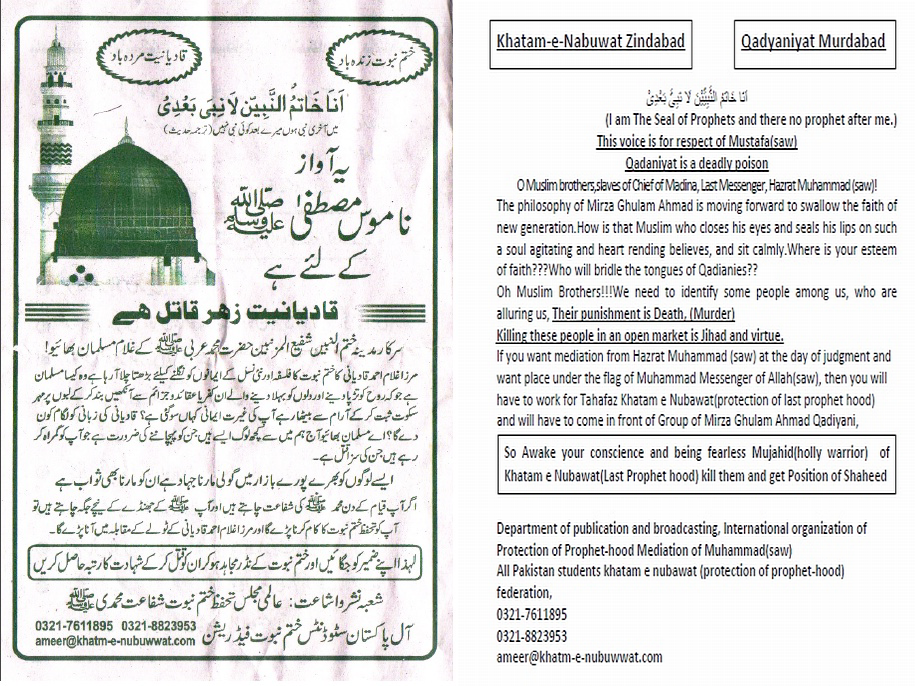
Showing posts with label Munir Report. Show all posts

Sunday, June 20, 2010

In our beginning is our end

Daily Dawn, Pakistan
Columnist
.
In our beginning is our end
   By Ardeshir Cowasjee
   Sunday, 20 Jun, 2010
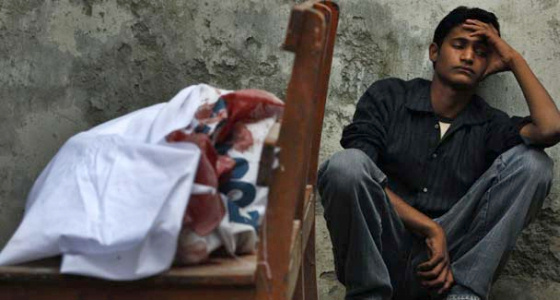
Whatever progress we have made in Pakistan's 63 years of life has been on the negative side, writes Ardeshir Cowasjee. - Photo by Reuters
Whatever progress we have made in Pakistan’s 63 years of life has been on the negative side, writes Ardeshir Cowasjee. — Photo by Reuters

We must read to remember. The early days of Pakistan were far from halcyon, though those of us who lived through them look back with some nostalgia. Whatever progress we have made in this country’s 63 years of life has been, as it turns out, on the negative side.

Where have we progressed in leaps and bounds? Well, in the scale of wholesale corruption, political and administrative ineptitude, and bigotry and intolerance and their accompanying violence — they were all there at the beginning which was in itself violent.

Perhaps the presence of founder-maker Mohammad Ali Jinnah for the first year of Pakistan’s life kept things somewhat in check, though his loyal lieutenants did take advantage of his state of health. His exhortations of Aug 11, 1947 to his constituent assembly were in vain.

All that he laid down — tolerance, equality of citizenship, the shunning of corruption, nepotism and jobbery, and above all that law and order was the first priority of any government — was all lost. It was never digested, the quality of manpower saw to that.

Having dipped into an OUP 2010 publication, The Culture of Power and Governance of Pakistan 1947-2008 by Ilhan Niazi, it has sadly dawned upon me how misplaced was the early enthusiasm for the new country and the belief that the words and teachings of Jinnah would prevail.

In January 1949, governor of the Punjab Francis Mudie sent a note to Prime Minister Liaquat Ali Khan complaining that Punjab Chief Minister Mamdot was one up on the centre and even Jinnah “every time that they have intervened and the feeling is growing that the centre is powerless even when the government is hopelessly corrupt and the administration paralysed … no questions of policy are even contemplated”.

The services were demoralised, ministers were interfering in the administration, “becoming more and more rapacious”. Land grabbing was the fashion from the start — the Punjab chief minister was described as “lazy, inefficient and a liar”, his main interest being the acquisition of evacuee land out of which he and his family and followers had all done splendidly.

The same applied to many other politicians and administrators whose main focus was the abandoned evacuee properties — buildings and land.

In March that same year, the ulema, who even in those days wielded far more influence than they should have done and were mainly comprised of groups that had opposed the creation of Pakistan, scored a famous victory.

The Muslim League, led by Liaquat Ali Khan, turned its back on Jinnah and his avowal to the world that Pakistan was not to be a theocratic state led by priests with a divine mission, and pushed through the constituent assembly the Objectives Resolution which put paid to any hope of freedom of worship, of the fundamental principle that all citizens are equal and above all of Jinnah’s promise to his people: “You may belong to any religion or caste or creed — that has nothing to do with the business of the state.”

In 1952, Interior Secretary G. Ahmed sent to Prime Minister Khwaja Nazimuddin a note on the internal situation. He reported a loss of public confidence in the weak and far from competent government. The country was on the downgrade, provincial and political disharmony was on the increase, and there was an undercurrent of restlessness.

The cause: the mindset of the politicians and their medieval attitude towards the acquisition and exercise of power — politicians at all levels used and abused the state as a personal estate, and were adept at playing games with the religious fundamentalists for short-term political benefit.

Well, all of the above is an apt description of what has transpired each year of Pakistan’s life — the generals had not by 1952 reared their heads, but the accusation against the politicians has also applied equally and fairly since 1956 to the generals of our army and to vast numbers of corrupt and venal administrators who have been willing tools in the hands of whatever masters they have served in servile manner.

Come 1953, and the ulema flaunted their powers. In January they issued an ultimatum to Prime Minister Nazimuddin that unless he declared the Ahmadis to be a non-Muslim minority and sacked all Ahmadis in key state posts they would resort to ‘direct action’. This they did in March, the prime minister having ignored them.

Widespread disturbances, killings and rioting broke out in Punjab leading to the imposition of a local martial law. In 1954 Justices M. Munir and M.R. Kayani presented their report on the disturbances in which they famously declared that, after having heard various members of the ulema, it was impossible to define a Pakistani Muslim.

Their final sentence to the report is one of the saddest truest comments ever made on this country: “But if democracy means the subordination of law and order to political ends — then Allah knoweth best and we end the report.”

Were any lessons learnt? No. In 1974, Prime Minister Zulfikar Ali Bhutto, bowing, it is said to external and internal pressures excommunicated an entire community, declaring the Ahmadis a minority. Ziaul Haq in 1984 declared the Ahmadis to be non-Muslims and into the Pakistan Penal Code inserted sections 298-B and 298-C prohibiting them from referring to their place of worship as a masjid, from referring to the call to prayer as the azan, from ‘posing’ as a Muslim, or from referring to their faith as Islam. The punishment was a fine and up to three years imprisonment.

And so, on to May 28 2010. Where do we go from there?

arfc@cyber.net .pk

©2010 DAWN Media Group. All rights reserved

Sunday, June 13, 2010

Smokers’ Corner: Whiplash

Daily Dawn, Pakistan
Columnist
.
Smokers’ Corner: Whiplash
   By Nadeem F. Paracha
   Sunday, 13 Jun, 2010

Jinnah's death in 1948 reduced his Muslim League (from being a dynamic organisation of visionary action) to a rag-tag group of self-serving politicians. It became a pale reflection of its pre-independence past. Gone too was the party's ability to bring into policy Jinnah's modernist Muslim vision.
Jinnah’s death in 1948 reduced his Muslim League (from being a dynamic organisation of visionary action) to a rag-tag group of self-serving politicians. It became a pale reflection of its pre-independence past. Gone too was the party’s ability to bring into policy Jinnah’s modernist Muslim vision.

A consensus across various academic and intellectual circles now states that violent entities such as the Pakistani Taliban and assorted sectarian organisations are the pitfalls of policies pursued by the state through its intelligence agencies to safeguard Pakistan’s ‘strategic’ and ideological interests.

The supposed ideology was constructed by the ruling establishment many years after the painful birth of this country. It has since been used by the state apparatus, political parties and media men to justify the patronisation and formation of brutal reactive outfits and groups. But whose ideology is it anyway? Pakistan seemed to have had a simple answer till about 1956. This answer, it seems, did not suit the political and economic interests of the early Pakistani ruling elite.

Till about the late 1960s it was normal to suggest that Pakistan was carved as a country for Muslims of the subcontinent who were largely seen (by Jinnah and his comrades in the Muslim League), as a distinct cultural set of Indians whose political, economic and cultural distinctiveness might have been compromised in a post-colonial ‘Hindu-dominated’ setup. As Jinnah went about explaining his vision of Pakistan, there was no doubt whatsoever in the historical validity of the notion that he imagined the new country as a cultural haven for Muslims of the subcontinent where the state and politics would remain separate.

The state was to be driven by modern democracy that incorporated the egalitarian concepts of Islam such as charity, equality and interfaith tolerance. According to Professor Aysha Jalal, Jinnah’s view of Islamic activism in the subcontinent was akin to his understanding it as a phenomenon that ‘derided the false and dangerous religious frenzy which had confused Indian politics and the zealots who were harming the national cause.’

However, Jinnah’s death in 1948 reduced his Muslim League (from being a dynamic organisation of visionary action) to a rag-tag group of self-serving politicians. It became a pale reflection of its pre-independence past. Gone too was the party’s ability to bring into policy Jinnah’s modernist Muslim vision. The idea got increasingly muddled and shouted down by the once anti-Pakistan Islamic forces, who now started flexing their muscles in the face of a disintegrating Muslim League, and the erosion of the ideal that its leader stood for.

The Jamat-i-Islami (JI) went on a rampage in 1953 in Lahore, hungrily overseeing the country’s first major anti-Ahmadi riots. Of course, by now the famous speech by Jinnah in which he underlined the idea of religious freedom in the new country was conveniently forgotten as the ruling elite grappled confusingly with the crises of its own creation. Eventually, it capitulated to the demands of the handful of vocal Islamist leaders by officially declaring the country an ‘Islamic Republic’. It was classic ostrich behaviour; the sort a number of Pakistani leaders continue to demonstrate whenever faced with the question of Pakistan and its relationship to political Islam.

Misunderstanding Islamist activism as mere emotionalism, the ruling elite gave the Islamists a bone to play with, without bothering to explain to the rest of the people exactly what an Islamic republic really meant in the Pakistani context — a country buzzing with a number of ethnicities, minority religions and distinct Muslim sects. A democratic order should have been a natural answer to the state’s crisis. But for Islamists, democracy meant the emergence of ethnic and religious plurality that would encourage secular politics and further undermine the notion of the new-found Islam-centric Pakistani nationhood.

Many years and follies later, and in the midst of unprecedented violence being perpetrated in the name of Islam, Pakistanis today stand more confused and flabbergasted than ever before. The seeds of ideological schizophrenia that the 1956 constitution sowed followed by the disastrous doings of the Gen Ziaul Haq dictatorship in the 1980s. These have now grown into a wicked tree that only bears delusions and denials as fruit.

As Islamic parties and reactionary journalists continue to use the flimsy historical narrative of Pakistan’s Islamic republicism, consciously burying the harrowing truth behind the chaos the so-called’ Islamic ideology of Pakistan’ has managed to create, whole new generations grow up lapping up this synthetic narrative. While it has continued to alienate not only the religious minorities — Muslim and non-Muslim — it has also stoked intolerance among the very vocal and assertive, puritan Muslims.

A recent example is the way many puritan Islamic groups have reacted to the conservative Nawaz Sharif’s statement sympathising with the plight of the Ahmadis. Also, one of Pakistan’s outstanding, moderate Islamic scholars, Javed Ahmed Ghamdi, has had to fly out of the country into a self-imposed exile. According to an executive producer at a popular Urdu-language TV channel, Ghamdi was facing a number of threats from certain puritan and violent Islamic groups.

His sin? He stood out as a mainstream Sunni Muslim scholar who banked on reason and an interpretive take on the Quran, eschewing the myopic literalism of the puritan groups that espouse a violent, political view of Islam.

©2010 DAWN Media Group. All rights reserved

Monday, May 31, 2010

COMMENT: We are in it together

---Daily Times, Pakistan
Monday, May 31, 2010

COMMENT: We are in it together — Dr Syed Mansoor Hussain

The Ahmedis have never done anything to harm Pakistan, and yet those that opposed the creation of Pakistan are at the forefront of accusing them of being anti-Pakistan

After the Friday massacre in Lahore, I kept asking myself, how and why we have come to this point. I grew up in the Lahore of the late 50s and 60s. My family was not very religious but neither were they very liberal. I went through a typical upper middle class education for that time, English medium schools, followed by a couple of years in Government College (GC) and then five years in the King Edward (KE) Medical College.

During those years, I had of course heard about the Ahmedis and very probably had friends and classmates who were Ahmedi as there were Shias, Sunnis, and even some Christians, but never gave it a thought. The first time this sectarian anger against the Ahmedis came to the fore in my life was when as a second year student in KE, a classmate of ours died in a tragic swimming pool accident.

We decided to have a funeral prayer (namaaz-e-jinaza) for our classmate on the college campus. Suddenly out of nowhere appeared a bunch of students who belonged to the Islami Jamiat-i-Talaba (IJT) trying to convince us that the deceased was an Ahmedi and a funeral prayer should therefore not be held for him. Fortunately, a majority of students in our class ignored these IJT types and went ahead to offer the prayers.

My earliest memories of Lahore as a child were of processions, riots leading to curfews and eventually something called a Martial Law. Many years later when I went back and read about the early history of Pakistan, I realised that those riots were part of the anti-Ahmedi movement led by anti-Pakistan religious groups like the Ahrar and the Jamaat-e-Islami. Part of my reading included the ‘Munir Report’ written by Justices Munir and Kayani about those ‘disturbances’.

In that report I also found out that the Pakistan Muslim League (PML) government in Punjab led by Mian Mumtaz Daultana had aided and abetted this movement. Indeed that report was an eye-opener and is perhaps a great example of the erudition and the objectivity of the senior judiciary in Pakistan. In my opinion any serious student of the history of Pakistan must read that report.

The decade of the 60s ended with the fall of the military dictatorship of General and then Field Marshal Ayub Khan, leading to the second military dictatorship in the history of Pakistan led by General Yahya Khan. Whatever one might say about the 13 years under these two generals, Pakistan was very much a country infused by a pluralist religious ethos. Sectarianism existed but was very much in a muted and undercover form.

Towards the end of 1971 I left Pakistan for the US. When I left Pakistan it still had two wings, East and West Pakistan; however, soon the country went through a violent rupture. During the next decade, things changed a lot. The Ahmedis were declared non-Muslims by Zulfikar Ali Bhutto (ZAB), their mosques became ‘prayer houses’ and they were forbidden to call themselves Muslims.

Then came the evil decade of Islamisation in which Pakistan changed entirely. Religiosity of an extreme sort became the accepted norm, and virtually all Muslims not subscribing to an extremist vision of Islam became pariahs. The Ahmedis were pushed into a corner and became completely ostracised. The 1953 agitation against them had finally succeeded. All members of religious minorities who could, fled the country including the Parsees, the Christians, Hindus, and the Ahmedis.

For three decades I lived and worked in the US. Other than the family members of the close friends I made during those years, half were probably Jewish and the rest divided between Christians of different denominations, Indians including Hindus, Sikhs and a couple of Jains, and some Muslims from Pakistan. For me religion became the least important barometer of friendship. Frankly, for most of my professional life in the US, if I had to depend on somebody, it was the Jews followed by the Indians with the Pakistani sorts being quite unreliable as a group.

When I returned to Pakistan some years ago, another General was in charge, and ‘enlightened moderation’ was the slogan being touted by the General and his acolytes. Sadly, whatever the facade was, the reality was that Talibanisation and religious extremism were being pushed by the ‘establishment’. All claims of enlightened moderation were completely exposed when the attempt to take off the ‘religion’ column in the Pakistani passports failed. Like ZAB, Musharraf might have been a religious moderate, but he also gave in to the religious extremists to save his job.

The last few years have seen an escalation of both religiosity as well as religiously-motivated terrorism in Pakistan. It is true that many external factors are stimulating the extremist revival, the most important being the US-led invasion and occupation of first Afghanistan and then Iraq. But that does not absolve us in Pakistan from the charge of letting this menace grow.

It happened due to the collusion of the people in power and flourished because many ordinary Pakistanis support the violent and extreme vision of Islam that is pushed by the Taliban and their ilk. Of course the new democratic governments both at the Centre as well as in Punjab have made appropriate noises but they just do not have the gumption to come out openly against religious extremism and those that pander to it. Unless the ordinary people rise up against this menace, it will never be checked.

As far as the attack on the Ahmedi places of worship (cannot call them ‘mosques’ because that is against the law) is concerned, that is particularly despicable. People aggregate to worship Allah, and they become victims of an attack by those that claim to serve Allah. As far as I know the Ahmedis have never done anything to harm Pakistan, and yet those that opposed the creation of Pakistan are at the forefront of accusing them of being anti-Pakistan.

Syed Mansoor Hussain has practised and taught medicine in the US. He can be reached at smhmbbs70@yahoo.com

URL: www.dailytimes.com.pk/default.asp?page=2010\05\31\story_31-5-2010_pg3_3

Monday, May 3, 2010

A matter of faith

---Express Tribune, Pakistan

A matter of faith

By Basil Nabi Malik
May 03, 2010


The writer is a lawyer with Malik, Chaudhry, Ahmed and Siddiqi in Karachi (basil.nabi@tribune.com.pk)

It is common knowledge that we are duty bound to follow and respect the Constitution of Pakistan and each and every one of its articles. However, the same becomes a tad bit difficult when certain unpalatable clauses are added which really have no business being in the constitution.

For example, if I were to ask anyone as to the definition of a ‘Muslim’, I am guessing the last place they’d look would be in the Constitution of Pakistan. However, lo and behold Article 260 of our constitution actually defines the term. Ironically, all this happened during the time of Zulfikar Ali Bhutto, though he was, of course, pressured to do this by certain religious quarters.

Although it was clearly a political move, the method was unique. Rather than to go into the intricacies and complications of trying to forge a unanimously agreed-upon definition, which many thought was next to impossible and perhaps even unnecessary, he thought it fit to zero in on an exclusionary clause which ‘enlightened’ us on what a Muslim could not be.
.
However, clearly, this was the kind of medieval quackery that only ‘scheming politicians’ could think of. It took the likes of General Zia in 1985 to give us an affirmative definition of a Muslim, sans the discussions and attempts at consensus building, which in all likelihood, he probably found irrelevant. He did this in the form of the President’s Order No. 24 of 1985, whereby Article 260(3) was substituted with what can best be described as intriguing definitions of the terms ‘Muslim’ and ‘non-Muslim’.

The word ‘Muslim’ entailed: “a person who believes in the unity and oneness of Almighty Allah, in the absolute and unqualified finality of the Prophethood of Muhammad (pbuh), the last of the Prophets and does not believe in, or recognise as a prophet or religious reformer, any person who claimed or claims to be a prophet, in any sense of the word or of any description whatsoever, after Muhammad (pbuh)”. General Zia, however, didn’t leave it at that.

For some odd reason, he didn’t feel that the people of the country would actually be able to understand the term ‘Muslim’ and so the definition of ‘non-Muslim’ was also inserted. The term ‘non-Muslim’ was defined as: “a person who is not a Muslim and includes a person belonging to the Christian, Hindu, Sikh, Buddhist or Parsi community, a person of the Qadiani Group or the Lahori Group who call themselves ‘Ahmadis’ or by any other name or a Bahai and a person belonging to any of the Scheduled Castes”.

Effectively, in one stroke, General Zia did what Justice Munir in the Munir Report of 1954 dreaded and forewarned against: the adoption of certain religious worldviews at the expense of others, thereby inducing divisions in society. To be more exact, after asking a variety of the ulema as to what the definition of a Muslim would entail and receiving varying responses, Justice Munir said in the report that: “keeping in view the several definitions given by the ulema [defining the term Muslim], need we make any comment except that no two learned divines are agreed on this fundamental.”

The point is that what business is it of the state to get into this whole matter of defining who is a Muslim and who isn’t. One would have thought that this is a matter best left to individuals themselves and is something to be assessed by their conduct and actions — and in any case it is a private matter for each individual. It’s a pity that the 18th amendment chose to ignore this in the present constitution.

URL:
http://tribune.com.pk/story/10274/a-matter-of-faith/
 
^ Top of Page