 | Columnist |
.
What the eye did not see
By Ardeshir Cowasjee
Sunday, 13 Jun, 2010

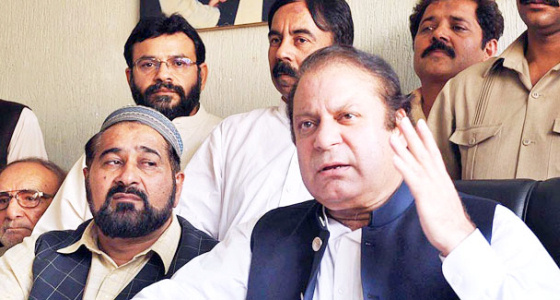
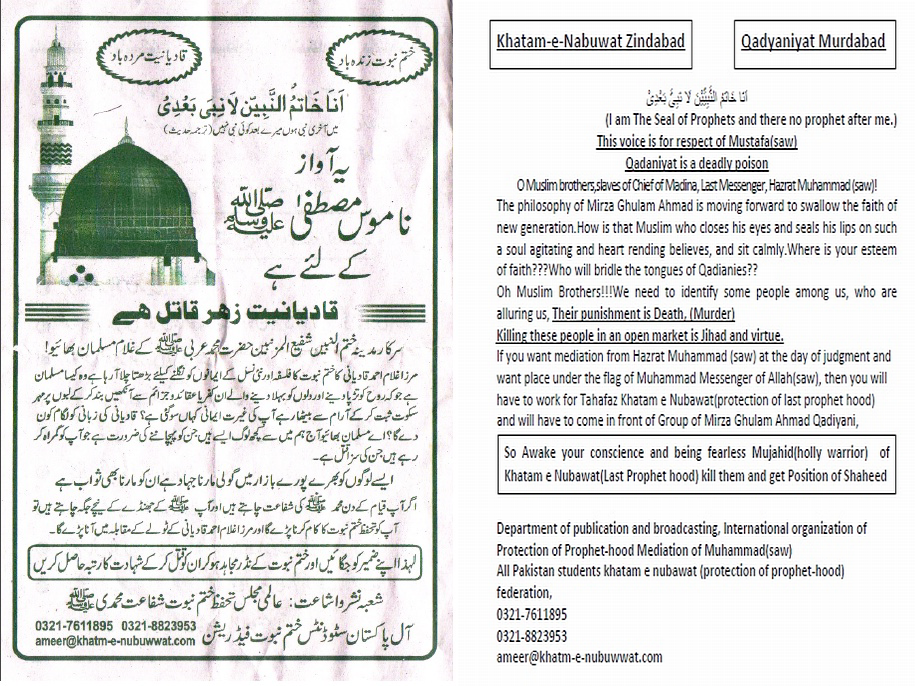
On May 28 of this year, how many members of the minority Ahmadi community were massacred in cold blood by the ‘student’ fraternity upholding their version of the religion of the majority? The official reaction: silence. Unforgivable! — Photo by Reuters.
“Wherein adequate provisions shall be made for the minorities freely to profess and practise their religions and develop their cultures” reads the fifth clause of the Objectives Resolution as adopted by the Constituent Assembly of Pakistan, having been moved by Prime Minister Liaquat Ali Khan, on March 7, 1949.
“Wherein adequate provisions shall be made for the minorities to profess and practise their religions and develop their cultures” reads the same clause in the same resolution when inserted into the constitution of 1973 by the Eighth Amendment and made the annex, and thus a substantive part of the constitution, by President Gen Zia ul Haq and his Majlis-i-Shura in 1985.
“CJ lauds parliament for correcting historic wrong” read the lead headline in this newspaper on June 9. The historic wrong was the omission of the word ‘freely’ from the constitution. It has now been reinserted by the 18th Amendment to the constitution as brought in by this PPP-Z government (accompanied by considerable fulsome fanfare).
Hearing petitions in the Supreme Court against various clauses in that contentious amendment, Chief Justice Iftikhar Chaudhry is quoted as having remarked not only how wrong it was that the word ‘freely’ was removed from the original clause in the Objectives Resolution but it was also strange that at the time the amendment was passed not one Majlis member had noticed the omission.
He might have added that it was equally strange that since 1985 none of our constitutional experts who have tinkered with the constitution, nor any member of succeeding governments until now, had been at all bothered about the removal of the word, which removal was obviously done with a purpose.
An editorial in our press on June 10 noted that “nobody noticed it till now” and “it is shocking that not only was this omission never highlighted but even the reinsertion was ignored by many until the Supreme Court’s remarks on this issue….”
On April 2, 1993, in my column printed in this space, I wrote about the grand opening on March 21 that year of the newly built Supreme Court and of the passing of its keys by Prime Minister Nawaz Sharif to Chief Justice of Pakistan Afzal Zullah. I also wrote of the Objectives Resolution, the text of which, embossed on brass plaques, was affixed to a wall in the entrance hall of the court, and quoted the entire original text.
Then: “What now adorns the wall of our Supreme Court is a modified version of the resolution which has destroyed its sanctity. Let us zero in on the original clause … The powers that be have deemed it fit and right to purposefully omit the word ‘freely’ from what has been inscribed. The people thus stand deceived. Does there live a man amongst us who will stand up and say ‘mea culpa’? Who will right the wrong? It is the true text, in toto, of the resolution as passed that must be embossed in the building wherein sit men against whose judgments an appeal lies only before God Almighty.”
On to Dec 3, 2000, when once more in my column printed in this space writing on the omission of the word ‘freely’ from the Annex to the constitution I commented: “Now we move to the Supreme Court, the Islamic Republic’s citadel of justice which in 1997 was so shamelessly stormed by Nawaz Sharif, his aiders and abettors, for which Nawaz remains unpunished. When the present building in which the Supreme Court sits was inaugurated plaques were affixed to the walls of the entrance hall on which were engraved in English and in Urdu the text of the Objectives Resolution. In the English version the word ‘freely’ was mischievously (repeat mischievously) omitted although it was contained in the Urdu version.
“In 1993 I made a vain attempt to get through to Chief Justice Afzal Zullah and impress upon him that the English version should be corrected. Then came Chief Justice Dr Nasim Hasan Shah, who said he would do his best to set things right. Nothing happened. He was followed by Chief Justice Sajjad Ali Shah who settled the issue by having both plaques, English and Urdu, removed from the hall. No successive chief justice has seen to it that the plaques with the corrected English version be re-affixed.
“Now I appeal to Gen Pervez Musharraf to do what he can to amend the annex to the constitution and to have the plaques refitted….”
So, somewhere within the storage vaults of Chief Justice Chaudhry’s court lie two plaques, unmourned, over the passage of over a decade. As matters in the Islamic Republic have evolved it is perhaps better that they remain where they are, for grave doubts have surfaced as to the wisdom of the passing of the Objectives Resolution. And, the resolution being the preamble to the 1973 constitution, what was Ziaul Haq’s true purpose in adding it for a second time, and amending it, as the annex?
We have seen over the past three decades how impossible it is for the minorities to truly ‘freely’ practise their religion. How many minority citizens of Pakistan have been killed or persecuted, through bigotry, intolerance and Zia’s iniquitous blasphemy laws. And on May 28 of this year, how many members of the minority Ahmadi community were massacred in cold blood by the ‘student’ fraternity upholding their version of the religion of the majority? The official reaction: silence. Unforgivable!
arfc@cyber.net .pk
“Wherein adequate provisions shall be made for the minorities to profess and practise their religions and develop their cultures” reads the same clause in the same resolution when inserted into the constitution of 1973 by the Eighth Amendment and made the annex, and thus a substantive part of the constitution, by President Gen Zia ul Haq and his Majlis-i-Shura in 1985.
“CJ lauds parliament for correcting historic wrong” read the lead headline in this newspaper on June 9. The historic wrong was the omission of the word ‘freely’ from the constitution. It has now been reinserted by the 18th Amendment to the constitution as brought in by this PPP-Z government (accompanied by considerable fulsome fanfare).
Hearing petitions in the Supreme Court against various clauses in that contentious amendment, Chief Justice Iftikhar Chaudhry is quoted as having remarked not only how wrong it was that the word ‘freely’ was removed from the original clause in the Objectives Resolution but it was also strange that at the time the amendment was passed not one Majlis member had noticed the omission.
He might have added that it was equally strange that since 1985 none of our constitutional experts who have tinkered with the constitution, nor any member of succeeding governments until now, had been at all bothered about the removal of the word, which removal was obviously done with a purpose.
An editorial in our press on June 10 noted that “nobody noticed it till now” and “it is shocking that not only was this omission never highlighted but even the reinsertion was ignored by many until the Supreme Court’s remarks on this issue….”
On April 2, 1993, in my column printed in this space, I wrote about the grand opening on March 21 that year of the newly built Supreme Court and of the passing of its keys by Prime Minister Nawaz Sharif to Chief Justice of Pakistan Afzal Zullah. I also wrote of the Objectives Resolution, the text of which, embossed on brass plaques, was affixed to a wall in the entrance hall of the court, and quoted the entire original text.
Then: “What now adorns the wall of our Supreme Court is a modified version of the resolution which has destroyed its sanctity. Let us zero in on the original clause … The powers that be have deemed it fit and right to purposefully omit the word ‘freely’ from what has been inscribed. The people thus stand deceived. Does there live a man amongst us who will stand up and say ‘mea culpa’? Who will right the wrong? It is the true text, in toto, of the resolution as passed that must be embossed in the building wherein sit men against whose judgments an appeal lies only before God Almighty.”
On to Dec 3, 2000, when once more in my column printed in this space writing on the omission of the word ‘freely’ from the Annex to the constitution I commented: “Now we move to the Supreme Court, the Islamic Republic’s citadel of justice which in 1997 was so shamelessly stormed by Nawaz Sharif, his aiders and abettors, for which Nawaz remains unpunished. When the present building in which the Supreme Court sits was inaugurated plaques were affixed to the walls of the entrance hall on which were engraved in English and in Urdu the text of the Objectives Resolution. In the English version the word ‘freely’ was mischievously (repeat mischievously) omitted although it was contained in the Urdu version.
“In 1993 I made a vain attempt to get through to Chief Justice Afzal Zullah and impress upon him that the English version should be corrected. Then came Chief Justice Dr Nasim Hasan Shah, who said he would do his best to set things right. Nothing happened. He was followed by Chief Justice Sajjad Ali Shah who settled the issue by having both plaques, English and Urdu, removed from the hall. No successive chief justice has seen to it that the plaques with the corrected English version be re-affixed.
“Now I appeal to Gen Pervez Musharraf to do what he can to amend the annex to the constitution and to have the plaques refitted….”
So, somewhere within the storage vaults of Chief Justice Chaudhry’s court lie two plaques, unmourned, over the passage of over a decade. As matters in the Islamic Republic have evolved it is perhaps better that they remain where they are, for grave doubts have surfaced as to the wisdom of the passing of the Objectives Resolution. And, the resolution being the preamble to the 1973 constitution, what was Ziaul Haq’s true purpose in adding it for a second time, and amending it, as the annex?
We have seen over the past three decades how impossible it is for the minorities to truly ‘freely’ practise their religion. How many minority citizens of Pakistan have been killed or persecuted, through bigotry, intolerance and Zia’s iniquitous blasphemy laws. And on May 28 of this year, how many members of the minority Ahmadi community were massacred in cold blood by the ‘student’ fraternity upholding their version of the religion of the majority? The official reaction: silence. Unforgivable!
arfc@cyber.net .pk
©2010 DAWN Media Group. All rights reserved






 Posts
Posts


