 | HEADLINES Tue, 07/13/2010 8:42 AM |
Violence feared to replace community dialogue
Dicky Christanto, The Jakarta Post, Jakarta
Ongoing incidents triggered by power-hungry mass organizations wanting to uphold their own “law” is behind the increasing levels of conflict in society, according to experts.
Franz Magnis-Suseno from the Jakarta-based Driyarkara School of Philosophy said the situation will worsen if the government does nothing to handle incidents of violence.
Such violence, he said, has begun replacing community dialogue as shown in, for instance, repeated raids on places of worship by religious hardliners.
“It is a matter of the government’s political will and priorities. We have no doubt that state institutions have sufficient resources to take stern action against these mass organizations,” Franz said Monday.
When asked if the state apparatus’ failure in being tough on organizations would jeopardize the country’s unity in the future, Franz said he believed the country had enough experience to deal with such issues.
“We have been faced with many problems before, some of them huge. But we have managed to survive. I’m confident we can [solve these fresh problems],” he said.
A University of Indonesia sociologist, Thamrin Amal Tamagola, said a special order from President Susilo Bambang Yudhoyono was needed to help boost the morale of law enforcers so they do not bow to pressure from violent civil groups.
“Our law enforcers have a problem coping with political pressure and they are easily bowed. Thus, a specific order is needed to authorize law enforcers to take stern measures against these organizations,” he said.
Thamrin suggested that members of society, who felt their rights had been violated by groups pushing their own agendas, file class actions lawsuits at the district courts.
“In a democratic country, the government is not authorized to disband a group or a mass organization. The only institution having such authority is a judicial body, in this case the courts,” he said.
National Defense Council outgoing secretary general Lt. Gen. Bambang Darmono, however, praised the government, saying it had done its best to preserve democracy.
He did, however, note that there had been problems relating to social interaction between the people and a few mass organizations.
“Thus, thorough mapping is needed to address the problems accurately and properly. This effort would ideally be conducted by organizations independent of the government, such as NGOs and the media,” he said.
Bambang said the results of the mapping should be given to the government for further measures.
Recently, there have been waves of protests and violence from several mass organizations, such as the Islam Defenders Front (FPI), and ethnic organizations clashing with groups with conflicting interests.
Last month a joint forum of Islamic mass organizations in Bekasi ordered local Christians to close down a building they deemed as an illegal church. The protesters deemed activity at the church part of a global proselytization effort.
In another incident, a mosque that once acted as a house of worship for Ahmadiyah followers in Bogor was demolished by police on Monday. The authorities argued that if they did not tear it down, several Islamic groups had threatened to close the mosque by force.
Last year alone, there were 291 acts of violence nationwide, 118 in Java, against the freedom of religion and belief, according to the Setara Institute which focuses on Equality.
Franz Magnis-Suseno from the Jakarta-based Driyarkara School of Philosophy said the situation will worsen if the government does nothing to handle incidents of violence.
Such violence, he said, has begun replacing community dialogue as shown in, for instance, repeated raids on places of worship by religious hardliners.
“It is a matter of the government’s political will and priorities. We have no doubt that state institutions have sufficient resources to take stern action against these mass organizations,” Franz said Monday.
When asked if the state apparatus’ failure in being tough on organizations would jeopardize the country’s unity in the future, Franz said he believed the country had enough experience to deal with such issues.
“We have been faced with many problems before, some of them huge. But we have managed to survive. I’m confident we can [solve these fresh problems],” he said.
A University of Indonesia sociologist, Thamrin Amal Tamagola, said a special order from President Susilo Bambang Yudhoyono was needed to help boost the morale of law enforcers so they do not bow to pressure from violent civil groups.
“Our law enforcers have a problem coping with political pressure and they are easily bowed. Thus, a specific order is needed to authorize law enforcers to take stern measures against these organizations,” he said.
Thamrin suggested that members of society, who felt their rights had been violated by groups pushing their own agendas, file class actions lawsuits at the district courts.
“In a democratic country, the government is not authorized to disband a group or a mass organization. The only institution having such authority is a judicial body, in this case the courts,” he said.
National Defense Council outgoing secretary general Lt. Gen. Bambang Darmono, however, praised the government, saying it had done its best to preserve democracy.
He did, however, note that there had been problems relating to social interaction between the people and a few mass organizations.
“Thus, thorough mapping is needed to address the problems accurately and properly. This effort would ideally be conducted by organizations independent of the government, such as NGOs and the media,” he said.
Bambang said the results of the mapping should be given to the government for further measures.
Recently, there have been waves of protests and violence from several mass organizations, such as the Islam Defenders Front (FPI), and ethnic organizations clashing with groups with conflicting interests.
Last month a joint forum of Islamic mass organizations in Bekasi ordered local Christians to close down a building they deemed as an illegal church. The protesters deemed activity at the church part of a global proselytization effort.
In another incident, a mosque that once acted as a house of worship for Ahmadiyah followers in Bogor was demolished by police on Monday. The authorities argued that if they did not tear it down, several Islamic groups had threatened to close the mosque by force.
Last year alone, there were 291 acts of violence nationwide, 118 in Java, against the freedom of religion and belief, according to the Setara Institute which focuses on Equality.





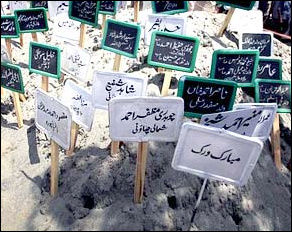 “We are all under threat. They will kill us. They will kill us,” claimed Rubina Saigol, repeating the conversation with members of the Ahmedi community a few months ago. Saigol, an independent social researcher, said that the community members wanted to show her some case files on Ahmedis and talk about the threats publicly.
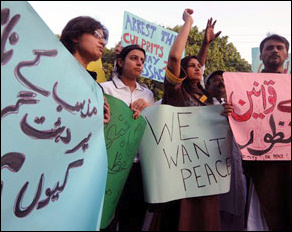 Life in the neighbourhood, where two Ahmedi places of worship in Lahore were attacked by terrorists on May 28, goes on but under a shadow of fear.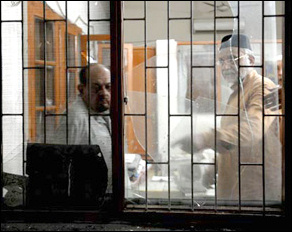
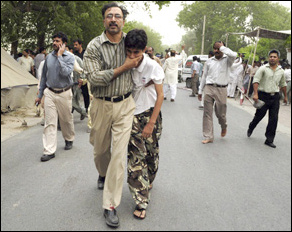

 The current set up of militants is the amalgamation of many diverse elements from different areas and backgrounds with the apparent patronage of the Wahabi-dominated al Qaeda out to carry forward its religious-political agenda in the region




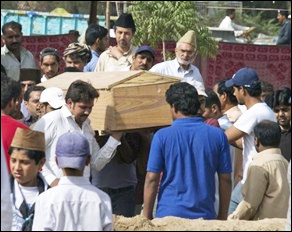 Incomprehensible. That is the only word I can use to express my feelings about the indifference of people, the authorities, and the media towards the attacks against the Ahmadi community in Lahore on Friday. Attacks that were carried out in broad daylight, killing over 90 people and injuring many others. Attacks that turned into a hostage situation with over 1500 people at risk of being killed or fatally injured.







 Posts
Posts


