Wednesday, June 8, 2011 |
 |
REVIEW & OUTLOOK ASIA
Could Indonesia ‘Pakistanize’?
The present tepid leadership hasn’t done enough to halt the rise of militant Islam.
By BENEDICT ROGERS
Four men, traumatized, terrorized and stigmatized, sat in a Jakarta apartment and described to me how they were almost killed by a Muslim mob earlier this year.
One was stripped naked, beaten to a pulp, a machete held at his throat with a threat to cut off his penis. He was dragged through the village and dumped in a truck like a corpse. Another fled into a fast-flowing river, pursued by attackers throwing rocks and shouting “kill, kill, kill.” He hid in a bush, dripping wet and extremely cold, for four hours. A third suffered a broken jaw, while a fourth, pursued by men armed with sickles, machetes and spears, was detained by the police for three days, treated as a suspect not a victim.
The four were members of Indonesia’s Ahmadiyya community, a Muslim sect regarded by other Muslims as heretical. They were victims of an attack in Cikeusik, Banten province, on February 6. More than 1,500 Muslims attacked 21 Ahmadis, killing three. President Susilo Bambang Yudhoyono has called for a full investigation.
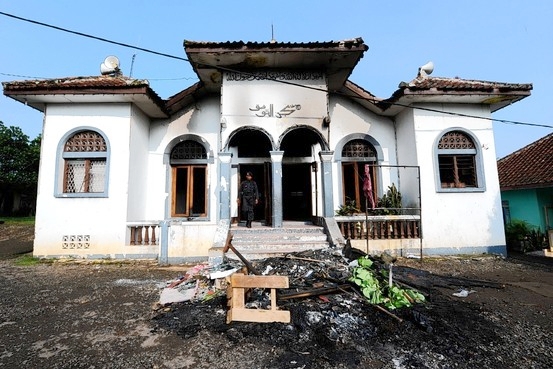
If Cikeusik was an isolated incident, it could be dismissed as a tragedy. Sadly, such tragedies are increasingly frequent. Last month I visited Cisalada, West Java, the scene of a similarly violent attack in October. Houses had broken windows boarded up, and some had been burned. A mob had thrown Molotov cocktails at the Ahmadi mosque and carried samurai swords. Anti-Ahmadi abuse was scrawled on the walls.
Indonesia’s tradition of pluralism, enshrined in its state ideology “pancasila,” is now under increasing threat. The world’s largest Muslim-majority nation has won applause for its religious tolerance and remarkable transition from authoritarianism to democracy, but these achievements are undermined by an increasingly vocal, violent Islamist minority. Under pressure from Islamists, the government banned the dissemination of Ahmadiyya teachings in 2008.
The rise of militant Islam has caused some in Indonesia to warn of “Pakistanization.” As a term to describe Indonesia today it is an exaggeration, but as a warning of what may come if action is not taken, it is valid. Pakistan’s path to extremism accelerated when the Ahmadiyya were banned in 1984; their treatment is a barometer of tolerance in a Muslim society.
It’s not just the Ahmadiyya. Christians are also under pressure. Radical Islamists have stirred tensions and forced churches to close. Even churches that have legal registration and secured Supreme Court rulings in their favor have remained sealed, their congregations forced to worship in the street. According to the Setara Institute in Indonesia, 91 violations of religious freedom were documented in 2010, at least 75 of which affected Christians.
A police officer stand guards at the damaged house of a member of Ahmadiyah after it was attacked by Muslim mob in Pandeglang, Banten province, Indonesia, Monday, Feb. 7, 2011.
 “The radicals want to push us to the limit, to see how long we are prepared to worship [out on the street] before we surrender,” Rev. Palti Panjetan, pastor of the HKBP Filadelfia church in Bekasi, West Java, told me. Local Muslims who have supported the church have also faced intimidation from Islamists.
Both Ahmadis and Christians warn that if their persecution continues, Indonesia could fracture. The victims of Cikeusik talk of seeking asylum overseas for their entire community. “We still love our country, but one day Christians and Ahmadis will decide we want to separate from Indonesia, if the situation does not change,” Rev. Panjetan says. “It is only a matter of time before there is ‘Sudan-ization,’ a separation of Indonesia between Muslims and minorities, like north and south Sudan. We don’t want that.”
Indonesia does have constitutional and legal protections for minorities. In fact, United Nations High Commissioner for Human Rights Navanethem Pillay, in a letter to Indonesia’s foreign minister in April, called for a review of all laws restricting religious freedom, to “ensure they comply” with Indonesia’s own constitution and international covenants.
The core problem is the weakness of the government. President Yudhoyono makes tepid statements condemning violence, but takes no action to protect minorities. Perpetrators of violence are arrested, but face minor charges and paltry punishments.
There are some signs that leaders are waking up. Last week former presidents B.J. Habibie and Megawati Sukarnoputri expressed concern that pancasila had lost its prominence. Last month, leading political and judicial figures, including the president, warned that “pancasila has been sidelined from people’s way of life.” Such statements are welcome, but rhetoric alone will not stop Indonesia’s slide toward Islamization.
Instead there are concrete steps Mr. Yudhoyono should take. Domestically, he can ensure that perpetrators of violence are brought to justice, that victims and witnesses receive proper protection, and that more investment is made in counter-extremism initiatives like the Wahid Institute, a liberal Muslim think tank founded by former President Abdurrahman Wahid. Jakarta could revise a blasphemy law on the books since the Sukarno era—often used by radicals to stir up hatred—and repeal the Ahmadiyya decree.
These recent events have tarnished Indonesia’s international reputation as a tolerant society. President Yudhoyono could start to repair it by inviting the U.N. Special Rapporteur on freedom of religion and belief to visit the country, as suggested by Ms. Pillay in her letter. Since Mr. Yudhoyono seems to care about Indonesia’s stature abroad—evidenced by Jakarta’s willingness to take on leadership roles in the region—the international community is in the right place to urge him to act.
Appeals from people like Rev. Panjetan must be heard. “We need support from the international community… . The rise of radicalism is not only a problem between Indonesians. There is an international agenda. Wahhabi influence is growing. We need the international community to be a watchdog. If there is no help from the international community, we are hopeless, we will be destroyed.”
If Indonesia abandons pluralism, the geopolitical consequences will be significant. The democratic success of the largest Muslim-majority country will be in jeopardy. The world will have lost a role model of tolerant, moderate Islam, which doesn’t bode well for the success of democratic revolutions in the Middle East. It is in all our interests to ensure that does not happen.
Mr. Rogers is East Asia Team Leader at Christian Solidarity Worldwide, a human rights organization based in London.
Four men, traumatized, terrorized and stigmatized, sat in a Jakarta apartment and described to me how they were almost killed by a Muslim mob earlier this year.
One was stripped naked, beaten to a pulp, a machete held at his throat with a threat to cut off his penis. He was dragged through the village and dumped in a truck like a corpse. Another fled into a fast-flowing river, pursued by attackers throwing rocks and shouting “kill, kill, kill.” He hid in a bush, dripping wet and extremely cold, for four hours. A third suffered a broken jaw, while a fourth, pursued by men armed with sickles, machetes and spears, was detained by the police for three days, treated as a suspect not a victim.
The four were members of Indonesia’s Ahmadiyya community, a Muslim sect regarded by other Muslims as heretical. They were victims of an attack in Cikeusik, Banten province, on February 6. More than 1,500 Muslims attacked 21 Ahmadis, killing three. President Susilo Bambang Yudhoyono has called for a full investigation.
If Cikeusik was an isolated incident, it could be dismissed as a tragedy. Sadly, such tragedies are increasingly frequent. Last month I visited Cisalada, West Java, the scene of a similarly violent attack in October. Houses had broken windows boarded up, and some had been burned. A mob had thrown Molotov cocktails at the Ahmadi mosque and carried samurai swords. Anti-Ahmadi abuse was scrawled on the walls.
Indonesia’s tradition of pluralism, enshrined in its state ideology “pancasila,” is now under increasing threat. The world’s largest Muslim-majority nation has won applause for its religious tolerance and remarkable transition from authoritarianism to democracy, but these achievements are undermined by an increasingly vocal, violent Islamist minority. Under pressure from Islamists, the government banned the dissemination of Ahmadiyya teachings in 2008.
The rise of militant Islam has caused some in Indonesia to warn of “Pakistanization.” As a term to describe Indonesia today it is an exaggeration, but as a warning of what may come if action is not taken, it is valid. Pakistan’s path to extremism accelerated when the Ahmadiyya were banned in 1984; their treatment is a barometer of tolerance in a Muslim society.
It’s not just the Ahmadiyya. Christians are also under pressure. Radical Islamists have stirred tensions and forced churches to close. Even churches that have legal registration and secured Supreme Court rulings in their favor have remained sealed, their congregations forced to worship in the street. According to the Setara Institute in Indonesia, 91 violations of religious freedom were documented in 2010, at least 75 of which affected Christians.
A police officer stand guards at the damaged house of a member of Ahmadiyah after it was attacked by Muslim mob in Pandeglang, Banten province, Indonesia, Monday, Feb. 7, 2011.
AFP/Getty Images
A mob damaged this Ahmadiyya mosque in Cisalada, West Java, last year.Both Ahmadis and Christians warn that if their persecution continues, Indonesia could fracture. The victims of Cikeusik talk of seeking asylum overseas for their entire community. “We still love our country, but one day Christians and Ahmadis will decide we want to separate from Indonesia, if the situation does not change,” Rev. Panjetan says. “It is only a matter of time before there is ‘Sudan-ization,’ a separation of Indonesia between Muslims and minorities, like north and south Sudan. We don’t want that.”
Indonesia does have constitutional and legal protections for minorities. In fact, United Nations High Commissioner for Human Rights Navanethem Pillay, in a letter to Indonesia’s foreign minister in April, called for a review of all laws restricting religious freedom, to “ensure they comply” with Indonesia’s own constitution and international covenants.
The core problem is the weakness of the government. President Yudhoyono makes tepid statements condemning violence, but takes no action to protect minorities. Perpetrators of violence are arrested, but face minor charges and paltry punishments.
There are some signs that leaders are waking up. Last week former presidents B.J. Habibie and Megawati Sukarnoputri expressed concern that pancasila had lost its prominence. Last month, leading political and judicial figures, including the president, warned that “pancasila has been sidelined from people’s way of life.” Such statements are welcome, but rhetoric alone will not stop Indonesia’s slide toward Islamization.
Instead there are concrete steps Mr. Yudhoyono should take. Domestically, he can ensure that perpetrators of violence are brought to justice, that victims and witnesses receive proper protection, and that more investment is made in counter-extremism initiatives like the Wahid Institute, a liberal Muslim think tank founded by former President Abdurrahman Wahid. Jakarta could revise a blasphemy law on the books since the Sukarno era—often used by radicals to stir up hatred—and repeal the Ahmadiyya decree.
These recent events have tarnished Indonesia’s international reputation as a tolerant society. President Yudhoyono could start to repair it by inviting the U.N. Special Rapporteur on freedom of religion and belief to visit the country, as suggested by Ms. Pillay in her letter. Since Mr. Yudhoyono seems to care about Indonesia’s stature abroad—evidenced by Jakarta’s willingness to take on leadership roles in the region—the international community is in the right place to urge him to act.
Appeals from people like Rev. Panjetan must be heard. “We need support from the international community… . The rise of radicalism is not only a problem between Indonesians. There is an international agenda. Wahhabi influence is growing. We need the international community to be a watchdog. If there is no help from the international community, we are hopeless, we will be destroyed.”
If Indonesia abandons pluralism, the geopolitical consequences will be significant. The democratic success of the largest Muslim-majority country will be in jeopardy. The world will have lost a role model of tolerant, moderate Islam, which doesn’t bode well for the success of democratic revolutions in the Middle East. It is in all our interests to ensure that does not happen.
Mr. Rogers is East Asia Team Leader at Christian Solidarity Worldwide, a human rights organization based in London.
Copyright ©2011 Dow Jones & Company, Inc. All Rights Reserved
URL: http://online.wsj.com/article/SB10001...824805736.html
URL: http://online.wsj.com/article/SB10001...824805736.html






 Posts
Posts


