Showing posts with label Muslim League. Show all posts

Saturday, August 14, 2010

Saving Jinnah’s Pakistan

Express Tribune, Pakistan
Pakistan
Opinion
Saving Jinnah’s Pakistan
Ayesha Siddiqa
By Ayesha Siddiqa
August 14, 2010
The writer is author of Military Inc and a visiting professor at Johns Hopkins University, US ayesha.siddiqa@tribune.com.pk

The Awami Jamhoori Party’s march to save “Jinnah’s Pakistan” is commendable. It denoted mobilisation of civil society against violence and intolerance. The procession ended at Data Darbar, which is considered a symbol of the country’s liberal Islamic ethos or culture of religious multi-polarity. But are we quite clear about whether this is the kind of liberal Islamic tradition that Jinnah and other founding leaders of Pakistan opted for?

There was quite a bit of confusion regarding the type of religious ideology that the leaders thought was suited to the new state. According to renowned scholar Farzana Sheikh, whose latest book Making Sense of Pakistan adds to our knowledge of Pakistan’s polity, Iqbal and others did not prefer sufi Islam for the functioning of a modern Islamic state. For them, sufi Islam represented the traditional type which may be popular but was certainly not modern. In any case, Jinnah did not necessarily think deeply about the ideological and socio-political connotations of religion or using religion for nation-building. Much that some people may protest against the factual description of Jinnah’s personal habits, the fact of the matter is that he had a western lifestyle. Nevertheless, he created a state that defined citizenship on the basis of, what Sheikh argues, is the citizen’s putative relationship with religion.

Later, the Muslim League engaged with Majlis-e-Ahrar because the group had links with the Punjabi elite and made inroads into society. The anti-Ahmadi riots of the 1950s exhibited both the growing power of puritanical and illiberal ideology, and the Muslim League’s leadership’s willingness to turn a blind eye to Ahrar’s activities. Instead of giving a liberal direction to the state, if that was indeed the intention, Liaquat Ali Khan went for a formula that appeared as a concession to both the liberal and religious-right in the form of the Objectives Resolution of 1949. The document with its conservative-religious interpretation is central to Pakistan’s legal, constitutional and political frameworks.

But then is cultural or religious-liberalism all that falls in the purview of religion? How about political-liberalism, which no one really wants to talk about? One can be less sure of Jinnah’s intended direction as far as political liberalism is concerned. The conflict between words and actions emerged due to his decisions to annex the state of Kalat and sack Dr Khan Sahib’s provincial government in the frontier. This, as Ayesha Jalal argues, might have been necessary for establishing and strengthening the newly born state. The measures, however, set a politically non-liberal tradition which was followed by his successors. The emphasis was on building a central state with a singular identity. All sub-nationalities were forced to merge their independent cultural and social identity into one mega-identity. The formula did not work so well because the state’s option for sub-nationalities or individuals was to opt for the central narrative and abandon everything else.

But even if we were to use the narrow definition of liberalism as representing religious-liberalism, even that may not seem possible at this juncture. Religious liberalism cannot happen in the absence of political liberalism. Religious radicalism grows not just because the majority or a minority believe in a peculiar and narrow interpretation of religion, but due to the fact that they live in a politically closed system which does not empower them economically and politically. It is not money alone which checks radicalisation but also the richness of a political system. The combination of political and economic poverty makes the problem even denser.

A lot of people have been radicalised in Pakistan not because they understand the radical philosophy of Ibn Tamiyya, Syed Qutb,and Maulana Maududi or its tactical interpretation by Maulana Shamzai, Zawahiri, bin Laden and others, but because they view religion and violence both as necessary tools to fight existing political hegemony and oppression. Under the circumstances, talking about Jinnah’s Pakistan does not make sense until the capable people (those who have resources, education, contacts and power) have the sense to take the bulk of people along and give them at least some of the opportunities they deserve.

Maybe it is time we thought about all what Jinnah could not do.

Published in The Express Tribune, August 15th, 2010.


URL: http://tribune.com.pk/story/39340/saving-jinnah%E2%80%99s-pakistan/

Sunday, June 20, 2010

In our beginning is our end

Daily Dawn, Pakistan
Columnist
.
In our beginning is our end
   By Ardeshir Cowasjee
   Sunday, 20 Jun, 2010

Whatever progress we have made in Pakistan's 63 years of life has been on the negative side, writes Ardeshir Cowasjee. - Photo by Reuters
Whatever progress we have made in Pakistan’s 63 years of life has been on the negative side, writes Ardeshir Cowasjee. — Photo by Reuters

We must read to remember. The early days of Pakistan were far from halcyon, though those of us who lived through them look back with some nostalgia. Whatever progress we have made in this country’s 63 years of life has been, as it turns out, on the negative side.

Where have we progressed in leaps and bounds? Well, in the scale of wholesale corruption, political and administrative ineptitude, and bigotry and intolerance and their accompanying violence — they were all there at the beginning which was in itself violent.

Perhaps the presence of founder-maker Mohammad Ali Jinnah for the first year of Pakistan’s life kept things somewhat in check, though his loyal lieutenants did take advantage of his state of health. His exhortations of Aug 11, 1947 to his constituent assembly were in vain.

All that he laid down — tolerance, equality of citizenship, the shunning of corruption, nepotism and jobbery, and above all that law and order was the first priority of any government — was all lost. It was never digested, the quality of manpower saw to that.

Having dipped into an OUP 2010 publication, The Culture of Power and Governance of Pakistan 1947-2008 by Ilhan Niazi, it has sadly dawned upon me how misplaced was the early enthusiasm for the new country and the belief that the words and teachings of Jinnah would prevail.

In January 1949, governor of the Punjab Francis Mudie sent a note to Prime Minister Liaquat Ali Khan complaining that Punjab Chief Minister Mamdot was one up on the centre and even Jinnah “every time that they have intervened and the feeling is growing that the centre is powerless even when the government is hopelessly corrupt and the administration paralysed … no questions of policy are even contemplated”.

The services were demoralised, ministers were interfering in the administration, “becoming more and more rapacious”. Land grabbing was the fashion from the start — the Punjab chief minister was described as “lazy, inefficient and a liar”, his main interest being the acquisition of evacuee land out of which he and his family and followers had all done splendidly.

The same applied to many other politicians and administrators whose main focus was the abandoned evacuee properties — buildings and land.

In March that same year, the ulema, who even in those days wielded far more influence than they should have done and were mainly comprised of groups that had opposed the creation of Pakistan, scored a famous victory.

The Muslim League, led by Liaquat Ali Khan, turned its back on Jinnah and his avowal to the world that Pakistan was not to be a theocratic state led by priests with a divine mission, and pushed through the constituent assembly the Objectives Resolution which put paid to any hope of freedom of worship, of the fundamental principle that all citizens are equal and above all of Jinnah’s promise to his people: “You may belong to any religion or caste or creed — that has nothing to do with the business of the state.”

In 1952, Interior Secretary G. Ahmed sent to Prime Minister Khwaja Nazimuddin a note on the internal situation. He reported a loss of public confidence in the weak and far from competent government. The country was on the downgrade, provincial and political disharmony was on the increase, and there was an undercurrent of restlessness.

The cause: the mindset of the politicians and their medieval attitude towards the acquisition and exercise of power — politicians at all levels used and abused the state as a personal estate, and were adept at playing games with the religious fundamentalists for short-term political benefit.

Well, all of the above is an apt description of what has transpired each year of Pakistan’s life — the generals had not by 1952 reared their heads, but the accusation against the politicians has also applied equally and fairly since 1956 to the generals of our army and to vast numbers of corrupt and venal administrators who have been willing tools in the hands of whatever masters they have served in servile manner.

Come 1953, and the ulema flaunted their powers. In January they issued an ultimatum to Prime Minister Nazimuddin that unless he declared the Ahmadis to be a non-Muslim minority and sacked all Ahmadis in key state posts they would resort to ‘direct action’. This they did in March, the prime minister having ignored them.

Widespread disturbances, killings and rioting broke out in Punjab leading to the imposition of a local martial law. In 1954 Justices M. Munir and M.R. Kayani presented their report on the disturbances in which they famously declared that, after having heard various members of the ulema, it was impossible to define a Pakistani Muslim.

Their final sentence to the report is one of the saddest truest comments ever made on this country: “But if democracy means the subordination of law and order to political ends — then Allah knoweth best and we end the report.”

Were any lessons learnt? No. In 1974, Prime Minister Zulfikar Ali Bhutto, bowing, it is said to external and internal pressures excommunicated an entire community, declaring the Ahmadis a minority. Ziaul Haq in 1984 declared the Ahmadis to be non-Muslims and into the Pakistan Penal Code inserted sections 298-B and 298-C prohibiting them from referring to their place of worship as a masjid, from referring to the call to prayer as the azan, from ‘posing’ as a Muslim, or from referring to their faith as Islam. The punishment was a fine and up to three years imprisonment.

And so, on to May 28 2010. Where do we go from there?

arfc@cyber.net .pk

©2010 DAWN Media Group. All rights reserved

Sunday, June 13, 2010

Smokers’ Corner: Whiplash

Daily Dawn, Pakistan
Columnist
.
Smokers’ Corner: Whiplash
   By Nadeem F. Paracha
   Sunday, 13 Jun, 2010

Jinnah's death in 1948 reduced his Muslim League (from being a dynamic organisation of visionary action) to a rag-tag group of self-serving politicians. It became a pale reflection of its pre-independence past. Gone too was the party's ability to bring into policy Jinnah's modernist Muslim vision.
Jinnah’s death in 1948 reduced his Muslim League (from being a dynamic organisation of visionary action) to a rag-tag group of self-serving politicians. It became a pale reflection of its pre-independence past. Gone too was the party’s ability to bring into policy Jinnah’s modernist Muslim vision.

A consensus across various academic and intellectual circles now states that violent entities such as the Pakistani Taliban and assorted sectarian organisations are the pitfalls of policies pursued by the state through its intelligence agencies to safeguard Pakistan’s ‘strategic’ and ideological interests.

The supposed ideology was constructed by the ruling establishment many years after the painful birth of this country. It has since been used by the state apparatus, political parties and media men to justify the patronisation and formation of brutal reactive outfits and groups. But whose ideology is it anyway? Pakistan seemed to have had a simple answer till about 1956. This answer, it seems, did not suit the political and economic interests of the early Pakistani ruling elite.

Till about the late 1960s it was normal to suggest that Pakistan was carved as a country for Muslims of the subcontinent who were largely seen (by Jinnah and his comrades in the Muslim League), as a distinct cultural set of Indians whose political, economic and cultural distinctiveness might have been compromised in a post-colonial ‘Hindu-dominated’ setup. As Jinnah went about explaining his vision of Pakistan, there was no doubt whatsoever in the historical validity of the notion that he imagined the new country as a cultural haven for Muslims of the subcontinent where the state and politics would remain separate.

The state was to be driven by modern democracy that incorporated the egalitarian concepts of Islam such as charity, equality and interfaith tolerance. According to Professor Aysha Jalal, Jinnah’s view of Islamic activism in the subcontinent was akin to his understanding it as a phenomenon that ‘derided the false and dangerous religious frenzy which had confused Indian politics and the zealots who were harming the national cause.’

However, Jinnah’s death in 1948 reduced his Muslim League (from being a dynamic organisation of visionary action) to a rag-tag group of self-serving politicians. It became a pale reflection of its pre-independence past. Gone too was the party’s ability to bring into policy Jinnah’s modernist Muslim vision. The idea got increasingly muddled and shouted down by the once anti-Pakistan Islamic forces, who now started flexing their muscles in the face of a disintegrating Muslim League, and the erosion of the ideal that its leader stood for.

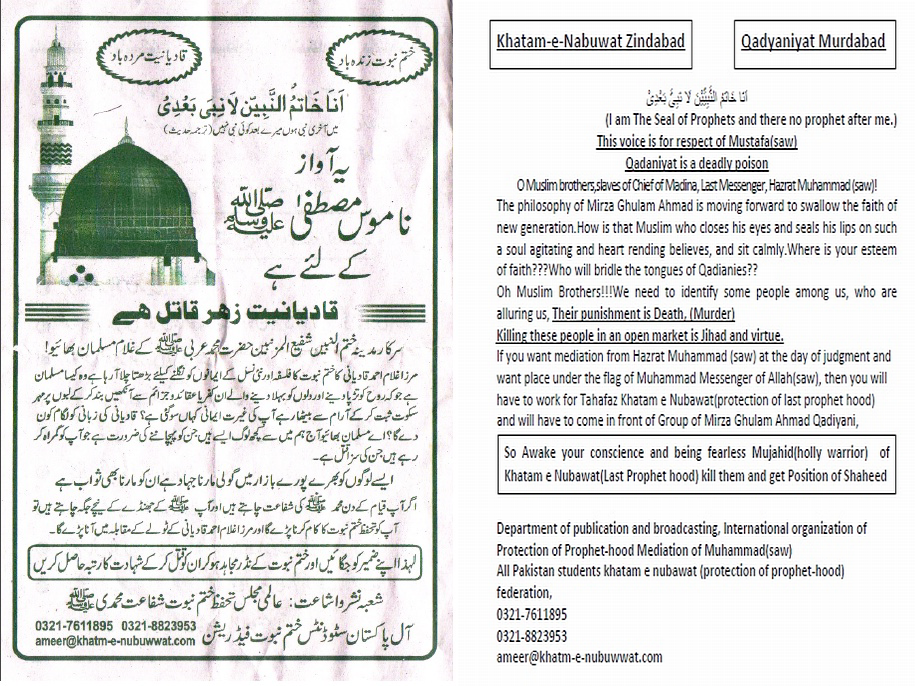
The Jamat-i-Islami (JI) went on a rampage in 1953 in Lahore, hungrily overseeing the country’s first major anti-Ahmadi riots. Of course, by now the famous speech by Jinnah in which he underlined the idea of religious freedom in the new country was conveniently forgotten as the ruling elite grappled confusingly with the crises of its own creation. Eventually, it capitulated to the demands of the handful of vocal Islamist leaders by officially declaring the country an ‘Islamic Republic’. It was classic ostrich behaviour; the sort a number of Pakistani leaders continue to demonstrate whenever faced with the question of Pakistan and its relationship to political Islam.

Misunderstanding Islamist activism as mere emotionalism, the ruling elite gave the Islamists a bone to play with, without bothering to explain to the rest of the people exactly what an Islamic republic really meant in the Pakistani context — a country buzzing with a number of ethnicities, minority religions and distinct Muslim sects. A democratic order should have been a natural answer to the state’s crisis. But for Islamists, democracy meant the emergence of ethnic and religious plurality that would encourage secular politics and further undermine the notion of the new-found Islam-centric Pakistani nationhood.

Many years and follies later, and in the midst of unprecedented violence being perpetrated in the name of Islam, Pakistanis today stand more confused and flabbergasted than ever before. The seeds of ideological schizophrenia that the 1956 constitution sowed followed by the disastrous doings of the Gen Ziaul Haq dictatorship in the 1980s. These have now grown into a wicked tree that only bears delusions and denials as fruit.

As Islamic parties and reactionary journalists continue to use the flimsy historical narrative of Pakistan’s Islamic republicism, consciously burying the harrowing truth behind the chaos the so-called’ Islamic ideology of Pakistan’ has managed to create, whole new generations grow up lapping up this synthetic narrative. While it has continued to alienate not only the religious minorities — Muslim and non-Muslim — it has also stoked intolerance among the very vocal and assertive, puritan Muslims.

A recent example is the way many puritan Islamic groups have reacted to the conservative Nawaz Sharif’s statement sympathising with the plight of the Ahmadis. Also, one of Pakistan’s outstanding, moderate Islamic scholars, Javed Ahmed Ghamdi, has had to fly out of the country into a self-imposed exile. According to an executive producer at a popular Urdu-language TV channel, Ghamdi was facing a number of threats from certain puritan and violent Islamic groups.

His sin? He stood out as a mainstream Sunni Muslim scholar who banked on reason and an interpretive take on the Quran, eschewing the myopic literalism of the puritan groups that espouse a violent, political view of Islam.

©2010 DAWN Media Group. All rights reserved

Tuesday, June 8, 2010

The demand for Pakistan and Islam

Daily Times, Pakistan
Tuesday, June 08, 2010

VIEW: The demand for Pakistan and Islam

The Muslim League’s propaganda struck terror in the hearts of the Hindus and Sikhs who were told that they would be paying jazya and Islamic law will prevail in all sectors of individual and collective life. The minority Shia and Ahmediyya communities were also fearful that it would result in Sunni domination

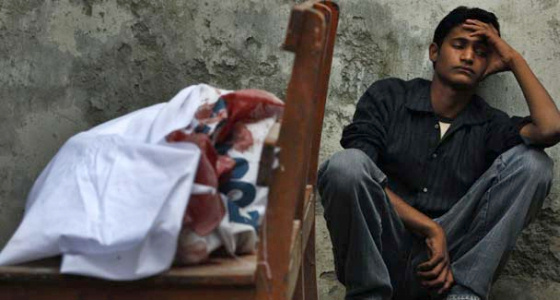
The recent attack on a congregation of Ahmedis during prayers, which claimed more than 90 innocent lives, has revived a discussion as to whether there is a connection between the creation of Pakistan and Islam. Within the Muslim League there was always a constituency in favour of Pakistan becoming an Islamic state. One of its proponents was a close confident of Jinnah: Raja Sahib Mahmudabad, a Shia. In 1939 he wrote to the historian Mohibul Hassan:

“When we speak of democracy in Islam it is not democracy in the government but in the cultural and social aspects of life. Islam is totalitarian — there is no denying about it. It is the Quran that we should turn to. It is the dictatorship of the Quranic laws that we want — and that we will have — but not through non-violence and Gandhian truth” (Mushirul Hasan, 1997: 57-8).

If the March 23, 1940, Lahore Resolution be taken as the start of the Pakistan campaign, then Jinnah had to make a breakthrough in the Muslim-majority provinces of northwestern India — Khyber Pakhtunkhwa, Punjab and Sindh — each of which had regional parties headed by Muslims. The Muslim League had to convince the Muslim voters in these provinces that their leaders were courting Hindus and Sikhs and thus were paving the way for Hindu Raj under the Indian National Congress. That opportunity arrived in July 1945 when the British government announced provincial elections for February 1946. Punjab Governor Sir Bertrand Glancy has recorded in several secret fortnightly reports (FR) the tactics that the Muslim League adopted during the long election campaign. In the FR of December 27, 1945, Glancy noted:

“Among Muslims the Leaguers are increasing their efforts to appeal to the bigotry of the electors. Pirs and maulvis have been enlisted in large numbers to tour the province and denounce all who oppose the League as infidels. Copies of the Holy Quran are carried around as an emblem peculiar to the Muslim League. Feroz [Khan Noon] and others openly preach that every vote given to the League is a vote cast in favour of the Holy Prophet (PBUH). These deplorable tactics, as I have frequently said, were only to be expected; they provide a grim augury of the future peace of India and they are certainly not easy for the Unionists to counter” (Lionel Carter, 2006: 160).

In the FR of February 2, 1946, Glancy wrote:

“The ML [Muslim League] orators are becoming increasingly fanatical in their speeches. Maulvis and pirs and students travel all round the province and preach that those who fail to vote for the League candidates will cease to be Muslims; their marriages will no longer be valid and they will be entirely excommunicated…It is not easy to foresee what the results of the elections will be. But there seems little doubt the Muslim League, thanks to the ruthless methods by which they have pursued their campaign of ‘Islam in danger’, will considerably increase the number of their seats and Unionist representatives will correspondingly decline” (Carter, 2006: 171).

Similar tactics were adopted in the campaigns in Khyber Pakhtunkhwa and Sindh. In his doctoral dissertation, India, Pakistan or Pakhtunistan?, Erland Jansson writes:

“The pir of Manki Sharif…founded an organisation of his own, the Anjuman-us-asfia. The organisation promised to support the Muslim League on the condition that Shariat would be enforced in Pakistan. To this Jinnah agreed. As a result the pir of Manki Sharif declared jihad to achieve Pakistan and ordered the members of his anjuman to support the League in the 1946 elections” (pg 166).

Jinnah wrote in November 1945 a letter to Pir Manki Sharif in which he promised that the Shariat would apply to the affairs of the Muslim majority. He wrote:

“It is needless to emphasise that the Constituent Assembly, which would be predominantly Muslim in its composition, would be able to enact laws for Muslims, not inconsistent with the Shariat laws and the Muslims will no longer be obliged to abide by the un-Islamic laws” (Constituent Assembly of Pakistan Debates, Volume 5, 1949, pg 46).

The Muslim League’s propaganda struck terror in the hearts of the Hindus and Sikhs who were told that they would be paying jazya and Islamic law will prevail in all sectors of individual and collective life. The minority Shia and Ahmediyya communities were also fearful that it would result in Sunni domination. This is obvious from the correspondence between the Shia leader Syed Ali Zaheer and Jinnah in July 1944 (G Allana, 1977: 375-9). Although the Council of Action of the All-Parties Shia Conference passed a resolution on December 25, 1945, rejecting the idea of Pakistan (SR Bakshi, 1997: 848-9), most Shias shifted their loyalty to the Muslim League in the hope that Pakistan will be a non-sectarian state. Initially the Ahmediyya were also wary and reluctant to support the demand for a separate Muslim state (Munir Report, 1954: 196). It is only when Sir Zafarullah was won over by Jinnah that the Ahmedis started supporting the demand for Pakistan. To all such groups Jinnah gave assurances that Pakistan will not be a sectarian state.

In my forthcoming book on the partition of Punjab, now running into more than 1,000 pages but which is at last completed and for which I am now looking for a publisher, I will shed light on how the fierce Islamist propaganda impacted on the partition of Punjab. The Sikhs had more fears than anyone else about what could happen to minorities in Pakistan. In a meeting in May 1947 sponsored by Lord Mountbatten to help the Muslims and Sikhs reach an agreement on keeping Punjab united, Jinnah offered the Sikhs all the safeguards they wanted if they agreed to support Pakistan. Only in March 1947 some 2,000-10,000 Sikhs — depending on who you cite — were butchered in the Rawalpindi rural areas so the Sikhs were very wary of Jinnah’s overtures. Chief Minister of Patiala Hardit Singh Malik writes he had an inspiration and asked Jinnah: “Sir you are making all the promises but God forbid if something happens to you, what will happen then?” The exact words Jinnah used in reply will be revealed in my forthcoming book, but the reasoning was that his followers will treat his words as sacred.

Ishtiaq Ahmed is a Visiting Research Professor at the Institute of South Asian Studies (ISAS) and the South Asian Studies Programme at the National University of Singapore and Professor Emeritus of Political Science at Stockholm University. He is currently working on a book, Is Pakistan a Garrison State? He can be reached at isasia@nus.edu.sg

Sunday, October 5, 2008

Restoring the Civil Rights of Ahmadis

- Chowk.com
June 16, 2008
By a Pakistani

(The writer is a lawyer and a participant in the lawyer’s movement. He has asked to keep his identity secret for the fear of persecution.)

The events in Punjab Medical College in Faisalabad recently have brought to the forefront once again a very important and yet neglected issue which continues to blacken our collective conscience as a nation. The expulsion of 23 students for allegedly preaching their faith underscored the sickness that has crept into the majority in this country bringing bad name to the country and the faith of Islam as well. There is need for serious inquiry as to whether this pathetic state of affairs will be allowed to continue and will the Ahmadis continue to be the victims of Pakistan’s version of Jim Crow Laws aided and abetted by a PCO-ed judiciary passing numerous “Dredd Scott” like decisions.

The persecution of Ahmadis even under the present mangled constitution is patently unconstitutional. A fair court of law would have noticed and pounced on the Ahmadi-specific legislation that has crept into our statute books for every single one of these laws violate a couple dozen fundamental rights accorded to the citizens of Pakistan not the least Article 20 which gives every citizen the right to practice and propagate his or her religion without any caveats. The rot however began with Bhutto’s 2nd Amendment which declared Ahmadis Non-Muslim. His law minister, Mr. Abdul Hafeez Pirzada, proved himself to be a poor constitutional lawyer when he declared that the National Assembly was sovereign and could take such a step. The correct legal position was that of Sir Zafrullah Khan, erstwhile Pakistani foreign minister and one of the authors of the Lahore Resolution, who argued that it was beyond the scope of the National Assembly to determine the faith of an individual especially under the Constitution of 1973. Even the Islamic provisions of the constitution of 1973 were to be interpreted according to each sect’s understanding and Ahmadis being an established Muslim sect in 1973 were entitled to their own interpretation of the Quran and Sunnah.

Ahmadis were also very much Muslim when the Government of Pakistan laid claim to Qadian as a Muslim holy place in 1947 as a counterweight to Sikh claims to their holy sites in Pakistan. No less a person than Quaid-e-Azam Muhammad Ali Jinnah, Pakistan’s founding father, had declared unequivocally on the Ahmadi issue that anyone who calls himself a Muslim is a Muslim and that anyone who says otherwise is conspiring against the Muslim cause. It is little known that Jinnah was finally persuaded to return to India and lead the Muslim League by Mr. Ibrahim Dard, the Imam of the London Ahmaddiya Mosque in the 1930s. The future founder of Pakistan had gone to and prayed behind the Ahmaddiya mosque unaware that the country he was about to create in two decades would one day make such an act punishable under law. If he was to time travel into the future, he would probably abandon the whole Pakistan project altogether.

Every single act of persecution against Ahmadis is quite unjustifiably laid at the door of the idea of Pakistan. Unjustifiably because those at the fore front of the “Persecute Ahmadis movement” are the same people who bitterly opposed Pakistan and considered Jinnah as big a Kafir as they consider the Ahmadis. The first occurrence of the anti-Ahmaddiya feeling on record is a report by a Muslim League activist who found that in the tribal areas, Fakir of Ipi and other pro-Congress Mullah elements had begun to describe the Muslim League as a bastion of “Qadiyanism”. The same feeling has persisted. Majlis-e-Ahrar that led the anti-Ahmaddiya movement in 1953-1954 was the biggest Congress ally before partition. Jamaat-e-Islami chief Maududi had dismissed Jinnah and others as too secular and westernized to properly lead the Muslims. The biggest persecutors of Ahmadis i.e. Darul-Uloom-Deoband and their cronies owe their very political existence to Mahatma Gandhi who introduced these Mullahs in the Khilafat movement — out of which arose the Jamiat-e-Ulema-Hind — the forerunner of all fundamentalist and militant movements in South Asia and beyond.

The idea that a majority can dictate to a minority what it is or isn’t allowed to call itself is the very anti-thesis of the principle Pakistan was created on. Pakistan was created on the idea that a permanent majority cannot by sheer numeric strength dominate and dictate to a permanent minority. The anti-Ahmaddiya legislation flies in face of the whole Pakistan idea, leading to at least one perceptive commentator calling the second amendment to the constitution in 1974 nothing less than the death of Pakistan. That a PPP government was in charge and Pakistan’s brightest Prime Minister was in power makes that event even more ironic. Bhutto perhaps had no other option. Had he resisted it, the establishment would have used the issue to dismiss Bhutto the same way they dismissed Khawaja Nazimuddin and the Muslim League government in 1953. Of course Bhutto fell three years later and atleast the rotund and very religious Nazimuddin does not carry the blot of being the Prime Minister who persecuted a group of people based on their faith. Great responsibility lies on the shoulders of the Pakistan People’s Party to undo its heinous mistake and clear up the good name of Zulfikar Ali Bhutto once and for all. It has an excellent opportunity to undo a historic wrong.

Remember the issue is not, and it has never been, whether anyone agrees with Ahmadis or considers them Muslim. It is one’s right to hold an opinion but that opinion cannot be imposed no matter what force of majority is behind it. The issue is — as it has always been — what Ahmadis consider themselves. No construction of Article 20 of the constitution can deny them the right to call themselves Muslims and by settled law fundamental rights are the over-riding feature of any written constitution. Therefore the second amendment itself is unconstitutional and illegal, not to mention the antithesis of Pakistan and its idealism. It is also an issue that cuts deep into our aspiration to be a civilized and tolerant society based on rule of law. The actions of those who had always opposed Pakistan and its founder are beginning to taint the very ideal to utter joy of our enemies home and abroad. It is time for Pakistanis to stand up and be counted.

URL : www.chowk.com/articles/14234
 
^ Top of Page