 | Asia Pacific |
Sectarian Clashes Surge in a City in Pakistan’s Heartland

Pakistanis gathered recently in Faisalabad outside a Presbyterian church damaged in riots after two Christian brothers were killed.
By SALMAN MASOOD
Published: August 7, 2010
FAISALABAD, Pakistan — This industrial city, famous for its textile exports, has lately become renowned as the center of a new wave of sectarian violence that has gripped Pakistan as militancy and extremism have taken firm root here in central Punjab Province.
Last month, violent clashes broke out between Muslims and Christians after two Christian brothers — Rashid and Sajid Emanuel — were shot dead outside the district courthouse after showing up to face charges of blasphemy.

Immediately, there were fears of rioters’ setting fire to the Christian neighborhood where the brothers had lived, Warispura, a poor suburb with about 100,000 people — as they had done in a similar episode last year in a district nearby.
Blasphemy is a capital crime in Pakistan, and rights activists say the allegations are usually spurious and used to settle personal vendettas or to score political points.
In this case, for instance, the troubles started on July 1 when a handwritten letter defaming the Prophet Muhammad was distributed in a marketplace; it contained the address and telephone numbers of both brothers.
“A thief does not leave behind an ID card,” said Aslam Pervez, 60, a Christian teacher and a neighbor of the brothers. “A grave injustice has been done. The charges were not even proven, and they were killed. Is it justice? Where is the law?”
Analysts say the communal and sectarian clashes often have a local spark — an economic grievance, for instance — that is easily ignited in an atmosphere in which militant groups have been allowed to thrive for years by politicians who use them as a base of support, or have little to gain by standing up to them.
Looking to expand their influence, the groups, too, read the political winds as astutely as they do the local political terrain.
Such groups have thrived for decades in Pakistan, though sectarian violence has ebbed and flowed. Some groups, like Sipah-e-Sahaba, a Sunni militant organization, have largely domestic agendas, while others, like Lashkar-e-Taiba, focus on jihad in India and Afghanistan.
But it can be hard to draw a firm line, and sometimes the domestic groups channel militants to the others.
Under the nearly 10 years of military government that ended in 2008, sectarian violence was relatively subdued, in part because the military did not need to manipulate domestic schisms to maintain control. But civilian politics and sectarian tensions work hand in hand in Pakistan, and recently the violence has flared again. The last bad spasm was also under civilian rule in the 1990s.
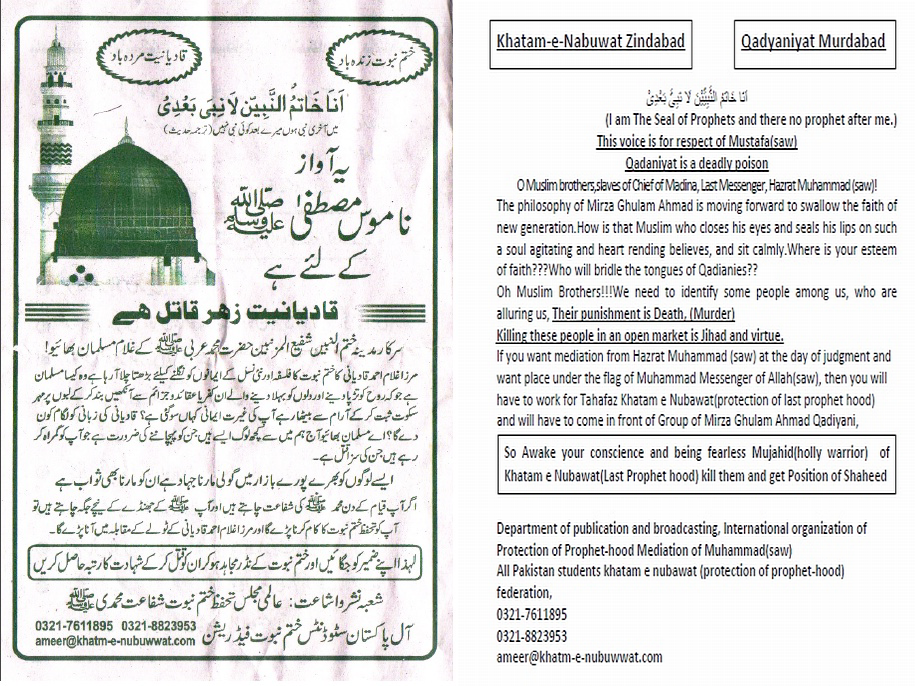
Christians are not the only targets of the violence. In February, one person was killed during armed clashes between two Muslim sects. One of the sects then burned down the homes of several leaders of the other sect. Then in April, four members of the minority Ahmadi sect, declared non-Muslim by the country’s Constitution, were gunned down in Faisalabad by masked gunmen thought to be from Sipah-e-Sahaba.
Amir Rana, a terrorism expert, said the level of radicalization had grown and spread across Punjab Province, the country’s heartland. Residents say banned Islamic militant groups have managed to increase their presence and clout in Faisalabad, a city of nearly three million, and its surroundings.
Both Sipah-e-Sahaba and Lashkar-e-Taiba, the group that India and the United States have blamed for the 2008 attacks in Mumbai, India, maintain offices in neighboring districts, which also serve as recruiting grounds.
As riots broke out on July 19, groups of agitated men, many of whom were said to be armed, tried to make their way to Warispura, the Christian neighborhood, from a neighboring village, Malkhan Wala, which is a known stronghold of Lashkar-e-Taiba, residents of the Christian neighborhood said.
Mr. Rana speculated that local economic competition might have been a motivator. Christians in Faisalabad are settled on land close to roads and railway tracks. “This is precious land,” he said. “Industrialists and builders have their eyes on such properties.”
Mr. Rana said Sipah-e-Sahaba had a strong base among the working class of the city; most Christians are in the working class, too.
Khalid Rashid, vicar general of the Cathedral of SS. Peter and Paul in Faisalabad, said the acts of violence against minorities, especially Christians, were on the rise, as the militant groups wanted “their presence to be felt.”
Religious minorities are feeling vulnerable and insecure. Christians make up only 5 percent of the population.
Neighbors and family members said the two Christian brothers who were killed had enmity with nobody. Rashid, 31, was a pastor who ran a local prayer group. Sajid, 28, was pursuing an M.B.A. degree.
They were taken into custody after a case was registered against them at the urging of local traders. On July 19, after a court appearance, an unidentified gunman entered the court premises and opened fire in the hallway. Both brothers were shot in the back and died at a hospital. A police officer was wounded. The attacker escaped easily.
The government has ordered a judicial inquiry into the killings. The Punjab police suspended two police officers for security lapses. But the family of the brothers is in hiding. The father, a retired government employee, and his three other sons and a daughter fear being singled out and are afraid to pursue the case.
Joseph Coutts, the bishop of the Cathedral of SS. Peter and Paul, attributed such attacks to the growing intolerance and militancy in Pakistani society.
“These groups have become so strong that they have become a law unto themselves,” he said. He added: “There is a lot of anger amongst Muslims, and there is a revival of militant Islam. Local Christians are seen as linked to the West, the United States, and therefore the fallout.”
Indeed, a city resident, Khurram Shahzad, who lodged the initial complaint with the police against the brothers, claims not to know them personally. Muslims in the Warispura neighborhood said that Christians had been provided financing from abroad to spread Christianity and convert Muslims.
“They had been given money to spread their religion,” said Muhammad Nadeem, 25, an electrician. A crowd of onlookers nodded in agreement.
Waqar Gilani contributed reporting.
Last month, violent clashes broke out between Muslims and Christians after two Christian brothers — Rashid and Sajid Emanuel — were shot dead outside the district courthouse after showing up to face charges of blasphemy.
The New York Times
Faisalabad, in Punjab Province, has become the center of a new wave of sectarian strife.
Blasphemy is a capital crime in Pakistan, and rights activists say the allegations are usually spurious and used to settle personal vendettas or to score political points.
In this case, for instance, the troubles started on July 1 when a handwritten letter defaming the Prophet Muhammad was distributed in a marketplace; it contained the address and telephone numbers of both brothers.
“A thief does not leave behind an ID card,” said Aslam Pervez, 60, a Christian teacher and a neighbor of the brothers. “A grave injustice has been done. The charges were not even proven, and they were killed. Is it justice? Where is the law?”
Analysts say the communal and sectarian clashes often have a local spark — an economic grievance, for instance — that is easily ignited in an atmosphere in which militant groups have been allowed to thrive for years by politicians who use them as a base of support, or have little to gain by standing up to them.
Looking to expand their influence, the groups, too, read the political winds as astutely as they do the local political terrain.
Such groups have thrived for decades in Pakistan, though sectarian violence has ebbed and flowed. Some groups, like Sipah-e-Sahaba, a Sunni militant organization, have largely domestic agendas, while others, like Lashkar-e-Taiba, focus on jihad in India and Afghanistan.
But it can be hard to draw a firm line, and sometimes the domestic groups channel militants to the others.
Under the nearly 10 years of military government that ended in 2008, sectarian violence was relatively subdued, in part because the military did not need to manipulate domestic schisms to maintain control. But civilian politics and sectarian tensions work hand in hand in Pakistan, and recently the violence has flared again. The last bad spasm was also under civilian rule in the 1990s.
Christians are not the only targets of the violence. In February, one person was killed during armed clashes between two Muslim sects. One of the sects then burned down the homes of several leaders of the other sect. Then in April, four members of the minority Ahmadi sect, declared non-Muslim by the country’s Constitution, were gunned down in Faisalabad by masked gunmen thought to be from Sipah-e-Sahaba.
Amir Rana, a terrorism expert, said the level of radicalization had grown and spread across Punjab Province, the country’s heartland. Residents say banned Islamic militant groups have managed to increase their presence and clout in Faisalabad, a city of nearly three million, and its surroundings.
Both Sipah-e-Sahaba and Lashkar-e-Taiba, the group that India and the United States have blamed for the 2008 attacks in Mumbai, India, maintain offices in neighboring districts, which also serve as recruiting grounds.
As riots broke out on July 19, groups of agitated men, many of whom were said to be armed, tried to make their way to Warispura, the Christian neighborhood, from a neighboring village, Malkhan Wala, which is a known stronghold of Lashkar-e-Taiba, residents of the Christian neighborhood said.
Mr. Rana speculated that local economic competition might have been a motivator. Christians in Faisalabad are settled on land close to roads and railway tracks. “This is precious land,” he said. “Industrialists and builders have their eyes on such properties.”
Mr. Rana said Sipah-e-Sahaba had a strong base among the working class of the city; most Christians are in the working class, too.
Khalid Rashid, vicar general of the Cathedral of SS. Peter and Paul in Faisalabad, said the acts of violence against minorities, especially Christians, were on the rise, as the militant groups wanted “their presence to be felt.”
Religious minorities are feeling vulnerable and insecure. Christians make up only 5 percent of the population.
Neighbors and family members said the two Christian brothers who were killed had enmity with nobody. Rashid, 31, was a pastor who ran a local prayer group. Sajid, 28, was pursuing an M.B.A. degree.
They were taken into custody after a case was registered against them at the urging of local traders. On July 19, after a court appearance, an unidentified gunman entered the court premises and opened fire in the hallway. Both brothers were shot in the back and died at a hospital. A police officer was wounded. The attacker escaped easily.
The government has ordered a judicial inquiry into the killings. The Punjab police suspended two police officers for security lapses. But the family of the brothers is in hiding. The father, a retired government employee, and his three other sons and a daughter fear being singled out and are afraid to pursue the case.
Joseph Coutts, the bishop of the Cathedral of SS. Peter and Paul, attributed such attacks to the growing intolerance and militancy in Pakistani society.
“These groups have become so strong that they have become a law unto themselves,” he said. He added: “There is a lot of anger amongst Muslims, and there is a revival of militant Islam. Local Christians are seen as linked to the West, the United States, and therefore the fallout.”
Indeed, a city resident, Khurram Shahzad, who lodged the initial complaint with the police against the brothers, claims not to know them personally. Muslims in the Warispura neighborhood said that Christians had been provided financing from abroad to spread Christianity and convert Muslims.
“They had been given money to spread their religion,” said Muhammad Nadeem, 25, an electrician. A crowd of onlookers nodded in agreement.
Waqar Gilani contributed reporting.
A version of this article appeared in print on August 8, 2010, on page A10 of the New York edition.






 Posts
Posts


