 |
May 27 - June 02, 2011 Vol. XXIII, No. 15 |
TFT Special
A minority without rights
 | Yasser Latif Hamdani Last year’s attacks on the Ahmadiyya community are part of a bigger problem where nobody’s places of worship are safe. What is different, however, is the indifference and apathy showed by the administration |

 | |||
| |||
|


“An unIslamic authority can survive but an unjust authority cannot,” said Hazrat Ali (AS), the fourth righteously guided caliph of Islam.
This simple observation has turned out to be true all through Islamic history, most notably in the Mughal Empire. The heterodox Akbar laid the real foundations of the empire on tolerance and justice for all communities in the realm, and his great grandson the pious and orthodox Aurangzeb Alamgir laid the foundations of its disintegration because of his discriminatory and unjust policy against Non-Sunnis and Non-Muslims.
These are poignant lessons for the Islamic Republic of Pakistan - which long fancied itself the successor state of the Mughal Empire and which has since General Zia’s hypocritical Islamisation embarked on a terrible course similar to the end of the Mughal Empire.
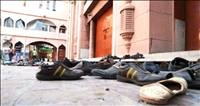
May 28 will mark the one-year anniversary of the deadly attacks on Ahmadi places of worship (it is a crime to call them mosques under the draconian anti-Ahmadiyya law, but a rose is a rose by any name). These attacks, just like the attacks on Shia imambargahs and Sunni ibadatgahs, are part of a bigger security problem that the country faces. What is different is the official indifference and apathy for Ahmadis displayed by the administration.
The most haunting thing about the tragedy was the question that the local leader of the Ahmaddiya community asked of the government in a press conference the next day. “You do not consider us Muslims, but at least tell us whether we are citizens of Pakistan.” This question should worry all those Pakistanis who want to see Pakistan a progressive and egalitarian state that treats all its citizens fairly and equitably.
In 1974, Pakistan’s National Assembly declared Ahmadis non-Muslim for the purposes of law and constitution. A legitimate question may be raised as to whether the constitution of Pakistan as framed in 1973 even empowered the National Assembly to exercise the power to ex-communicate an entire sect. The Islamic provisions blended into the constitution were subject to interpretation of all schools of thought that were recognised as Muslim at the time. Therefore, arguably, the National Assembly overstepped its boundaries when it declared Ahmadis non-Muslim.
In 1947, Pakistan had laid claim to Gurdaspur because the “Muslim holy place” of Qadian was located there and Gurdaspur as a whole was Muslim majority only with the inclusion of Ahmadis in Muslim numbers.
Even if Ahmadis are considered non-Muslim, they have rights under the constitution of the Islamic Republic of Pakistan as citizens of Pakistan which have been violated time and again. Ordinance XX of 1984 for example makes it a crime for Ahmadis to even use the Islamic greeting of “Assalamualaikum” and other Islamic symbols and religious verses. This hits at the root of the Ahmadi mode of worship. It defeats the purpose of Article 20 of the constitution which gives citizens the right to practice and propagate their faiths and offends Article 2-A, which after the necessary correction by the 18th Amendment, promises all religious minorities can practice their faith freely.
The Objectives Resolution had been incorporated as Article 2-A by General Zia’s regime. However the word “freely” was omitted in connection with the right of religious minorities to practice their religions and develop their cultures. Since 1974, Ahmadis were a non-Muslim minority and their status was a double-edged sword for the Zia regime. The Objectives Resolution was introduced in its mutilated form only to target them. The 18th Amendment corrected a longstanding wrong when it restored the word “freely”, but the damage had already been done.
In Zaheeruddin v State, the Supreme Court of Pakistan declared that placing restrictions on Ahmadis did not violate the constitutional religious freedom. It was a terrible decision because the majority opinion resorted to using principles of intellectual property law to determine exclusive ownership of religious symbols such as use of Islamic vocabulary for those determined to be Muslims. The judgment also went on to say that a Muslim cannot be but outraged at the use of Islamic symbols by Ahmadis. It goes on to condone acts of violence and religious sentiment used to persecute minorities. Dr Martin Lau, a renowned legal scholar, very poignantly argued that after the aforesaid judgment all religious freedom effectively stands abolished in Pakistan.
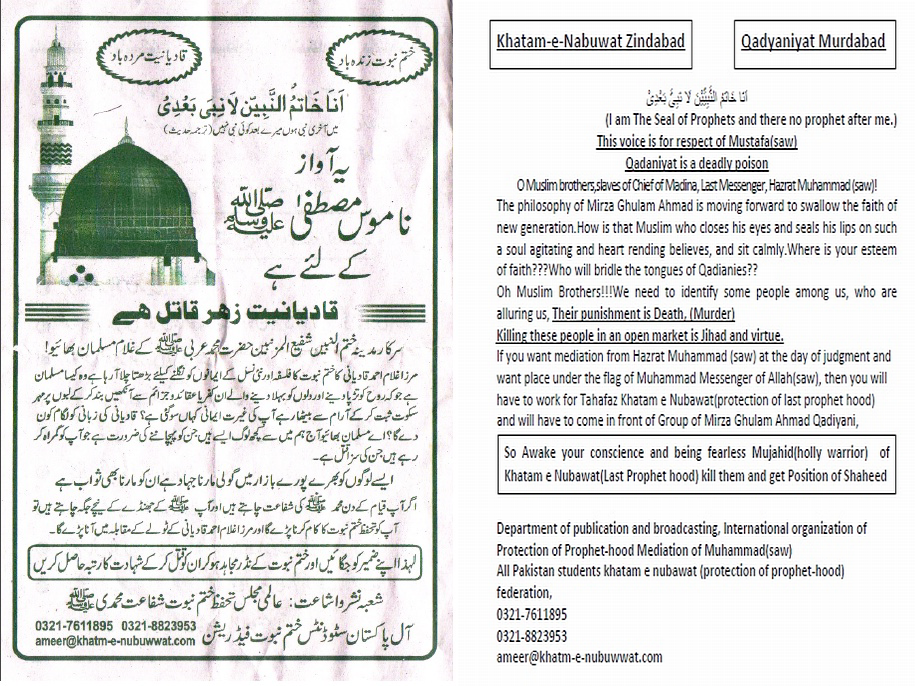
Under Article 2-A, the constitution ensures something more than religious freedom for religious minorities - it ensures a special status and requires the state to aid and allow the minorities every opportunity to develop their religions and cultures. When it comes to Ahmadis however, the state goes out of its way to demonise and discriminate against the community. No Muslim in Pakistan can get a passport unless he signs a statement abusing Ahmadis and their religious beliefs. Therefore every time the state prints a passport form, it effectively militates against several constitutional provisions and against 295-A of the Pakistan Penal Code which safeguards against malicious or willful writings against the founders of any religion practised by a class of persons in Pakistan.
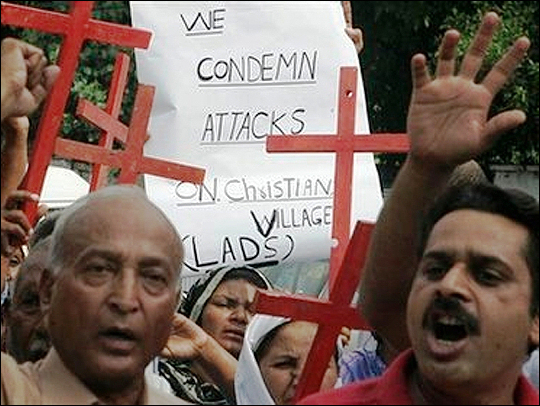
By restoring the word “freely” in Article 2-A, the government has given our judiciary another opportunity to correct a wrong that was committed by a martial law regime. The judiciary has to act to safeguard the citizens of Pakistan because the legislature in Pakistan can only go so far. Challenging bigotry is answered with 26 bullets. The minister of minorities was killed for standing up for the original idealism of Pakistan. Under the circumstances, the legislature can only give the smallest of rooms and the judiciary must rush in to re-establish religious freedom which is not only constitutionally ensured in Pakistan, but also part of the International Convention of Civil and Political Rights which Pakistan has signed and ratified.
Till then, the Ahmaddiya community - which played a major role in the making of Pakistan and which has contributed magnificently to its progress - will remain effectively stripped of citizenship rights in Pakistan.
Yasser Latif Hamdani lives in Lahore
This simple observation has turned out to be true all through Islamic history, most notably in the Mughal Empire. The heterodox Akbar laid the real foundations of the empire on tolerance and justice for all communities in the realm, and his great grandson the pious and orthodox Aurangzeb Alamgir laid the foundations of its disintegration because of his discriminatory and unjust policy against Non-Sunnis and Non-Muslims.
These are poignant lessons for the Islamic Republic of Pakistan - which long fancied itself the successor state of the Mughal Empire and which has since General Zia’s hypocritical Islamisation embarked on a terrible course similar to the end of the Mughal Empire.
May 28 will mark the one-year anniversary of the deadly attacks on Ahmadi places of worship (it is a crime to call them mosques under the draconian anti-Ahmadiyya law, but a rose is a rose by any name). These attacks, just like the attacks on Shia imambargahs and Sunni ibadatgahs, are part of a bigger security problem that the country faces. What is different is the official indifference and apathy for Ahmadis displayed by the administration.
The most haunting thing about the tragedy was the question that the local leader of the Ahmaddiya community asked of the government in a press conference the next day. “You do not consider us Muslims, but at least tell us whether we are citizens of Pakistan.” This question should worry all those Pakistanis who want to see Pakistan a progressive and egalitarian state that treats all its citizens fairly and equitably.
In 1974, Pakistan’s National Assembly declared Ahmadis non-Muslim for the purposes of law and constitution. A legitimate question may be raised as to whether the constitution of Pakistan as framed in 1973 even empowered the National Assembly to exercise the power to ex-communicate an entire sect. The Islamic provisions blended into the constitution were subject to interpretation of all schools of thought that were recognised as Muslim at the time. Therefore, arguably, the National Assembly overstepped its boundaries when it declared Ahmadis non-Muslim.
In 1947, Pakistan had laid claim to Gurdaspur because the “Muslim holy place” of Qadian was located there and Gurdaspur as a whole was Muslim majority only with the inclusion of Ahmadis in Muslim numbers.
Even if Ahmadis are considered non-Muslim, they have rights under the constitution of the Islamic Republic of Pakistan as citizens of Pakistan which have been violated time and again. Ordinance XX of 1984 for example makes it a crime for Ahmadis to even use the Islamic greeting of “Assalamualaikum” and other Islamic symbols and religious verses. This hits at the root of the Ahmadi mode of worship. It defeats the purpose of Article 20 of the constitution which gives citizens the right to practice and propagate their faiths and offends Article 2-A, which after the necessary correction by the 18th Amendment, promises all religious minorities can practice their faith freely.
The Objectives Resolution had been incorporated as Article 2-A by General Zia’s regime. However the word “freely” was omitted in connection with the right of religious minorities to practice their religions and develop their cultures. Since 1974, Ahmadis were a non-Muslim minority and their status was a double-edged sword for the Zia regime. The Objectives Resolution was introduced in its mutilated form only to target them. The 18th Amendment corrected a longstanding wrong when it restored the word “freely”, but the damage had already been done.
In Zaheeruddin v State, the Supreme Court of Pakistan declared that placing restrictions on Ahmadis did not violate the constitutional religious freedom. It was a terrible decision because the majority opinion resorted to using principles of intellectual property law to determine exclusive ownership of religious symbols such as use of Islamic vocabulary for those determined to be Muslims. The judgment also went on to say that a Muslim cannot be but outraged at the use of Islamic symbols by Ahmadis. It goes on to condone acts of violence and religious sentiment used to persecute minorities. Dr Martin Lau, a renowned legal scholar, very poignantly argued that after the aforesaid judgment all religious freedom effectively stands abolished in Pakistan.
Under Article 2-A, the constitution ensures something more than religious freedom for religious minorities - it ensures a special status and requires the state to aid and allow the minorities every opportunity to develop their religions and cultures. When it comes to Ahmadis however, the state goes out of its way to demonise and discriminate against the community. No Muslim in Pakistan can get a passport unless he signs a statement abusing Ahmadis and their religious beliefs. Therefore every time the state prints a passport form, it effectively militates against several constitutional provisions and against 295-A of the Pakistan Penal Code which safeguards against malicious or willful writings against the founders of any religion practised by a class of persons in Pakistan.
By restoring the word “freely” in Article 2-A, the government has given our judiciary another opportunity to correct a wrong that was committed by a martial law regime. The judiciary has to act to safeguard the citizens of Pakistan because the legislature in Pakistan can only go so far. Challenging bigotry is answered with 26 bullets. The minister of minorities was killed for standing up for the original idealism of Pakistan. Under the circumstances, the legislature can only give the smallest of rooms and the judiciary must rush in to re-establish religious freedom which is not only constitutionally ensured in Pakistan, but also part of the International Convention of Civil and Political Rights which Pakistan has signed and ratified.
Till then, the Ahmaddiya community - which played a major role in the making of Pakistan and which has contributed magnificently to its progress - will remain effectively stripped of citizenship rights in Pakistan.
Yasser Latif Hamdani lives in Lahore
© The Friday Times
URL: www.thefridaytimes.com/27052011/page9.shtml
URL: www.thefridaytimes.com/27052011/page9.shtml








 Posts
Posts


