Thursday, December 15, 2011

Blasphemy charges: Out of fear, Ahmadi family on the run

Express Tribune, Pakistan
Pakistan
Punjab
Blasphemy charges: Out of fear, Ahmadi family on the run
By Rana Tanveer
Published: December 15, 2011
Teenager accused of making derogatory remarks against Holy Prophet (PBUH).
LAHORE: Blasphemy allegations continue to haunt minorities in Pakistan.

Aalmi Majlis Tahafuz Khatm-e-Nabuwat (AMTKN) activists alleged that 16-year-old Sajeel committed blasphemy by making derogatory remarks against the Holy Prophet (PBUH) and his father, Rana Hakim Jameel, had done the same by portraying Sajeel as a Muslim in his school admission form.

Denying that he ever put down Islam as Sajeel’s religion and all other allegations levelled against his son, Jameel’s was a different tale.

According to him, the allegations stemmed from a school fight.

The school principal overheard some students abusing Sajeel and beat them up. The students later accused Sajeel of telling on them and beat him up. When Sajeel actually went to the principal to complain, he learnt that the students had “made up a story, telling the principal they had attacked him because he had made blasphemous remarks”.

Later, Haji Aslam, the school principal, expelled Sajeel.

Fearing their safety, the two have been on the run ever since the charges emerged.

While the police have yet to register an FIR against the accused, they have already started conducting raids for their arrests.

A member of the accused family, Rana Asfandyar, 18, was arrested by the police, who allegedly pressurised the young student to reveal his brother’s whereabouts, Asfandyar’s older brother, Rana Mujahid told The Express Tribune.

At local mosques, various religious scholars were fuelling a hate campaign against Ahmadis, Mujahid alleged, adding that evoking such hatred among the public could prove dire for his family.

However, Khushab police station SHO Raja Arshad told The Express Tribune that since the family refused to tell them about Sajeel’s whereabouts, the police had brought Asfandyar in to record his statement at the DPO’s office. Arshad denied that they had detained the boy.

Mujahid alleged that religious scholars Qari Saeed and Waqas Ahmed were producing “false witnesses” before the police.

SHO Arshad said that they were still in the process of recording the statements of witnesses, and hence, were unable to conclude their investigations.

Meanwhile, Jameel alleged that a property dispute could also be a reason behind the accusations.

Published in The Express Tribune, December 15th, 2011.

Copyrighted © 2011 The Express Tribune News Network
URL: http://tribune.com.pk/?p=306901

Saturday, December 10, 2011

Ahmadiyah bans: Legal justification for intolerance?

Jakarta Post, Indonesia
OPINIONSat, 12/10/2011 9:27 AM
Ahmadiyah bans: Legal justification for intolerance?
Ati Nurbaiti, Canberra
As of September this year, at least 26 regencies and municipalities have passed bylaws restricting or banning the Ahmadiyah sect, 11 of them in West Java alone, according to a list from the National Commission on Violence Against Women.

Some were issued after the murderous assault on the sect in Pandeglang regency, Banten, in February 2011; including the Banten bylaw itself. The Commission has said women and children of the sect were the most vulnerable in the attacks, which according to the Setara Institute have included 342 cases of assault from 2007 to 2011. This also includes the resettlement of an entire Ahmadiyah community to an island off Lombok.

The local regulations justify other citizens and authorities into closing down Ahmadi mosques, forcing them out of their homes, or ordering them to denounce Islam if they insist on their beliefs. Unlike mainstream Muslims, the Ahmadiyah do not believe that Muhammad is the last prophet, saying they differentiate between prophets and messengers.

However, Muslims have said this is their excuse to hide their real beliefs; that the Ahmadiyah have frequently violated the joint ministerial decree on their sect by proselytizing; and that the attacks on them would stop — if only they would drop their teachings, or declare that they are no longer Muslims.

The bylaws and the joint ministerial decree, revived in 2008, refer to the 2005 non-binding fatwa of the Indonesian Council of Ulema (MUI) which states the Ahmadiyah is deviant; and also the 1965 Law on Blasphemy, which was upheld in 2005 by the Constitutional Court in its ruling against a group of human rights advocates who wanted it annulled. The plaintiffs had said the blasphemy law was no longer relevant for a democracy since it was issued under martial law in 1965.

The movement to annul the 1965 law and those advocating an end to prosecuting minorities, pursue entirely different reasoning from groups who are sealing the Ahmadiyah mosques, often accompanied by local police.

The first argues that the state of a democratic country should not decide which Islam is “right”. The second wonders out loud why the state is leaving Muslims to take matters into their own hands, because, they say, it is evident that Ahmadiyah should be banned, based on the 1965 law, the joint ministerial decree and the MUI fatwa.

A glimpse at news reports in the wake of the Feb. 6 attacks shows that a number of these reports asserted or implied that the real victims were not the Ahmadiyah, whose three members were mobbed and killed, with helpless police officers looking on — all on display to the world thanks to YouTube.

According to the sources in the reports, such as in CyberSabili and hidayatullah.com, the real victims were the Muslims, because the Ahmadis, who insulted Islam, and blatantly defied all civilized requests to stop proselytizing, gained all the sympathy. The “victimization” of Muslims is traced to the marginalization and suppression of Islamic expression by Soeharto, apart from reports of intelligence operations against Muslim activists.

That the Ahmadiyah were not the real victims in the February assault would not necessarily be the majority view; a poll involving 3,000 respondents found most rejecting violence in the name of religion. The July poll by the Setara Institute was conducted in 47 regencies and municipalities in 10 provinces.

But if most Indonesians agreed with these respondents, it doesn’t explain all those bylaws restricting the Ahmadiyah, emerging right under the nose of President Susilo Bambang Yudhoyono. The passing of the bylaws had no difficulty, it seemed, even though the regional autonomy law states that religion should be regulated by the state. But similarly, Religious Affairs Minister Suryadharma Ali and Home Minister Gamawan Fauzi have voiced their opinions that the state should ban or dissolve the Ahmadiyah instead of only restricting their activities.

So are Indonesia’s Muslims becoming increasingly intolerant? Many say tolerance is not the issue, for the Ahmadiyah has insulted Islam.

Leading lawyer Adnan Buyung Nasution told a recent discussion in Canberra that he had a hard time convincing President Yudhoyono that the Ahmadiyah had constitutional rights as a minority — and thus the President may have been persuaded against an outright ban. The ministers overseeing the joint ministerial decree restricting the Ahmadiyah also have a constitutional reference; that religious freedom is limited in respect of followers of other faiths.

The International Crisis Group had recommended an independent body to work out a strategy for religious tolerance; such a body would have to deal with this legal confusion stemming from demands to “protect” the Muslim majority against “deviants”, through rulings such as a state ban on the Ahmadiyah.

Malaysia may seem tragic to many of us as its activists say ordinary citizens, including Muslims themselves, cannot speak out against increased state regulation of Islam, lest they would be considered un-Islamic.

But the incidences of Malaysians’ violence against minorities do not come anywhere close to our long list. Should we be proud of outdoing Malaysia?

The author is a staff writer at The Jakarta Post.

Copyright © 2008 The Jakarta Post - PT Bina Media Tenggara. All Rights Reserved
URL: www.thejakartapost.com/news/2011/12/10/ahmadiyah...intolerance.html

Tuesday, December 6, 2011

2011 Yet Another Bad Year for Human Rights: Setara

Jakarta Globe, Indonesia
HOME
2011 Yet Another Bad Year for Human Rights: Setara
Ulma Haryanto | December 06, 2011

Only a handful of those involved in the attack on a small Ahmadiyah community in Cikeusik, Banten, were charged, and they only received prison sentences of just a few months. An Ahmadi survivor who almost had his hand hacked off, though, was charged with provoking the attack and sentenced to six months in prison, half a month longer than his attacker. (JG Photo)
The year 2011 has been yet another period of abject failure by the government to protect human rights, according to the results of a survey released on Monday.

Bonar Tigor Naipospos, deputy chairman of the Setara Institute for Peace and Democracy, said the survey of leading rights activists, community and religious leaders and bureaucrats showed no improvement in the state’s efforts to protect rights.

“There has been no significant change or effort from the government to uphold human rights compared to the previous year,” he said.

“The survey used a similar approach as last year. The Setara Institute grouped the variables in eight categories and measured how these items were perceived by our 71 respondents.”

Bonar said the category respondents rated the lowest was the resolution of past human rights violations, which received a score of 1.4 on a scale from 0 to 7. Last year’s worst-performing category, the perception of religious freedom, improved from a score of 1.0 to 2.3, while elimination of discrimination dropped from 4.0 to 2.8.

“Even though the score for religious freedom improved, one item in that group that still received a low score was the handling of cases of violence against minority groups,” said Ismail Hasani, a researcher at the Setara Institute.

He said that this year the worst of those incidents was the attack by a mob of 1,500 on a small Ahmadiyah community in Cikeusik, Banten province. That attack, in February, led to the deaths of three members of the beleaguered sect.

Only a handful of the perpetrators were charged, and wound up receiving prison sentences of just a few months. An Ahmadi survivor who almost had his hand hacked off, though, was charged with provoking the attack and sentenced to six months in prison, half a month longer than his attacker.

Hendardi, the Setara Institute chairman, called on President Susilo Bambang Yudhoyono to “construct policies that uphold human rights through the resolution of past human rights abuses, end impunity and provide legislation enabling the enforcement of human rights.”

“Compared to previous presidents, Yudhoyono has the strongest political backing because he was directly elected by the people,” he added.

“So there’s no excuse for him for not to uphold human rights.”

Researchers said that on the positive side, survey respondents were more satisfied with the performance of state bodies such as the National Commission on Violence Against Women (Komnas Perempuan), the Indonesian Commission for Child Protection (KPAI), and the National Commission on Human Rights (Komnas Ham).

“Komnas Perempuan received the highest score, with a 3.7, while the KPAI got 3.6 and Komnas HAM got 3.4,” Ismail said.

“Another government initiative that received a higher score was terrorism eradication.”

The survey questioned 71 respondents across 13 provinces in the country. It was carried out in September and October and focused on items in international covenants on human rights.

Copyright 2010 The Jakarta Globe
URL: www.thejakartaglobe.com/home/2011-yet-another.../482919

Monday, December 5, 2011

ANALYSIS: Persecution of Ahmedis in the Islamic Republic

Daily Times, Pakistan
Monday,
December 05, 2011

ANALYSIS: Persecution of Ahmedis in the Islamic Republic — Yasser Latif Hamdani

Yasser Latif HamdaniThe basic premise on which we won ourselves Pakistan was that a permanent majority cannot and should not dominate a permanent minority on account of numeric strength. Yet contrary to that founding logic, Pakistan is today legally a totalitarian fundamentalist theocracy
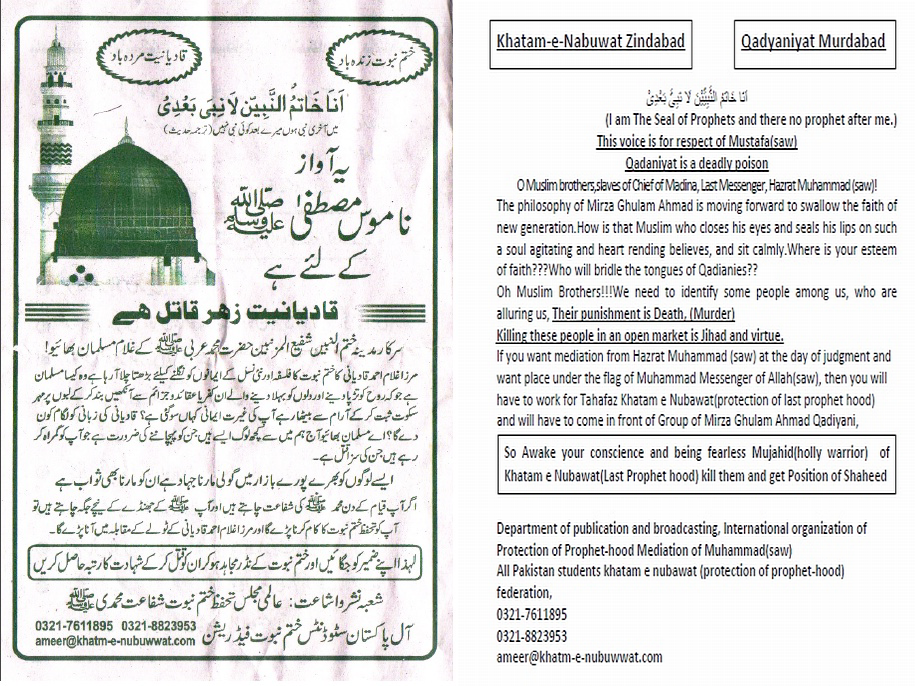
A fresh round of hate has been unleashed against the hapless Ahmediyya community once again. A young woman has been expelled from her university for daring to stand up to hate speech against her community on campus in Lahore. In Rawalpindi, ignorant and boorish mobs have been agitating to close down an Ahmedi ‘place of worship’ for being ‘unconstitutional’. In other words, practising their own faith in their own space is deemed unconstitutional by a mob that has probably never opened the constitution. All the while this community goes on praying and fasting for Pakistan, where a majority continues to persecute them for believing differently.

Oliver Wendell Holmes, the great American Judge, wrote in his dissenting opinion in Abrams vs United States 250 US 616 (1919): “When men have realised that time has upset many fighting faiths, they may come to believe even more than they believe the very foundations of their own conduct that the ultimate good desired is better reached by free trade in ideas — that the best test of truth is the power of the thought to get itself accepted in the competition of the market.” If the Ahmedi beliefs are so patently false and ridiculous as our ulema (Islamic scholars) say they are, then why be so insecure as to shut them down completely? Why not allow them to be ridiculed in the marketplace of ideas?

Every citizen of Pakistan has the unfettered right to practice and propagate his or her religion and every religious denomination and sect thereof has the right to establish its places of worship and educational institutions according to Article 20 of the constitution of the Islamic Republic of Pakistan, 1973. These rights are paramount. Unlike other articles, this Article — the cornerstone of religious liberty in our country — is not restricted by reasonable restrictions but is subject to law, order and morality alone. This means that religious freedom and freedom of conscience cannot be restricted. Ahmedis might be non-Muslims for the purposes of law and constitution under Article 260 but that does not mean that they are not Pakistanis. Unfortunately, time and again the judiciary in Pakistan — whose basic function is to safeguard marginalised sections of our society — has upheld retrogressive laws that target the Ahmedis.

To begin with, let us put a popular notion to rest that if an Ahmedi calls himself a Muslim, he is violating the constitution. The most one can stretch Article 260, which is a definition clause, is to say that the state of Pakistan does not agree with an Ahmedi if he calls himself a Muslim and that laws and provisions specific to the Muslims will not apply to the Ahmedis. When Article 260 is read with Article 19 (freedom of speech and expression) and Article 20 (freedom of religion), it becomes clear that there is no constitutional bar against an Ahmedi citizen calling himself a Muslim, even if the Pakistani constitution and law does not agree with him. In these circumstances Ordinance XX of 1984 is a clear violation of the fundamental rights of an entire community to any sane and reasonable mind. However, two judges on a three member bench of the Supreme Court of Pakistan in Zaheeruddin vs the State 1993 SCMR 1718 did not think so. They felt — incredibly enough — that Ahmedis purporting to or even thinking themselves to be Muslims is a violation akin to violation of intellectual property rights. One of these judges went so far as to declare that it was reasonable for a Muslim to be outraged and therefore attack the Ahmedis on this ground. This is our Supreme Court for God’s sake. Check your religious biases on the door, Lordships. You cannot be partisan judges serving communitarian interests of the majority. You are justices of the superior judiciary of Pakistan, tasked with safeguarding fundamental rights of every citizen of Pakistan, whatever his faith maybe. The clearest duty on part of the Pakistani Supreme Court is to stand up for every citizen of Pakistan, be it an Ahmedi, Shia, Christian or Hindu. If you cannot be unbiased or if you cannot stand up or are too afraid to stand up for every citizen of Pakistan, then I implore you to resign and let men made of sterner stuff replace you.

Last but not the least, the history of Ahmedi persecution is as sordid as it is surreal. The anti-Pakistan Majlis-e-Ahrar-ul-Islam, which had opposed the Muslim League in the 1940s, enflamed passions on the Ahmedi issue to hit back at the Muslim League, which had many prominent Ahmedis in it. One particular Ahmedi target for this party was Chaudhry Zafarullah Khan who was Pakistan’s first foreign minister and in the words of Quaid-e-Azam Mohammed Ali Jinnah, the most able Muslim in his team. Jinnah himself would have been horrified at the persecution of the Ahmedis. He had dismissed appeals by the mullahs in his lifetime. saying that anyone who professes to be a Muslim is a Muslim. It was this statement that won him the eternal animosity of the Majlis-e-Ahrar-ul-Islam and other religious outfits. These religious organisations are today claimants of the protectors of Nazaria-e-Pakistan (Ideology of Pakistan).

The basic premise on which we won ourselves Pakistan was that a permanent majority cannot and should not dominate a permanent minority on account of numeric strength. Yet contrary to that founding logic, Pakistan is today legally a totalitarian fundamentalist theocracy. It will lead us to a dead end from which there will be no way out. It is time the Muslims of Pakistan halted and thought about where they intend to take this much abused, much maligned and much misunderstood Islamic Republic.

The writer is a lawyer based in Lahore. He is also a regular contributor to the Indian law website http://mylaw.net and blogs on http//globallegalforum.blogspot.com and http://pakteahouse.net. He can be reached at yasser.hamdani@gmail.com

Sunday, December 4, 2011

For minorities in Pakistan, persecution never ends

Express Tribune, Pakistan
Pakistan
Punjab
For minorities in Pakistan, persecution never ends
By Abdul Manan
Published: December 4, 2011
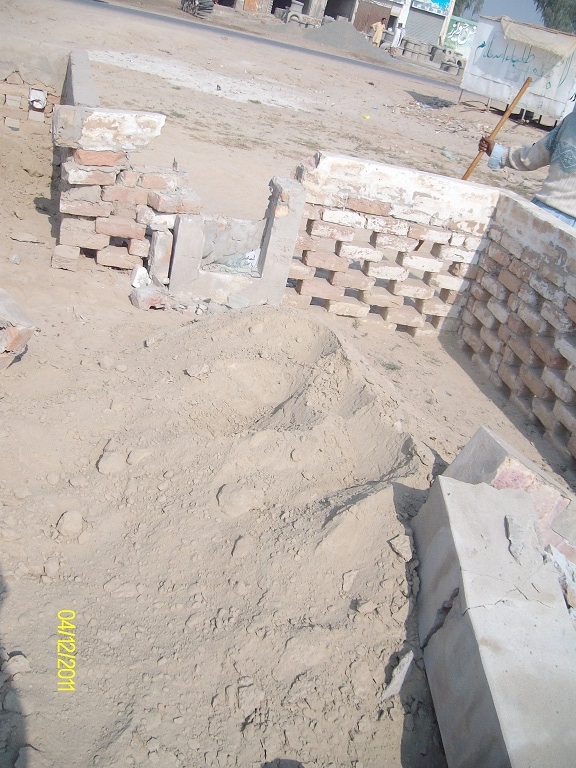
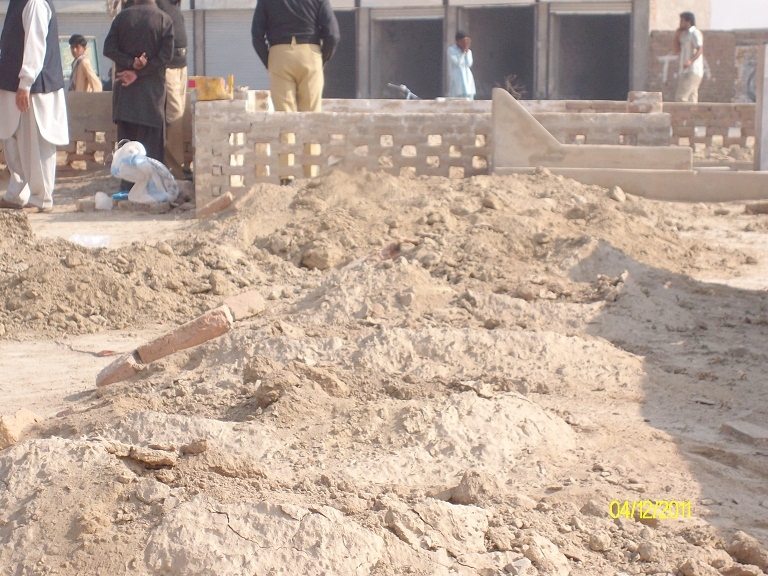
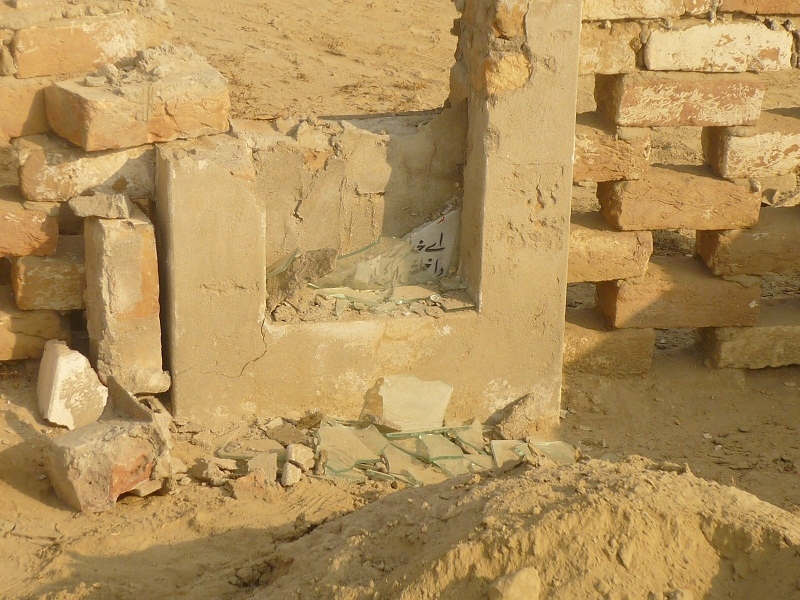
Dug out, desecrated graves at the Ahmadi graveyard. Dug out, desecrated graves at the Ahmadi graveyard. PHOTO: MASAUD SARWAR Dug out, desecrated graves at the Ahmadi graveyard. PHOTO: MASAUD SARWAR
Dug out, desecrated graves at the Ahmadi graveyard.
DUNYAPUR: Even in death, the Ahmadiyya community faces persecution.

In a gruesome incident late Saturday night, 29 graves in an Ahmadi graveyard were desecrated in Dunyapur, district Lodhran, around 100 kilometres away from Multan.

The community’s spokesperson Saleemuddin told The Express Tribune that unidentified people entered the graveyard and broke the plaques (katbe) of a large number of graves, while digging around 29 others. Only two graves that were made of marble were left concrete, he said.

Saleemuddin said local representatives of the community have approached the police and submitted an application for legal action, but no investigation has been undertaken so far. Police officials have asked the community to first rebuild their graves after which the issue would be further investigated, he added.

DPO Lodhran Agha Muhammad Yusuf while talking to The Express Tribune confirmed that the graveyard had been desecrated, adding that the area’s DSP is looking into the matter. The DPO said he would look into the case after investigations are completed.

The graveyard is said to be established in 1976, but Saleemuddin claimed that said it was made 80 years ago.

Religious tension is high in Dunyapur where around 15 families belonging to the Ahmadiyya community reside.

Saleemuddin said that around six months ago, a private school run by a member of the Ahmadiyya community was forcefully closed down by residents. People took to the streets and to shut the school where many Muslim children were being educated free of cost, he said.

The next face of persecution may be the take over business and properties of the community, he feared.

Unfortunately, this is not the first such incident. Around two months ago, another Ahmadi graveyard located in Haveli Majokan district Sargodha was dug up, humiliating and angering community members.

He said the incidents of desecrating graves of the Ahmadiyya community have increased over the last few months. He said that till now, a total of 30 such cases have been recorded in the country.

Published in The Express Tribune, December 5th, 2011.

Copyrighted © 2011 The Express Tribune News Network
URL: http://tribune.com.pk/?p=302105

Thursday, December 1, 2011

Blasphemy allegations: Ahmadi family under threat from clerics

Express Tribune, Pakistan
Pakistan
Punjab
Blasphemy allegations: Ahmadi family under threat from clerics
By Rana Tanveer
Published: December 1, 2011
“The police should come and see me. If I go to the police station, thousands of Muslims will come with me and there will be unrest,” Qari Saeed.
LAHORE: An Ahmadi family in Khushab says it is being victimised by local clerics who instigated the expulsion of a 16-year-old from his school and are now pressing the police to register blasphemy cases against him and his father.

The father, Hakim Jameel, told The Express Tribune that activists of the Aalmi Majlis Tahafuz Khatme Nabuwat (AMTKN) were also trying to get his other two sons expelled from a college where they are ICom and BSc students.

AMTKN members insisted that the 16-year-old student of class 10 and his father had both committed blasphemy. They also made thinly-veiled threats to this correspondent not to publish this story.

Qari Saeed, the divisional president of AMTKN, and Waqas Ahmed moved the application seeking a case under Section 295-C of the Pakistan Penal Code against Rana Sajeel, 16, for allegedly making derogatory remarks about the Holy Prophet (peace be upon him), and under Section 289 against his father Rana Hakim Jameel for allegedly describing Sajeel as a Muslim in the school admission form.

The law does not permit anyone to call Ahmadis Muslims. Jameel denied putting down Islam as Sajeel’s religion, saying he had put down Ahmadi, as he had done when his other sons were applying to colleges.

He said the allegation against his son stemmed from a fight at school. He said that the school’s principal had overheard some students abusing Sajeel and had beaten them up. The students accused Sajeel of telling on them and beat him up. Sajeel then went to the principal to complain. “They made up a story, telling the principal they had attacked him because he made blasphemous remarks,” Jameel said.

He said that the principal of Al-Tahir Public School, Haji Aslam, was an AMTKN supporter and had lost an eye during a protest organised by the group. “The principal expelled my son and then got together with other AMTKN activists to lodge a police complaint,” Jameel said.

He said since the family had been accused of blasphemy, the AMTKN had been organising meetings at a mosque near their residence where they made inflammatory speeches. “People have turned against us,” he said. “We are under serious threat.”

He said that a property dispute may also lie behind the accusations. In August 2011, the Jamaat-i-Ahmadia had moved the courts against a woman named Zaibun Nisa who had tried to sell off land belonging to the Jamaat as her own, he said. Her grandfather had donated the land to the Jamaat in his will, he said.

The court ordered the registration of a case against Nisa and four others for fraud. She spent about three weeks in jail, before she announced that she was renouncing the community and moved in with Qari Saeed. He also arranged for her bail, Jameel said.

Qari Saeed said that he had no doubt that the police would register the blasphemy cases as “hundreds of students” had told him about the incident. Asked why he had not contacted the Khushab DPO when he was summoned as part of the investigation, he said: “The police should come to me if they need me. If I go to the police station, thousands of Muslims will come with me and there will be unrest.”

He admitted that Zaibun Nisa and her family were residing with him, but insisted that had nothing to do with this case. Asked about the property dispute, he lost his temper and hung up. Shortly after, a man identifying himself as AMTKN secretary general Abdullah phoned this correspondent and sought the address of The Tribune offices, saying he would send over some Lahore-based activists. As of late Wednesday night, they had not arrived.

A relative of Qari Saeed who taught at Al-Tahir School, speaking on the condition of anonymity, said that Sajeel had been his student and he did not believe that the boy had made blasphemous remarks. He said Saeed had a deep personal hatred towards Ahmadis.

Khushab DPO Imran Mahmood said that he was personally investigating the case and would not register the FIRs without substantial evidence. He said he would decide the applications in a few days.

Published in The Express Tribune, December 1st, 2011.

Copyrighted © 2011 The Express Tribune News Network
URL: http://tribune.com.pk/story/300305/...from-clerics/
 
^ Top of Page