 | NEWS |
Ahmadiyah Leader Tries To Clear the Air About Persecuted Sect’s Beliefs
Ulma Haryanto & Fitri | November 10, 2010
Jakarta. The beleaguered Ahmadiyah sect has tried to clarify its beliefs, with the national secretary of Ahmadiyah Indonesia, Zafrullah Pontoh, saying it had never claimed Mirza Ghulam Ahmad as their prophet.
Rather, he was the “Promised Messiah, a savior for Muslims, Christians and Jews.”
“We believe in the Holy Prophet Muhammad as the messenger of the last religion, which is Islam. We follow Islam as the final religion,” Zafrullah told the Jakarta Globe on Tuesday.
He denied they were too afraid to say they believed Mirza Ghulam Ahmad was the Prophet and were hiding their true beliefs to avoid further persecution.
Religious Affairs Minister Suryadharma Ali has repeatedly called for the sect to be banned, claiming members cannot consider themselves followers of Islam because they did not believe Muhammad was the final monotheist prophet. Nor did they consider the Koran as their holy book.
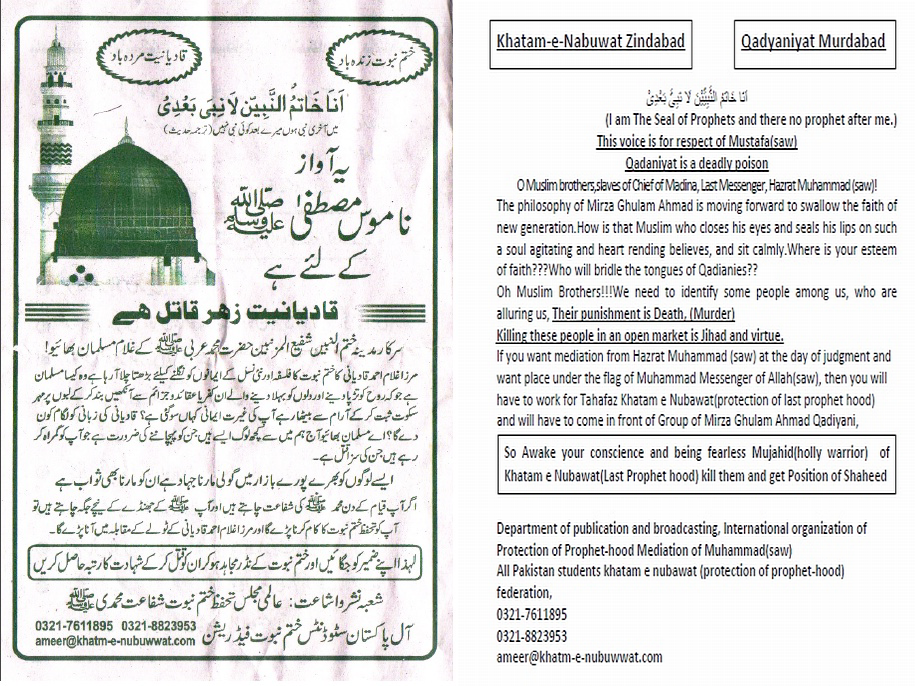
Anti-Ahmadiyah violence has increased since 2008, when Indonesia banned the sect from any public displays or teaching. Earlier that year the sect had to give the government a statement explaining the core contents of the religion. Zafrullah said this was to “avoid unrest and disruption to peace and order.”
“This limits us from explaining our beliefs to the public,” he said. “As a result, people receive second-hand information and stick with it.”
Mirza Ghulam Ahmad established the Ahmadiyah movement in Qadian in India in 1889.
Zafrullah said the 12-point statement submitted to the government had explained that they believed Muhammad was the final messenger, and that Mirza Ghulam Ahmad was “a teacher and a messiah who will strengthen the understanding of Islam, as taught by Prophet Muhammad.”
“They often claim that we consider Tazkirah as the holy book, which is not true,” he said. “Tazkirah is a compilation of Mirza’s writings and notes on his behavior, just like the Hadith [the words and deeds of Prophet Muhammad].” God was Allah to them, just like any other Muslim.
According to Jauzi, who chairs the Ahmadiyah regional leadership council in West Nusa Tenggara, the main difference between the two was that Ahmadiyah believed Mirza Ghulam Ahmad was the Promised Messiah.
“In other religions, the Messiah has not arrived yet. For us he did. It was Mirza Ghulam Ahmad. That is the core difference,” Jauzi told the Globe.
Zafrullah said there were two Ahmadiyah groups in Indonesia – the Jemaah Ahmadiyah Indonesia, or JAI, and the Gerakan Ahmadiyah Indonesia, or GAI.
“Both are Ahmadiyah, [JAI] is Ahmadiyah from Qadian, a small town in India, while [GAI] derives its teachings from Lahore [Pakistan],” he said.
“Although both follow Islam according to the teachings of Mirza Ghulam Ahmad, Lahore Ahmadis place Mirza Ghulam Ahmad merely as a “reformer”, and not the messiah, as opposed to the main belief of Ahmadiyah.
“JAI has more members than GAI. But the leaders of the two organizations know each other, and we acknowledged each other without getting too deep into each other’s business.”
Zafrullah said the split came after a feud among pupils of Mirza Ghulam Ahmad after his death. Those who did not see him as a messiah moved to Lahore.
Ulil Abshar Abdalla, a Democratic Party chairman and founder of the Liberal Islam Network, has been critical of Suryadharma for his failure to stand up to those who preach hatred and instigate violence against the sect.
On Tuesday he said the minister had adopted an approach that fostered radicalism.
“It’s like putting oil on a flame,” Ulil said.
Rather, he was the “Promised Messiah, a savior for Muslims, Christians and Jews.”
“We believe in the Holy Prophet Muhammad as the messenger of the last religion, which is Islam. We follow Islam as the final religion,” Zafrullah told the Jakarta Globe on Tuesday.
He denied they were too afraid to say they believed Mirza Ghulam Ahmad was the Prophet and were hiding their true beliefs to avoid further persecution.
Religious Affairs Minister Suryadharma Ali has repeatedly called for the sect to be banned, claiming members cannot consider themselves followers of Islam because they did not believe Muhammad was the final monotheist prophet. Nor did they consider the Koran as their holy book.
Anti-Ahmadiyah violence has increased since 2008, when Indonesia banned the sect from any public displays or teaching. Earlier that year the sect had to give the government a statement explaining the core contents of the religion. Zafrullah said this was to “avoid unrest and disruption to peace and order.”
“This limits us from explaining our beliefs to the public,” he said. “As a result, people receive second-hand information and stick with it.”
Mirza Ghulam Ahmad established the Ahmadiyah movement in Qadian in India in 1889.
Zafrullah said the 12-point statement submitted to the government had explained that they believed Muhammad was the final messenger, and that Mirza Ghulam Ahmad was “a teacher and a messiah who will strengthen the understanding of Islam, as taught by Prophet Muhammad.”
“They often claim that we consider Tazkirah as the holy book, which is not true,” he said. “Tazkirah is a compilation of Mirza’s writings and notes on his behavior, just like the Hadith [the words and deeds of Prophet Muhammad].” God was Allah to them, just like any other Muslim.
According to Jauzi, who chairs the Ahmadiyah regional leadership council in West Nusa Tenggara, the main difference between the two was that Ahmadiyah believed Mirza Ghulam Ahmad was the Promised Messiah.
“In other religions, the Messiah has not arrived yet. For us he did. It was Mirza Ghulam Ahmad. That is the core difference,” Jauzi told the Globe.
Zafrullah said there were two Ahmadiyah groups in Indonesia – the Jemaah Ahmadiyah Indonesia, or JAI, and the Gerakan Ahmadiyah Indonesia, or GAI.
“Both are Ahmadiyah, [JAI] is Ahmadiyah from Qadian, a small town in India, while [GAI] derives its teachings from Lahore [Pakistan],” he said.
“Although both follow Islam according to the teachings of Mirza Ghulam Ahmad, Lahore Ahmadis place Mirza Ghulam Ahmad merely as a “reformer”, and not the messiah, as opposed to the main belief of Ahmadiyah.
“JAI has more members than GAI. But the leaders of the two organizations know each other, and we acknowledged each other without getting too deep into each other’s business.”
Zafrullah said the split came after a feud among pupils of Mirza Ghulam Ahmad after his death. Those who did not see him as a messiah moved to Lahore.
Ulil Abshar Abdalla, a Democratic Party chairman and founder of the Liberal Islam Network, has been critical of Suryadharma for his failure to stand up to those who preach hatred and instigate violence against the sect.
On Tuesday he said the minister had adopted an approach that fostered radicalism.
“It’s like putting oil on a flame,” Ulil said.
Copyright 2010 The Jakarta Globe








 Posts
Posts


