 |
NEWS |
Governor Wants Lombok Tolerant, but Ahmadiyah-Free
Nivell Rayda | January 25, 2011

Senggigi beach on Indonesia's Lombok. The island's governor wants to turn Lombok into a top holiday destination, but only if the minority Ahmadiyah leave the island. (Reuters Photo)
Lombok, Indonesia. West Nusa Tenggara’s governor dreams of turning Lombok into a top holiday destination, rich in culture and known for interreligious harmony — but only if a minority Muslim sect is out of the picture.
Zainul Majdi says that he did not see why the Ahmadiyah should be part of the island’s plans to follow in the footsteps of neighboring Bali, a noted tourist hotspot.
Ahmadis, Zainul said, would be better off moving out of the province entirely or agreeing to a proposal to relocate to a remote island in West Nusa Tenggara.
The governor said the sect — maligned by mainstream Muslims for believing that Ahmadiyah founder Mirza Ghulam Ahmad was a prophet, in opposition to Islamic tenets — did not fit into his drive to ramp up Lombok’s tourist appeal.
Zainul, a politician from the conservative Prosperous Justice Party (PKS), said he planned to promote dozens of traditional festivals to draw in more visitors.
The main highlight, he says, is Perang Topat, or rice cake war, a festival observed by both Hindus and Muslims in Lombok.
It is celebrated after Ramadan, the Islamic month of fasting, at the Lingsar Temple, a Hindu shrine in West Lombok.
The governor said he was eager to promote the rice cake festival as an example of the province’s cultural diversity and religious tolerance.
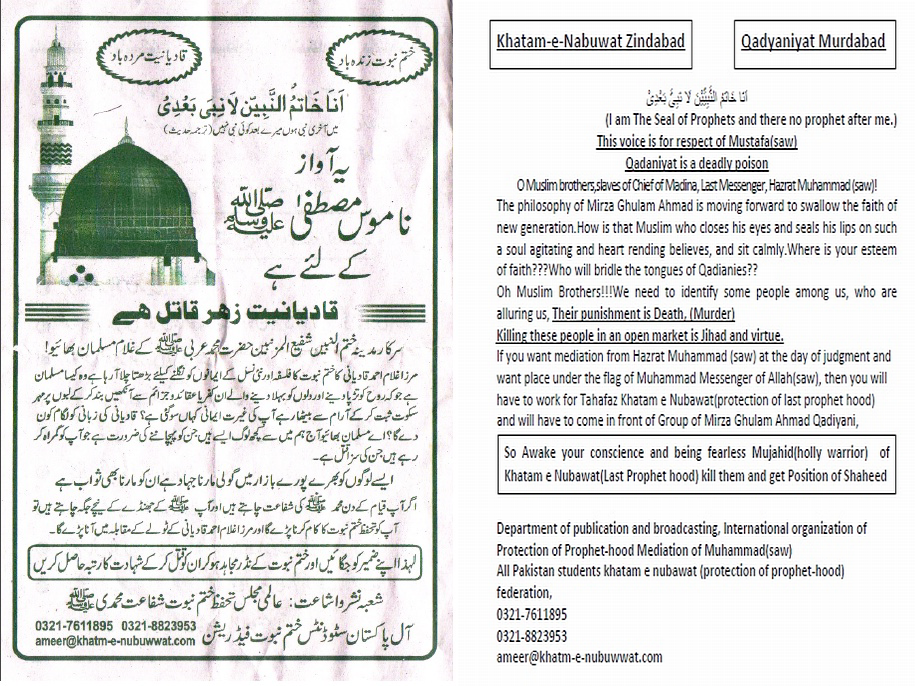
However, such tolerance was called into question by some residents in Mataram, who said the Ahmadiyah members had suffered through mob attacks, the closure of their mosques or eviction from their homes.
“The relationship between Muslims and Hindus is harmonious. Conservative Muslims also live side by side with other Islamic communities which still conform to animistic beliefs. How can Muslims be so violent toward the Ahmadiyah?” said Gusti, a Hindu driver in Mataram.
But Zainul, who referred to the sect as “my Ahmadiyah brothers,” said the only solution to tensions was to “get them out of the province” or move them to the remote village of Teluk Sepi in southern Lombok.
“Ahmadiyah had never been a problem. It was only after they formed their own community, maintaining their exclusivity and proselytizing their faith did friction with surrounding areas occur,” he said.
Zainul Majdi says that he did not see why the Ahmadiyah should be part of the island’s plans to follow in the footsteps of neighboring Bali, a noted tourist hotspot.
Ahmadis, Zainul said, would be better off moving out of the province entirely or agreeing to a proposal to relocate to a remote island in West Nusa Tenggara.
The governor said the sect — maligned by mainstream Muslims for believing that Ahmadiyah founder Mirza Ghulam Ahmad was a prophet, in opposition to Islamic tenets — did not fit into his drive to ramp up Lombok’s tourist appeal.
Zainul, a politician from the conservative Prosperous Justice Party (PKS), said he planned to promote dozens of traditional festivals to draw in more visitors.
The main highlight, he says, is Perang Topat, or rice cake war, a festival observed by both Hindus and Muslims in Lombok.
It is celebrated after Ramadan, the Islamic month of fasting, at the Lingsar Temple, a Hindu shrine in West Lombok.
The governor said he was eager to promote the rice cake festival as an example of the province’s cultural diversity and religious tolerance.
However, such tolerance was called into question by some residents in Mataram, who said the Ahmadiyah members had suffered through mob attacks, the closure of their mosques or eviction from their homes.
“The relationship between Muslims and Hindus is harmonious. Conservative Muslims also live side by side with other Islamic communities which still conform to animistic beliefs. How can Muslims be so violent toward the Ahmadiyah?” said Gusti, a Hindu driver in Mataram.
But Zainul, who referred to the sect as “my Ahmadiyah brothers,” said the only solution to tensions was to “get them out of the province” or move them to the remote village of Teluk Sepi in southern Lombok.
“Ahmadiyah had never been a problem. It was only after they formed their own community, maintaining their exclusivity and proselytizing their faith did friction with surrounding areas occur,” he said.
Copyright 2010 The Jakarta Globe
URL: www.thejakartaglobe.com/news/governor...free/418631
URL: www.thejakartaglobe.com/news/governor...free/418631





 Posts
Posts


