
ASIA
Indonesian Religion Minister Wants Ahmadiyah Sect Disbanded
Brian Padden | Jakarta31 August 2010
 Photo: AP
Members of Indonesian hard-line Islamic groups shout slogans during a rally in front of the Presidential Palace in Jakarta, Indonesia, demanding the government disband Ahmadiyah, 5 Mar 2009 (file photo)
The Indonesian minister of Religious Affairs wants the Jamaah Ahmadiyah religious group to be disbanded in the country. Human rights groups and some religious organizations said such action would be a violation of both human rights and the constitution, which guarantees freedom of religion.
Suryadharma Ali, the Religious Affairs minister, has said that the Jamaah Ahmadiyah sect should to be broken up because its followers violated regulations and are not Muslim.
The Ahmadiyah sect, which has 200,000 followers across the country, breaks with mainstream Islam because its followers do not believe the Prophet Muhammad was the final prophet. In 2008, the Indonesian government banned the group from propagating the faith. The Religious Affairs minister says Ahmadiyah has defied this restriction and should now be banned.
Syafi’i Anwar with the International Center for Islam and Pluralism said the minister’s call to restrict the religion contradicts the values and laws he should be upholding. “This is definitely against human rights, against religious freedom, against our constitution and against our Islamic principles.”
He said Ahmadiyah has been a sanctioned religion by the government since 1954 and its members should enjoy the same protection under the law as other religions.
Some Muslims, however, contend Ahmadiyah is not a separate religion, but a deviate sect of Islam, and therefore does not enjoy the same constitutional protection.
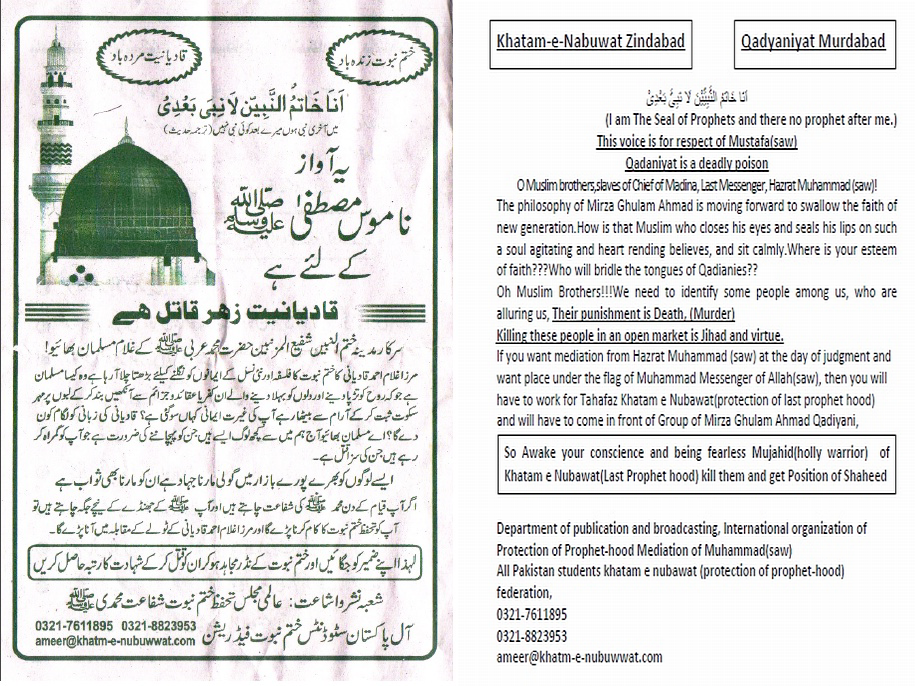
In the past few months there have been attacks on Ahmadiyah mosques by fundamentalist Islamic groups. At a hearing in the House of Representatives on Monday, the Religious Affairs minister said Ahmadiyah should be disbanded to prevent further problems.
Anwar said the attacks happened because the government, particularly President Susilo Bambang Yudhoyono, refuses to speak out against the violence and for religious freedom.
“President SBY makes a serious mistake,” said Anwar. “Why? Because he doesn’t take any firm position. If he just say that, you know, order the police (to arrest) those who attack Ahmadiyah or any other non-Muslim groups, I think the police will follow.”
The president thus far has refused to comment, so the minister of Religious Affairs’ statement is the clearest indication of where the government stands on this issue.
While Indonesia has the world’s largest Muslim population, the government is secular and the constitution guarantees freedom of religion. The country has seen sporadic violence, though, between different religious groups over the past decade.
Suryadharma Ali, the Religious Affairs minister, has said that the Jamaah Ahmadiyah sect should to be broken up because its followers violated regulations and are not Muslim.
The Ahmadiyah sect, which has 200,000 followers across the country, breaks with mainstream Islam because its followers do not believe the Prophet Muhammad was the final prophet. In 2008, the Indonesian government banned the group from propagating the faith. The Religious Affairs minister says Ahmadiyah has defied this restriction and should now be banned.
Syafi’i Anwar with the International Center for Islam and Pluralism said the minister’s call to restrict the religion contradicts the values and laws he should be upholding. “This is definitely against human rights, against religious freedom, against our constitution and against our Islamic principles.”
He said Ahmadiyah has been a sanctioned religion by the government since 1954 and its members should enjoy the same protection under the law as other religions.
Some Muslims, however, contend Ahmadiyah is not a separate religion, but a deviate sect of Islam, and therefore does not enjoy the same constitutional protection.
In the past few months there have been attacks on Ahmadiyah mosques by fundamentalist Islamic groups. At a hearing in the House of Representatives on Monday, the Religious Affairs minister said Ahmadiyah should be disbanded to prevent further problems.
Anwar said the attacks happened because the government, particularly President Susilo Bambang Yudhoyono, refuses to speak out against the violence and for religious freedom.
“President SBY makes a serious mistake,” said Anwar. “Why? Because he doesn’t take any firm position. If he just say that, you know, order the police (to arrest) those who attack Ahmadiyah or any other non-Muslim groups, I think the police will follow.”
The president thus far has refused to comment, so the minister of Religious Affairs’ statement is the clearest indication of where the government stands on this issue.
While Indonesia has the world’s largest Muslim population, the government is secular and the constitution guarantees freedom of religion. The country has seen sporadic violence, though, between different religious groups over the past decade.






 Posts
Posts


