
Extremist Intimidation Chills Pakistan Secular Society
by Julie McCarthy
Listen to the Story or Download. 07:46

Pakistani police guards carry the coffin of the assassinated governor of Punjab, Salman Taseer, during the funeral procession in Lahore on Jan. 5. - Arif Ali/AFP/Getty Images
January 24, 2011
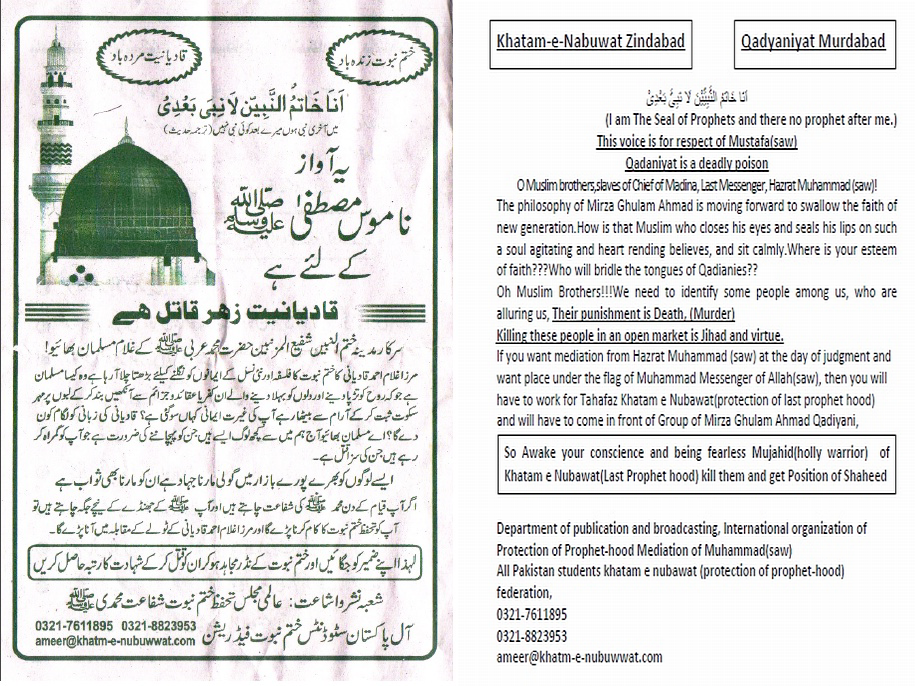
In Pakistan, a battle has been joined by those who want a tolerant Islamic state against those who want a fundamentalist religious regime.
The killing in Pakistan earlier this month of Punjab Gov. Salman Taseer has cheered the religious right while chilling secular Pakistanis and exposing deep fissures in the society.
The governor was gunned down in Islamabad by a bodyguard angered at his bid to relax the country’s blasphemy laws. The assassination of Taseer, an audacious advocate for modernism, revealed the conservative attitudes about Islam that are sweeping through Pakistan.
A Growing Rift
A growing and dangerous dichotomy is evident in the Old City of Lahore that teems with shop owners and vendors. Outdoor stalls sit cheek by jowl in the city of 6 million.
In the aftermath of the governor’s killing, Zafar Iqbol, 65, who owns a fabric shop in the Mehood Cloth Market, says he “fears for the future.”
“We feel utterly helpless,” he says. “The market here is under the dominion of elements who have affiliations with religious parties. They come along and they insist that we shut things down, and of course we’re afraid not to, so we do close things down and we lose our business.”
A few of the men who run the market traders association hoist themselves onto the counter of Iqbol’s stall and lean in to listen, causing the owner obvious discomfort.
 While Iqbol mourns the loss of the governor, his unannounced visitors feel anything but sorrow. Mohammad Ilyas, the vice president of the traders association, says the slain governor maligned Islam when he said Pakistan’s strict laws on blasphemy had become a tool to oppress religious minorities.
“It was totally wrong on the part of the governor to say that the blasphemy laws of Pakistan should be changed. The governor not only criticized the law of the land, but he went out of his way to protect Asia Bibi,” a Christian woman who was sentenced to death last year on the charge of blaspheming the Prophet Muhammad.
When asked whether Taseer deserved to die, Ilyas, 65, says, “Definitely, because he interfered with the religion of this country. If he hadn’t interfered, he would not have been killed.”
Making An Assassin A Hero
Banners draped in the streets of the Punjab capital, Lahore, call the governor’s confessed killer, Mumtaz Qadri, a hero. The 23-year-old police commando assigned to guard the governor said Taseer was an apostate for opposing Pakistan’s blasphemy law.
Evidence that fundamentalism is becoming mainstream was found in the young lawyers who showered the assassin with rose petals as he entered court in Islamabad one day after the shooting. It signaled that religious fundamentalism was not the purview of the poor Pakistani masses but reaches far into the educated class as well.
Demonstrations saluting Qadri have continued throughout the country, a disturbing signal for Washington, which is hoping for greater stability from its nuclear armed ally.
Supreme Court Bar Association President Asma Jahangir says each time democracy begins to take hold in Pakistan, the extreme right wages an offensive that is more lethal than the one before.
“And there is a reason behind it. They do not want a democratic dispensation here. It doesn’t suit them. They don’t figure in there. They get marginalized there. So the murder of the governor was a part of that larger plan as well,” she says.
Parliamentarian Sherry Rehman also is facing death threats for proposing amendments to the blasphemy law, as had the governor. Rehman says “sane” voices have been silenced.
 “And none of them are seeking to offend sensibilities of any religion, let alone Muslims themselves,” she says.
Rehman’s Pakistan Peoples Party, the party of President Asif Ali Zardari, has disowned any reform of the blasphemy laws and has been conspicuously quiet amid the uproar. Historian Mubarak Ali says all of the mainstream parties have emboldened the religious right by kowtowing to the radical clerics who are roiling the streets.
“Instead of fighting, instead of challenging — they just surrendered,” he says. “And now these clerics, they are so powerful, they are so bold, that now they are threatening everybody.”
‘No Other Alternative’
Farid Piracha, the deputy secretary general of Jamaat-e-Islami, Pakistan’s largest religious party, says “if there [were] justice in Pakistan,” there would be no eruptions on the streets.
The party’s Islamic revivalist message has pushed Pakistan toward conservatism while preaching the dangers of a perceived U.S. war on Islam.
The radical right is gathering strength in Pakistan conflating religious dogma with the policies of the United States. Piracha says they cannot be separated.
“There is damage of more than 30,000 innocent people during the so-called war against terrorism. So, one cannot believe that America is not against Islam. America’s total military actions are against the Muslim states,” he says.
U.S. drone attacks and the war in Afghanistan have provoked a popular outcry among Pakistanis, which radical Islamists exploit. Historian Ali says extremists have expanded their constituency by emerging as the only alternative voice in a country where millions feel under threat by everything from the faltering economy to the lack of security.
“They say that dictatorships didn’t give them anything. Democracy didn’t give them anything,” he says. “So, they are exhorted that Islam is going to solve their problems, give them dignity in the society and rule of law. Because there is no other alternative, they believed it.”
The extremists also benefit from the legacy of Zia al Haq, the 1980s dictator who undertook the Islamization of the schools that indoctrinated a generation in religious orthodoxy.
“As a result of this education,” Ali says, “they have very closed minds.”
Speaking Out
As religious passions stifle liberal voices, one group refuses to be repressed — the Ajoka Theater.
 It’s been in the forefront of the struggle for a secular democratic Pakistan. This past week, it staged a disturbing production about blasphemy and dedicated it to the slain governor.
It’s a study in brutality, with white-robed clerics in league with black-clad followers haranguing their victims as they hang them.
“That this play was shown in Islamabad is an act of courage,” says audience member Pervez Hoodbhoy, a physicist and essayist. “This is a country that stands at the very verge of religious fascism.”
Hoodbhoy says he fears for the theater company.
“I don’t know when they might be targeted,” he says.
The theater founder and director of the play, Madeeha Guahar, says Ajoka will continue performing and take the risk.
In Pakistan, a battle has been joined by those who want a tolerant Islamic state against those who want a fundamentalist religious regime.
The killing in Pakistan earlier this month of Punjab Gov. Salman Taseer has cheered the religious right while chilling secular Pakistanis and exposing deep fissures in the society.
The governor was gunned down in Islamabad by a bodyguard angered at his bid to relax the country’s blasphemy laws. The assassination of Taseer, an audacious advocate for modernism, revealed the conservative attitudes about Islam that are sweeping through Pakistan.
A Growing Rift
A growing and dangerous dichotomy is evident in the Old City of Lahore that teems with shop owners and vendors. Outdoor stalls sit cheek by jowl in the city of 6 million.
In the aftermath of the governor’s killing, Zafar Iqbol, 65, who owns a fabric shop in the Mehood Cloth Market, says he “fears for the future.”
“We feel utterly helpless,” he says. “The market here is under the dominion of elements who have affiliations with religious parties. They come along and they insist that we shut things down, and of course we’re afraid not to, so we do close things down and we lose our business.”
A few of the men who run the market traders association hoist themselves onto the counter of Iqbol’s stall and lean in to listen, causing the owner obvious discomfort.
Members of the Association to Protect the Dignity of the Holy Prophet, or Tahafuz-e-Namwoos Risalat, join the Sunni Itehad Council in a protest march to denounce the Pope. The Vatican called for the abolition of Pakistan's blasphemy laws after a Christian woman accused of blaspheming the Prophet Muhammad was sentenced to death. - Julie McCarthy/NPR
“It was totally wrong on the part of the governor to say that the blasphemy laws of Pakistan should be changed. The governor not only criticized the law of the land, but he went out of his way to protect Asia Bibi,” a Christian woman who was sentenced to death last year on the charge of blaspheming the Prophet Muhammad.
When asked whether Taseer deserved to die, Ilyas, 65, says, “Definitely, because he interfered with the religion of this country. If he hadn’t interfered, he would not have been killed.”
Making An Assassin A Hero
Banners draped in the streets of the Punjab capital, Lahore, call the governor’s confessed killer, Mumtaz Qadri, a hero. The 23-year-old police commando assigned to guard the governor said Taseer was an apostate for opposing Pakistan’s blasphemy law.
Evidence that fundamentalism is becoming mainstream was found in the young lawyers who showered the assassin with rose petals as he entered court in Islamabad one day after the shooting. It signaled that religious fundamentalism was not the purview of the poor Pakistani masses but reaches far into the educated class as well.
Demonstrations saluting Qadri have continued throughout the country, a disturbing signal for Washington, which is hoping for greater stability from its nuclear armed ally.
Supreme Court Bar Association President Asma Jahangir says each time democracy begins to take hold in Pakistan, the extreme right wages an offensive that is more lethal than the one before.
“And there is a reason behind it. They do not want a democratic dispensation here. It doesn’t suit them. They don’t figure in there. They get marginalized there. So the murder of the governor was a part of that larger plan as well,” she says.
Parliamentarian Sherry Rehman also is facing death threats for proposing amendments to the blasphemy law, as had the governor. Rehman says “sane” voices have been silenced.
Historian Mubarak Ali estimates that the religious right now makes up some 30 percent of Pakistani society and says radical clerics have been emboldened by the mainstream parties, including President Asif Ali Zardari's Pakistan Peoples Party. - Julie McCarthy/NPR
Rehman’s Pakistan Peoples Party, the party of President Asif Ali Zardari, has disowned any reform of the blasphemy laws and has been conspicuously quiet amid the uproar. Historian Mubarak Ali says all of the mainstream parties have emboldened the religious right by kowtowing to the radical clerics who are roiling the streets.
“Instead of fighting, instead of challenging — they just surrendered,” he says. “And now these clerics, they are so powerful, they are so bold, that now they are threatening everybody.”
‘No Other Alternative’
Farid Piracha, the deputy secretary general of Jamaat-e-Islami, Pakistan’s largest religious party, says “if there [were] justice in Pakistan,” there would be no eruptions on the streets.
The party’s Islamic revivalist message has pushed Pakistan toward conservatism while preaching the dangers of a perceived U.S. war on Islam.
The radical right is gathering strength in Pakistan conflating religious dogma with the policies of the United States. Piracha says they cannot be separated.
“There is damage of more than 30,000 innocent people during the so-called war against terrorism. So, one cannot believe that America is not against Islam. America’s total military actions are against the Muslim states,” he says.
U.S. drone attacks and the war in Afghanistan have provoked a popular outcry among Pakistanis, which radical Islamists exploit. Historian Ali says extremists have expanded their constituency by emerging as the only alternative voice in a country where millions feel under threat by everything from the faltering economy to the lack of security.
“They say that dictatorships didn’t give them anything. Democracy didn’t give them anything,” he says. “So, they are exhorted that Islam is going to solve their problems, give them dignity in the society and rule of law. Because there is no other alternative, they believed it.”
The extremists also benefit from the legacy of Zia al Haq, the 1980s dictator who undertook the Islamization of the schools that indoctrinated a generation in religious orthodoxy.
“As a result of this education,” Ali says, “they have very closed minds.”
Speaking Out
As religious passions stifle liberal voices, one group refuses to be repressed — the Ajoka Theater.
Ajoka Theater founder Madeeha Guahar on stage following a performance in Islamabad of a play about blasphemy. In the antisecular atmosphere following the Punjab governor’s assassination, the staging of the play is a rare example of secular society standing up against the intimidation of religious extremists. - Julie McCarthy/NPR
It’s a study in brutality, with white-robed clerics in league with black-clad followers haranguing their victims as they hang them.
“That this play was shown in Islamabad is an act of courage,” says audience member Pervez Hoodbhoy, a physicist and essayist. “This is a country that stands at the very verge of religious fascism.”
Hoodbhoy says he fears for the theater company.
“I don’t know when they might be targeted,” he says.
The theater founder and director of the play, Madeeha Guahar, says Ajoka will continue performing and take the risk.
Copyright 2011 NPR
URL: www.npr.org/2011/01/24/...secular-society
URL: www.npr.org/2011/01/24/...secular-society










 Posts
Posts


