 | OPINION Fri, 03/25/2011 8:02 PM |
Societal security and the danger of military partiality
Curie Maharani and Cahyadi Satriya, Singapore
Indonesia is at a crossroads, again. The young democracy and biggest Muslim majority country in the world recently faced the resurgence of violent attacks against Islamic minority Ahmadiyah.
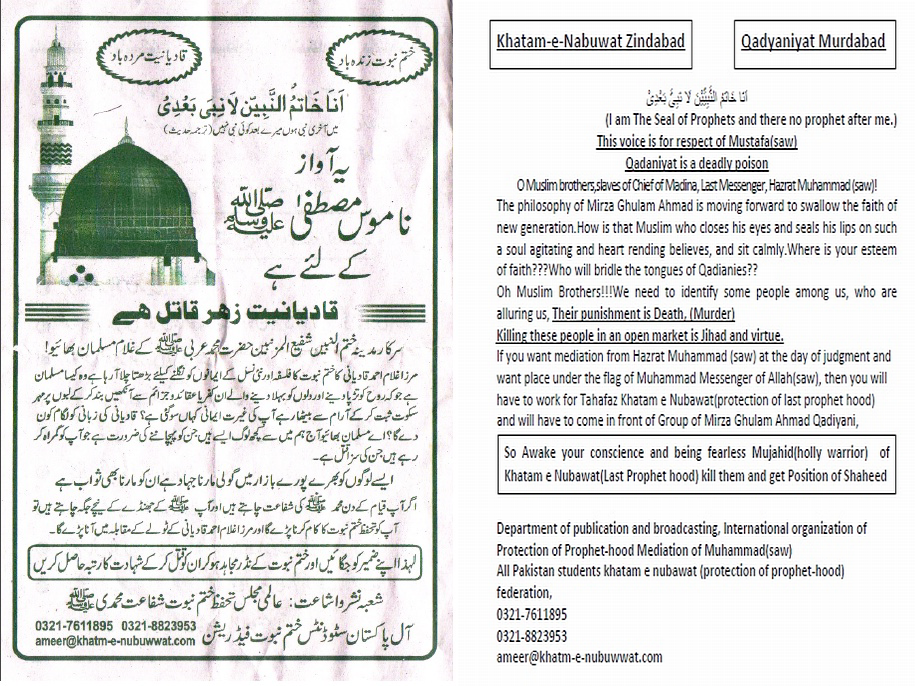
The problem started when mainstream Muslim accused Ahmadiyah of practicing blasphemy. The indecisiveness of the central government provided an opportunity for locals to take matters into their own hands, advancing aggressively to ban Ahmadiyah in their respective regions, resulting in deadly attacks that were barely deterred with a minimum police presence.
Judging from the statements of government officials, members of parliaments, regional governments, NGOs and the media, there seems to be great divides in looking at the issue. First, those who see the issue as national security: What initially started as blasphemy has evolved into a threat to the nation’s unity. According to this logic, there are basically two intertwined threats: The threat of Ahmadiyah to the unity of Indonesia and threat of riots/disobedience should the state turn down the demand to disband Ahmadiyah. TNI involvement in this case is necessary to prevent the riots, should the police fail to act as deterrents (again).
Second, those who see the issue as societal security: A majority group tried to impose its exclusive value over a minority group against the context of what is supposed to be a pluralism-embracing society. This perspective believed that violence, not Ahmadiyah, is the threat to the democratic value and the survival of a pluralistic society. The latter also believe that the issue is not more than a constructed attempt to distract people’s attention from other more pressing issues.
It takes a proper lens to aid a better understanding on the appropriateness of the military’s role in a societal problem. This lens is societal security and not national security; although arguably the first, if not properly managed, can be a cornerstone to create the latter. Societal security is basically an analytical tool for understanding the security concerns of multi-ethnic states, especially the relations between the regime and the minority. The dilemma of societal security is imminent in a democratic state that embraces a nation with different identities.
As nation-building unfolds, state regimes may often require minority groups to give up all, or part, of their cultural distinctiveness; and then minority identities are assimilated into the majority. The state’s approval became the determinant factor of one identity’s survival; therefore the state can either be a protector or a threat to societal security.
The Ahmadiyah issue is basically a societal security issue; it is a threat against the identity of society, not the survival of the state. In the context of Ahmadiyah versus non Ahmadiyah, the threat is looming from horizontal competition due to overriding beliefs, which interpret the same religion in different ways, if not contradictory. Both communities feel threatened simply by each other’s presence. Hence, the attempt to securitize this (take to the national security level) should be rejected.
When the state and TNI dismiss their neutrality and impartiality and take sides with one group, the nature of the issue will shift from horizontal to vertical competition: The minority group is pushed toward a state-approved identity.
State intervention in this case presents a grave threat to the community because if it was forced to merge with the majority, it would risk losing its identity or risk members lives trying to refute. Thousands of Indonesian blood has been shed many times due to identity conflict during the formation of this Republic.
The correct interpretation on what role the TNI can and cannot take according to the current law, and why expanding the role into tackling societal security problems may not help to address the issue, needs to be clearly understood.
The argument is simple: First, a non-military threat like societal security should not be tackled by military means, because the military are not trained and prepared to do such a job. Dealing with societal conflict requires diplomatic and peace-brokering capacity, something which the TNI is not trained to do. Second, the involvement of the TNI in societal issues will impact on its professionalism.
It would be difficult to preserve neutrality and impartiality on societal issues, even soldiers engaged in peacekeeping operations overseas found it dilemmatic to stay neutral and impartial, if not because of the distinct mandate of the UN Security Council.
Sadly, even the government does not seem to have a united stance when it comes to the TNI’s role in the Ahmadiyah issue. The law and justice minister argued that the involvement of TNI personnel was in its capacity to support police, to serve as a “preventive measure” to avoid unwarranted riots.
On the other hand, the defense minister and TNI chief dismissed the allegation of institutional involvement, saying that it was not the TNI’s job to be involved in societal issues. Human rights NGOs are concerned that by participating in Operation “Prayer Mat”, the TNI has violated the 2004 law, article 2 (c) and (d), which prohibits the Armed Forces from expanding its role into the political sphere.
The law basically stipulated the need for a neutral Armed Forces that complied with the political stance of a state that upholds democratic principles, civilian supremacy and national law, as well as international law that has been ratified.
By taking a stance on the majority against the minority, the TNI is not only violating the law but also crossing the line of its professionalism. With all due respect, in facing societal security issues pertaining to identity rivalry, we need a strong security apparatus that can take a neutral stance and ensure the protection of every single individual through law enforcement.
The societal problem eventually will have to be solved by society itself, but the state can help by pressuring society to agree on the lowest common denominator: Agree to disagree within a peaceful coexistence.
Curie Maharani is an associate research fellow with the Military Studies Program at the S. Rajaratnam School of International Studies, Singapore. Cahyadi Satriya is a researcher at Imparsial, the Indonesian Human Rights
The problem started when mainstream Muslim accused Ahmadiyah of practicing blasphemy. The indecisiveness of the central government provided an opportunity for locals to take matters into their own hands, advancing aggressively to ban Ahmadiyah in their respective regions, resulting in deadly attacks that were barely deterred with a minimum police presence.
Judging from the statements of government officials, members of parliaments, regional governments, NGOs and the media, there seems to be great divides in looking at the issue. First, those who see the issue as national security: What initially started as blasphemy has evolved into a threat to the nation’s unity. According to this logic, there are basically two intertwined threats: The threat of Ahmadiyah to the unity of Indonesia and threat of riots/disobedience should the state turn down the demand to disband Ahmadiyah. TNI involvement in this case is necessary to prevent the riots, should the police fail to act as deterrents (again).
Second, those who see the issue as societal security: A majority group tried to impose its exclusive value over a minority group against the context of what is supposed to be a pluralism-embracing society. This perspective believed that violence, not Ahmadiyah, is the threat to the democratic value and the survival of a pluralistic society. The latter also believe that the issue is not more than a constructed attempt to distract people’s attention from other more pressing issues.
It takes a proper lens to aid a better understanding on the appropriateness of the military’s role in a societal problem. This lens is societal security and not national security; although arguably the first, if not properly managed, can be a cornerstone to create the latter. Societal security is basically an analytical tool for understanding the security concerns of multi-ethnic states, especially the relations between the regime and the minority. The dilemma of societal security is imminent in a democratic state that embraces a nation with different identities.
As nation-building unfolds, state regimes may often require minority groups to give up all, or part, of their cultural distinctiveness; and then minority identities are assimilated into the majority. The state’s approval became the determinant factor of one identity’s survival; therefore the state can either be a protector or a threat to societal security.
The Ahmadiyah issue is basically a societal security issue; it is a threat against the identity of society, not the survival of the state. In the context of Ahmadiyah versus non Ahmadiyah, the threat is looming from horizontal competition due to overriding beliefs, which interpret the same religion in different ways, if not contradictory. Both communities feel threatened simply by each other’s presence. Hence, the attempt to securitize this (take to the national security level) should be rejected.
When the state and TNI dismiss their neutrality and impartiality and take sides with one group, the nature of the issue will shift from horizontal to vertical competition: The minority group is pushed toward a state-approved identity.
State intervention in this case presents a grave threat to the community because if it was forced to merge with the majority, it would risk losing its identity or risk members lives trying to refute. Thousands of Indonesian blood has been shed many times due to identity conflict during the formation of this Republic.
The correct interpretation on what role the TNI can and cannot take according to the current law, and why expanding the role into tackling societal security problems may not help to address the issue, needs to be clearly understood.
The argument is simple: First, a non-military threat like societal security should not be tackled by military means, because the military are not trained and prepared to do such a job. Dealing with societal conflict requires diplomatic and peace-brokering capacity, something which the TNI is not trained to do. Second, the involvement of the TNI in societal issues will impact on its professionalism.
It would be difficult to preserve neutrality and impartiality on societal issues, even soldiers engaged in peacekeeping operations overseas found it dilemmatic to stay neutral and impartial, if not because of the distinct mandate of the UN Security Council.
Sadly, even the government does not seem to have a united stance when it comes to the TNI’s role in the Ahmadiyah issue. The law and justice minister argued that the involvement of TNI personnel was in its capacity to support police, to serve as a “preventive measure” to avoid unwarranted riots.
On the other hand, the defense minister and TNI chief dismissed the allegation of institutional involvement, saying that it was not the TNI’s job to be involved in societal issues. Human rights NGOs are concerned that by participating in Operation “Prayer Mat”, the TNI has violated the 2004 law, article 2 (c) and (d), which prohibits the Armed Forces from expanding its role into the political sphere.
The law basically stipulated the need for a neutral Armed Forces that complied with the political stance of a state that upholds democratic principles, civilian supremacy and national law, as well as international law that has been ratified.
By taking a stance on the majority against the minority, the TNI is not only violating the law but also crossing the line of its professionalism. With all due respect, in facing societal security issues pertaining to identity rivalry, we need a strong security apparatus that can take a neutral stance and ensure the protection of every single individual through law enforcement.
The societal problem eventually will have to be solved by society itself, but the state can help by pressuring society to agree on the lowest common denominator: Agree to disagree within a peaceful coexistence.
Curie Maharani is an associate research fellow with the Military Studies Program at the S. Rajaratnam School of International Studies, Singapore. Cahyadi Satriya is a researcher at Imparsial, the Indonesian Human Rights
Copyright © 2008 The Jakarta Post - PT Bina Media Tenggara. All Rights Reserved
URL: www.thejakartapost.com/news/2011/03/25/societal...
URL: www.thejakartapost.com/news/2011/03/25/societal...






 Posts
Posts


