Thursday, June 30, 2011

Darul Uloom asks Saudi Arabia to ban Ahmadiyas from Mecca visit

Times of India
India
Darul Uloom asks Saudi Arabia to ban Ahmadiyas from Mecca visit
Mohammed Wajihuddin, TNN | Jun 30, 2011, 04.20am IST
Darul Uloom DeobandMUMBAI: Islamic seminary Darul Uloom Deoband has asked the Saudi Arabian government to ban Ahmadiyas (Qadiyanis) from visiting Mecca and Medina to perform Haj and Umrah (mini-Haj). Ahamdiyas have been declared non-Muslims in countries like Pakistan and face persecution.

The seminary’s vice-rector, Maulana Abdul Khaliq Madrasi, has alleged that many Qadiyanis from India “disguise themselves as Muslims” and visit Mecca to perform Haj and Umrah in a memorandum to Saudi ruler King Abdullah, the custodian of two mosques in Mecca and Medina. “Stop them as they are misguided and may mislead other Muslims,” said the memorandum.

Ahmadiyas are the followers of Mirza Ghulam Ahmad (1835-1908), who declared himself to be imam Mahdi or the awaited imam that is also the faith of Muslims, and are scattered across the world.

The Ahmadiya movement is headquartered at Qadiyan near Amritsar and has around five lakh followers in India. Their spiritual leader — Khalifatul Masih (successor of the Messiah) — Mirza Masror Ahmad is London based.

Mainstream Muslim scholars believe that Muhammad was the last prophet and, since Mirza Ghulam Ahmad claimed to be the Prophet’s shadow and the awaited Messiah, he deviated from a basic principle of Islam and, therefore, he and his followers cannot be considered Muslims. The Mahdi and Messiah, Muslims believe, will not be self-declared.

The Ahmadiya Jamaat’s Qadiyan-based spokesman Maqbool Ahmad said, “We are not aware of it. But Darul Uloom’s campaign against us is not new.”

The seminary reminded the Saudi monarch of an Organisation of Islamic Countries resolution that ex-communicated Ahmadiyas from Islam in 1979. The seminary’s letter to the Saudi king suggests a clause in the application forms for Haj and Umra where every applicant should be asked to declare that he/she believes that Mohammed is that last prophet.

Copyright © 2011 Bennett, Coleman & Co. Ltd. All rights reserved
URL: http://timesofindia.indiatimes.com/india/Darul-Uloom-.../9045624.cms

Monday, June 27, 2011

Sensitive investigations: Police ignore court’s ruling on blasphemy cases

Express Tribune, Pakistan
Pakistan
Punjab
Sensitive investigations: Police ignore court’s ruling on blasphemy cases
By Rana Tanveer
Published: June 27, 2011
All accused will be given full right of defence by the board of inquiry.

LAHORE: Provincial police is either ignorant or dismissive of Lahore High Court’s instructions regarding the investigation of blasphemy cases, piling misery on those accused of the offence.

A division bench of the Lahore High Court comprising Justice Ali Nawaz Chawhan and Justice Rustam Ali Malik, while deciding a murder reference in offences under section 295-A and 295-C in August 2002, directed the inspector-general of police (IGP) Lahore “to ensure that whenever [a blasphemy] case is registered, it be entrusted for purposes of investigation to a team of at least two gazette investigating officers, preferably those conversant with Islamic jurisprudence.”

In the event that the officers are not conversant with Islamic law, “a scholar of known reputation and integrity may be added to the team … [to] investigate whether a [blasphemy] offence is committed or not,” the ruling added.

The ruling conceded that cases of blasphemy are on the rise and at times, “elements of mischief have also been observed to be involved.”

Since the passing of this ruling, however, not a single case has been investigated by a panel of two gazette officers and one religious scholar, The Express Tribune has learnt.

The cases are usually investigated by assistant sub-inspectors, or in the event of a high-profile case, the inspector in charge of investigation.

Neither the deputy superintendent police (DSP) nor an SP get involved in such cases owing to their sensitivity, sources say.

Guilty until proven innocent

Shahid Butt, a blasphemy accused presently on bail, told The Express Tribune that despite his struggle, the SP concerned refuses to be involved in the investigation.

Inspector Aftab Shah of Batapur police station had been investigating into his case, he added.

Because of incompetent investigators, I spent five months in prison, said Butt, adding that he was released when his case was taken up by the court.

LHC judgment ‘not mandatory’

Superintendent of Police (Investigation) Capt (r) Liaqat Ali Malik told The Express Tribune that all cases of blasphemy are investigated by an SP.

An inspector, or any official below this rank, does not have the authority to investigate such cases according to law, he said.

When asked about the LHC judgment which made two SPs mandatory to investigate blasphemy cases, Malik said that they follow the Pakistan Penal Code and the Criminal Procedure Code.

Any judgment besides those was not binding upon them, he added. Advocate Muhammad Anis Saadi, however, told The Express Tribune that the LHC judgment was binding upon the police officers.

If the LHC had issued instructions to the IGP in this regard, the IGP must have conveyed the message to all SPs concerned to ensure its implementation, he added.

An SP, on condition of anonymity, said that no such instructions had been received from the IGP office.

He added that most SPs are ignorant of the issue and adopt the conventional methods in investigating blasphemy cases.

Published in The Express Tribune, June 27th, 2011.

Prosecutor weak in Ahmadiyah trial: Elsam

Jakarta Post, Indonesia
NATIONALMon, 06/27/2011 5:19 PM
Prosecutor weak in Ahmadiyah trial: Elsam
The Jakarta Post
A team monitoring the trials of an attack against religious minority group Ahmadiyah said Monday the prosecutor performed below standard.

It said many witnesses’ statements were not well-explored during the trials.

Wahyu Wagiman, a team member from the Institute for Policy Research and Advocacy (Elsam), told reporters the prosecutor ignored statements from key witnesses such as Muh. Kamil Safei over the 13 trials.

“Kamil said in a trial that he received a text message from Ujang Muh. Arif, a case defendant, saying that Habib Rizieq, the Islamic Defenders Front [FPI] leader, would be held responsible for the riot,” Wahyu said.

The prosecutor did not question the content of the text message further, Wahyu added.

In February, about 1,500 people attacked Ahmadis in Cikeusik, Banten, killing three.

Eleven defendants are being jointly tried for an assault causing death, inciting violence, maltreating others, participating in assault and illegally possessing sharp weapons.

Prosecutors declined to charge anyone with the murder or manslaughter of the three Ahmadis.

The next trials will be held on June 30 and July 3 at Serang District Court. (rpt)

Copyright © 2008 The Jakarta Post - PT Bina Media Tenggara. All Rights Reserved
URL: www.thejakartapost.com/news/2011/06/27/prosecutor-weak...

Friday, June 24, 2011

Critics Say Pakistan’s Blasphemy Law is Being Abused

VOA News
News
Critics Say Pakistan’s Blasphemy Law is Being Abused
Peter Fedynsky | New York June 24, 2011
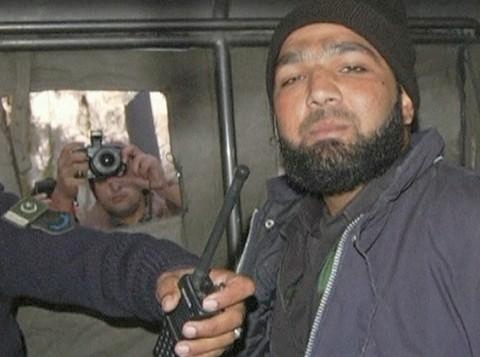
Alleged assassin of Punjab province governor, Mumtaz Qadri is taken into custody

In January, the governor of Pakistan’s Punjab province, Salman Taseer, was assassinated by his bodyguard, who claimed Taseer had violated the country’s blasphemy law. Taseer, a Muslim, was shot dead in broad daylight on January 4 in Islamabad. His alleged assassin, Mumtaz Qadri, has yet to be tried, though he does not deny pulling the trigger. The late governor’s daughter, Shehrbano Taseer, has become a critic of the blasphemy law, saying it is is often abused.

Asia Bibi, the Christian woman who Taseer sought to defend against charges of blasphemy, faces the death penalty - accused by women in her village of blaspheming the Prophet Mohammed.

Bibi protested her innocence in November.

“They [neighbors] filed fake charges against me,” she said. “In the past I have had conflicts with them due to a sewerage issue. They stole my goat.”


Shehrbano Taseer, the governor’s daughter, is on a speaking tour of the United States to discuss the issues surrounding the case. She says blasphemy laws are easily twisted to victimize Christians, Hindus and even Muslims, to serve the self-interest of the accusers.

“The ground reality is that they are mostly used as an instrument of oppression and terror. Anyone can level a blasphemy charge against anyone,” explained Taseer. “You know, it’s mostly due because of personal vendettas or land disputes.”

In the case of Asia Bibi, local clerics reportedly took the accusations against her at face value. One of them, Maqsood Ahmed Masoomi, insists that courts are not necessary to punish blasphemy.

“We are saying that anybody in this world who says anything blasphemous against the Holy Prophet has to be killed, and anyone who hears it [blasphemous words], should kill him on the spot. This is our belief,” the cleric said.

Taseer says Pakistani leaders fail to adequately pursue cases against those who abuse the blasphemy laws - partly because they fear being killed by extremists.

“This is not just this government, but previous governments have a tendency to appease these religious extremists, and there needs to be a no-holds-barred policy,” Taseer said. “They need precedents to be set to ensure that this kind of behavior will not be tolerated by the state.”

Taseer warns that in Pakistan, knives are being turned inward - by people who take the law into their own hands, hiding behind religion to pursue selfish ends. She says her father’s murder should serve as an occasion for the people of Pakistan to consider whether this is the kind of country they want.

Tuesday, June 21, 2011

Refugee Agency slams arrests in Thailand

The Nation, Thailand
NATIONAL »
UNITED NATIONS
Refugee Agency slams arrests in Thailand
By SUPALAK GANJANAKHUNDEE,
NUNTIDA PUANGTHONG
THE NATION
Published on June 21, 2011

‘Deep concern’ over 32 locked up, including children

The United Nations refugee agency yesterday slammed Thailand for the arrest of 32 refugees over the past two weeks.

The refugees were arrested in a number of locations, including Bangkok.

“We are deeply concerned about these arrests, which just increase the sense of insecurity that refugees and asylum-seekers already feel,” said Jean-Noel Wetterwald, the United Nations High Commissioner for Refugees (UNHCR) regional representative and coordinator for Southeast Asia, who is based in Bangkok.

Thirty-two asylum seekers and refugees, including many children, have been arrested since June 7 and the charges against them are unclear, the UNHCR said.

Six Pakistani asylum seekers and a Pakistani who had obtained refugee status were nabbed in Pathum Thani on June 7 and sent to Bangkok’s Immigration Detention Centre at Suan Phlu. The group included three children, two of whom were under five years old.

Two days later, on June 9, nine Ahmadi asylum-seekers, including two more children under five years old, were arrested in Ayutthaya. The UNHCR was able to secure the release of three other Ahmadi asylum-seekers who were rounded up in Bangkok on the same afternoon without them being charged or brought to court, it said.

The Ahmadi Muslim sect has tens of millions of members in 190 countries, with most followers living in the subcontinent and Africa.

Five other refugees and eight asylum-seekers - Ahmadis and Sri Lankans, including eight children - were detained on June 15 at a Bangkok bus stop and taken to the Bangkok detention centre, the UN said.

“We have long believed that refugees should not be locked up simply for being refugees,” Wetterwald said.

Thailand has long experience, starting in the 1970s, of dealing with refugees and asylum seekers from neighbouring countries. As at the end of last year, Thailand was sheltering 96,675 refugees, mostly from Burma, and the UN was discussing with the Thai authorities the verification of about 540,000 stateless persons in the country, the UNHCR said in its annual report on “Global Trends”, released yesterday.

However, Thailand, like many Asian countries, does not have a national asylum system. All foreigners who enter or live in Thailand without proper documentation are subject to arrest, prosecution, detention and deportation under immigration laws, even if they are registered with the UNHCR as asylum-seekers or refugees.

“An immigration detention centre is no place for refugees and asylum-seekers who have committed no crime, especially for children and women,” Wetterwald said.

Foreign Ministry spokesman Thani Thongpakdi said the ministry acknowledged the UN’s concern, but said Thai immigration authorities had handled the arrests in accordance with normal legal procedures.

“For a long time, Thailand has treated them in accordance with our laws, on a humanitarian basis,” Thani said. “Thailand is ready to cooperate with the UNHCR, concerned countries and international organisations to solve the problem.”

As far as children are concerned, it is established policy not to separate them from their parents. As long as the parents are under arrest, they are allowed to take care of their children within the detention centre, Thani said.

New Refugee Arrests Undermine Recent Progress

Irrawaddy News, Thailand
Burma
==
New Refugee Arrests Undermine Recent Progress
Tuesday, June 21, 2011 By SIMON ROUGHNEEN
In this photo taken on Feb. 16, 2011, Rohingya boat people wait for medical treatment after being rescued, at a port in Aceh Besar, Aceh province, Indonesia. (Photo: AP)

BANGKOK — on June 7, the day after 96 Pakistani Ahmadiyah refugees and asylum seekers were freed on bail in what was hailed as a landmark new departure in Thailand’s dealings with refugees, six other Pakistani asylum seekers and one refugee were arrested in Pathum Thani, north of Bangkok.

The seven were sent to Bangkok’s Suan Phlu Immigration Detention Centre (IDC), site of the high-profile June 6 release, says the UN refugee agency (UNCHR). “We are deeply concerned about these arrests that just increase the sense of insecurity that refugees and asylum seekers already feel”, said Jean-Noël Wetterwald, UNHCR regional representative and coordinator for Southeast Asia.

The June 7 arrests were followed up on June 9 with the arrest of nine more Ahmadiyah asylum-seekers in Ayutthuya, with still more Ahmadiyah detained on June 15. The new arrests include children under five years old, as well as a number of Sri Lankan nationals. The Ahmadiyah are members of a minority Islamic group that is oppressed in Pakistan, where they are not recognized as Muslims and are often victims of sectarian violence.

Speaking on Monday evening at Bangkok’s Foreign Correspondent’s Club, Thailand National Human Rights Commissioner Niran Pitakwatchara described possible human rights violations at the IDC, such as detention conditions he depicted as crowded and unhealthy. One year ago today, Thailand assumed the Presidency of the United Nations Human Rights Council in Geneva.

Thailand has long been a destination for refugees fleeing oppression in south and southeastern Asia, and currently around 140,000 Burmese refugees are in Thailand, mostly in nine camps along the Thai-Burma border. Monday, June 20, was World Refugee Day, with Burma cited as the world’s fifth-highest source of refugees with 415,700 worldwide, around 200,000 of which are Rohingya.

The Rohingya are a Muslim people numbering around one million, mostly living in northern Arakan State in western Burma. They are denied Burmese citizenship and have long been persecuted. According to Refugees International, state and army land seizures, forced labor, arbitrary arrests and extortion of Rohngya are common.

More than 40 Rohngya are detained in Suan Plu IDC, which sits close to the main banking and finance district in Bangkok. Others are held elsewhere in Thailand, some of whom have languished inside detention centers for more than two years, although negotiations are taking place between refugee rights groups and the Thai authorities for the release of the Rohingya detainees.

In early 2009, allegations that the Thai army abandoned nearly 1,000 Rohingya at sea caused international anger, prompting then newly-installed Prime Minister Abhisit Vejajjiva to say he would investigate the claims. A diplomatic cable sent from the US Embassy in Bangkok, which was released early on Tuesday, outlined that prior to March 2009, the US sought to influence Thailand’s ‘pushback’ of Rohingya trying to enter Thailand by sea.

The American representatives, including then-Ambassador to Thailand Eric John, said they raised the issue with Thai officials and lawmakers, including PM Abhisit, resulting in what the Americans perceived to be a temporary respite in Thailand’s maritime pushbacks. The cable acknowledged the role played by media coverage, including that of The Irrawaddy, in pressuring the Thai authorities to relax the pushbacks.

After the advocacy push and media coverage, the next group of Rohingya arrivals to Thailand’s shores were well-treated, according to the US account. However, the Thai authorities cited their concerns that the granting of full refugee status to a party of 78 Rohingya being held at Ranong would prompt more refugees to come to Thailand in the hope of acquiring the same status and possible eventual third-country resettlement to a Western nation.

The cable mentioned US efforts to address the ‘root causes’ of the Rohingya problem, namely the human rights situation in Burma and Arakan State specifically. The US said it wanted Burma’s fellow members of the Association of Southeast Asian Nations (ASEAN) to pressure Burma into improving conditions in Rohingya-populated regions of Burma, measures that some analysts believe would reduce the numbers of Rohingya seeking refuge abroad.

On June 9, US Assistant Secretary for Bureau of Population, Refugees and Migration Eric P Schwartz reiterated the American position that “the solution to the Rohingya issue lies in Burma.” However, it is not clear that the US can convince Burma’s neighbors that Burmese Government policy toward Rohingya is the cause of their flight to Bangladesh, Thailand and Malaysia.

In early June, Bangladeshi Food Minister Abdur Razaque accused Western countries of being the root cause of the Rohingya refugee crisis, due to their pressure on his country to register more of the estimated 200,000 Rohingya. Only 28,000 are officially-recognized as refugees by Dhaka, with the rest living in dire conditions in squalid camps.


Copyright © 2008 Irrawaddy Publishing Group. All Rights Reserved.
URL: www.irrawaddy.org/article.php?art_id=21536
 
^ Top of Page