 |
October 07-13, 2011 Vol. XXIII, No. 34 |
View » By Ali Usman Qasmi
What does the early 20th century campaigner and rabble-rouser Syed Ata Ullah Shah Bukhari have in common with Imran Khan? More than you think, according to Ali Usman Qasmi
The upset men

Those cognizant of the towering figure of Sayyid Ata Ullah Shah Bukhari (d. 1961) may consider the comparison of his life and achievements with Imran Khan rather bizarre. Not only because both of them hail from markedly divergent backgrounds and different socio-political temporalities. These points of dissimilarity notwithstanding, their style of politics, I would like to argue, bear close resemblances.
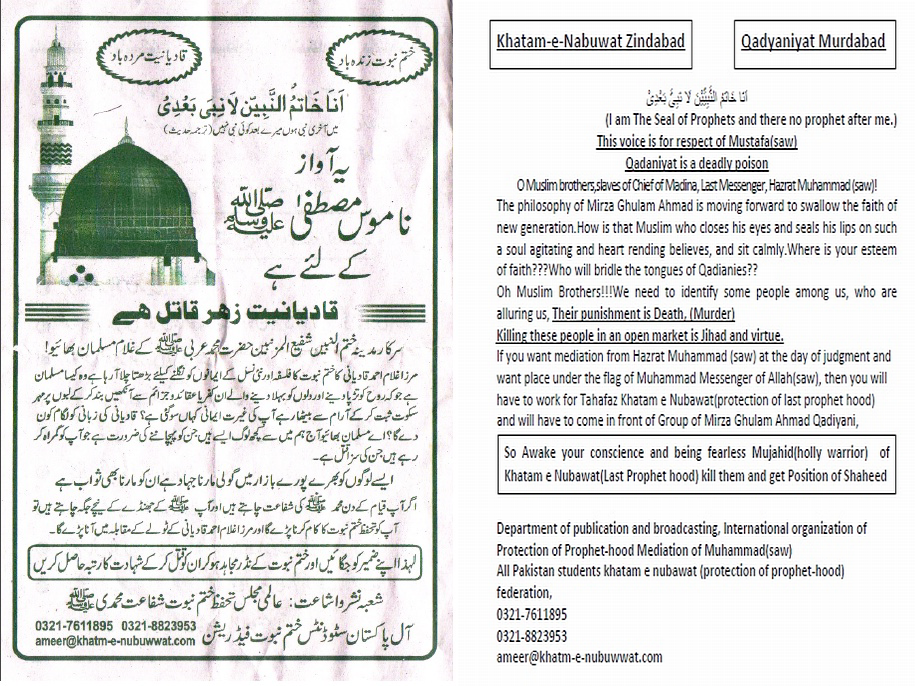
Syed Ata Ullah Shah Bukhari - referred to as Shah ji by his admirers and disciples - was born in Patna in 1892. He was the scion of a Kashmiri family settled in Amritsar - a city where Shah ji spent his childhood and received education in Islamic learning. His political career commenced when the Khilafat movement was in full swing. Shah ji soon made a meteoric rise to fame within the circle of Ulema-led politics of the Khilafat Movement by sheer dint of his fiery speeches. In numerous hagiographical accounts, Shah ji’s charisma is described in a rather Weberian sense with superlative degrees. What gave him a mesmerizing aura over his followers was the gift of the gab. He is described by his admirers as an orator par excellence whose eloquence had no match in the entire subcontinent during the first half of the twentieth century. He used his talents to launch a tirade of verbal assaults against the Ahmadis. He visited every nook and cranny of India to publicly condemn Ahmadis. He used to say jokingly that he spent half his life in jail and the second half in rail, traveling around India to address public rallies. The momentum he built up during the 1930s against the Ahmadis snowballed into hatred and violence against them after the creation of Pakistan.
After the Khilafat movement petered out, Ata Ullah Shah Bukhari remained committed to the nationalist politics of Jamiat-i-Ulema-i-Hind and the Congress Party. It was after the split in the ranks of Congressite Muslims in the wake of the Nehru Report of 1927 that Shah ji seceded along with his followers and like-minded activists to form Majlis-i-Ahrar in 1929. As the name of this organization suggested, Majlis-i-Ahrar (Party of the Free) was committed to fighting against the British for the freedom of India. The Ahrar obsequiously toed the party line of the Congress and in many ways it was, along with Jamiat-i-Ulema-i-Hind, the Congress wing of Muslim Ulema.
Shah ji had an equally spirited party cadre. Comprising mostly of artisans, small traders and peasant proprietors, his followers and party workers supported him vehemently in opposing the creation of Pakistan - often crossing the limits of moral and reasonable criticism of their political opponents.
Imran Khan, on the other hand, is a second-generation Pakistani, born and bred in the affluent environs of Zaman Park, Lahore. He had nominal understanding of Islamic teachings at the elitist Atchison College before he went to Keble College, Oxford, to pursue a degree in Economics and Politics. He pursued a career as a professional cricketer notching up the loftiest feats as a cricketer and also as a captain of the Pakistan cricket team. During his years at the top of stardom, Imran Khan was a playboy whose only sense of identification with Islam was by the symbolic gesture of avoiding alcohol and - according to one of his biographers - drinking milk at British high society parties. But as his adrenaline levels dipped in his late 30s, Imran Khan increasingly turned towards religion to find solace and spiritual mirth. He became a born-again Muslim after ‘rediscovering Islam’ through the writings of Muhammad Iqbal and Muhammad Asad. He read the Quran with translation and commentary and drew inspiration from them. In order to rediscover his ancestral roots, Imran made a trip to the tribal areas where he was fascinated by the simple lifestyle of the Pashtuns, reminding him of the Muslim warriors of yore who had ostensibly been ravaging across the globe for the glory of Islam and not for material gains. His book on the Pashtuns from tribal areas provides an ample testimony of the romantic view that he holds about the people of that region in much the same vein as Sir Olaf Caroe’s book The Pathans.
Imran Khan’s personal and intellectual background has a tangible bearing on his present political stance. As a born-again Muslim, he is obsessed with the idea of bringing about a Muslim renaissance; claiming to be an expert witness of the ‘ailments of the Western civilization’ on account of his personal experiences, he regards Islam to be the sole panacea for the ills that humanity is currently plagued with. Therefore, in his estimation, Islam poses a challenge to the West and its value system in the same sense as articulated by Samuel Huntington; on the basis of his reading of the Quran and as per its injunctions, Jews and Christians, he opines with confidence, cannot be the friends of Muslims. One should, hence, guard against their conspiracies against Muslims and Islam. In the context of Pakistan, it implies a severing of the relationship with the US. This, as argued by him for over a decade now, has to be for one main reason: The war against terror does not belong to Pakistan. It is all about US’s illegal occupation of Afghanistan. Pakistan must stay out of it by denying logistic supplies and access to US and NATO forces from Pakistani ports, airbases and roads. It is by allowing the US and NATO to use Pakistan as a conduit and launch drone attacks against terrorist targets in tribal areas, rationalizes Imran Khan, that the militants have taken up arms against the Pakistani military and civilians and are busy butchering them through suicide bombings. Imran Khan’s recipe for restoring peace in Pakistan is simple: ban drone attacks and block the supply lines to US and NATO. The militancy will peter out on its own. In order to muster public support for this strategy, he is staging dharnas and addressing public gatherings all over Pakistan.
What is common between Shah ji and Imran Khan is the naivety that overshadows their respective political visions and cherished goals. Shah ji was imbued to the core in his hatred for the firangi (British) that he could not withstand a ‘Muslim’ Jinnah steeped in British parliamentary traditions and lifestyle. He found ‘Hindu’ Gandhi and Nehru more amenable to his liking. He believed in Nehru and Gandhi’s assurances that Muslims of united India, with a composite nationalist ambience, would live in peace and prosperity. In retrospect, Shorish Kashmiri - the most loyal lieutenant of Shah ji -lamented the hollowness of such a perception. He ascribed the failure of Ahrar to the inability of its leaders to wean away from the nostalgic clutches of the Khilafat movement. They failed to realize that ‘Pan-Indian Islamic universalism’ had lived out its life. The dynamics of communal strife and economic hardships of the Muslims were lost upon the Ahrar. That particular mindset spawned disaster for Ahrar. After the creation of Pakistan - and especially after the suppression of the anti-Ahmadiyya movement in 1953 - the Ahrar’s cadre was depleted of its verve and gusto. Its workers joined other parties where they carried on with their Ahrari ideology in a dissimulative manner.
The politics of Ahrar has been variously interpreted by scholars. For Markus Daechsel, it is reflective of the general trend in the inter-war period when several semi-fascist, cadre-based groups and parties emerged in India with ‘politics of self-expression’. He describes this concept in contrast to the ‘politics of interest’. A similar mode of distinction is made by David Gilmartin in his assessment of the politics of 20th century colonial Punjab in terms of aql (rationality) and qalb (heart).
The politics of interest was understood by the colonial authorities as the ‘rational’ mode of doing politics whereby the Indian society and its political-actors playing upon a medley of regional, linguistic, religious and caste identities - engaged each other at an electorally competitive level for acquisition of power and patronage for the purpose of furthering their sectional, personal or community interests. The politics of self-expression (or to put it in simple words, the politics of heart) defies such attempts at rationalization of society by invoking the will to power. It thrives on rhetoric and emotional invocation of an idealized, glorious past. It refuses to be woven into a simplistic narrative or sets of explanation. It evades rationality for the purpose of defying the supremacy of its logic in determining the modus operandi of real politik. Through the rhetoric of fiery speeches (like Ahrar), parading of khaki-clad cadres (in case of Khaksar) and invoking tropes and symbols of war, heroic warship and martyrdom, the self-expressionists defied the logic of politics of interests. This explains why people like Maulana Muhammad Ali Johar engaged in such spectacles as promoting child marriage among Muslims as an act based on ‘pure Islamic injunctions’ in defiance to British law prohibiting under-age marriages; Maulana Abul Kalam Azad and Maulana Abdul Bari Farangi Mahali inspired thousands of Muslim families to migrate to neighbouring Afghanistan as India had become Dar-ul-Harb on account of British aggression against the Muslim Caliph in Turkey; most importantly, this explains why Shah ji was spending time between rail and jail in inspiring Muslims on issues ranging from apostasy of Ahmadis to the killing of Rajpal - the publisher of a pamphlet that insulted the Prophet (PBUH).
Like Ahrar and Shah ji, Imran Khan’s politics is the classic example of politics of heart - if this term can be applied in the context of post-colonial, nay, post 9-11 Pakistan. One can say that now the modes of politics are heuristically labeled along the binaries of ghairat and realism instead of qalb and aql. The content of these two, however, have changed little. It too thrives on a rhetoric which emotionally invokes an imagined past of Muslim glory. By centralizing ghairat as the linchpin of his political strategy and panacea for taking Pakistan out of its current moribund situation, Imran Khan’s ‘explanations’ cut across the ‘rationality’ of the proponents of realpolitik in Pakistan. It is through rhetoric and the invocation of ghairat that he seeks to counter ‘liberal fascists’ intent on enforcing their worldview predicated on notions of realism and pragmatism which proposes continuance of Pakistan’s alliance with the US in the war against terror and promotion of a liberal-secular democracy in Pakistan.
In many ways, I find Imran Khan to be doing an Ahrar brand of politics. Like Shah ji, Imran Khan has the charisma and talent of an inspiring speech-maker to impress the masses but not to lead them. He is capitalizing on issues which touch an emotional chord among many Pakistanis. People throng to his dharnas and rallies to catch a glimpse of his persona and listen to his speech. But as Shah ji used to say, people would listen to his speech from dusk till dawn and on the polling day they would quietly vote for the Muslim League. The same seems to be a fait accompli in the case of Imran Khan. Unlike Ahrar, he is bereaved of any ideologically motivated cadre with unflinching commitment. As one blogger described him, Imran Khan can at best be the Prime Minister of the Islamic Republic of Facebook.
Like Shah ji, Imran Khan has great nuisance value as well. He can create a public spectacle of disorder through his following. But Imran Khan’s politics, rhetoric and charisma - similar to that of Shah ji - does not translate into electoral support for acquisition of political power. He can grab votes but not parliamentary seats. Still, its potential for inflicting deep societal crisis cannot be ruled out. This Imran Khan is doing by cultivating doubts in the hearts and minds of ordinary Pakistanis as well military men about the legitimacy of Pakistan’s involvement in the war against terror. His mode of reasoning is simplistic. He describes Pakistan’s involvement in the war against terror as an act of baighairati to acquire US aid money and exaggerates or dramatizes the destruction caused by drone attacks and operations of Pakistan’s army. In doing so, Imran Khan only intends to incite people’s emotions without offering a viable alternative for military operations and economic strategy. This is a classic example of the politics of heart in which there is an emotionally-laden criticism of a certain figure, policy or incident which touches a chord with the larger population without an attempt to offer a constructive line of action or alternative. In the end, this brand of politics does not even yield any significant electoral gains. In case Imran Khan performs better than expected in electoral polls, it would not be without the role and support of Pakistan’s security establishment. Already there are reports in circulation suggesting that Imran Khan is being used to counter the influence of Nawaz Sharif, especially in urban Punjab.
The fissures in Pakistani society will be exacerbated by continuation of such tirades by Imran Khan. In the current state of militant bombings and the trauma it inflicts on ordinary Pakistanis, the effects of such an accentuation speaks for itself. We saw the end product of Ahrar as a legacy of religious intolerance towards the minorities. The path on which Imran Khan is treading may end up in civil war and collapse of military disciplinarian ethics. In order to avoid the retrospective regret of the outcomes of his current politics, Imran Khan better revisit his rhetoric and emotionalism about the war on terror and the anachronistic trope of ghairat in his understanding of politics.
Shah ji used to say jokingly that he spent half his life in jail and the second half in rail, traveling around India to address public rallies |
After the Khilafat movement petered out, Ata Ullah Shah Bukhari remained committed to the nationalist politics of Jamiat-i-Ulema-i-Hind and the Congress Party. It was after the split in the ranks of Congressite Muslims in the wake of the Nehru Report of 1927 that Shah ji seceded along with his followers and like-minded activists to form Majlis-i-Ahrar in 1929. As the name of this organization suggested, Majlis-i-Ahrar (Party of the Free) was committed to fighting against the British for the freedom of India. The Ahrar obsequiously toed the party line of the Congress and in many ways it was, along with Jamiat-i-Ulema-i-Hind, the Congress wing of Muslim Ulema.
Imran Khan is capitalizing on issues which touch an emotional chord among many Pakistanis |
Imran Khan, on the other hand, is a second-generation Pakistani, born and bred in the affluent environs of Zaman Park, Lahore. He had nominal understanding of Islamic teachings at the elitist Atchison College before he went to Keble College, Oxford, to pursue a degree in Economics and Politics. He pursued a career as a professional cricketer notching up the loftiest feats as a cricketer and also as a captain of the Pakistan cricket team. During his years at the top of stardom, Imran Khan was a playboy whose only sense of identification with Islam was by the symbolic gesture of avoiding alcohol and - according to one of his biographers - drinking milk at British high society parties. But as his adrenaline levels dipped in his late 30s, Imran Khan increasingly turned towards religion to find solace and spiritual mirth. He became a born-again Muslim after ‘rediscovering Islam’ through the writings of Muhammad Iqbal and Muhammad Asad. He read the Quran with translation and commentary and drew inspiration from them. In order to rediscover his ancestral roots, Imran made a trip to the tribal areas where he was fascinated by the simple lifestyle of the Pashtuns, reminding him of the Muslim warriors of yore who had ostensibly been ravaging across the globe for the glory of Islam and not for material gains. His book on the Pashtuns from tribal areas provides an ample testimony of the romantic view that he holds about the people of that region in much the same vein as Sir Olaf Caroe’s book The Pathans.
Imran Khan’s personal and intellectual background has a tangible bearing on his present political stance. As a born-again Muslim, he is obsessed with the idea of bringing about a Muslim renaissance; claiming to be an expert witness of the ‘ailments of the Western civilization’ on account of his personal experiences, he regards Islam to be the sole panacea for the ills that humanity is currently plagued with. Therefore, in his estimation, Islam poses a challenge to the West and its value system in the same sense as articulated by Samuel Huntington; on the basis of his reading of the Quran and as per its injunctions, Jews and Christians, he opines with confidence, cannot be the friends of Muslims. One should, hence, guard against their conspiracies against Muslims and Islam. In the context of Pakistan, it implies a severing of the relationship with the US. This, as argued by him for over a decade now, has to be for one main reason: The war against terror does not belong to Pakistan. It is all about US’s illegal occupation of Afghanistan. Pakistan must stay out of it by denying logistic supplies and access to US and NATO forces from Pakistani ports, airbases and roads. It is by allowing the US and NATO to use Pakistan as a conduit and launch drone attacks against terrorist targets in tribal areas, rationalizes Imran Khan, that the militants have taken up arms against the Pakistani military and civilians and are busy butchering them through suicide bombings. Imran Khan’s recipe for restoring peace in Pakistan is simple: ban drone attacks and block the supply lines to US and NATO. The militancy will peter out on its own. In order to muster public support for this strategy, he is staging dharnas and addressing public gatherings all over Pakistan.
What is common between Shah ji and Imran Khan is the naivety that overshadows their respective political visions and cherished goals. Shah ji was imbued to the core in his hatred for the firangi (British) that he could not withstand a ‘Muslim’ Jinnah steeped in British parliamentary traditions and lifestyle. He found ‘Hindu’ Gandhi and Nehru more amenable to his liking. He believed in Nehru and Gandhi’s assurances that Muslims of united India, with a composite nationalist ambience, would live in peace and prosperity. In retrospect, Shorish Kashmiri - the most loyal lieutenant of Shah ji -lamented the hollowness of such a perception. He ascribed the failure of Ahrar to the inability of its leaders to wean away from the nostalgic clutches of the Khilafat movement. They failed to realize that ‘Pan-Indian Islamic universalism’ had lived out its life. The dynamics of communal strife and economic hardships of the Muslims were lost upon the Ahrar. That particular mindset spawned disaster for Ahrar. After the creation of Pakistan - and especially after the suppression of the anti-Ahmadiyya movement in 1953 - the Ahrar’s cadre was depleted of its verve and gusto. Its workers joined other parties where they carried on with their Ahrari ideology in a dissimulative manner.
The politics of Ahrar has been variously interpreted by scholars. For Markus Daechsel, it is reflective of the general trend in the inter-war period when several semi-fascist, cadre-based groups and parties emerged in India with ‘politics of self-expression’. He describes this concept in contrast to the ‘politics of interest’. A similar mode of distinction is made by David Gilmartin in his assessment of the politics of 20th century colonial Punjab in terms of aql (rationality) and qalb (heart).
The politics of interest was understood by the colonial authorities as the ‘rational’ mode of doing politics whereby the Indian society and its political-actors playing upon a medley of regional, linguistic, religious and caste identities - engaged each other at an electorally competitive level for acquisition of power and patronage for the purpose of furthering their sectional, personal or community interests. The politics of self-expression (or to put it in simple words, the politics of heart) defies such attempts at rationalization of society by invoking the will to power. It thrives on rhetoric and emotional invocation of an idealized, glorious past. It refuses to be woven into a simplistic narrative or sets of explanation. It evades rationality for the purpose of defying the supremacy of its logic in determining the modus operandi of real politik. Through the rhetoric of fiery speeches (like Ahrar), parading of khaki-clad cadres (in case of Khaksar) and invoking tropes and symbols of war, heroic warship and martyrdom, the self-expressionists defied the logic of politics of interests. This explains why people like Maulana Muhammad Ali Johar engaged in such spectacles as promoting child marriage among Muslims as an act based on ‘pure Islamic injunctions’ in defiance to British law prohibiting under-age marriages; Maulana Abul Kalam Azad and Maulana Abdul Bari Farangi Mahali inspired thousands of Muslim families to migrate to neighbouring Afghanistan as India had become Dar-ul-Harb on account of British aggression against the Muslim Caliph in Turkey; most importantly, this explains why Shah ji was spending time between rail and jail in inspiring Muslims on issues ranging from apostasy of Ahmadis to the killing of Rajpal - the publisher of a pamphlet that insulted the Prophet (PBUH).
Like Ahrar and Shah ji, Imran Khan’s politics is the classic example of politics of heart - if this term can be applied in the context of post-colonial, nay, post 9-11 Pakistan. One can say that now the modes of politics are heuristically labeled along the binaries of ghairat and realism instead of qalb and aql. The content of these two, however, have changed little. It too thrives on a rhetoric which emotionally invokes an imagined past of Muslim glory. By centralizing ghairat as the linchpin of his political strategy and panacea for taking Pakistan out of its current moribund situation, Imran Khan’s ‘explanations’ cut across the ‘rationality’ of the proponents of realpolitik in Pakistan. It is through rhetoric and the invocation of ghairat that he seeks to counter ‘liberal fascists’ intent on enforcing their worldview predicated on notions of realism and pragmatism which proposes continuance of Pakistan’s alliance with the US in the war against terror and promotion of a liberal-secular democracy in Pakistan.
In many ways, I find Imran Khan to be doing an Ahrar brand of politics. Like Shah ji, Imran Khan has the charisma and talent of an inspiring speech-maker to impress the masses but not to lead them. He is capitalizing on issues which touch an emotional chord among many Pakistanis. People throng to his dharnas and rallies to catch a glimpse of his persona and listen to his speech. But as Shah ji used to say, people would listen to his speech from dusk till dawn and on the polling day they would quietly vote for the Muslim League. The same seems to be a fait accompli in the case of Imran Khan. Unlike Ahrar, he is bereaved of any ideologically motivated cadre with unflinching commitment. As one blogger described him, Imran Khan can at best be the Prime Minister of the Islamic Republic of Facebook.
Like Shah ji, Imran Khan has great nuisance value as well. He can create a public spectacle of disorder through his following. But Imran Khan’s politics, rhetoric and charisma - similar to that of Shah ji - does not translate into electoral support for acquisition of political power. He can grab votes but not parliamentary seats. Still, its potential for inflicting deep societal crisis cannot be ruled out. This Imran Khan is doing by cultivating doubts in the hearts and minds of ordinary Pakistanis as well military men about the legitimacy of Pakistan’s involvement in the war against terror. His mode of reasoning is simplistic. He describes Pakistan’s involvement in the war against terror as an act of baighairati to acquire US aid money and exaggerates or dramatizes the destruction caused by drone attacks and operations of Pakistan’s army. In doing so, Imran Khan only intends to incite people’s emotions without offering a viable alternative for military operations and economic strategy. This is a classic example of the politics of heart in which there is an emotionally-laden criticism of a certain figure, policy or incident which touches a chord with the larger population without an attempt to offer a constructive line of action or alternative. In the end, this brand of politics does not even yield any significant electoral gains. In case Imran Khan performs better than expected in electoral polls, it would not be without the role and support of Pakistan’s security establishment. Already there are reports in circulation suggesting that Imran Khan is being used to counter the influence of Nawaz Sharif, especially in urban Punjab.
The fissures in Pakistani society will be exacerbated by continuation of such tirades by Imran Khan. In the current state of militant bombings and the trauma it inflicts on ordinary Pakistanis, the effects of such an accentuation speaks for itself. We saw the end product of Ahrar as a legacy of religious intolerance towards the minorities. The path on which Imran Khan is treading may end up in civil war and collapse of military disciplinarian ethics. In order to avoid the retrospective regret of the outcomes of his current politics, Imran Khan better revisit his rhetoric and emotionalism about the war on terror and the anachronistic trope of ghairat in his understanding of politics.
Copyright © 2011 by The Friday Times, Inc. or related companies. All rights reserved.
URL: www.thefridaytimes.com/beta2/tft/article.php?issue=20111007&page=28
URL: www.thefridaytimes.com/beta2/tft/article.php?issue=20111007&page=28






 Posts
Posts


