 |
Home » News & Politics |
Pandora’s Law
23 December 2010By Aftab Alexander Mughal
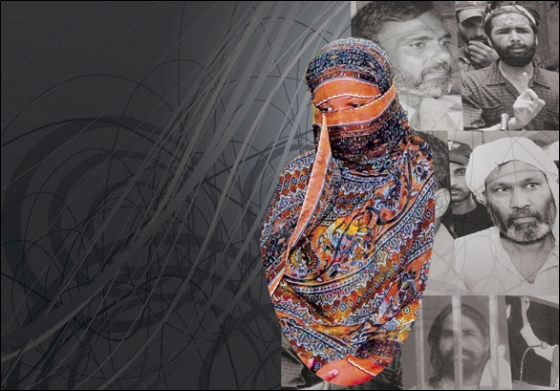
Following the pronouncement of the death sentence against a Christian woman, Aasiya Bibi, on a charge of blasphemy, the case and the controversial law pertaining to this alleged crime are once again the subject of heated debate.
Aasiya’s case and the resultant prevailing situation are full of ironies. The state that purports to offer ‘special protection’ to its minority communities finds itself in a dilemma. Even before the president could consider a mercy petition filed by Punjab Governor Salmaan Taseer and appeals by assorted international human rights organisations to spare Aasiya Bibi’s life, the chief justice of the Punjab High Court, where the case is to be sent, has already issued a verdict: there is no room for pardon in a blasphemy case.
And while the governor – a PPP stalwart – has taken an unequivocal stand on the issue, Federal Law Minister, Babar Awan, also from the PPP, has made his position on the larger issue this case has resurrected, crystal clear. Stated Awan, “In my presence as law minister, no one should think of finishing the [blasphemy] law.”
Meanwhile, the Punjab Law Minister, the PML-N’s Rana Sanaullah, has said that he believes Aasiya’s conviction is a miscarriage of justice, even while his party is an avid proponent itself of the death sentence for this charge – doing away with the lesser punishment of life imprisonment for this crime during its time in government.
Aasiya’s “crime” was by all accounts a simple spat with two Muslim women of her village who refused to drink water from a glass she had touched because they said it had been defiled due to her faith and caste. The women taunted her and when she responded, they lodged a complaint of blasphemy against her at the Nankana Sahib district and sessions court. Aasiya, the mother of a special child, was arrested and has languished in jail for over a year on account of these charges. Now the executioner’s noose looms ominously over her head. While the mounting pressure on the government by activists on both sides (the anti- and pro-pardon for Aasiya) of the divide promises to engender heated debate, the outcome of this case will hold greater significance because of the bigger debate it has thrown up – i.e. the validity of the Blasphemy Law. Aasiya’s fate will graphically determine the ethos of the country today and the direction in which it is moving.
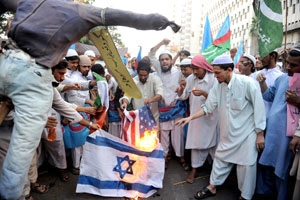 Several non-governmental organisations (NGOs) in Pakistan have long been calling for a repeal of the Blasphemy Law because it has repeatedly been used to persecute the minorities, especially in the rural areas. Parliamentary Secretary for Science and Technology Aasia Nasir, a Christian member of parliament said, “Discrimination against minorities is widespread. We need to sensitise the public and bring an attitudinal change to eliminate this menace from society.”
However, given the entrenchment of attitudes, that seems a near impossible undertaking in the short term. Prominent Deobandi and Barelvi clerics and the chief of the Sunni Ittehad Council (SIC) Sahibzada Fazal Karim have declared in no uncertain terms that they will not allow a repeal of the Blasphemy Law.
The genesis of the Blaspehmy Law lies in colonial times. A blasphemy law, Section 295, was added to the Indian Penal Code (IPC) in 1860 during the British Raj. In 1927, another law, Section 295-A, IPC, was added to prevent tension between Hindus and Muslims. At its creation, Pakistan adopted the same laws, ostensibly in order to promote religious harmony in Pakistan.
The existing Blasphemy Law, which actually affords ‘protection’ to only one religion, and that too being a moot point – Islam – was introduced in the 1980s by General Zia-ul-Haq. Through the introduction of this law he wanted to please Islamic parties who supported his illegitimate martial law government. Most controversial among the law are sections 295-B and C of the Pakistan Penal Code (PPC). Section 295-B, was introduced in 1982, which is against any insult to the Holy Quran, and the crime is punishable with life imprisonment. Section 295-C, PPC which was added by an act of parliament in 1986, made it a criminal offence to use derogatory remarks against the Holy Prophet (PBUH) and made the crime punishable with life imprisonment or death. In 1992, during former prime minister Nawaz Sharif’s rule, the sentence of life imprisonment was removed, and now the death sentence exists as the only punishment for this offence. Given the harshness of the punishments, Retired Justice Rana Bhagwandas, a Hindu, who once served as acting chief justice of Pakistan, said, “Who would be senseless enough to commit blasphemy in Pakistan?”
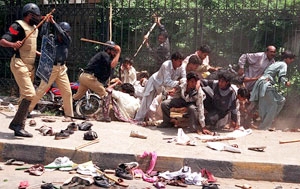 That notwithstanding, hundreds of individuals in Pakistan have been charged with blasphemy. As a Christian leader pointed out, “These laws have been widely misused against religious minorities, as well as against many Muslims to settle personal scores. The Blasphemy Law is thus a danger to all Pakistanis, an affront to the rule of law and also against the concept of basic human rights and equality among the citizens of the state.” Human Rights Watch spokesman Ali Dayan endorsed this view, contending that the Blasphemy Law is used to exploit vulnerable minority groups and encourage Islamist extremism.
Well-known international human rights organisation Amnesty International chimed in, stating, “This law, while purporting to protect Islam and religious sensitivities of the Muslim majority, is vaguely formulated and arbitrarily enforced by the police and judiciary in a way which amounts to harassment and persecution of religious minorities.”
Between 1927 and 1986, there were less than 10 reported cases of blasphemy. The National Commission of Justice and Peace (NCJP), a human rights body of the Catholic Bishops Conference of Pakistan, reports that between 1986 and August 2009, at least 974 people have been charged for defiling the Holy Quran or insulting the Prophet Muhammad (PBUH). Those charged include 479 Muslims, 340 Ahmadis, 119 Christians, 14 Hindus and 10 from other religions. In 2009, no less than 112 cases were registered against 57 Ahmadis, 47 Muslims and eight Christians.
In most of the blasphemy cases filed, people convicted in the lower courts have been released by the higher courts, but invariably they had to spend years in jail before they were deemed innocent. To date no one has ever been executed for blasphemy under court orders. However, about 34 people have been murdered by individuals or crazed mobs for alleged blasphemy against the Holy Quran or for insulting the Prophet Muhammad (PBUH).
 Many organisations have been campaigning for the repeal of the Blasphemy Law, which they think creates a wide space for discrimination against religious minorities, especially Ahmadis and Christians. And, while it is true that earlier this law was used mainly against minorities, a number of Muslims have also been victimised. The law has mainly been striking against vulnerable, poor members of minority communities who live in remote areas.
A history of blasphemy cases reveals that once a person is blamed for blasphemy against Islam, its holy personages or the Holy Quran, he/she has no place in society. The accused can be killed before the police’s intervention, in police custody or during his/her trial. Often the police fail to register FIRs due to local pressure. The courts are also not free from such pressures and have been known to convict people without concrete proof. And even if a court pardons the accused, he/she continues to live in fear since he/she is only too likely to be stalked and targeted by Muslim zealots. The more fortunate ones go into exile. For others, it is death or a life in hiding.
The Blasphemy Law has also created serious problems for the judiciary, especially the subordinate courts. “In almost each case brought before them, they come under such heavy pressure from agitators that they are afraid of applying their minds to the papers before them,” wrote senior journalist and human rights campaigner, I.A. Rehman in a column published in a local newspaper. Thus, campaigners contend, invariably decisions by courts in these cases are made not on merit, but under pressure.
In the last two months at least five blasphemy cases have been registered. Recently, three members of a Christian family were forced to flee their home because of alleged blasphemy. In mid-September, Tasawwar Masih, a Christian youth of Sargodha, was accused by Muslim youths of insulting Prophet Muhammad (PBUH), and was forced to leave the area along with his family.
In Sialkot district, Punjab, another Christian, Walayat Masih, was charged with blasphemy. His accusers contended that a copy of the Holy Quran with a few of its pages burned was found in front of his house. A crowd of people gathered around Masih’s front door and it was only through police intervention that a lynching was averted.
In Lahore, three Muslim men, Shaheed Hassan Butt, Sheikh Shahid and Nawazish, were accused of having trashed some pages of the Holy Quran. The original complaint and the subsequent class action suit against them were levelled by leaders of the Ahl-e-Hadith mosque.
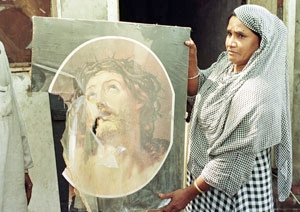 On July 19, 2010, two Christian brothers, Pastor Rashid Emmanuel, 32, and Sajid Emmanuel, 30, who were being led out of a court by a police escort in Faisalabad City after a trial hearing in a blasphemy case, were gunned down by a religious zealot.
On August 1, 2009, a Christian locality in Gojra, Punjab was attacked and nine Christians were killed, 18 were injured, and more than 120 Christian homes destroyed by a Muslim mob who were enraged by the allegation that a Christian in a nearby village, Korian, had desecrated the Holy Quran. Among the victims was 50-year-old Hameed Masih, who was shot dead, and seven of his family members, including women and small children (the youngest was just four years old), who were burnt alive.
On November 12, 2005, some 2,000 Muslims attacked a Christian locality in Sangla Hill, Punjab. They destroyed and burnt several houses and desecrated a few churches in the area. The attack was sparked by an alleged case of blasphemy of the Holy Quran.
On February 6, 1997, about 3,000 Muslims attacked a Christian village, Shantinagar (land of peace), located 10 kilometres south-east of Khanewal in the Punjab. About 80% of the village was destroyed. The mob ransacked 785 houses, 13 churches and over 1,500 Bibles, hymn books and religious commentaries were burnt. The perpetrators alleged that Christians had committed blasphemy against the Holy Quran.
Over the years, many attempts have been made to review the Blasphemy Law, but none have been successful because of the pressure exerted by religious groups – a small but powerful minority, wielding influence at all levels of government. The sad truth is that no government has had the courage to confront religious intolerance and the growing trend of violence associated with it. On April 20, 2000, former president, General Pervez Musharraf announced a procedural change in the Blasphemy Law, but within a month he backed down because of protests from Islamic parties whose support he needed to perpetuate his illegitimate rule.
After the Gojra incident, on August 7, 2009, Prime Minister Yousuf Raza Gilani hinted at a review of the Blasphemy Law. He stated that a committee would discuss “laws detrimental to religious harmony.” More than a year later, nothing has been heard of about this committee. The National Assembly’s Standing Committee on Minorities, meanwhile, also proposed a review of the Blasphemy Law. Although his party’s stand is still vague on the issue, PML-N leader Javed Hashmi courageously stated in the house that the law has to be changed to prevent persecution of innocent Pakistanis.
He was not alone in his crusade. Last October, Pakistan’s former information minister, Sherry Rehman from the Pakistan Peoples Party, and Jameela Gilani from the Awami National Party, both Muslim MNAs, called for a repeal of the Blasphemy Law. Rehman has now submitted a private members bill in the National Assembly Secretariat calling for an end to the death penalty.
In February 2010, the Federal Minister for Minorities’ Affairs, Shahbaz Bhatti, stated that the Blasphemy Law has been misused on several occasions and declared that Pakistan is planning to revise the law within the year. He maintained that this was necessary because this law has been misused on several occasions. In response to his statement, religious parties began demanding his removal.
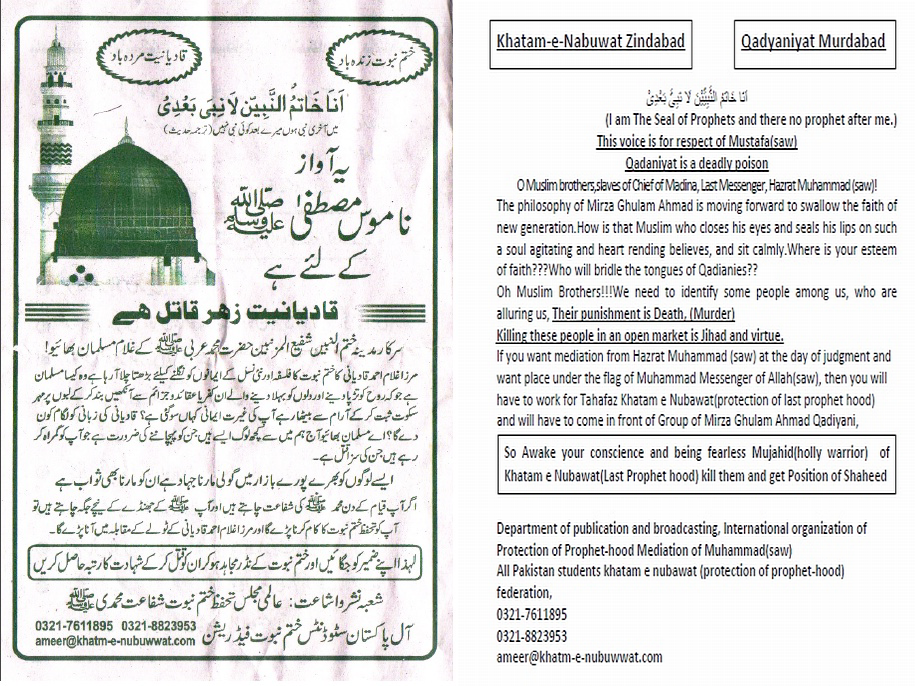
It is interesting to note that two-thirds of all blasphemy cases in Pakistan have been registered in the Punjab where militant organisations have a strong presence. According to a report, from 1986 to date 4,000 blasphemy cases have been reported in the country. Of these, 69% have been registered in the Punjab, 25% were reported in Sindh and 2.5% in Khyber-Pakhtunkhwa. The seven districts of Punjab that have had the most blasphemy cases reported are Lahore, Faisalabad, Sialkot, Kasur, Sheikhupura, Gujranwala and Toba Tek Singh. The involvement of Aalmi Majlis-e-Tahuffuz-e-Khatm-e-Nabuwwat and other hard-line religious groups can be traced in most of these cases.
It is widely believed that the provincial government of the PML-N has close contacts with the province’s militant outfits. Not surprisingly then, during the first week of November, Punjab Chief Minister Shahbaz Sharif withdrew charges of rioting and vandalism that had been levelled against different clerics in Lahore. Due to this kind of appeasement perhaps, militant groups like the Majlis-e-Ahrar and Lashkar-e-Jhangvi, widely believed to be offshoots of the Tehreek-e-Taliban Pakistan, which is responsible for almost all the suicide attacks in Pakistan, are finding it easier to operate in the province. “The PML-N has intellectual and ideological leanings towards the extreme right. The Punjab government has been cushioning extremism and does not recognise extremism as a real problem,” stated political analyst Hassan Askari Rizvi.
Against this backdrop, it is no mystery why the Minority Rights Group (MRG) International ranks Pakistan as the world’s sixth-most dangerous country for minorities. “Very often, mob violence and police brutality in such cases follow a sluggish court procedure subjecting the accused to lengthy periods in jail, legal costs and repeated court appearances,” says a MRG report. And Dawn’s editorial read, “Blasphemy laws have become a ticket in the hands of the majority to persecute and victimise the minority communities if they don’t easily submit to their inferior status in society.”
Prominent human rights advocate and newly-elected President of the Supreme Court Bar Association, Asma Jahangir, has suggested that all blasphemy cases should be tried in the High Courts for more transparency. She also contends that all cases relating to blasphemy must be investigated by superior police officials.
Whether the parliament will show the resolve to follow such procedures, or even amend, let alone do away with the Blasphemy Law, however, remains to be seen. To begin with, the right-wing groups in parliament have dug in their heels on the issue and this government does not appear strong enough, either in terms of will or numbers, to be able to make any substantial changes in the law. But even in the unlikely event of this happening, minorities will only find marginal safety. Ever-increasing religious intolerance cannot be done away with by amending laws alone.
It requires a change of mindset. And that, only a focused and committed programme by the government and civil society together can bring about – a utopian hope in a country as riven by ideological schisms as Pakistan today.
Aasiya’s case and the resultant prevailing situation are full of ironies. The state that purports to offer ‘special protection’ to its minority communities finds itself in a dilemma. Even before the president could consider a mercy petition filed by Punjab Governor Salmaan Taseer and appeals by assorted international human rights organisations to spare Aasiya Bibi’s life, the chief justice of the Punjab High Court, where the case is to be sent, has already issued a verdict: there is no room for pardon in a blasphemy case.
And while the governor – a PPP stalwart – has taken an unequivocal stand on the issue, Federal Law Minister, Babar Awan, also from the PPP, has made his position on the larger issue this case has resurrected, crystal clear. Stated Awan, “In my presence as law minister, no one should think of finishing the [blasphemy] law.”
Meanwhile, the Punjab Law Minister, the PML-N’s Rana Sanaullah, has said that he believes Aasiya’s conviction is a miscarriage of justice, even while his party is an avid proponent itself of the death sentence for this charge – doing away with the lesser punishment of life imprisonment for this crime during its time in government.
Aasiya’s “crime” was by all accounts a simple spat with two Muslim women of her village who refused to drink water from a glass she had touched because they said it had been defiled due to her faith and caste. The women taunted her and when she responded, they lodged a complaint of blasphemy against her at the Nankana Sahib district and sessions court. Aasiya, the mother of a special child, was arrested and has languished in jail for over a year on account of these charges. Now the executioner’s noose looms ominously over her head. While the mounting pressure on the government by activists on both sides (the anti- and pro-pardon for Aasiya) of the divide promises to engender heated debate, the outcome of this case will hold greater significance because of the bigger debate it has thrown up – i.e. the validity of the Blasphemy Law. Aasiya’s fate will graphically determine the ethos of the country today and the direction in which it is moving.
Some observers say that the Blasphemy Law is used to exploit vulnerable minority groups and encourage Islamist extremism. Photo: AFP
However, given the entrenchment of attitudes, that seems a near impossible undertaking in the short term. Prominent Deobandi and Barelvi clerics and the chief of the Sunni Ittehad Council (SIC) Sahibzada Fazal Karim have declared in no uncertain terms that they will not allow a repeal of the Blasphemy Law.
The genesis of the Blaspehmy Law lies in colonial times. A blasphemy law, Section 295, was added to the Indian Penal Code (IPC) in 1860 during the British Raj. In 1927, another law, Section 295-A, IPC, was added to prevent tension between Hindus and Muslims. At its creation, Pakistan adopted the same laws, ostensibly in order to promote religious harmony in Pakistan.
The existing Blasphemy Law, which actually affords ‘protection’ to only one religion, and that too being a moot point – Islam – was introduced in the 1980s by General Zia-ul-Haq. Through the introduction of this law he wanted to please Islamic parties who supported his illegitimate martial law government. Most controversial among the law are sections 295-B and C of the Pakistan Penal Code (PPC). Section 295-B, was introduced in 1982, which is against any insult to the Holy Quran, and the crime is punishable with life imprisonment. Section 295-C, PPC which was added by an act of parliament in 1986, made it a criminal offence to use derogatory remarks against the Holy Prophet (PBUH) and made the crime punishable with life imprisonment or death. In 1992, during former prime minister Nawaz Sharif’s rule, the sentence of life imprisonment was removed, and now the death sentence exists as the only punishment for this offence. Given the harshness of the punishments, Retired Justice Rana Bhagwandas, a Hindu, who once served as acting chief justice of Pakistan, said, “Who would be senseless enough to commit blasphemy in Pakistan?”
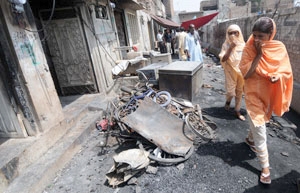
A woman walks past burnt out buildings in Gojra after accusations of blasphemy led to mob violence. Photo: AFP / File
Well-known international human rights organisation Amnesty International chimed in, stating, “This law, while purporting to protect Islam and religious sensitivities of the Muslim majority, is vaguely formulated and arbitrarily enforced by the police and judiciary in a way which amounts to harassment and persecution of religious minorities.”
Between 1927 and 1986, there were less than 10 reported cases of blasphemy. The National Commission of Justice and Peace (NCJP), a human rights body of the Catholic Bishops Conference of Pakistan, reports that between 1986 and August 2009, at least 974 people have been charged for defiling the Holy Quran or insulting the Prophet Muhammad (PBUH). Those charged include 479 Muslims, 340 Ahmadis, 119 Christians, 14 Hindus and 10 from other religions. In 2009, no less than 112 cases were registered against 57 Ahmadis, 47 Muslims and eight Christians.
In most of the blasphemy cases filed, people convicted in the lower courts have been released by the higher courts, but invariably they had to spend years in jail before they were deemed innocent. To date no one has ever been executed for blasphemy under court orders. However, about 34 people have been murdered by individuals or crazed mobs for alleged blasphemy against the Holy Quran or for insulting the Prophet Muhammad (PBUH).
Photo: AFP
A history of blasphemy cases reveals that once a person is blamed for blasphemy against Islam, its holy personages or the Holy Quran, he/she has no place in society. The accused can be killed before the police’s intervention, in police custody or during his/her trial. Often the police fail to register FIRs due to local pressure. The courts are also not free from such pressures and have been known to convict people without concrete proof. And even if a court pardons the accused, he/she continues to live in fear since he/she is only too likely to be stalked and targeted by Muslim zealots. The more fortunate ones go into exile. For others, it is death or a life in hiding.
The Blasphemy Law has also created serious problems for the judiciary, especially the subordinate courts. “In almost each case brought before them, they come under such heavy pressure from agitators that they are afraid of applying their minds to the papers before them,” wrote senior journalist and human rights campaigner, I.A. Rehman in a column published in a local newspaper. Thus, campaigners contend, invariably decisions by courts in these cases are made not on merit, but under pressure.
In the last two months at least five blasphemy cases have been registered. Recently, three members of a Christian family were forced to flee their home because of alleged blasphemy. In mid-September, Tasawwar Masih, a Christian youth of Sargodha, was accused by Muslim youths of insulting Prophet Muhammad (PBUH), and was forced to leave the area along with his family.
In Sialkot district, Punjab, another Christian, Walayat Masih, was charged with blasphemy. His accusers contended that a copy of the Holy Quran with a few of its pages burned was found in front of his house. A crowd of people gathered around Masih’s front door and it was only through police intervention that a lynching was averted.
In Lahore, three Muslim men, Shaheed Hassan Butt, Sheikh Shahid and Nawazish, were accused of having trashed some pages of the Holy Quran. The original complaint and the subsequent class action suit against them were levelled by leaders of the Ahl-e-Hadith mosque.
Photo: AFP
On August 1, 2009, a Christian locality in Gojra, Punjab was attacked and nine Christians were killed, 18 were injured, and more than 120 Christian homes destroyed by a Muslim mob who were enraged by the allegation that a Christian in a nearby village, Korian, had desecrated the Holy Quran. Among the victims was 50-year-old Hameed Masih, who was shot dead, and seven of his family members, including women and small children (the youngest was just four years old), who were burnt alive.
On November 12, 2005, some 2,000 Muslims attacked a Christian locality in Sangla Hill, Punjab. They destroyed and burnt several houses and desecrated a few churches in the area. The attack was sparked by an alleged case of blasphemy of the Holy Quran.
On February 6, 1997, about 3,000 Muslims attacked a Christian village, Shantinagar (land of peace), located 10 kilometres south-east of Khanewal in the Punjab. About 80% of the village was destroyed. The mob ransacked 785 houses, 13 churches and over 1,500 Bibles, hymn books and religious commentaries were burnt. The perpetrators alleged that Christians had committed blasphemy against the Holy Quran.
Over the years, many attempts have been made to review the Blasphemy Law, but none have been successful because of the pressure exerted by religious groups – a small but powerful minority, wielding influence at all levels of government. The sad truth is that no government has had the courage to confront religious intolerance and the growing trend of violence associated with it. On April 20, 2000, former president, General Pervez Musharraf announced a procedural change in the Blasphemy Law, but within a month he backed down because of protests from Islamic parties whose support he needed to perpetuate his illegitimate rule.
After the Gojra incident, on August 7, 2009, Prime Minister Yousuf Raza Gilani hinted at a review of the Blasphemy Law. He stated that a committee would discuss “laws detrimental to religious harmony.” More than a year later, nothing has been heard of about this committee. The National Assembly’s Standing Committee on Minorities, meanwhile, also proposed a review of the Blasphemy Law. Although his party’s stand is still vague on the issue, PML-N leader Javed Hashmi courageously stated in the house that the law has to be changed to prevent persecution of innocent Pakistanis.
He was not alone in his crusade. Last October, Pakistan’s former information minister, Sherry Rehman from the Pakistan Peoples Party, and Jameela Gilani from the Awami National Party, both Muslim MNAs, called for a repeal of the Blasphemy Law. Rehman has now submitted a private members bill in the National Assembly Secretariat calling for an end to the death penalty.
In February 2010, the Federal Minister for Minorities’ Affairs, Shahbaz Bhatti, stated that the Blasphemy Law has been misused on several occasions and declared that Pakistan is planning to revise the law within the year. He maintained that this was necessary because this law has been misused on several occasions. In response to his statement, religious parties began demanding his removal.
It is interesting to note that two-thirds of all blasphemy cases in Pakistan have been registered in the Punjab where militant organisations have a strong presence. According to a report, from 1986 to date 4,000 blasphemy cases have been reported in the country. Of these, 69% have been registered in the Punjab, 25% were reported in Sindh and 2.5% in Khyber-Pakhtunkhwa. The seven districts of Punjab that have had the most blasphemy cases reported are Lahore, Faisalabad, Sialkot, Kasur, Sheikhupura, Gujranwala and Toba Tek Singh. The involvement of Aalmi Majlis-e-Tahuffuz-e-Khatm-e-Nabuwwat and other hard-line religious groups can be traced in most of these cases.
It is widely believed that the provincial government of the PML-N has close contacts with the province’s militant outfits. Not surprisingly then, during the first week of November, Punjab Chief Minister Shahbaz Sharif withdrew charges of rioting and vandalism that had been levelled against different clerics in Lahore. Due to this kind of appeasement perhaps, militant groups like the Majlis-e-Ahrar and Lashkar-e-Jhangvi, widely believed to be offshoots of the Tehreek-e-Taliban Pakistan, which is responsible for almost all the suicide attacks in Pakistan, are finding it easier to operate in the province. “The PML-N has intellectual and ideological leanings towards the extreme right. The Punjab government has been cushioning extremism and does not recognise extremism as a real problem,” stated political analyst Hassan Askari Rizvi.
Against this backdrop, it is no mystery why the Minority Rights Group (MRG) International ranks Pakistan as the world’s sixth-most dangerous country for minorities. “Very often, mob violence and police brutality in such cases follow a sluggish court procedure subjecting the accused to lengthy periods in jail, legal costs and repeated court appearances,” says a MRG report. And Dawn’s editorial read, “Blasphemy laws have become a ticket in the hands of the majority to persecute and victimise the minority communities if they don’t easily submit to their inferior status in society.”
Prominent human rights advocate and newly-elected President of the Supreme Court Bar Association, Asma Jahangir, has suggested that all blasphemy cases should be tried in the High Courts for more transparency. She also contends that all cases relating to blasphemy must be investigated by superior police officials.
Whether the parliament will show the resolve to follow such procedures, or even amend, let alone do away with the Blasphemy Law, however, remains to be seen. To begin with, the right-wing groups in parliament have dug in their heels on the issue and this government does not appear strong enough, either in terms of will or numbers, to be able to make any substantial changes in the law. But even in the unlikely event of this happening, minorities will only find marginal safety. Ever-increasing religious intolerance cannot be done away with by amending laws alone.
It requires a change of mindset. And that, only a focused and committed programme by the government and civil society together can bring about – a utopian hope in a country as riven by ideological schisms as Pakistan today.








 Posts
Posts


