 |
Pakistan |
Ahmadis fear another attack after intimidation
By Mudassir Raja
Published: November 11, 2011
Published: November 11, 2011
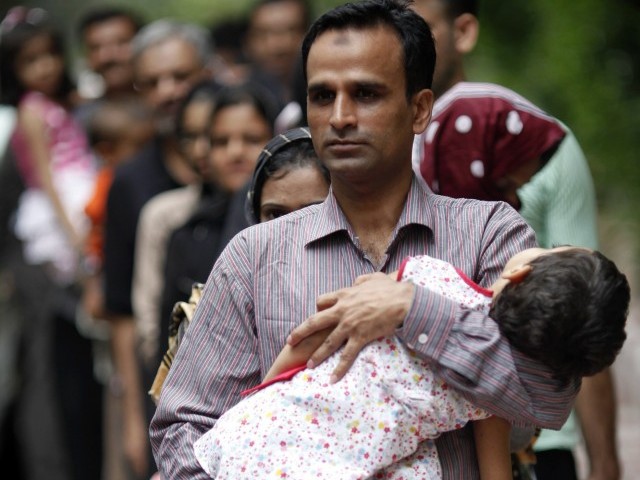 Locals foresee outbreak of violence after banners against the community. PHOTO: REUTERS/FILE |
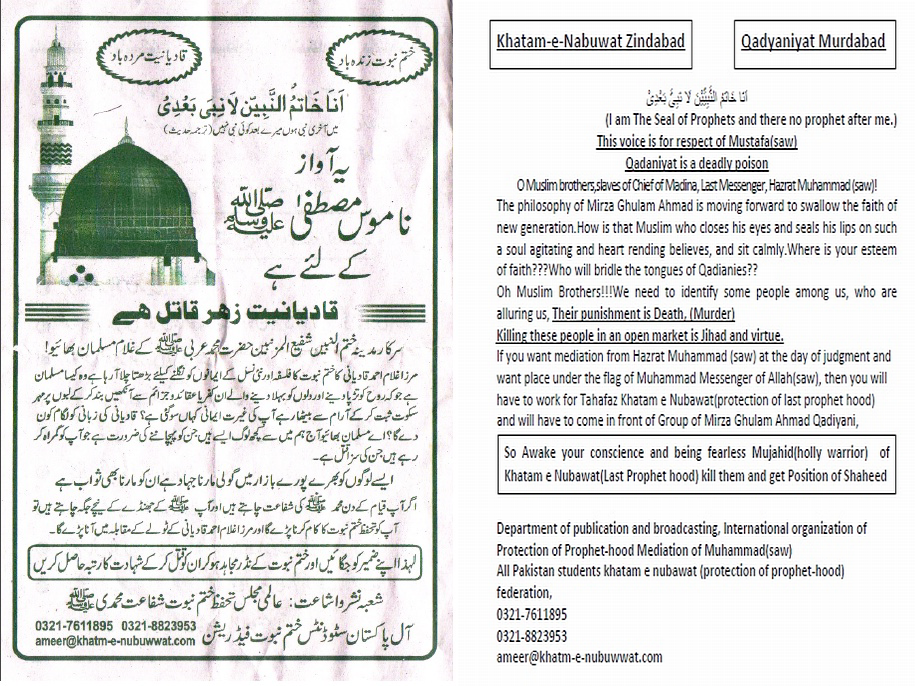
RAWALPINDI: The residents of F block, Satellite Town fear for their safety after a number of banners cropped up, demanding that Ahmadis leave the area and terming the community’s activities “unconstitutional”.
The banners are anonymous, though their demands are clear: for Ahmadis to cease all acts of worship in F block.
The Ahmadi community now fears a recurrence of recent attacks on their community, such as in May 2010 in Lahore when 93 people were killed.
Sherjeel Mir, who leads the campaign against the minority, calls Ahmadis ‘Qadianis’ – a term with pejorative connotations. “The Qadianis, a few years ago, purchased a building in Satellite Town from their own people and set up a worship place, in addition to carrying out preaching in the residential areas, creating problems for neighbours”, he says.
Mir says that he has no objections to any community living in the area; his problem is with the congregation of religious groups. He adds that Ahmadis have put up barriers and posted private guards on the main road adjacent to the hospital. Mir, a businessman, even claims the Ahmadi community has snipers on the rooftop of the building, which he terms a “fortress”.
Alarmingly, he adds that if there are delays in dealing with the problem, there could be serious repercussions.
A number of Ahmadis, when interviewed, say they have done no wrong.
“The building was built after Jamaat-e-Ahmadiyya purchased the land. Being a registered organisation, and under the relevant rules, they can carry out worship in the building”, said a senior member of Ahmadi community, who asked not to be identified.
The man added that moveable barriers and a few young security guards were arranged every Friday after last year’s attack in Lahore. The district administration granted permission for this.
“We have removed the barriers and young guards from the main road in front of our building after some people objected to our security measures”, he said.
The community member also justified shifting premises, as the community had previously gathered at a building near Committee Chowk on Benazir Bhutto Road.
He emphasised that his community had committed no unconstitutional or unlawful activities and pleaded for the hate campaign to stop so Ahmadis could feel safe living in the area.
Superintendent of Police for Rawal Town area Malik Matloob Ahmed ruled out any chance the law and order situation might turn sour.
Ahmed said he had referred both sides to contact either the town municipal administrator or the DCO to establish whether the building purchased by the Ahmadis was a residential building or a place of worship. The police will be in a better position to tackle the issue after the determination of the actual status of the building, he added. The SP also said the banners and hoardings against Ahmadis would be removed.
Published in The Express Tribune, November 11th, 2011.
The banners are anonymous, though their demands are clear: for Ahmadis to cease all acts of worship in F block.
The Ahmadi community now fears a recurrence of recent attacks on their community, such as in May 2010 in Lahore when 93 people were killed.
Sherjeel Mir, who leads the campaign against the minority, calls Ahmadis ‘Qadianis’ – a term with pejorative connotations. “The Qadianis, a few years ago, purchased a building in Satellite Town from their own people and set up a worship place, in addition to carrying out preaching in the residential areas, creating problems for neighbours”, he says.
Mir says that he has no objections to any community living in the area; his problem is with the congregation of religious groups. He adds that Ahmadis have put up barriers and posted private guards on the main road adjacent to the hospital. Mir, a businessman, even claims the Ahmadi community has snipers on the rooftop of the building, which he terms a “fortress”.
Alarmingly, he adds that if there are delays in dealing with the problem, there could be serious repercussions.
A number of Ahmadis, when interviewed, say they have done no wrong.
“The building was built after Jamaat-e-Ahmadiyya purchased the land. Being a registered organisation, and under the relevant rules, they can carry out worship in the building”, said a senior member of Ahmadi community, who asked not to be identified.
The man added that moveable barriers and a few young security guards were arranged every Friday after last year’s attack in Lahore. The district administration granted permission for this.
“We have removed the barriers and young guards from the main road in front of our building after some people objected to our security measures”, he said.
The community member also justified shifting premises, as the community had previously gathered at a building near Committee Chowk on Benazir Bhutto Road.
He emphasised that his community had committed no unconstitutional or unlawful activities and pleaded for the hate campaign to stop so Ahmadis could feel safe living in the area.
Superintendent of Police for Rawal Town area Malik Matloob Ahmed ruled out any chance the law and order situation might turn sour.
Ahmed said he had referred both sides to contact either the town municipal administrator or the DCO to establish whether the building purchased by the Ahmadis was a residential building or a place of worship. The police will be in a better position to tackle the issue after the determination of the actual status of the building, he added. The SP also said the banners and hoardings against Ahmadis would be removed.
Published in The Express Tribune, November 11th, 2011.
Copyrighted © 2011 The Express Tribune News Network
URL: http://tribune.com.pk/story/290063/ahmadis-fear...
URL: http://tribune.com.pk/story/290063/ahmadis-fear...







 Posts
Posts


