---The Nut Graph, Malaysia
Making minorities count
2 Oct 09 : 8.00AM
By Shanon Shah
shanonshah at thenutgraph dot com
 “PAS for all” was an enchanting slogan indeed during the March 2008 general election. It was a sentiment that allowed for a warm partnership to develop between PAS and its eventual Pakatan Rakyat (PR) partners, Parti Keadilan Rakyat (PKR) and DAP. It was also what convinced Malaysians of all races to vote for PAS candidates even in non-Muslim majority constituencies. A case in point is PAS central working committee member Dr Siti Mariah Mahmud’s landslide victory in the 51% non-Muslim Kota Raja parliamentary seat.
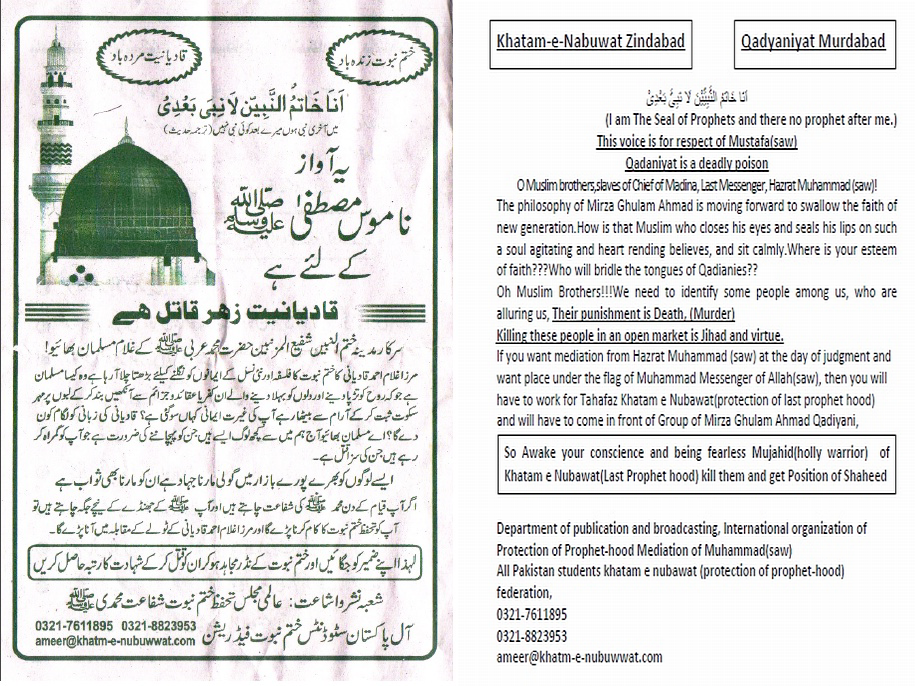
But post-March 2008, there seem to have been some caveats to this inclusive slogan. For one thing, there has been an ongoing tussle in Selangor regarding the status of the Ahmadiyah community in Selayang. And the Selangor religious exco from PAS, Datuk Dr Hasan Ali, has been instrumental in efforts to restrict religious worship among Ahmadiyah.
 Granted, Ahmadiyah are but a tiny minority in Malaysia. Ahmadiyah probably make up 0.007% of the entire Malaysian population. Still, the slogan would not be as sexy if it were to say “PAS for 99.993%”, so this is probably why “PAS for all” remains the preferred brand strategy.
But PAS is not alone in having such contradictions between speaking for an inclusive Malaysia, and yet trying to clamp down on those it disagrees with. Just look at Prime Minister Datuk Seri Najib Razak’s much-praised as well as lampooned 1Malaysia slogan. And yet, someone in his administration is guilty of perpetuating, or at the minimum excusing, intimidation of minorities. We just need to recall Home Minister Datuk Seri Hishammuddin Hussein’s defence of protesters who brandished a severed cow-head as a means of protesting the relocation of a Hindu temple.
Context matters
 The question then is not just about how people deal with diversity and disagreement. It is also about how the many treat the few, and how the powerful treat the weak. It is something humanity has had to grapple with in witnessing the Jewish Holocaust in World War II, the 1994 butchering of 800,000 Tutsis and Hutu moderates by Hutus in Rwanda, and the systematic suffocation of indigenous communities in democracies such as the US and Australia.
Perhaps some of these examples are exaggerated in the case of Malaysia. Have we witnessed the gassing of entire communities here? Have we seen an ethnic majority bringing machetes and axes to systematically annihilate a particular ethnic minority? After all, the Selangor authorities are not bringing machetes or axes to the Ahmadiyah compound in Selayang — they are “merely” stopping them from worshipping. Is this cause for worry?
 The situation is complicated. Sure, there may only be approximately 2,000 Ahmadiyah in Malaysia, but there are an estimated 200 million worldwide. And of this 200 million, many have settled in countries such as Canada and the UK, where they enjoy the support and protection of secular governments there. In fact, Ahmadiyah communities in these countries are able to lobby government ministers to put pressure on Muslim countries that persecute Ahmadiyah.
Ironically, it’s not that different being a “mainstream” Muslim in certain situations. Plant yourself in the US and you become the target of racial profiling, harassment and torture. Move to, for example, Pakistan and you are suddenly all-powerful. In practise, you could then profile, harass or abuse Christian, Hindu and Ahmadiyah communities and very likely get away with it.
A numbers game?
Furthermore, there are minorities and then there are minorities. On some levels, it is a numbers game after all. For example, Indian Malaysians are an ethnic minority, and have been the butt of racist jokes and not-so-helpful policies. But this minority group, spearheaded by Hindraf, managed to summon 30,000 from its ranks to march the streets of Kuala Lumpur in November 2007, demanding reparations and better treatment.

The Indian Malaysian vote also went squarely against the Barisan Nasional (BN) in March 2008, and this inflicted a painful enough blow to the ruling coalition. And so, policies towards Indian Malaysians, especially in terms of education, have changed since then. Is this what it takes for a minority to assert itself? To demonstrate, “Hey, we have the numbers too, and we can inflict some real damage.”
There are various minorities in Malaysia. There are the tiny, often invisible, communities — indigenous people, lesbians, gays, bisexuals and transsexuals, and “deviant” Muslim groups. There are minorities of circumstance — those with HIV/AIDS, migrant workers, refugees, underprivileged urban settlers, and so on. And then there are the “bigger” minorities — Chinese and Indian Malaysians, Christians, Hindus and Buddhists, and so on.
Sometimes different categories of “minority” intersect. A Christian Indian Malaysian would already be a minority. But what if this person was also lesbian, poor and HIV positive? What would we do with her then? Were the 30,000 Hindraf protesters thinking of her when they took to the streets in 2007?
Hunting season
Would it be easier if we just did not have to deal with minorities? Either by doing away with them, or by making them comply with what the majority dictates? Anti-Ahmadiyah quarters might use this argument — in a democracy, we must accept the will of the majority. But what if the will of the majority, as in Rwanda, is that minorities must be killed? If that were the case, then there is not much difference being an Ahmadiyah in Pakistan, a “mainstream” Muslim in the US, a gay teenager in Iran, or a refugee in Australia. You just have to look out for when “hunting season” begins, and when it ends.
 And yet, it’s not like societies have not learnt to deal with minorities before. In 2008, Australian Prime Minister Kevin Rudd formally apologised to the country’s indigenous population for wrongdoings caused by successive administrations. Germany openly grapples with its anti-Jewish Nazi past. The staunchly Catholic Ireland ultimately decriminalised homosexuality in 1993.
But getting back to Malaysia, what direction then is the BN government going to take with 1Malaysia? Where is PAS going to take “PAS for all“? Or are these merely the soundtrack to a prolonged hunting season?
The misguided majority-rule argument fails to acknowledge that democracy isn’t just about the will of the majority; it also entails that the majority government recognises the legitimate rights and freedom of the minority. For if it were merely the former, democracy is no more than giving the majority the right to tyrannise over the minority.
See Also:
URL: www.thenutgraph.com/making-minorities-count
Making minorities count
2 Oct 09 : 8.00AM
By Shanon Shah
shanonshah at thenutgraph dot com
 “PAS for all” was an enchanting slogan indeed during the March 2008 general election. It was a sentiment that allowed for a warm partnership to develop between PAS and its eventual Pakatan Rakyat (PR) partners, Parti Keadilan Rakyat (PKR) and DAP. It was also what convinced Malaysians of all races to vote for PAS candidates even in non-Muslim majority constituencies. A case in point is PAS central working committee member Dr Siti Mariah Mahmud’s landslide victory in the 51% non-Muslim Kota Raja parliamentary seat.
But post-March 2008, there seem to have been some caveats to this inclusive slogan. For one thing, there has been an ongoing tussle in Selangor regarding the status of the Ahmadiyah community in Selayang. And the Selangor religious exco from PAS, Datuk Dr Hasan Ali, has been instrumental in efforts to restrict religious worship among Ahmadiyah.
 Granted, Ahmadiyah are but a tiny minority in Malaysia. Ahmadiyah probably make up 0.007% of the entire Malaysian population. Still, the slogan would not be as sexy if it were to say “PAS for 99.993%”, so this is probably why “PAS for all” remains the preferred brand strategy.
But PAS is not alone in having such contradictions between speaking for an inclusive Malaysia, and yet trying to clamp down on those it disagrees with. Just look at Prime Minister Datuk Seri Najib Razak’s much-praised as well as lampooned 1Malaysia slogan. And yet, someone in his administration is guilty of perpetuating, or at the minimum excusing, intimidation of minorities. We just need to recall Home Minister Datuk Seri Hishammuddin Hussein’s defence of protesters who brandished a severed cow-head as a means of protesting the relocation of a Hindu temple.
Context matters
 The question then is not just about how people deal with diversity and disagreement. It is also about how the many treat the few, and how the powerful treat the weak. It is something humanity has had to grapple with in witnessing the Jewish Holocaust in World War II, the 1994 butchering of 800,000 Tutsis and Hutu moderates by Hutus in Rwanda, and the systematic suffocation of indigenous communities in democracies such as the US and Australia.
Perhaps some of these examples are exaggerated in the case of Malaysia. Have we witnessed the gassing of entire communities here? Have we seen an ethnic majority bringing machetes and axes to systematically annihilate a particular ethnic minority? After all, the Selangor authorities are not bringing machetes or axes to the Ahmadiyah compound in Selayang — they are “merely” stopping them from worshipping. Is this cause for worry?
 The situation is complicated. Sure, there may only be approximately 2,000 Ahmadiyah in Malaysia, but there are an estimated 200 million worldwide. And of this 200 million, many have settled in countries such as Canada and the UK, where they enjoy the support and protection of secular governments there. In fact, Ahmadiyah communities in these countries are able to lobby government ministers to put pressure on Muslim countries that persecute Ahmadiyah.
Ironically, it’s not that different being a “mainstream” Muslim in certain situations. Plant yourself in the US and you become the target of racial profiling, harassment and torture. Move to, for example, Pakistan and you are suddenly all-powerful. In practise, you could then profile, harass or abuse Christian, Hindu and Ahmadiyah communities and very likely get away with it.
A numbers game?
Furthermore, there are minorities and then there are minorities. On some levels, it is a numbers game after all. For example, Indian Malaysians are an ethnic minority, and have been the butt of racist jokes and not-so-helpful policies. But this minority group, spearheaded by Hindraf, managed to summon 30,000 from its ranks to march the streets of Kuala Lumpur in November 2007, demanding reparations and better treatment.

The Indian Malaysian vote also went squarely against the Barisan Nasional (BN) in March 2008, and this inflicted a painful enough blow to the ruling coalition. And so, policies towards Indian Malaysians, especially in terms of education, have changed since then. Is this what it takes for a minority to assert itself? To demonstrate, “Hey, we have the numbers too, and we can inflict some real damage.”
There are various minorities in Malaysia. There are the tiny, often invisible, communities — indigenous people, lesbians, gays, bisexuals and transsexuals, and “deviant” Muslim groups. There are minorities of circumstance — those with HIV/AIDS, migrant workers, refugees, underprivileged urban settlers, and so on. And then there are the “bigger” minorities — Chinese and Indian Malaysians, Christians, Hindus and Buddhists, and so on.
Sometimes different categories of “minority” intersect. A Christian Indian Malaysian would already be a minority. But what if this person was also lesbian, poor and HIV positive? What would we do with her then? Were the 30,000 Hindraf protesters thinking of her when they took to the streets in 2007?
Hunting season
Would it be easier if we just did not have to deal with minorities? Either by doing away with them, or by making them comply with what the majority dictates? Anti-Ahmadiyah quarters might use this argument — in a democracy, we must accept the will of the majority. But what if the will of the majority, as in Rwanda, is that minorities must be killed? If that were the case, then there is not much difference being an Ahmadiyah in Pakistan, a “mainstream” Muslim in the US, a gay teenager in Iran, or a refugee in Australia. You just have to look out for when “hunting season” begins, and when it ends.
 And yet, it’s not like societies have not learnt to deal with minorities before. In 2008, Australian Prime Minister Kevin Rudd formally apologised to the country’s indigenous population for wrongdoings caused by successive administrations. Germany openly grapples with its anti-Jewish Nazi past. The staunchly Catholic Ireland ultimately decriminalised homosexuality in 1993.
But getting back to Malaysia, what direction then is the BN government going to take with 1Malaysia? Where is PAS going to take “PAS for all“? Or are these merely the soundtrack to a prolonged hunting season?
The misguided majority-rule argument fails to acknowledge that democracy isn’t just about the will of the majority; it also entails that the majority government recognises the legitimate rights and freedom of the minority. For if it were merely the former, democracy is no more than giving the majority the right to tyrannise over the minority.
See Also:
URL: www.thenutgraph.com/making-minorities-count






 Posts
Posts


